
Your First Time in
Munich, Germany
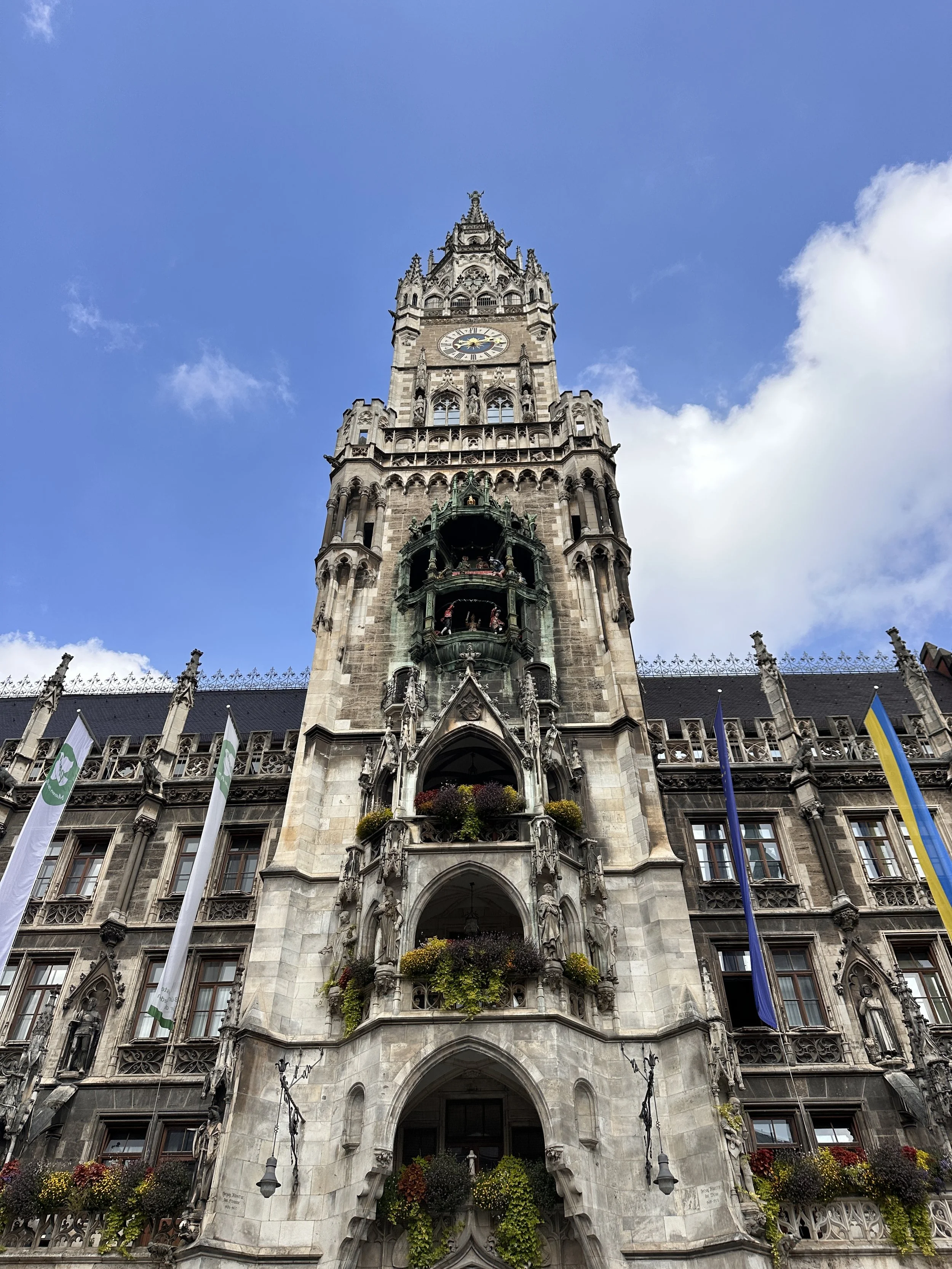
Some cities you visit. Some cities you have been planning to visit your whole life. Munich was always the second kind for me. Oktoberfest had been on my bucket list so long it had started to feel less like a plan and more like a fact about myself, one of those things you just know you are going to do eventually and cannot quite explain why it has not happened yet.
We finally went. Opening weekend, four days, dirndl purchased from an Austrian seller on Etsy, no table reservation, and no real plan beyond getting there and figuring it out.
It delivered. Not just Oktoberfest, though Oktoberfest alone would have justified the trip. The city itself earned its place. The Gothic architecture that feels heavier and more serious than anything else in Europe. The English Garden, one of the largest urban parks in the world, with surfers riding a standing river wave in the middle of it. The beer, which tastes like a completely different thing from whatever has been coming out of your tap at home. And Dachau, thirty minutes away, which is the hardest day and the most important one and the thing that makes Munich impossible to reduce to a festival.
Munich is not just Oktoberfest. Oktoberfest is just the reason a lot of people finally go.
A Brief Look At
Your Itinerary
The full itinerary is at the bottom of the page when you are ready.
-
The only thing on the agenda is getting there and ordering a German beer wherever you end up. Everything else starts tomorrow.
-
The right way to start any European city. A guided walking tour that gives you 850 years of Munich history, the Rathaus-Glockenspiel, Fünf Höfe, lunch at the Ratskeller, the English Garden, and the surfers you will not be expecting.
-
The hardest day and one of the most important ones. Dachau in the morning, Heilig-Geist-Kirche on the way back, and the beer halls and breweries tour in the evening because Munich holds both things and understanding that is part of understanding the city.
-
The bucket list day. Dirndl on, cash in hand, Ein Prosit learned. Everything you came for.
-
The parade through Old Town Munich before it winds into the festival grounds, a lighter crowd than opening day, and the tents one more time before you go home and start planning the next trip.
What to See on Your Visit to Munich
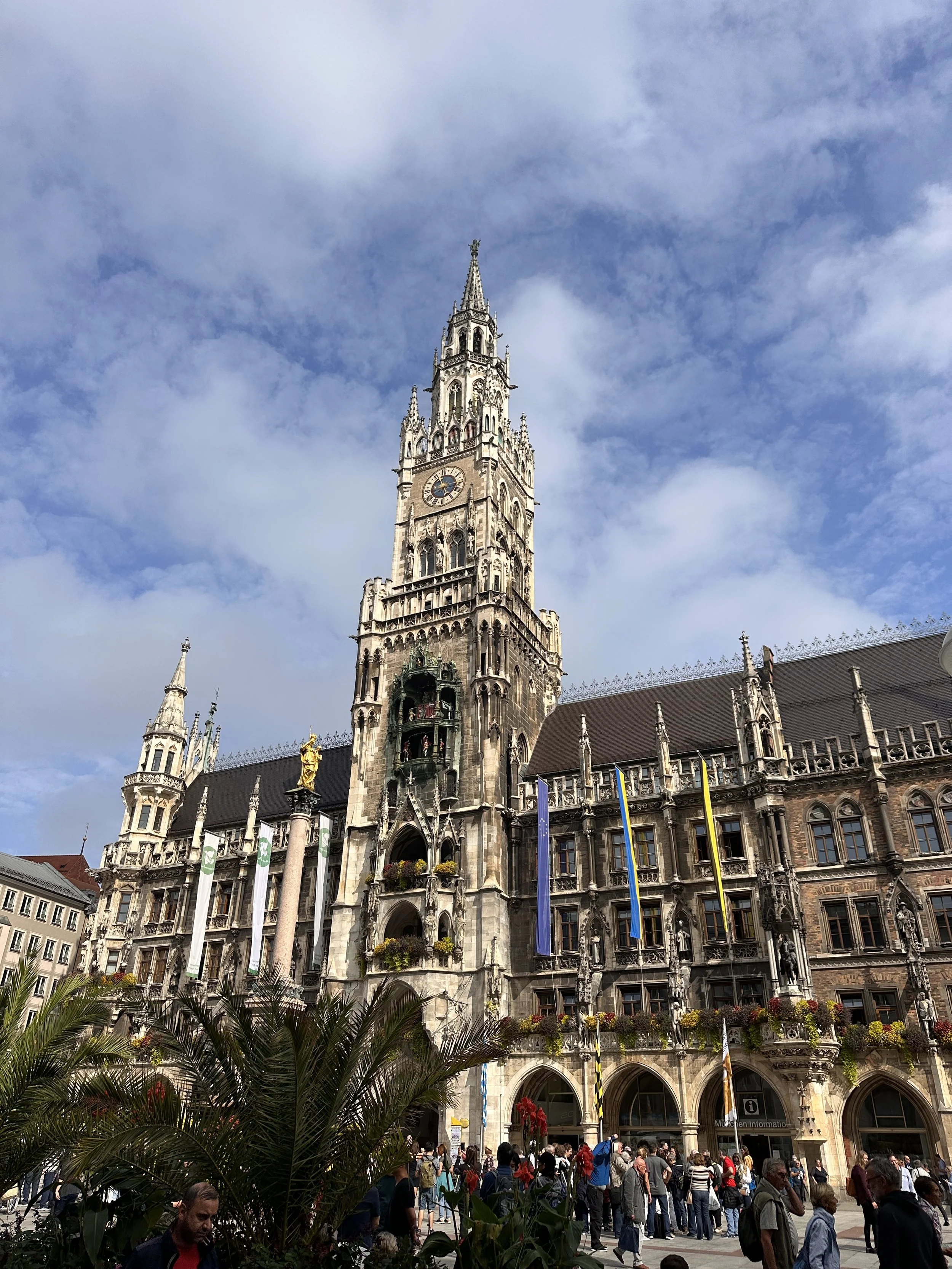
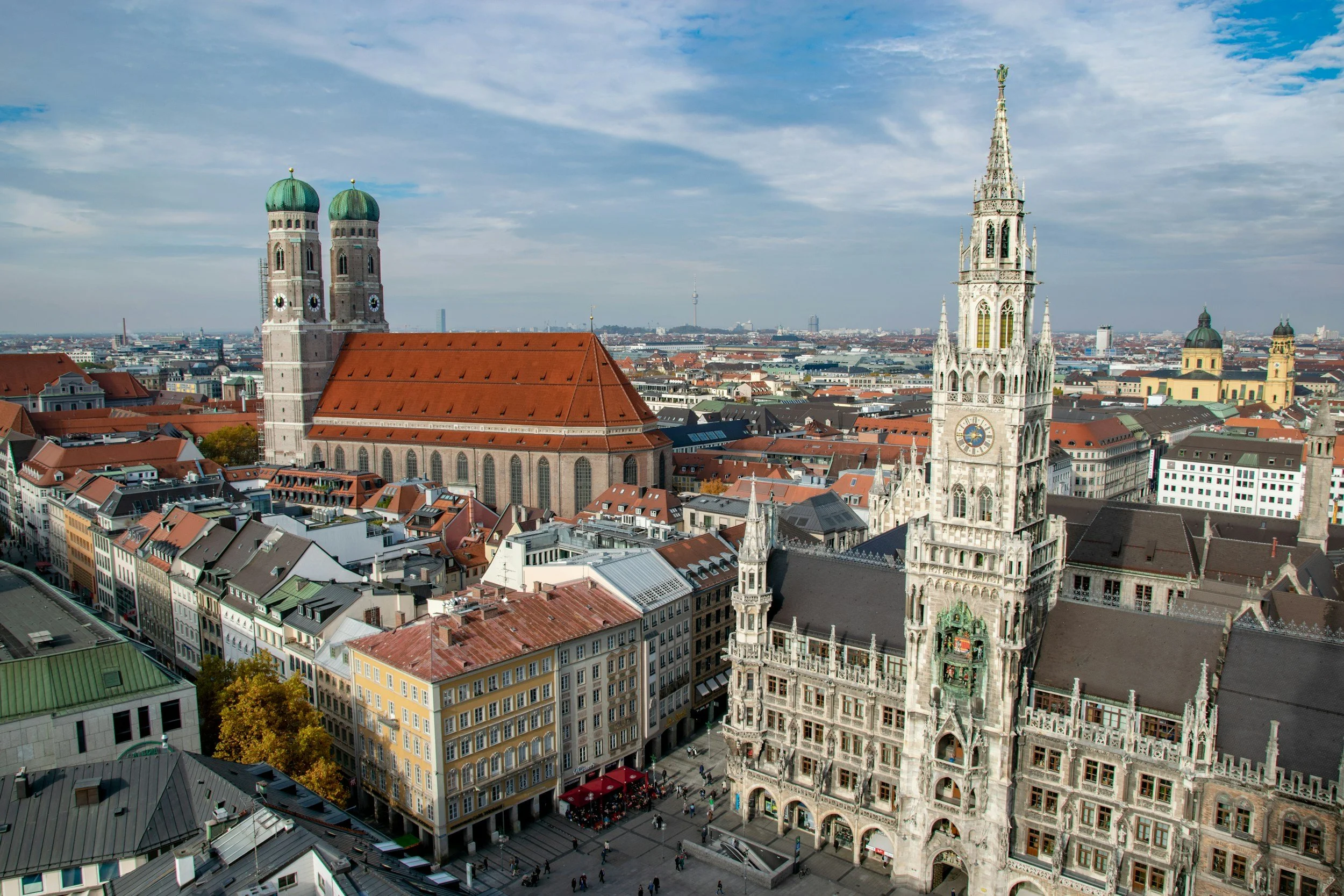
The heart of Munich and the right place to start. A large open square dominated by the Neo-Gothic New Town Hall on one side and the older Old Town Hall on the other, with the Mariensäule column at its center that has stood there since 1638. Everything in Munich seems to radiate outward from this square, which is why almost every guided tour in the city begins here.
The Rathaus-Glockenspiel is built into the tower of the New Town Hall and puts on a show at 11am, noon, and 5pm, with thirty two life-sized figures reenacting stories from Munich's history while the bells play. It felt completely, specifically German in a way I was not prepared for. Coming from a family with German roots and having studied the language, standing in that square watching the glockenspiel felt like something clicking into place.
During Oktoberfest season the square transforms. Shops hang gingerbread hearts and decorations from their doorways, the energy in the streets shifts into something festive and anticipatory, and the whole city feels like it is getting ready for something. Because it is.
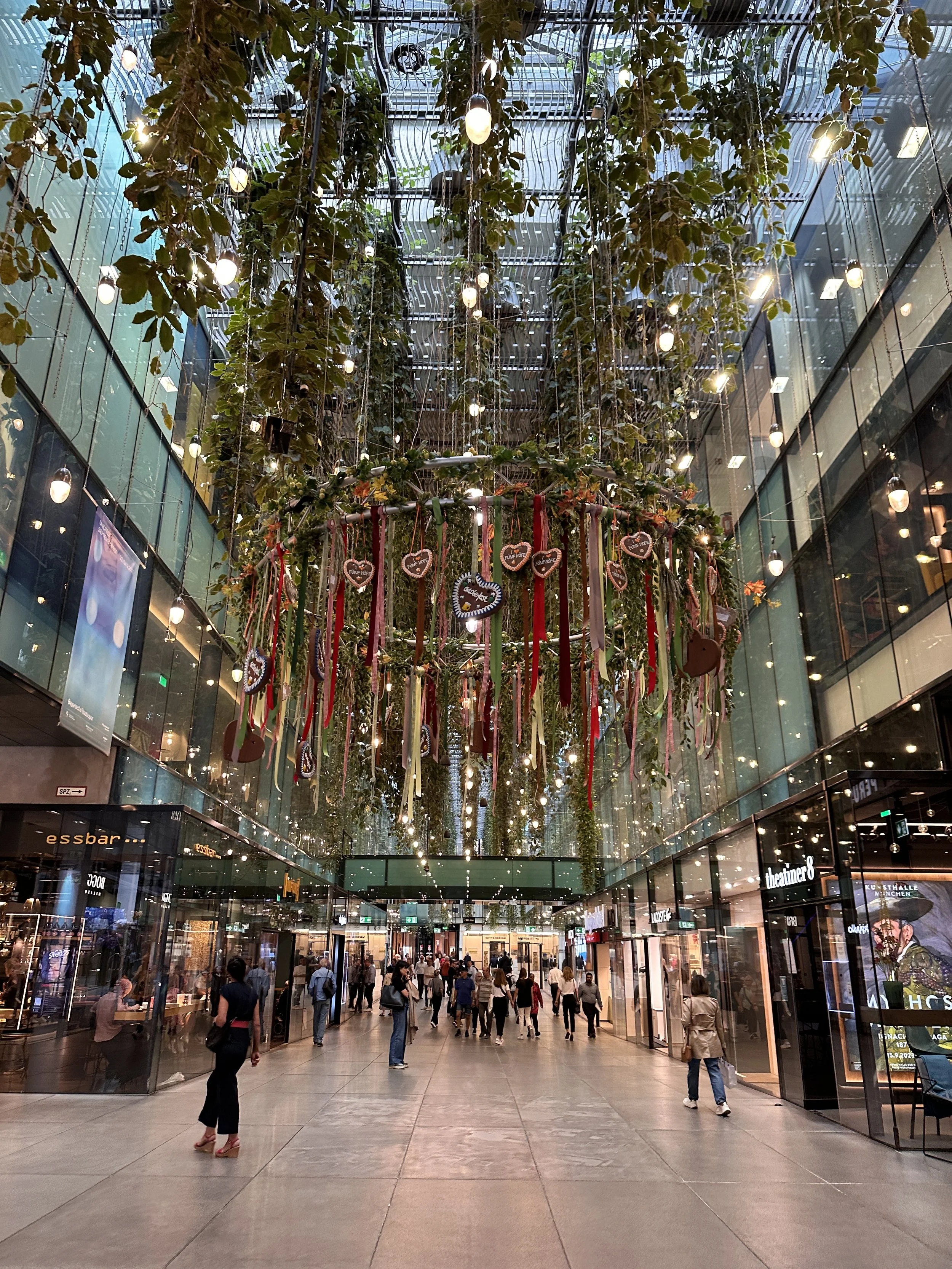
A short walk from Marienplatz, Fünf Höfe is a shopping arcade built through five interconnected courtyards of a historic building, with greenery climbing the walls, lights strung between the levels, and during Oktoberfest season the large traditional gingerbread hearts hanging as decoration throughout. It is not a landmark in the conventional sense but it is one of those places that makes you stop and look up and feel like you are somewhere specific. Worth wandering through.
The English Garden and the River Surfers
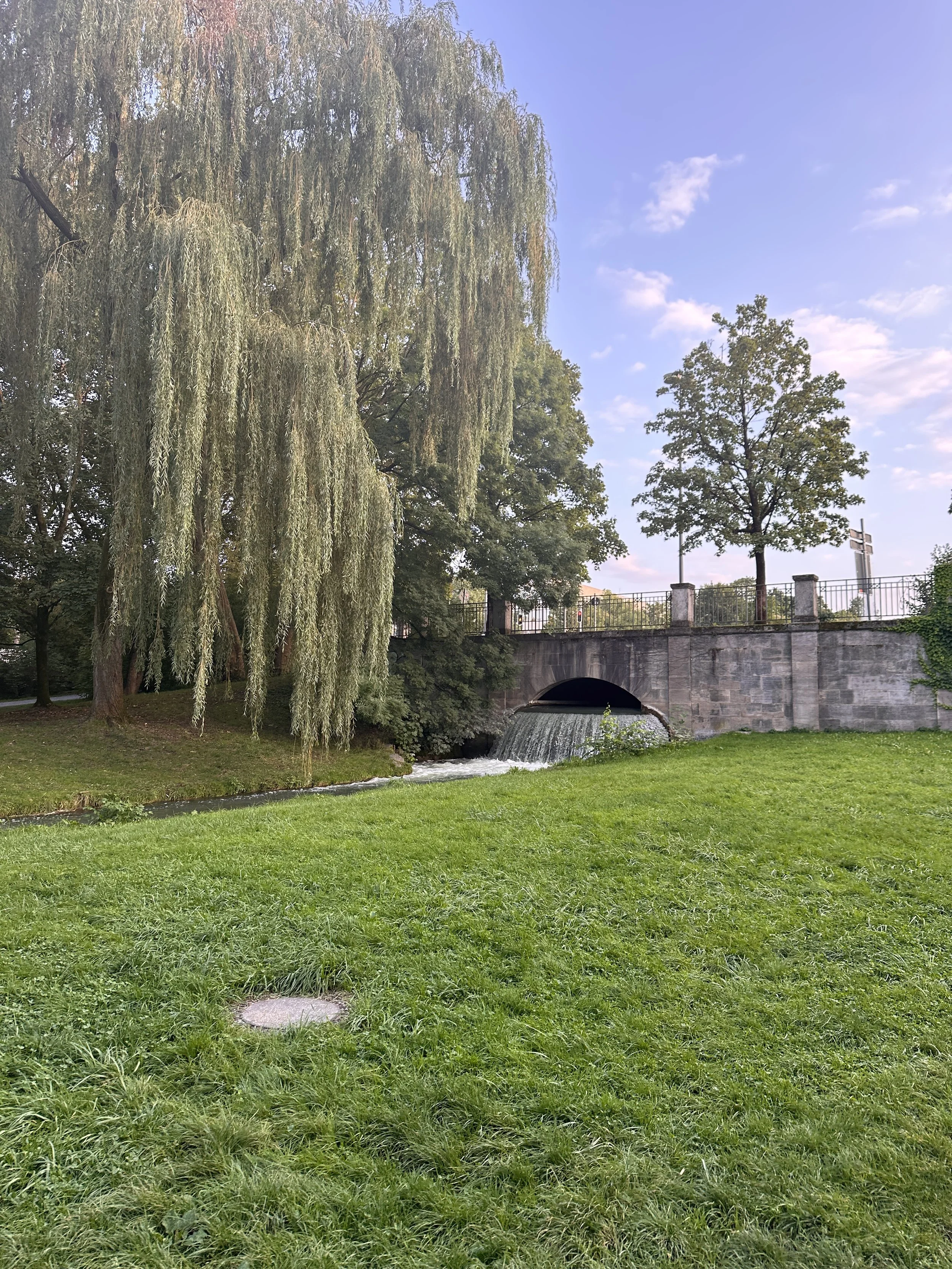
The English Garden is one of the largest urban parks in the world, significantly bigger than Central Park in New York, and it runs through the heart of Munich in a way that makes the city feel like it was built around the idea of green space rather than the other way around. We walked through it from our hotel at the Hilton Munich Park, which overlooks the park from its southern edge, following the Schwabinger Bach as it runs through the trees.
Then we stumbled on the surfers.
At a channel near the southern entrance to the park, a standing wave forms in the fast-moving water and Munich locals surf it. Not a handful of them. A rotating queue of maybe ten people waiting their turn, with a small crowd watching from the bridge above. We had no idea this existed. Our guide had not mentioned it. We just heard the sound of rushing water and followed it and found something that felt completely specific to this city, a tradition that belongs entirely to Munich and that the locals seemed entirely unbothered by visitors stopping to watch.
It is the kind of thing that makes you feel like you actually stumbled into a city rather than passing through it.
Dachau Concentration Camp Memorial Site
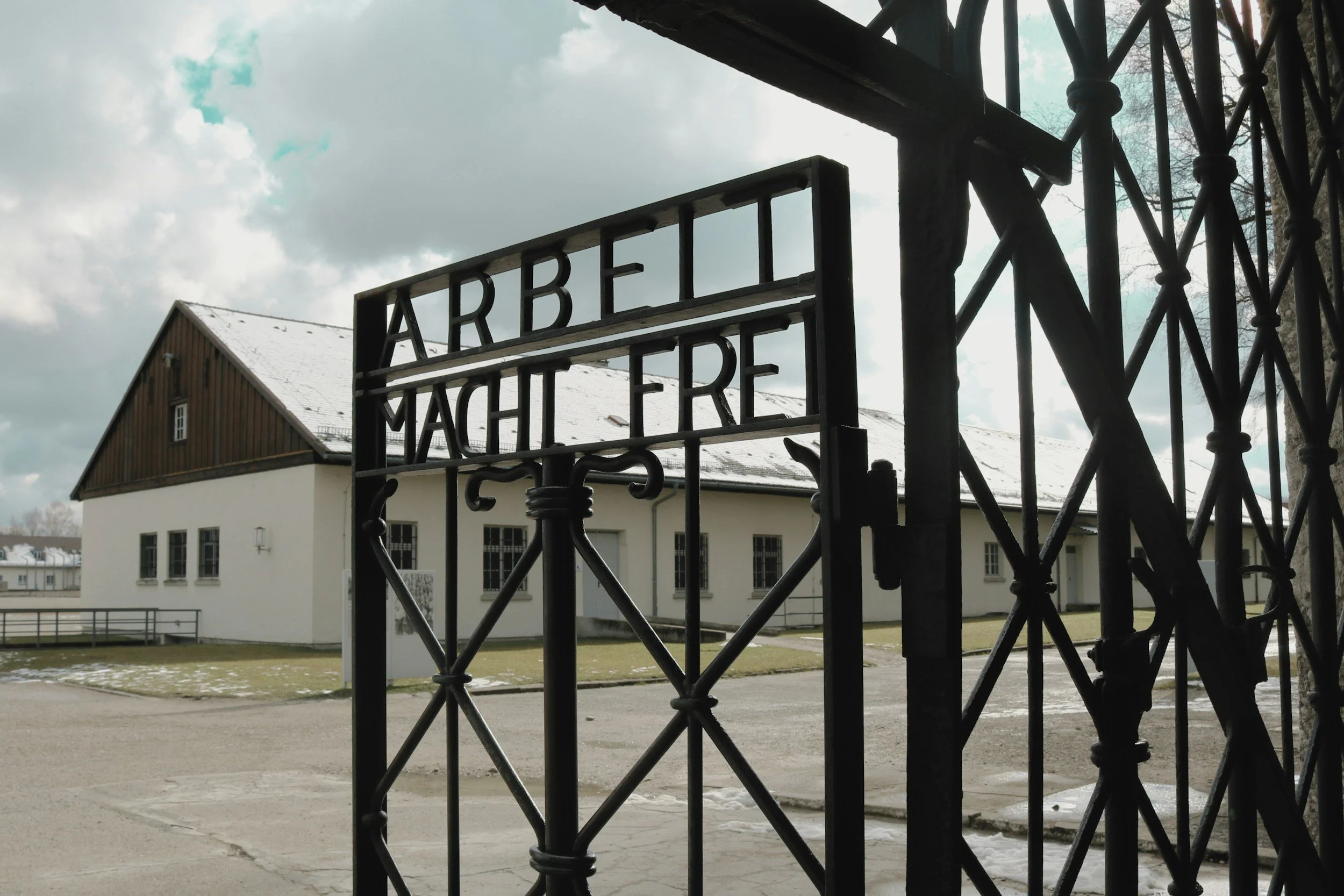
Thirty minutes from Munich by public transport, Dachau was the first permanent concentration camp of the Nazi regime, opened in 1933 and operating for the full twelve years of Nazi rule. More than 200,000 people were imprisoned there. At least 41,500 died.
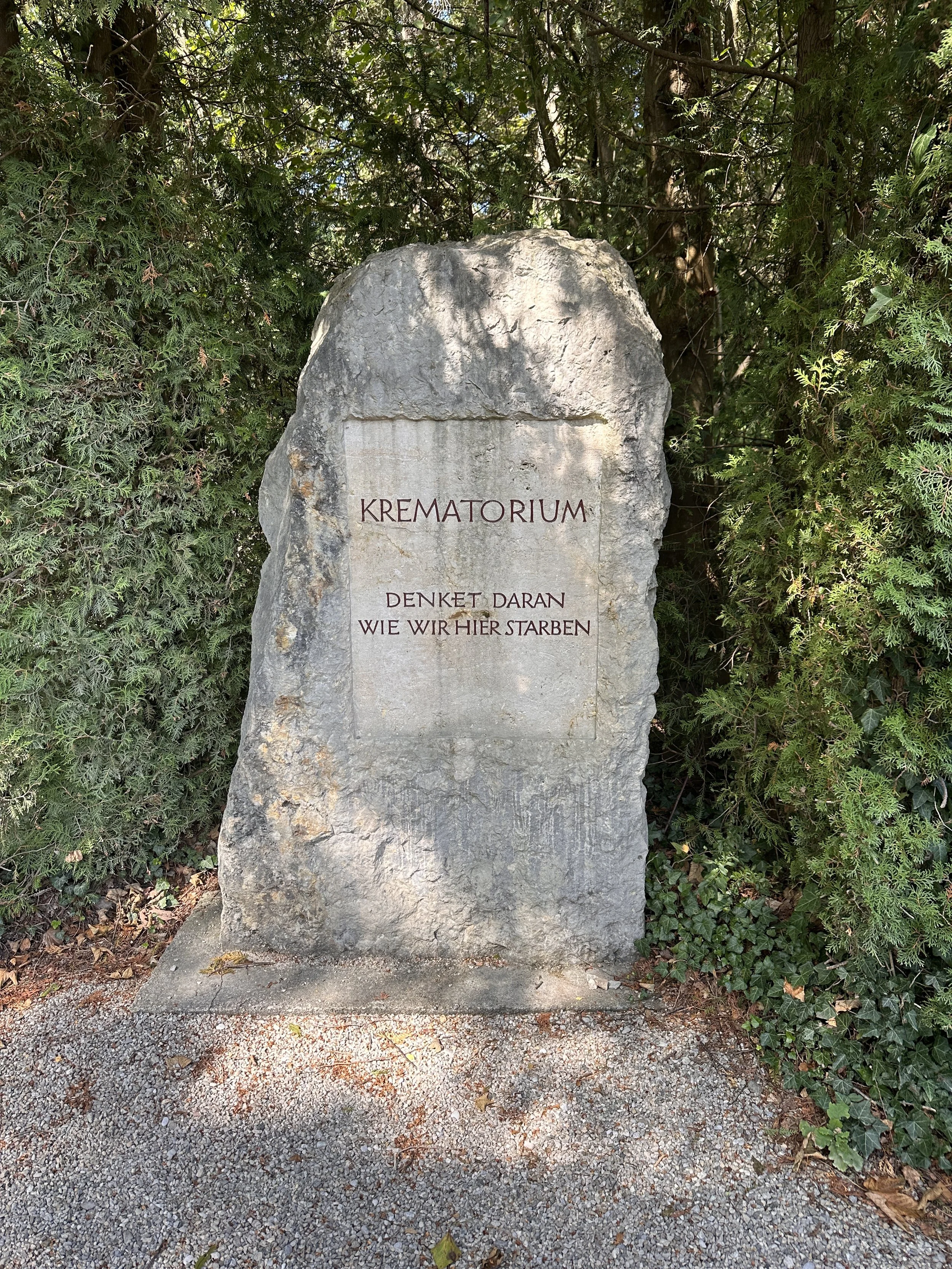
I had been to the Holocaust Museum in Washington DC, read extensively about this history, watched more documentaries than I can count. Walking through the barracks where prisoners slept, three bunks high with multiple people to a single bunk, with ceilings so low the space felt deliberately dehumanizing. Standing in front of the execution wall. Walking into the gas chamber.
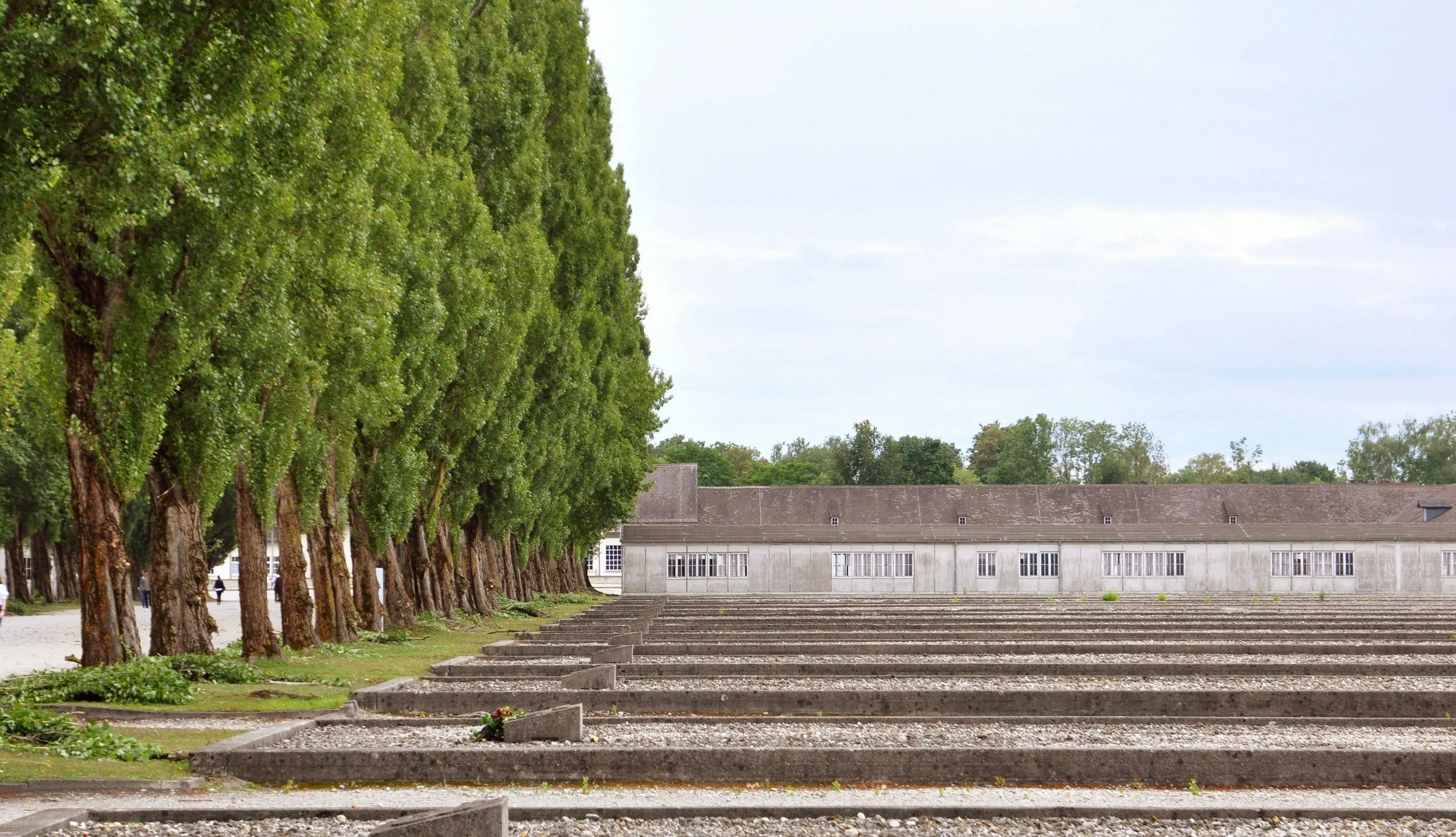
The grounds outside are strangely peaceful, which is its own kind of unsettling. The horror happened inside and underground and behind walls, and the grass and trees and open sky feel wrong against what you know occurred there. Our guide encouraged us to take photographs and videos, which surprised me given what I had read online suggesting otherwise. Her reasoning was direct: this is how we remember what happened and how we make sure other people do not forget. It reframed the cameras I saw everywhere.
Book the Dachau Memorial Site Full-Day Tour on GetYourGuide. The history is too specific and too layered to absorb without a guide who knows it deeply. Six hours including travel time, four hours inside the camp. It is a hard day. It is an important one.
What No Documentary Prepares You For
I thought that preparation meant something. It does not. Nothing prepares you for standing in the gas chamber. Nothing prepares you for the barracks, the ceiling so deliberately low, the bunks three high with five people to a single one. Nothing prepares you for the execution wall, which is where I stopped moving and stopped thinking about what I was going to say when I got home and just stood there.
We filed back onto the bus in the late afternoon and nobody said a word. Not just our group. The whole tour. The specific quiet of people who have just been somewhere that required them to hold more than they expected to.
The grounds outside are peaceful. That is the part that stays with you in a way you do not expect. Green grass, trees, open sky. The horror happened indoors and underground and behind walls, and the natural world kept going around it. Nature does not know what happened there. The quiet outside is not comfort. It is just the world being indifferent to human cruelty in the way it always is.
What I was not prepared for, after all of that, was walking into Heilig-Geist-Kirche an hour later. We had not planned to go in. We were just following a crowd near Marienplatz and the door was open. The painted ceiling. The grand columns. The smell of incense and old stone. Something so deliberately beautiful built by the same civilization that built what we had just come from, centuries apart but the same people, the same country, the same city.
I am not sure what I made of that then. I am not entirely sure what I make of it now. But I think it is the most honest thing Munich gave me. Just the two places an hour apart, and the silence between them, and what that silence said about what a country can be and what it can do and what it has to carry.
Oktoberfest
Covered in full below. The short version: it is nothing like what you picture and exactly like what you picture at the same time.
Oktoberfest in Munich
Walking through the gates for the first time, my first thought was that it felt like a county fair. The midway, the stalls, the rides. Familiar in a way I was not expecting from something I had been imagining for years.
And then the tents came into view.
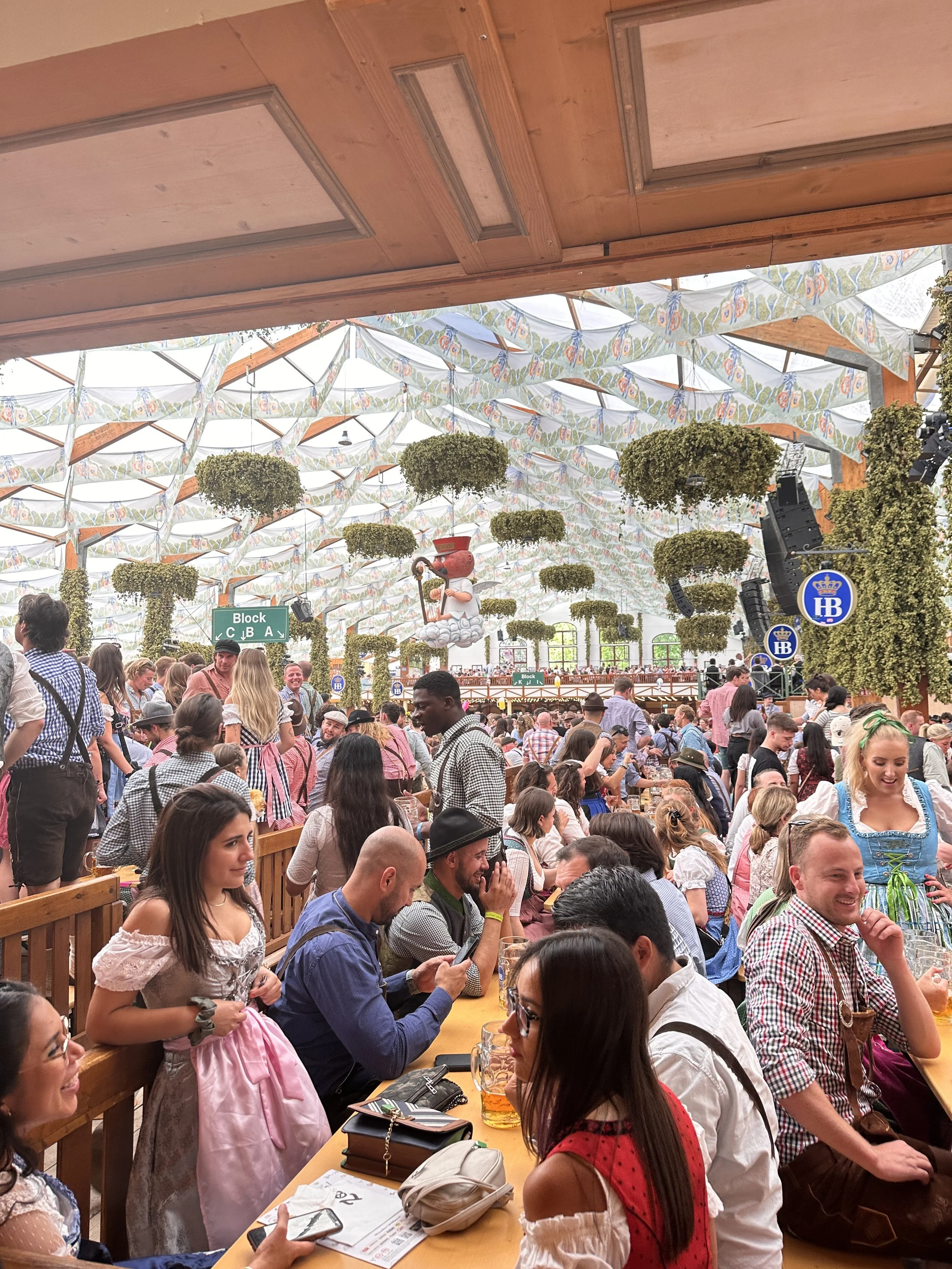
Fifteen of them, the size of airplane hangars, packed with people in traditional dress. Inside, servers cut through the crowd carrying up to ten one-liter steins at a time without spilling a drop. The noise. The smell of fried food and crowds and something that only exists in this specific place.
It is not what you picture. It is what you picture and then significantly more.
The Tents
Choosing which tents to visit is the Oktoberfest research rabbit hole. There are 14 large tents in total. Here is an honest breakdown of the 12 we either visited.
The prettiest tent at Oktoberfest. The ceiling is painted as an open blue sky with clouds, giving the whole space an airy, open feeling that no other tent has. 9,000 seats, a second story balcony with the best view of the floor, and a crowd that is energetic at all hours. The music starts with traditional brass and moves into classic rock as the day goes on. We ended up here on both days and it was the right call each time. If you only go to one tent, make it this one.
Where we sat on day one. Lively, well organized, and the server who helped us find seats was the first real Oktoberfest kindness we experienced. A strong first tent for people arriving without a reservation.
Arguably wildest tent at Oktoberfest and the one with the most foreign visitors. 10,000 seats, a bonus standing area for 1,000 more, and an energy that leans more party than tradition. The most chaotic option in the best possible way. Good if you want maximum energy and do not mind that the crowd skews heavily tourist.
One of the largest tents. We drank here on day two and found it noticeably less crowded than opening day, which made the whole experience more relaxed. The beer garden outside is particularly good.
The locals' tent. The beer here is widely considered the best at Oktoberfest, served fresh from wooden barrels rather than steel kegs, which makes a difference you can taste. The interior is gorgeous and on the more romantic end of the tent spectrum. Most popular among Munich residents and worth seeking out if authenticity is the priority.
One of the more traditional tents at Oktoberfest, named for the annual German crossbow championship held on the grounds. The bands here lean more traditional than most, performing largely in German, which gives it a noticeably more local feel than the international crowd tents. Has a full bar serving schnapps, mixed drinks, and champagne alongside the beer. Strong food menu with some of the best pork dishes at the festival. Near the Lady of Bavaria statue, which you can climb for a bird's eye view of the grounds.
The most intimate and most authentically atmospheric tent at Oktoberfest. Two levels, each with its own band, a rustic farmhouse interior, and the best food on the grounds. Fills up faster than almost any other tent. If you want to understand what Oktoberfest is supposed to feel like at its core, this is the tent that delivers it.
The newest of the major tents, open since 2014, with a striking Art Nouveau exterior and an interior decorated with horses that reference the royal riding school the tent is named after. Family friendly during the day with clear aisles and a menu for kids, then a full party atmosphere once the evening kicks in. Spaten and Franziskaner on tap, a strong food menu that goes beyond the Oktoberfest basics, and a big bar on the rear balcony where the action concentrates at night. One of the more visually distinctive tents on the grounds.
The oldest tent and the most important one on opening day. The Mayor of Munich taps the first keg here at noon and shouts "O'zapft is!" meaning it is tapped, before a twelve-gun salute signals to the entire festival that Oktoberfest has officially begun. Popular with younger locals and the symbolic heart of opening day.
The only tent at Oktoberfest dedicated to fish. Steckerlfisch, whole fish grilled on a stick over an open flame, is the signature dish and one of the most iconic things you can eat on the grounds. If you want something other than roasted chicken or pork knuckle, this is where to go. Smaller and quieter than the big beer tents, which makes it a good option if you need a break from the intensity of the main halls.
The one tent at Oktoberfest that is not about beer. Twenty five different wine options, plenty of sparkling wine and champagne, and an interior designed to feel like a royal hunting lodge with intimate booth seating and sturdy benches for dancing at night. High energy in the evening in a way that feels different from the beer tents. Worth knowing about if wine is your preference or if you want something that feels slightly more refined than the main halls.
One of the most recognizable tents on the grounds, marked by the famous mechanical lion mounted above the entrance that roars and raises a stein periodically throughout the day. Inside it is classic Oktoberfest, loud, packed, and completely alive. The Löwenbräu beer is excellent and the tent has a loyal following among both locals and visitors.
We wandered into one of the 22 smaller tents and it was immediately, obviously different from everything else on the grounds. Packed but intimate in a way the big tents cannot be by design. The crowd looked like people who had been coming to this specific tent for years. No one was performing for anyone. No one was figuring out where to sit or what to order or how the whole thing worked. They just knew.
We could not tell you which tent it was. We are not sure it matters. If you find yourself near one of the smaller tents and the door is open, go in for at least one beer. The big tents are the experience everyone comes for. The small ones are the version the locals kept for themselves.
The Small Tents
The beer comes in one size: a maß, pronounced moss, which is a full liter. There is no smaller option and nobody will take you seriously if you ask for one. At around 12 to 14 euros before tip, budget at least 100 euros per person per day and bring all of it in cash. Credit cards are not accepted inside the tents or at most stalls. The ATMs on the grounds charge steep fees.
Learn Ein Prosit before you arrive. It is the Oktoberfest drinking song played every twenty minutes or so in every tent and the crowd sings along every time. Knowing it makes you feel like you belong there in a way that nothing else quite does.
The radler is your friend, especially in the morning. Half beer, half lemon soda, it looks exactly like a maß and tastes refreshing in a way that straight beer at nine in the morning sometimes does not. It costs the same as a full beer and is the right call for the first hour or two. Start there, pace yourself, and remember that this is a marathon.
Touch steins on the bottom when you prost, not the top. Hold the handle when you cheer, put your hand through it when you drink. Never pour the dregs of one beer into a new one. This is called Noagerl and is a genuine offense.
Do not take your stein outside the tent. It is a criminal offense and the fine is significant. Souvenir steins are available for purchase from vendors inside.
The bathrooms inside the tents are maintained all day and the attendants work hard to keep them clean. Always leave a small tip. The lines outside at the portable toilets are long. Plan accordingly.
Bring a small bag. Large bags over three liters are not permitted past security. Everything goes through a bag check at the entrance.
If you do not tip generously and consistently, you will stop getting served.
One more thing worth knowing before you go in. You may notice people at Oktoberfest snorting a white powder directly at the tables. It is not what it looks like. Schneeberg, also called Wiesn-Koks, is a harmless mixture of glucose and menthol sold openly by servers and at souvenir booths inside the tents. It gives a brief burst of alertness and a cooling sensation, basically glorified grape sugar. It costs around five euros a bottle. If you are curious, buy your own. Do not just accept whatever gets passed your way.
What to Know Before You Go to Oktoberfest for the First Time
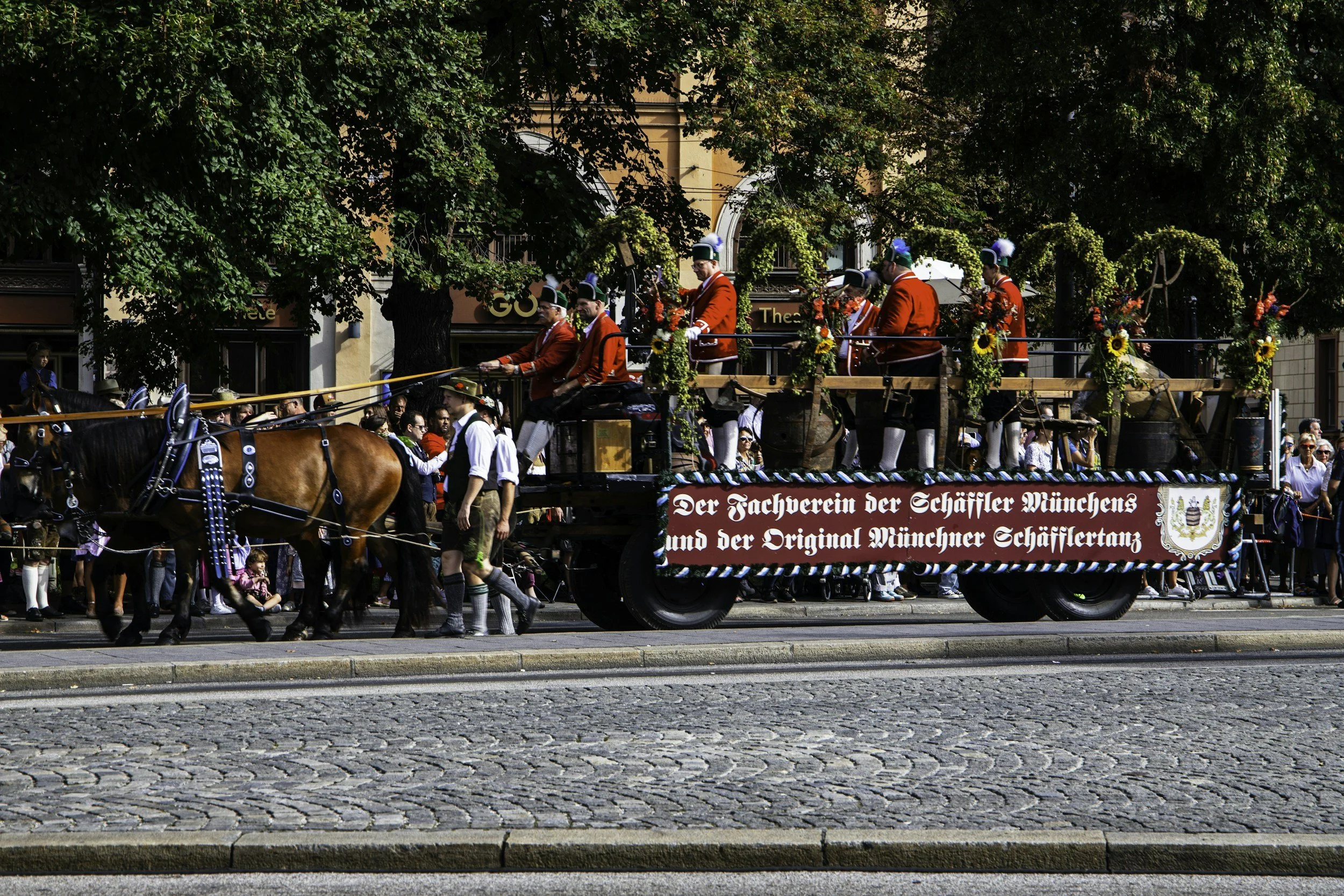
The Parade
The Sunday parade is one of the most underrated parts of Oktoberfest and one of the things I am most glad we did not skip. The Traditional Costume and Riflemen's Parade has been running since 1835 and winds through Old Town Munich before arriving at the festival grounds. Over 9,000 participants including musicians, horses, oxen, and elaborate wagons in traditional dress. We caught the first half in the streets and then made our way to the grounds where the parade passes through, which turned out to be an even better viewing spot with more room to breathe.
I love a parade. This one has been happening every single year since 1835 and it shows. There is nothing performative about it. It is just a city that has been doing this for nearly two centuries and has no intention of stopping.
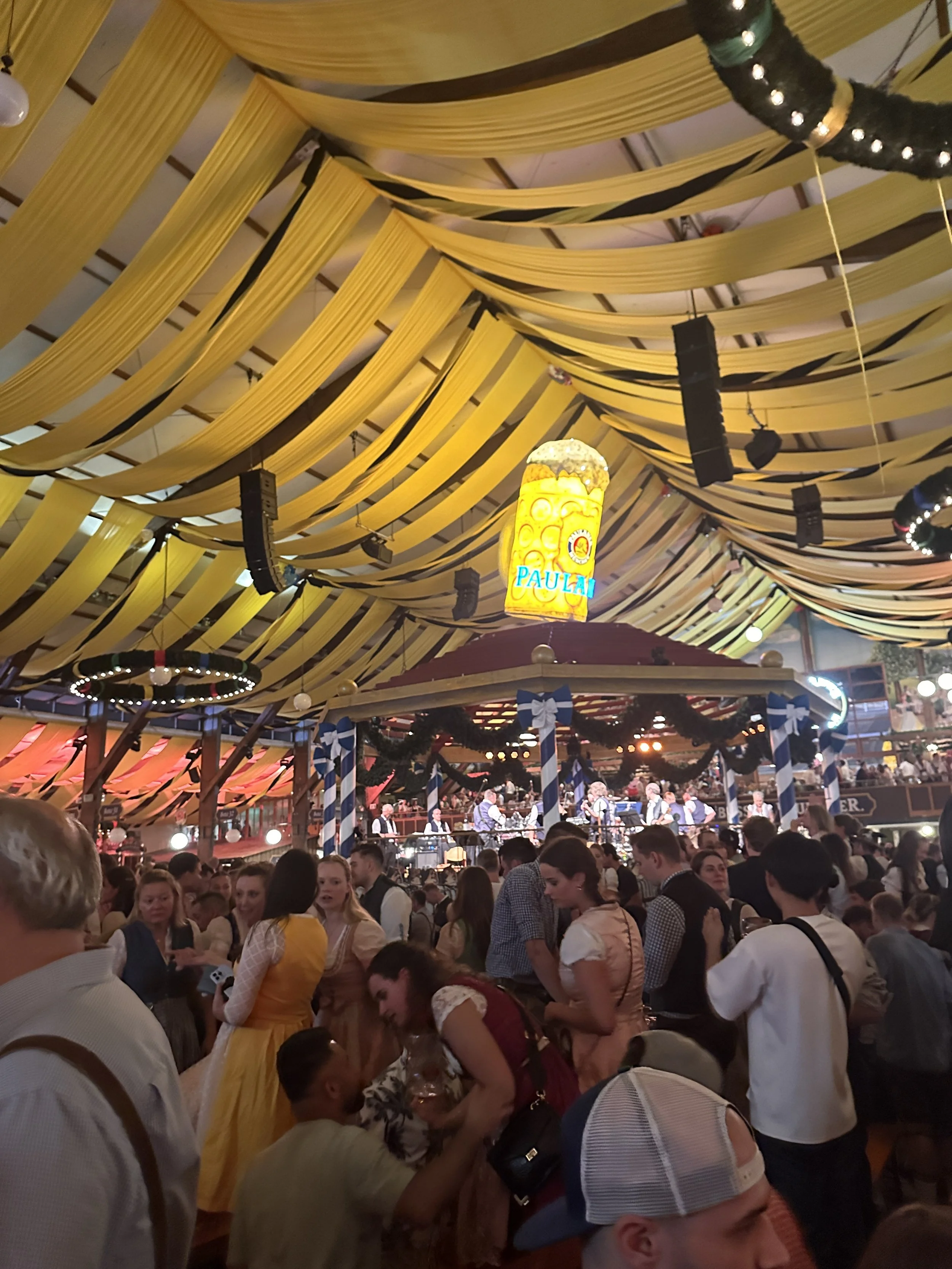
Day versus Night
They are genuinely different experiences. The afternoon is communal and celebratory, families at tables, beer flowing steadily, traditional brass bands and German folk songs filling the tents in a way that makes the whole thing feel grounded in something real. The night is something else entirely. The rides light up, the tents hit a different level of energy, people are dancing on the benches, the crowd is denser, and the music shifts into classic rock and American anthems. Sweet Caroline. Songs that a tent full of people from everywhere on earth all somehow know every word to. Night two was noticeably more packed and more intense than night one. If you can only do one evening session on opening weekend, make it your second night.
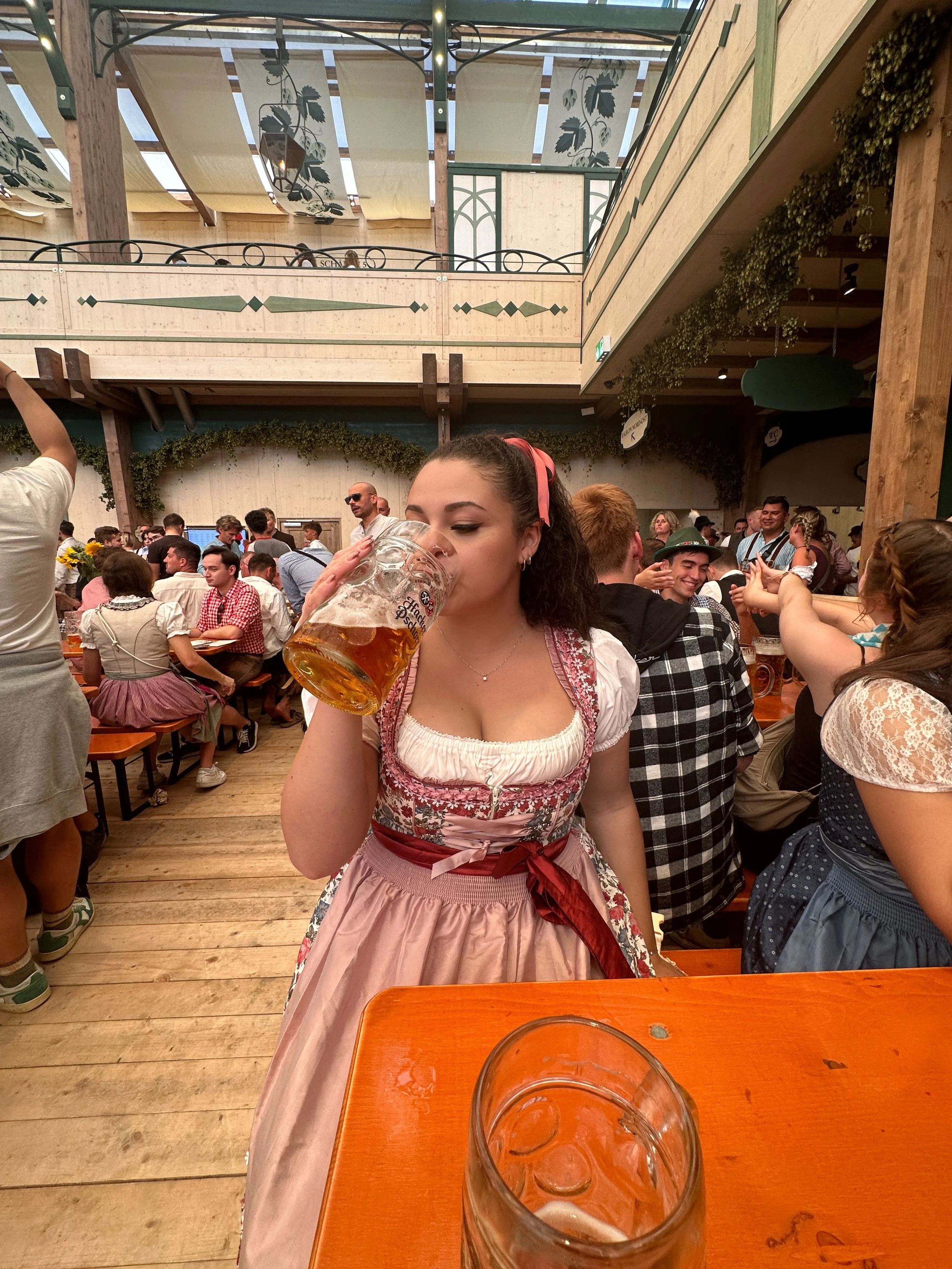
The Hangovers
The mornings after Oktoberfest were more manageable than four to six liters of beer has any right to produce. Whether it is the quality of the beer, the food that comes with it, the pacing that a marathon day demands, or something in the water, the hangovers simply did not land the way they should have. Germany takes its beer seriously from grain to glass and the result is something your body processes differently than what comes out of a domestic tap back home.
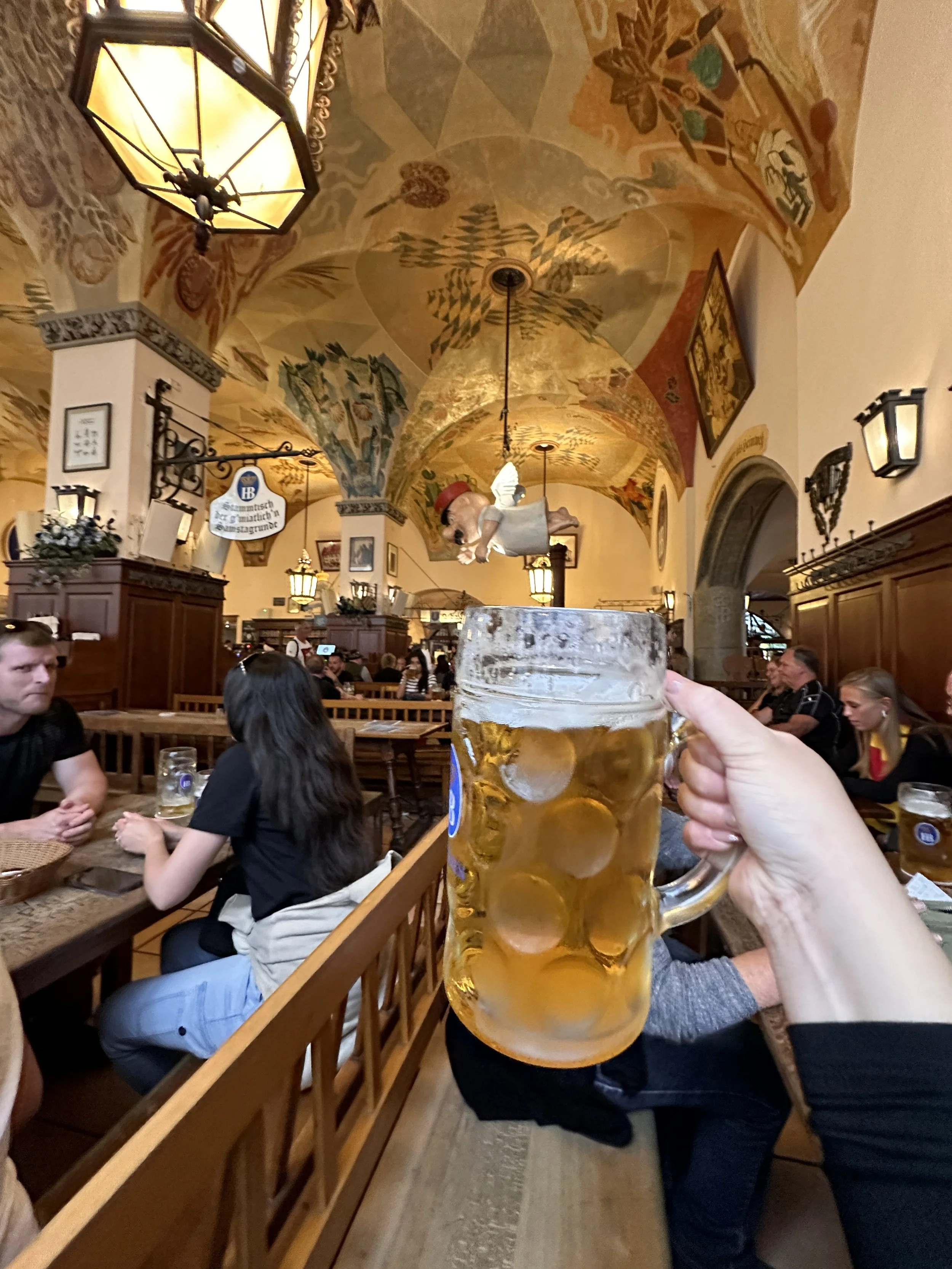
The Beer Halls and Breweries Tour in Munich
We did this the evening before Oktoberfest opened and it was one of the better decisions of the trip. Not because it was the most spectacular thing we did in Munich but because it gave us context we would not have had otherwise. Walking into the Hofbräuhaus tent the next day felt different after understanding the history of how Munich became the beer capital of the world, what Weissbier actually is and how it is brewed, and what makes one hall different from another.
Book the Munich Beer Halls and Breweries Guided Tour on GetYourGuide. Three hours, two complimentary half-liter beers included, and the kind of specific knowledge that makes everything that follows make more sense. Going into Oktoberfest with a baseline understanding of Bavarian beer culture is a different experience from going in blind.
Where to Stay Your First Time in Munich
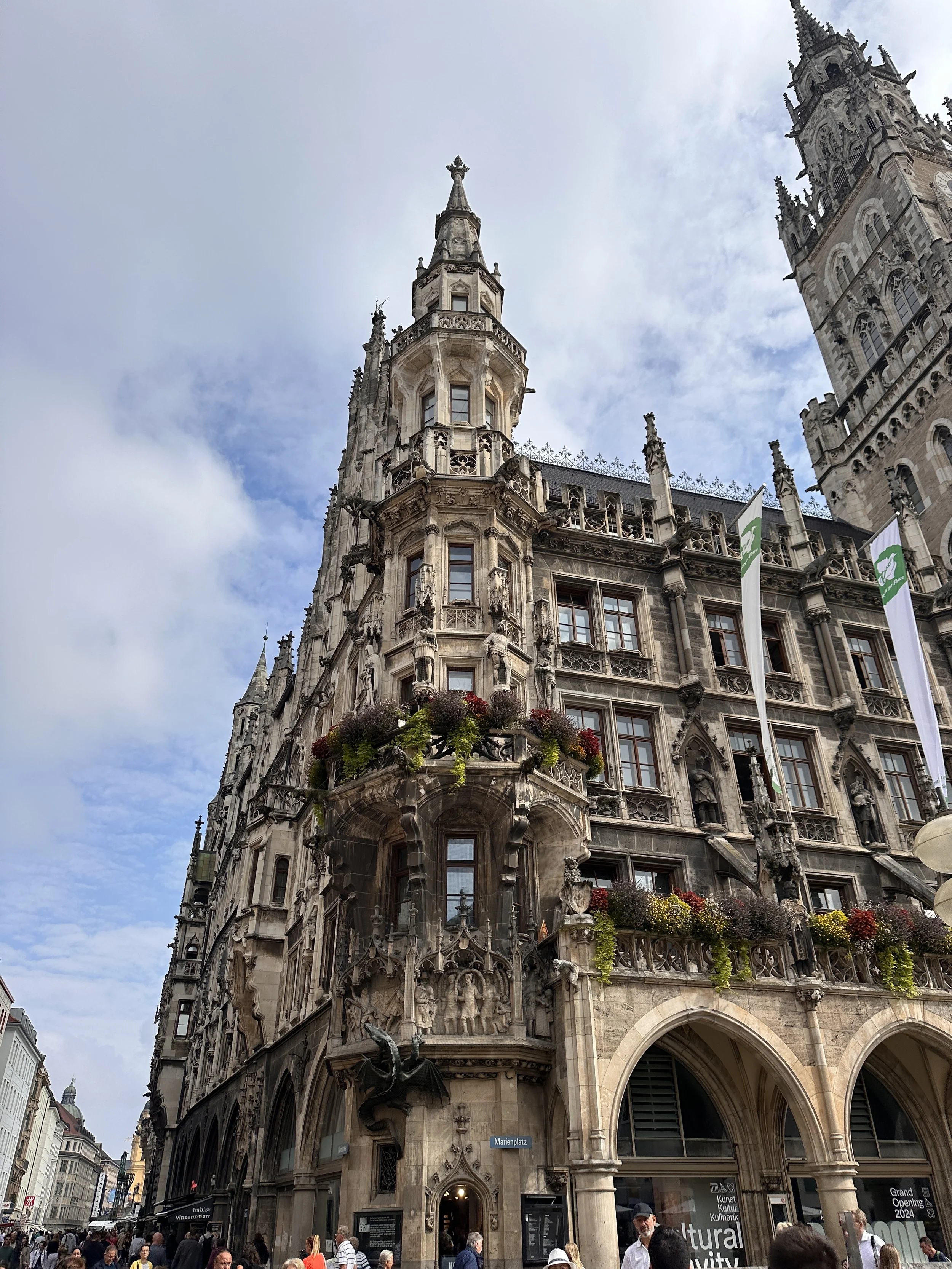
Munich has a clear logic to it in terms of where to base yourself. The city center around Marienplatz is where almost everything on a first visit happens, and the closer you are to it the less time you spend getting there and back.
Know the Neighborhoods
Maxvorstadt and the Museum Quarter sits just north of the old town and is one of the more pleasant areas to base yourself for a first visit. Close to the English Garden, walkable to Marienplatz, and with a slightly more residential feel than the tourist center.
Altstadt is the old town itself and the most central option. Marienplatz, Hofbräuhaus, the churches, and the start of every guided tour are all within walking distance. The most convenient choice if you want to minimize transit time.
Schwabing sits north of the city center and borders the English Garden. Younger, more local in feel, and still very manageable for the main sights. Where our first hotel was located and the views over the park from the upper floors made the slightly longer commute to Marienplatz worth it.
During Oktoberfest, wherever you stay, book months in advance. Hotels fill up completely and prices increase significantly. The earlier you book the better the options.
Hotel Suggestions
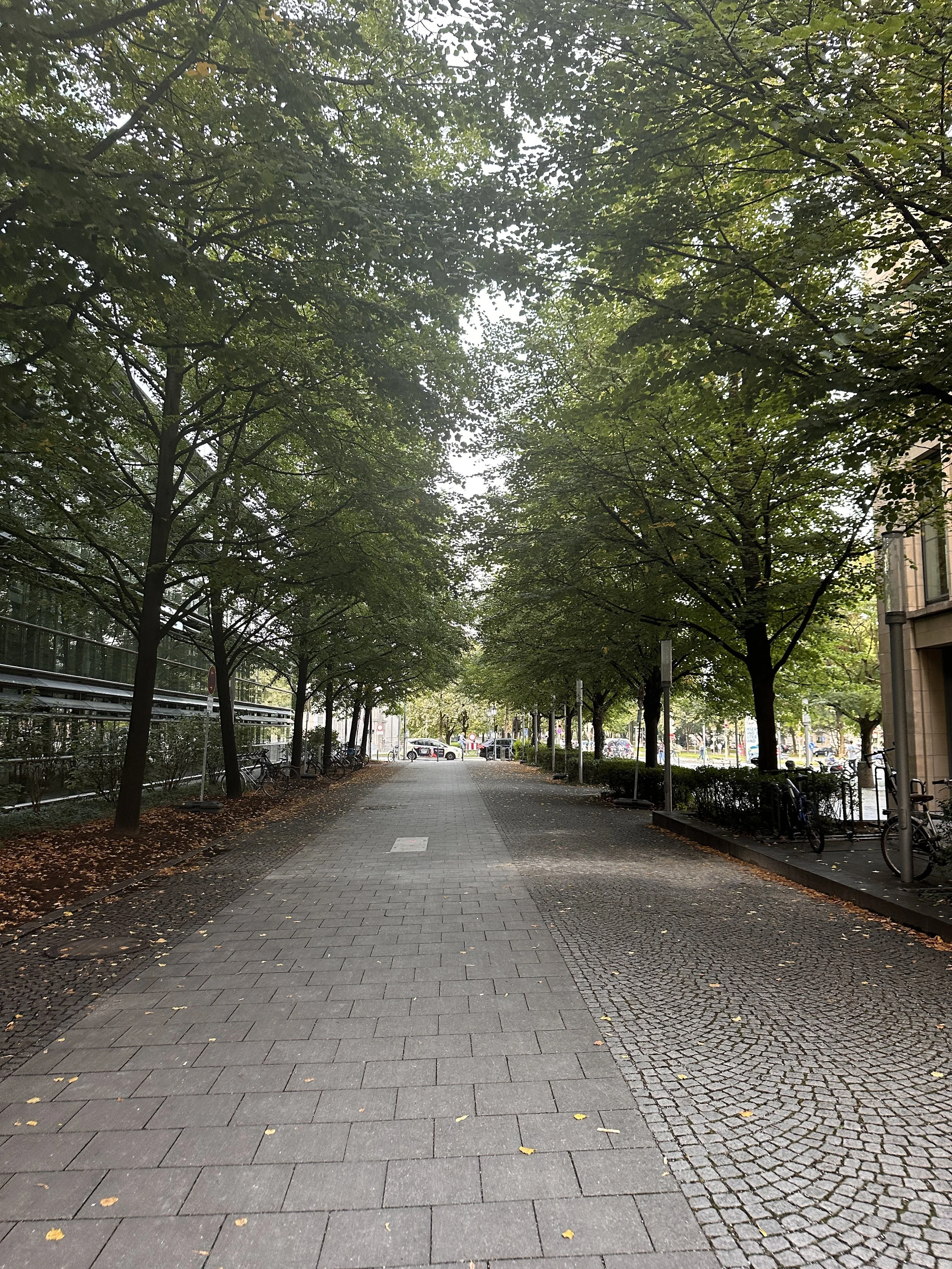
Hilton Munich Park - Closed from January 2025 for the redevelopment, with an anticipated reopening in 2029
Where we stayed for the first two nights and would stay again without hesitation. Located on the edge of the English Garden in Schwabing, with rooms overlooking the park on the upper floors. The views of the green space below are genuinely lovely and the location gives you easy access to both the park and the city center. A strong choice for a first visit, especially if the English Garden is on your itinerary.
Hampton by Hilton Munich City North
Where we moved for the Oktoberfest nights, more practical than atmospheric but completely comfortable and well connected by public transport to the festival grounds. A solid mid-range option.
Hotel Vier Jahreszeiten Kempinski
The classic Munich luxury option, on Maximilianstrasse in the heart of the city. One of the most elegant hotels in Munich, with service and interiors to match. The splurge choice for a first visit.
Mandarin Oriental Munich
A five-star property in the Altstadt, within walking distance of Marienplatz and everything in the old town. Intimate, beautifully designed, and consistently rated among the best hotels in the city.
Where to Eat and Drink Your First Time in Munich Outside of Oktoberfest
Munich takes its food and drink as seriously as it takes its beer, which is saying something. Bavarian cuisine is not subtle or complex. It is generous, hearty, and built around the idea that you are probably hungry after a long day of doing something physical. It delivers on that every time.
A Brief Ode to Ratskeller München
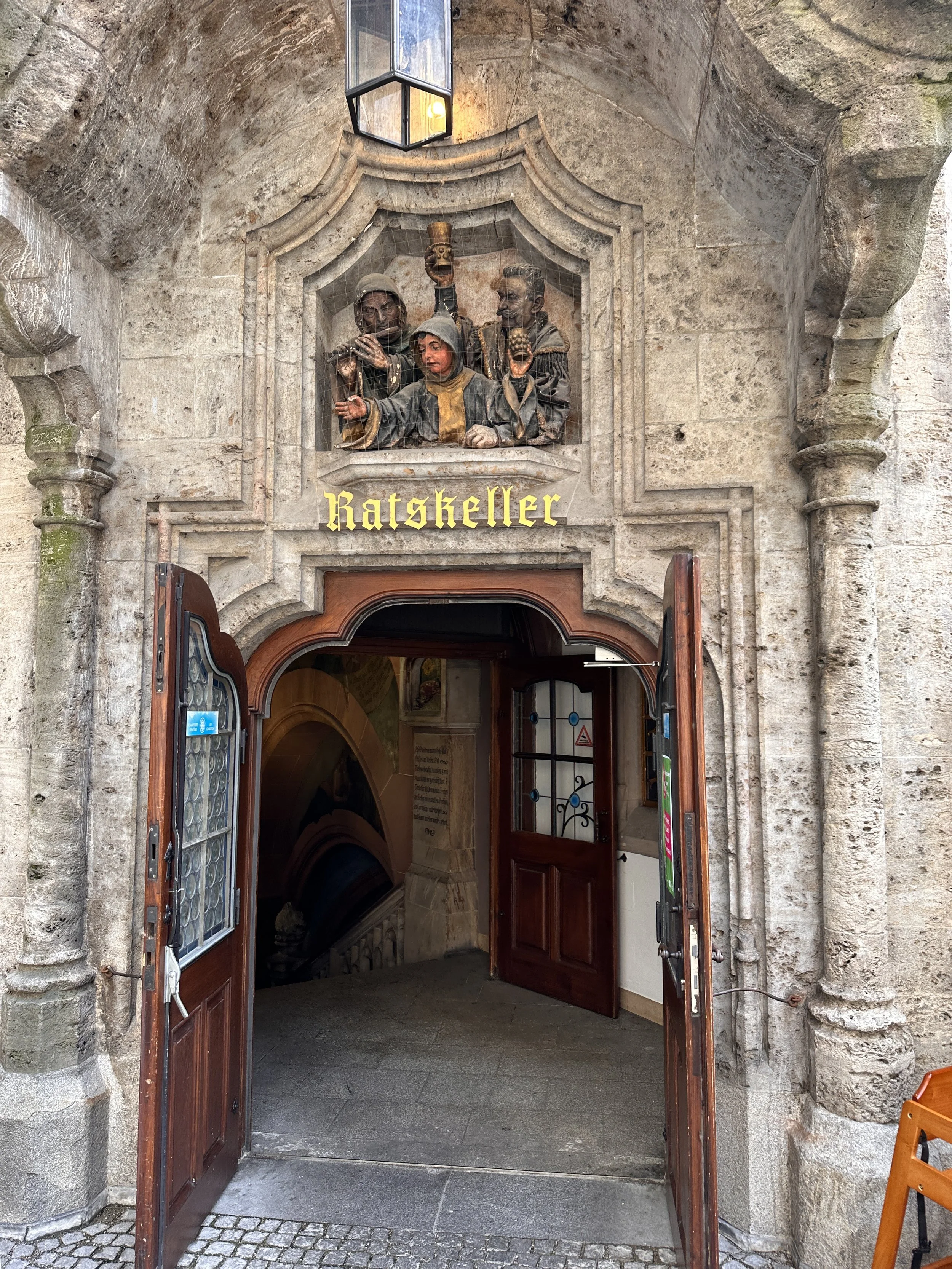
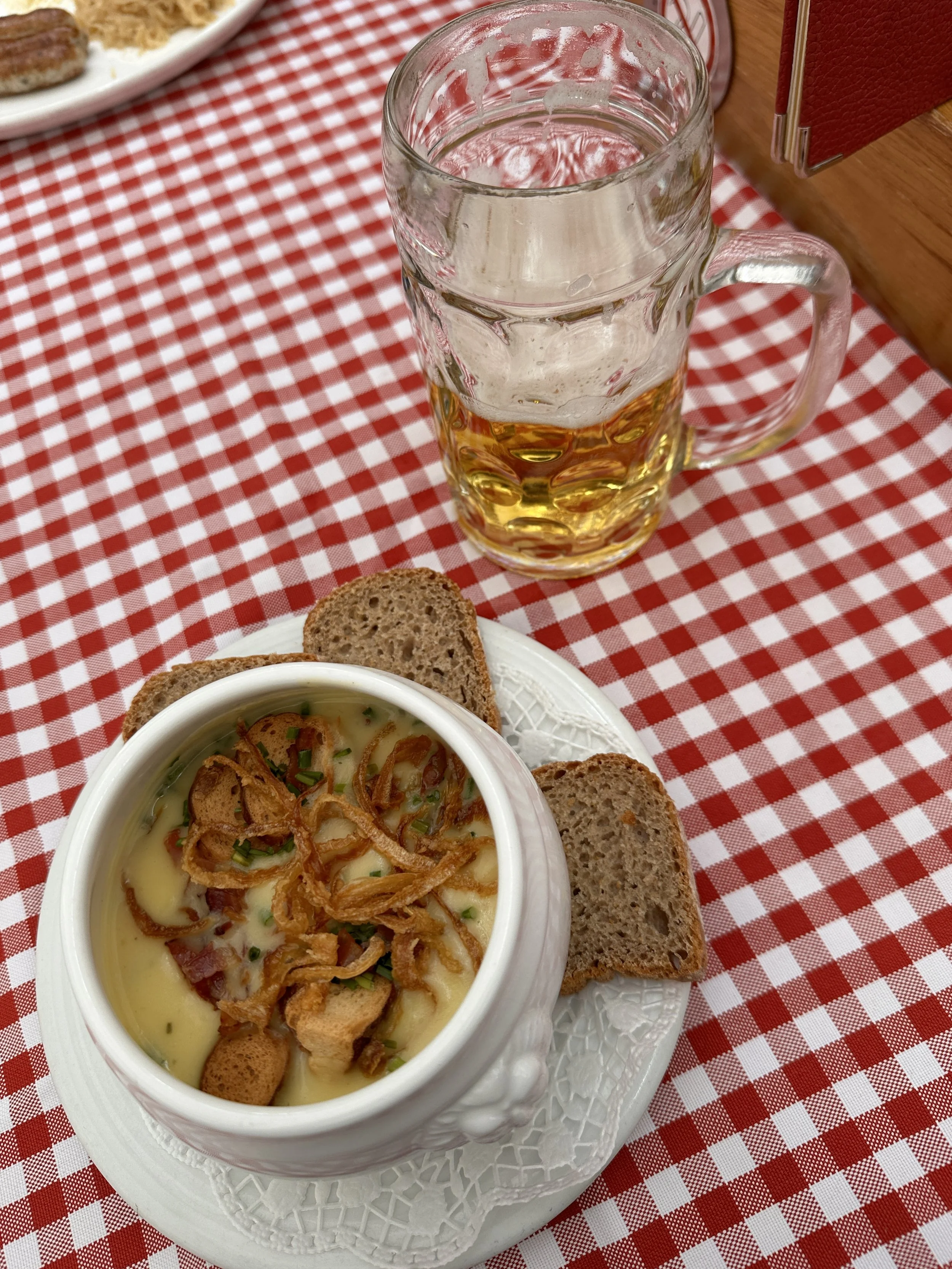
In the vaulted basement beneath the New Town Hall on Marienplatz, the Ratskeller served Bavarian food for over 150 years before permanently closing on January 1, 2026. We ate here during our visit and it was exactly what you want a German restaurant to look like, low stone ceilings, long wooden tables, a darkness that feels ancient rather than gloomy. The potato soup was good, the bratwurst and sauerkraut were exactly right. German food is not subtle or complex in the way French or Italian food is. It is hearty and honest and tastes exactly like what it is.
We are including it here because we ate there, because it was good, and because a place that operated since 1874 deserves to be remembered. If you want to read a proper farewell to it, this piece says it well.
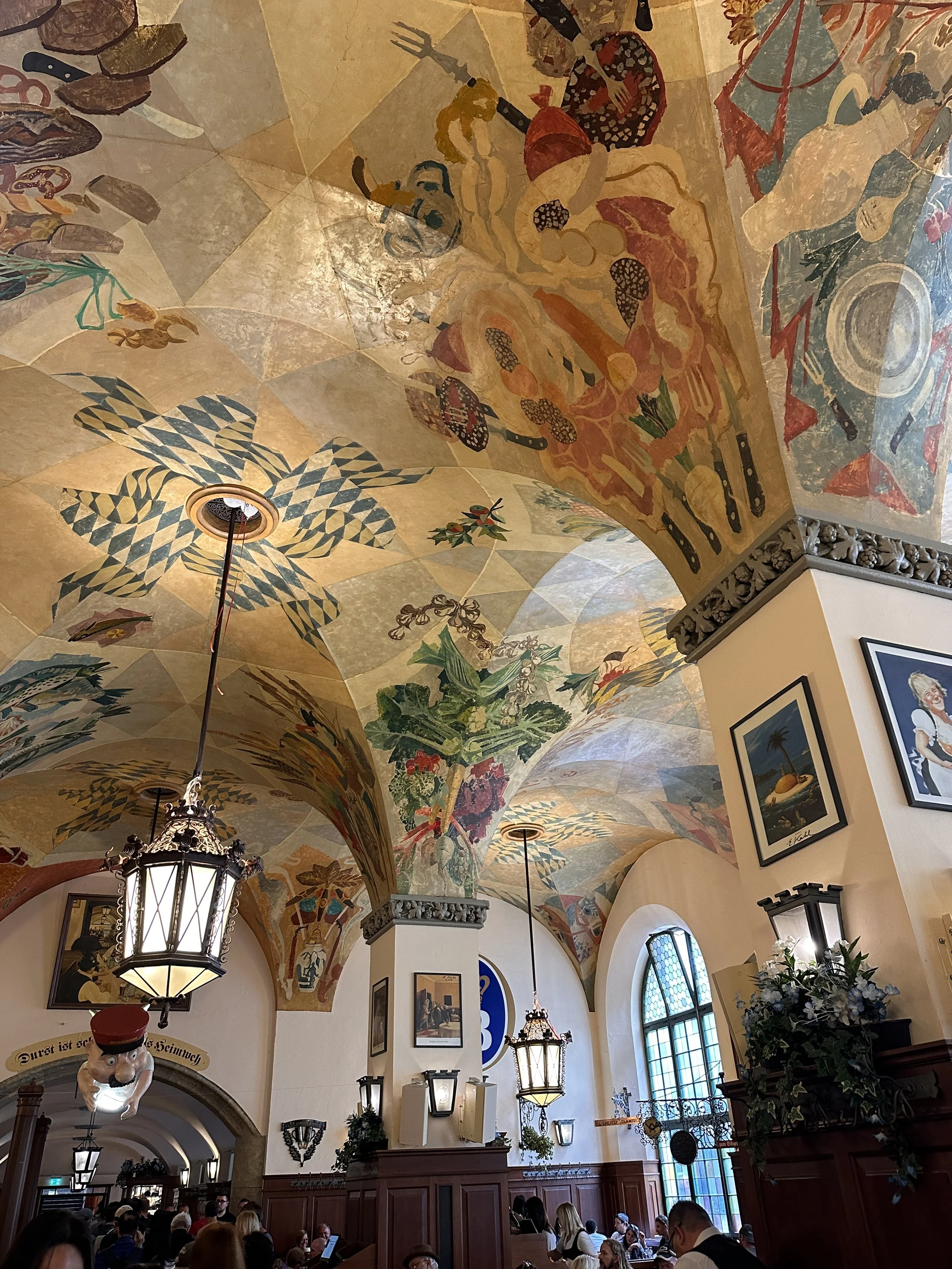
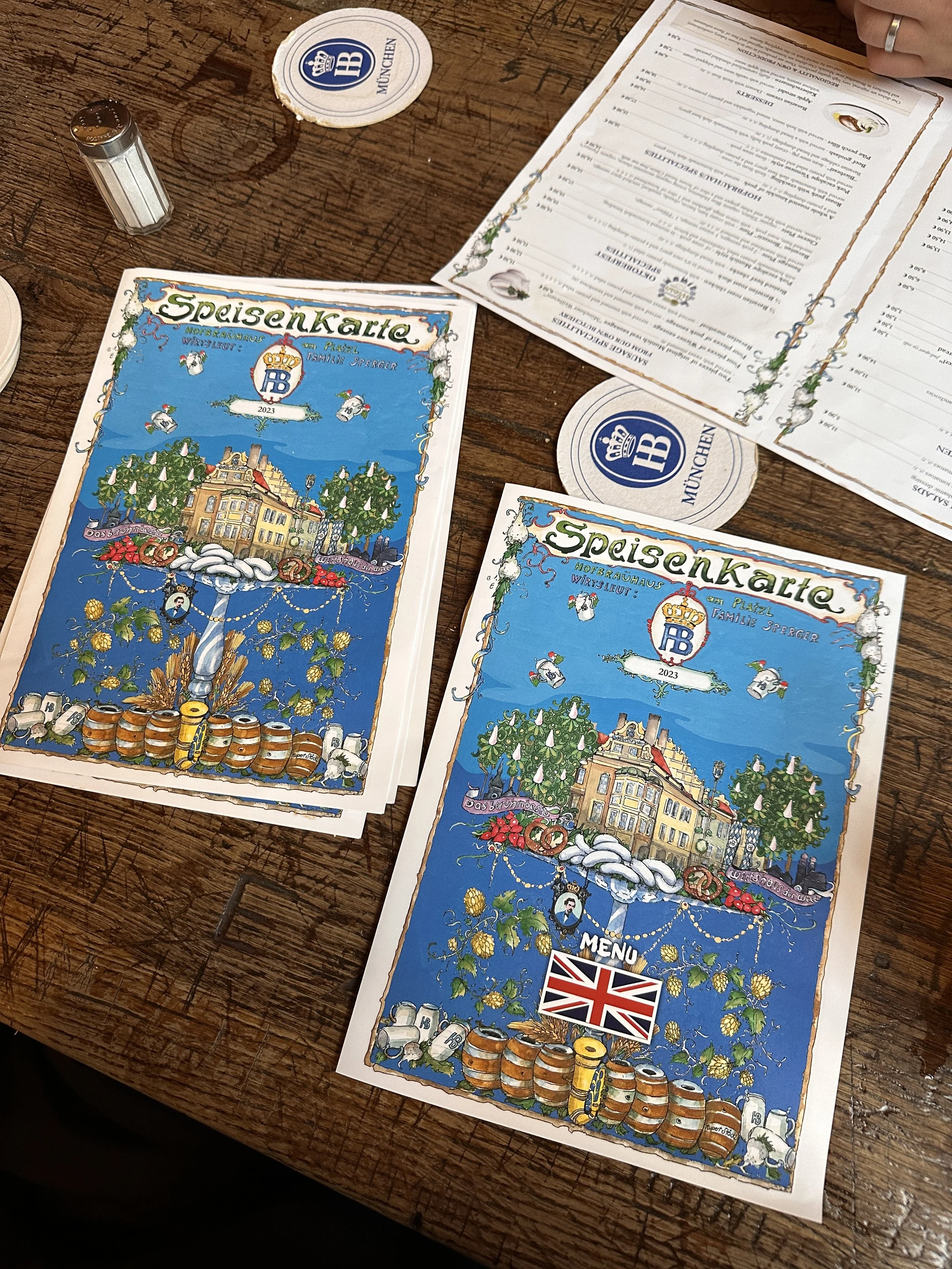
The most famous beer hall in the world and one that earns the description despite the tourist reputation. The ceiling is painted in traditional Bavarian style, the beer is exceptional, the food is genuinely good, and the atmosphere manages to feel authentic even when you know half the room is visiting from somewhere else. Order a maß, the one-liter stein that is the only size available, and give yourself time to sit with it. This is not a place to rush through.
The best introduction to Munich drinking culture outside of Oktoberfest itself. Long rows of tables in the classic Bavarian style, everyone having a genuinely good time in a way that feels communal rather than performative. We went the night before Oktoberfest opened and the atmosphere was electric with anticipation, like Christmas Eve but with more beer. We ended up sitting next to three Polish guys who looked about eighteen, which reminded us that the legal drinking age for beer in Germany is sixteen. Munich does not pretend otherwise.
In the English Garden, at the base of a Chinese pagoda tower that has stood there since 1789, this beer garden is one of the most pleasant places to eat in Munich. Order a maß, find a table among the trees, and let the afternoon happen around you. Traditional Bavarian food served at communal wooden tables. This is what a Munich afternoon is supposed to feel like.
What to Try at Least Once in Munich
Weissbier, the traditional Bavarian wheat beer that is brewed differently from the lagers most people associate with Germany. Cloudier, slightly fruity, and completely specific to this region.
Schweinshaxe, the roasted pork knuckle that appears on menus across the city and is one of the more satisfying things you can eat in Bavaria. Order it at a proper sit-down restaurant rather than a stall.
Käsespätzle, handmade egg noodles in an Emmental cheese sauce. Think of it as German mac and cheese and you will understand immediately why it works.
Obatzda, a Bavarian cheese spread mixed with butter, onions, and paprika, served with a pretzel. Simple and completely right.
Soft pretzels from a street stall rather than a sit-down restaurant. Cheaper, fresher, and exactly the right thing to eat while walking through the city.
Lebkuchen, the traditional gingerbread that Munich does better than anywhere. Lebkuchen Schmidt near Marienplatz is the most famous producer in the city and the tins make one of the better souvenirs you will find.
What to Pack for Your First Trip to Munich
Munich in September sits in a specific weather window that requires a little thought. Oktoberfest season adds its own specific packing considerations on top of the standard city trip requirements.
Weather (Quick Reality Check)
Late September in Munich is warm during the day, often reaching the low to mid 70s Fahrenheit, and noticeably cooler in the evenings. Pack layers. A light jacket for evenings is not optional. The inside of the Oktoberfest tents, despite being outdoors adjacent, gets genuinely hot from the combination of bodies and energy, but the walk to and from the grounds in the morning can be cold.
Core Items for Munich
Comfortable walking shoes. Munich involves significant ground coverage between the city sights, the English Garden, and the festival grounds.
A dirndl or lederhosen if Oktoberfest is on the agenda. This is not optional in the sense that you will feel significantly more out of place without it than with it. I bought my dirndl from an Austrian seller on Etsy specifically for this trip and it was one of the better pre-trip decisions I made. Authentic traditional dress is not hard to find online and the difference between wearing it and not wearing it at Oktoberfest is the difference between feeling like a visitor and feeling like you belong there.
A small bag that fits within the three-liter size limit for Oktoberfest security. Large bags are not permitted on the grounds.
Cash. Lots of it. Oktoberfest runs almost entirely on cash and the ATM fees on the grounds are steep. Withdraw before you arrive and bring more than you think you need. Budget at least 100 euros per person per day at the festival.
A portable charger. The days are long and the photo opportunities are constant.
A light layer you can remove inside the tents. It gets hot in there regardless of the outside temperature.
O'zapft Is
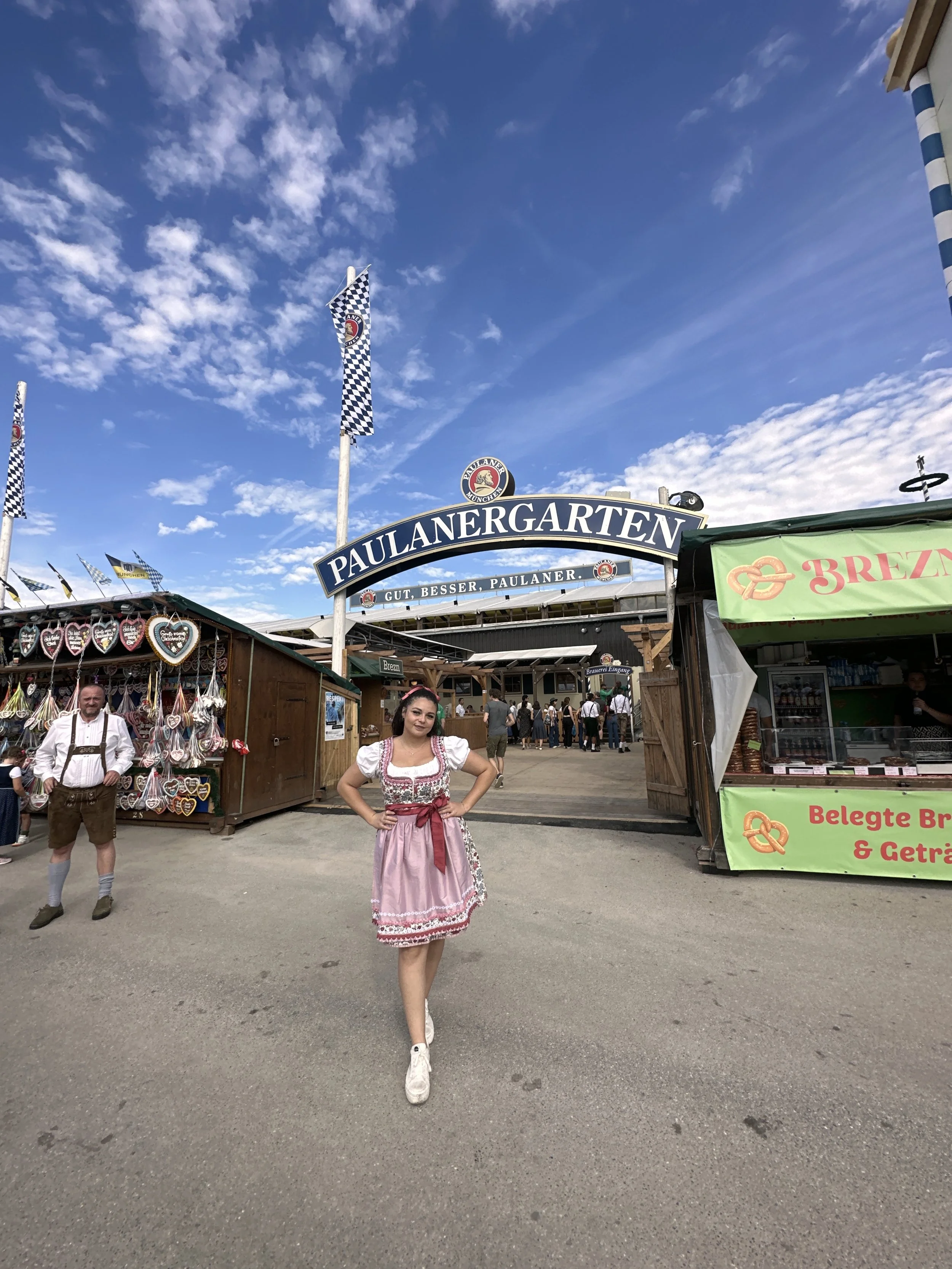
I had wanted to go to Oktoberfest for as long as I can remember. It was not a casual item on a list. It was the trip.
Opening day is controlled chaos from the moment you arrive. Finding an entrance, getting through security, navigating the grounds, figuring out which tent, walking through it, walking through another one, trying to read the energy of each room while also trying not to lose your group in a crowd of hundreds of thousands of people. We found seats at Pschorr-Festzelt Bräurosl because a server took pity on us and made a table of teenagers scoot together. The beer arrived. We ordered food. Everything was loud and fast and slightly overwhelming in the best possible way.
And then Ein Prosit started.
I had learned it before the trip because someone said you should. Thirty seconds long, played every twenty minutes, and every single time the whole tent rises and sings it together. A thousand people got to their feet around me and I got up with them and raised my glass and I knew every word.
That was the moment everything slowed down.
Because somewhere in the middle of those thirty seconds I realized I was actually there. Not planning to go, not reading about it, not watching videos of someone else doing it. There. At Oktoberfest. In a dirndl I bought from an Etsy seller from Austria. Singing a song I had learned at home in San Diego. And it was exactly what I had hoped it would be and somehow still more than that.
The song ended. The tent erupted. Someone handed me a pretzel.
I have thought about those thirty seconds more than almost anything else from that trip.
Itinerary for Your First
Trip to Munich
Munich rewards a willingness to cover ground. The city is walkable, well connected by public transport, and dense enough with things worth seeing that three or four days moves quickly. For Oktoberfest visitors specifically, the days before the festival opens are as important as the festival days themselves. Do not skip the city.
Before You Arrive
Book your hotel months in advance if you are visiting during Oktoberfest. The city fills completely and prices reflect it. The same applies to guided tours, particularly the Dachau tour, which fills up quickly in peak season.
Decide on your Oktoberfest strategy before you land. If you want a reserved table, book it through the official Oktoberfest website months ahead. If you are going without a reservation, read the tent guide above and know which ones keep unreserved seating before you arrive. Going in without a plan is going in without a seat.
Bring a dirndl or lederhosen. Not optional.
Land, get to your hotel, and do one thing before you do anything else. Order a German beer. Not at Oktoberfest, not at Hofbräuhaus. Just wherever you are. The hotel bar is fine. Your first sip of Bavarian beer on Bavarian soil is going to tell you immediately that everything you have been drinking at home has been a copy of something. Let that land before the trip begins in earnest.
Day 1 - Arrive and Find the Best Beer of Your Life
Day 2 - The Walking Tour, Marienplatz, and the English Garden
Morning: Munich Old Town Walking Tour
Book the Munich City Marienplatz and English Garden Walking Tour on GetYourGuide. It starts at the Tourist Information Centre in Marienplatz and covers 850 years of Munich history across two hours. The Frauenkirche, the Munich Residenz, the former royal palaces, the beer halls, and the English Garden. I have learned after traveling through Europe that starting with a guided walking tour changes everything. The things you see for the rest of the trip make more sense when you understand what you are looking at.
Walk through Fünf Höfe on the way back toward the square. Look up at the greenery and the gingerbread heart decorations if you are there during Oktoberfest season. Duck into the Ratskeller for lunch.
Afternoon: The English Garden and the Surfers
Walk north from Marienplatz into the English Garden. Follow the Schwabinger Bach as it moves through the trees. At some point you will hear rushing water and if you follow it you will find the surfers at the standing wave near the southern entrance to the park. Stop and watch for a while. It is one of those Munich things that belongs entirely to this city.
Evening: Hofbräuhaus and Augustiner-Keller
Dinner at Hofbräuhaus, then make your way to Augustiner-Keller later in the evening. If you are arriving the night before Oktoberfest opens, the atmosphere at Augustiner will do everything a preview of the next day should do.
This is the hardest day of the trip and one of the most important ones.
Morning: Dachau
Meet your guide at Marienplatz at 8:15am for the Dachau Memorial Site Full-Day Tour. Six hours including travel time. Take photographs. Pay attention. Come back changed.
When you return to Marienplatz in the afternoon, walk into Heilig-Geist-Kirche if you pass it. The timing will feel strange. Go in anyway.
Evening: Beer Halls and Breweries Tour
Meet back at Marienplatz at 5:15pm for the Beer Halls and Breweries guided tour. Three hours, two beers included, and the knowledge that makes Oktoberfest make more sense. We booked it partly to understand Bavarian beer culture before walking into the festival, and partly because after a day at Dachau we needed something to remind us that Munich is also a city people come to for joy. It worked on both counts. The juxtaposition of this day, Dachau in the morning and beer halls at night, is jarring and somehow exactly right. Munich holds both things. Understanding that is part of understanding the city.
Day 3 - Dachau and the Beer Halls Tour
Day 4 - Oktoberfest, Opening Day
Wear your dirndl or lederhosen. Bring cash and only cash.
The conventional advice says to arrive at the gates four to five hours before the nine o'clock opening. The locals we talked to said you only need to arrive that early if you have a large group that needs to sit together. We arrived at 12:30pm with the midday crowds and found seats. If you are a small group and are willing to be flexible about where you end up, the early morning lineup is not strictly necessary.
Walk through a couple of tents before you sit down to get the feel of the grounds. When you are ready, find a server and ask politely if they can help you find seats. In our experience they will. Be kind, be patient, and tip well from the first beer.
Learn Ein Prosit before you arrive. It pays off every twenty minutes.
Afternoon session, then back to the hotel for a nap. Return for the evening session, which is its own experience entirely. Night is louder, brighter, more intense. You may be tired but you will regret not going back.
Day 5 - The Sunday Parade and More Oktoberfest
Wake up, watch the parade. The Traditional Costume and Riflemen's Parade starts at nine and winds through Old Town Munich before arriving at the festival grounds. Catch the first half in the streets, then make your way to the grounds to watch it arrive. You will have both perspectives and more room to breathe at the second.
The Sunday crowds are noticeably lighter than opening day. Use it. You will find seats more easily, move between tents more comfortably, and experience the festival at a pace that lets you actually look around at what is happening.
Augustiner Festzelt for the beer. Schützen-Festzelt for the music. Hacker-Pschorr for the view.
Then you go home and realize you are already planning the next trip to Oktoberfest.