
Your First Time in
Athens, Greece
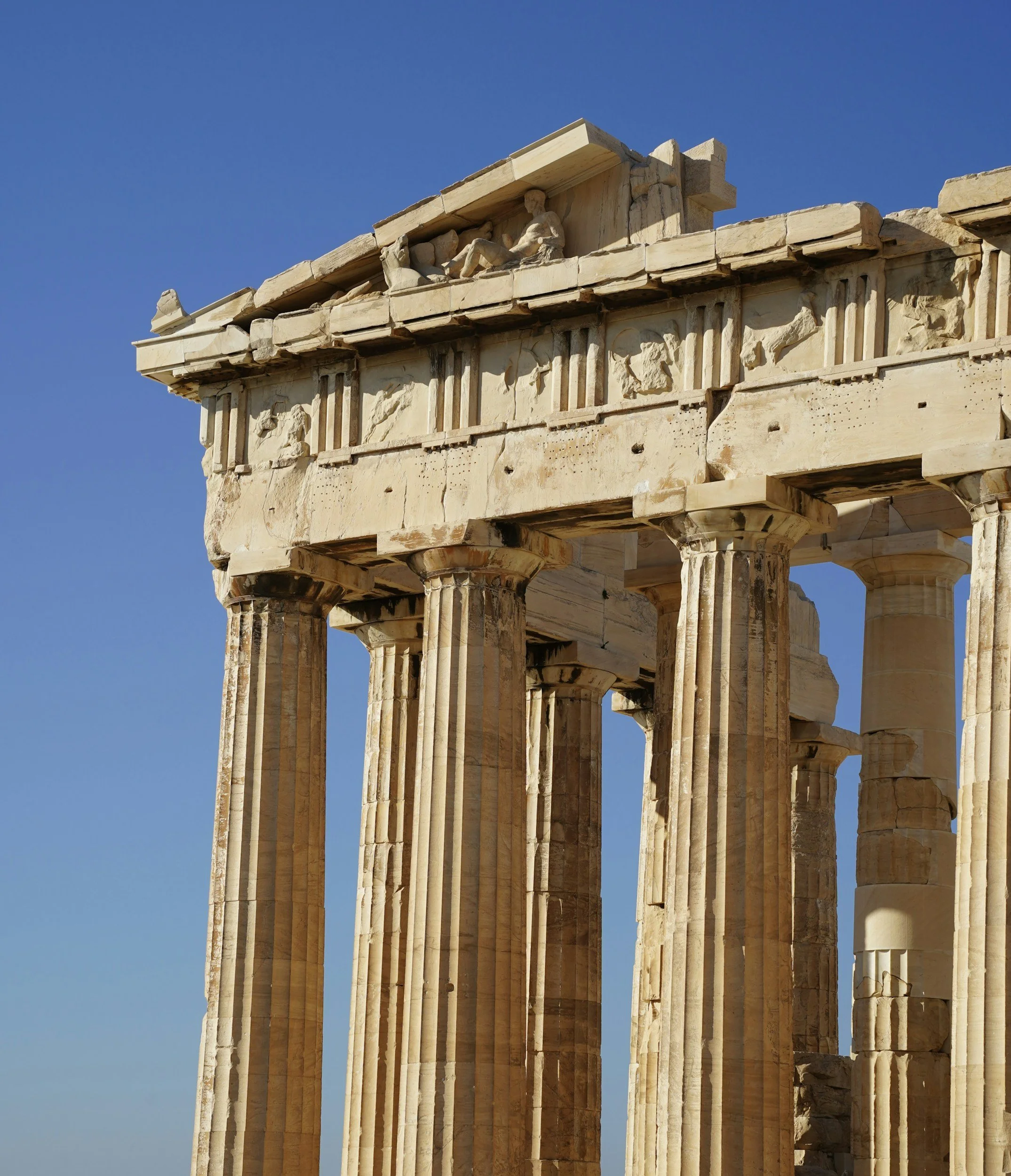
Athens is a real city. Not a preserved one, not a curated one, just a functioning European capital with real streets and real traffic and people going about their days. And then you look up and there is the Acropolis, rising above all of it like it belongs to a completely different world. That contrast is the thing nobody quite prepares you for and it is what makes Athens unlike anywhere else you will visit in Greece.
We came in on a cruise, docking at Piraeus port, and had a single day. We spent it almost entirely at the ancient sites on a small group guided tour and left feeling like we had seen what we came to see. That is the honest version of Athens as a port stop or a single-day visit.
One day is enough to cover the main ancient sites well. Two days gives you the neighborhoods, the Acropolis Museum, the food scene, and a version of the city that goes beyond the ruins. Both are valid trips depending on what you are there for.
What to See and Do on Your Visit to Athens
The Acropolis
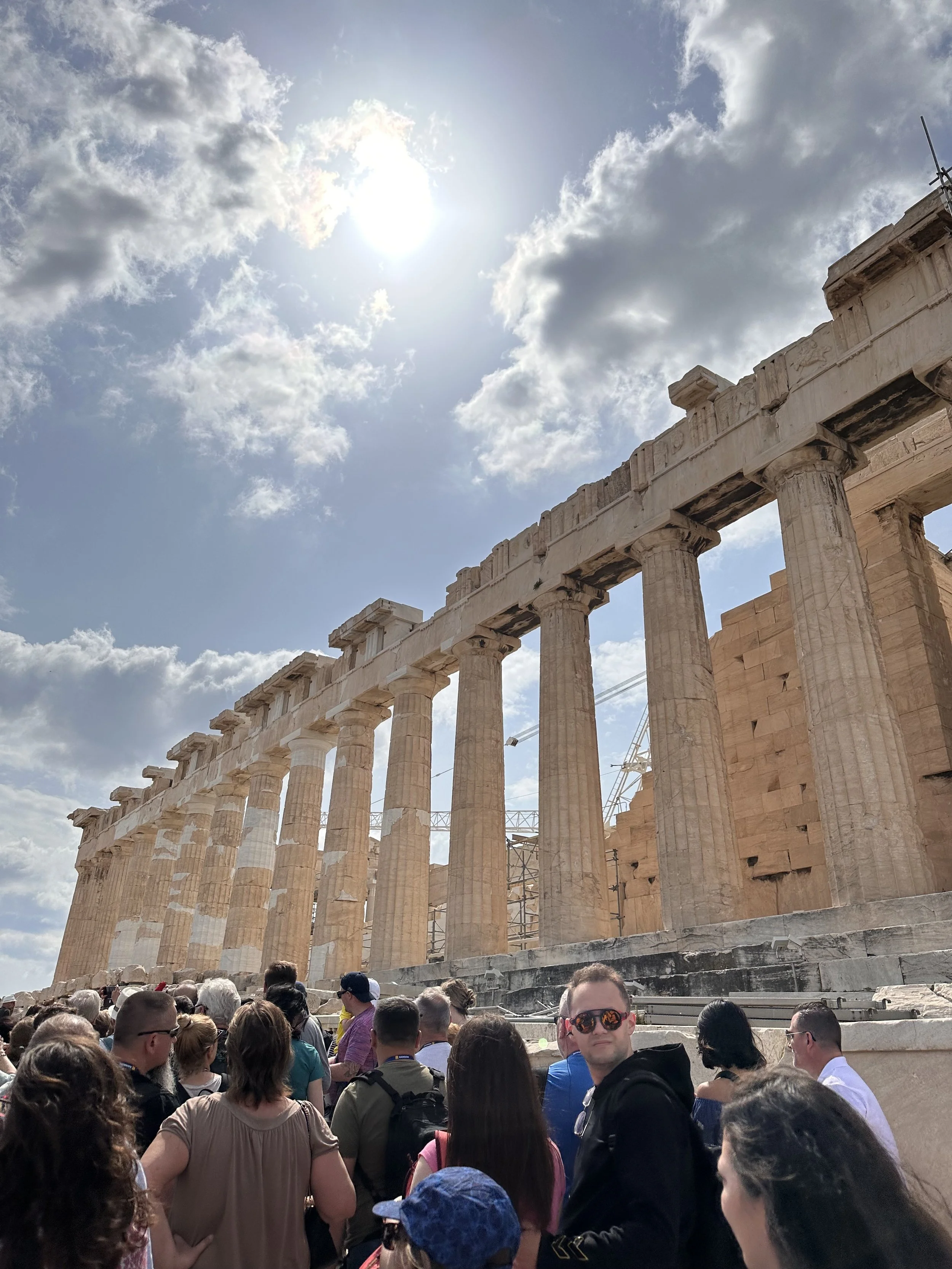
The most iconic ancient site in the Western world and the reason most people come to Athens. A fortified citadel sitting on a rocky hill above the city, visible from almost everywhere in Athens, and significantly more complex and impressive in person than the single image of the Parthenon that represents it in most people's minds.
A licensed guide makes an enormous difference here. The history of the Acropolis spans centuries and without context you are walking through ruins. With context you are walking through the center of the ancient world. Book a guided tour in advance and do not try to navigate it on your own on a first visit.
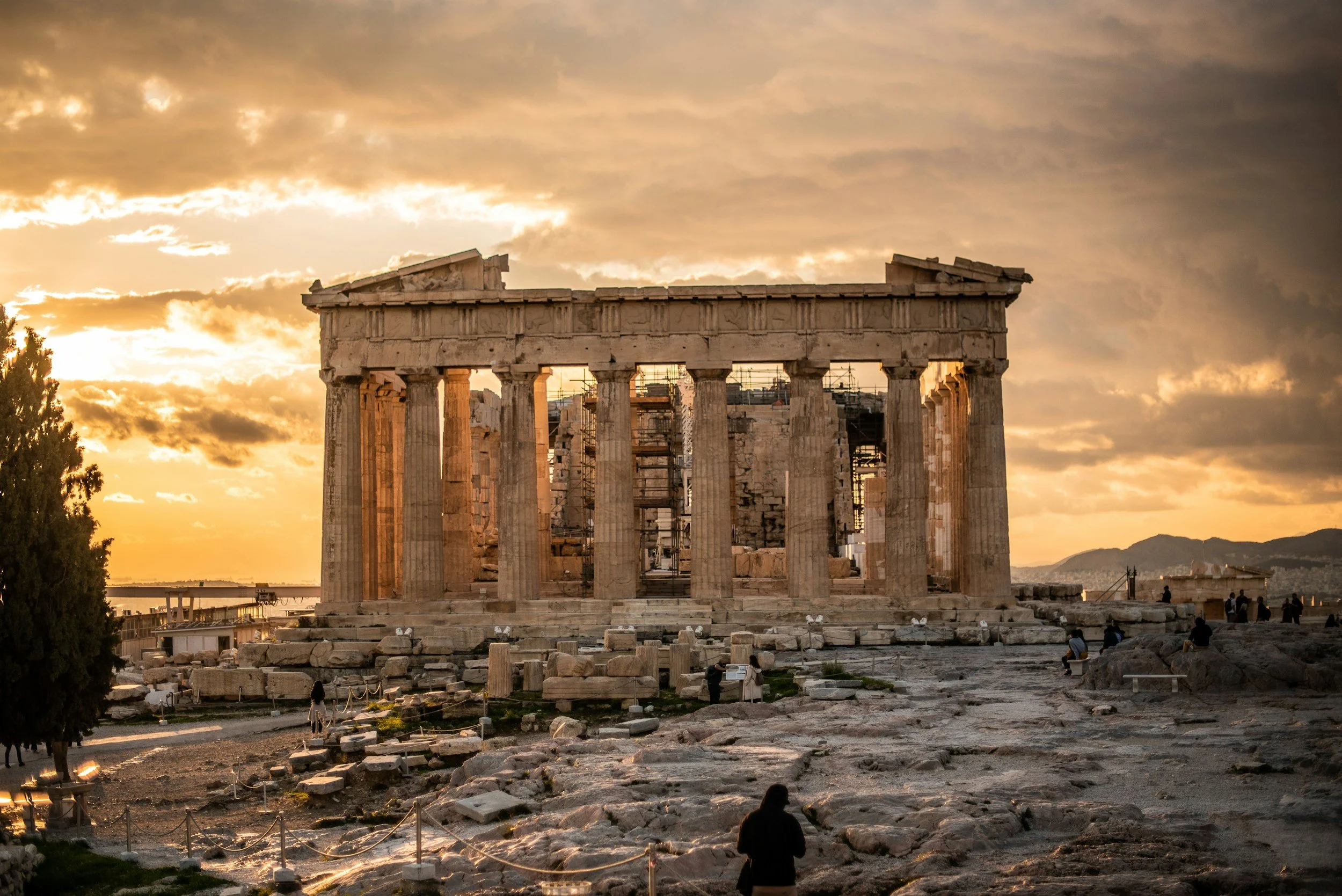
The centerpiece of the Acropolis and one of the most recognizable structures ever built. Dedicated to the goddess Athena and constructed between 448 and 438 BC, it has survived invasions, explosions, and centuries of neglect and still manages to be more impressive in person than in any photograph. There is ongoing restoration work happening on the site which your guide will likely address. The debate about whether to restore these monuments fully or leave them as ruins is one of the more genuinely interesting conversations you will have on the tour.
Just north of the Parthenon, the Erechtheion is known for its Porch of the Caryatids, six female figures serving as architectural columns. The ones you see on site today are replicas. The originals are in the Acropolis Museum, which is worth knowing before you go so you understand what you are looking at and why the museum visit matters.
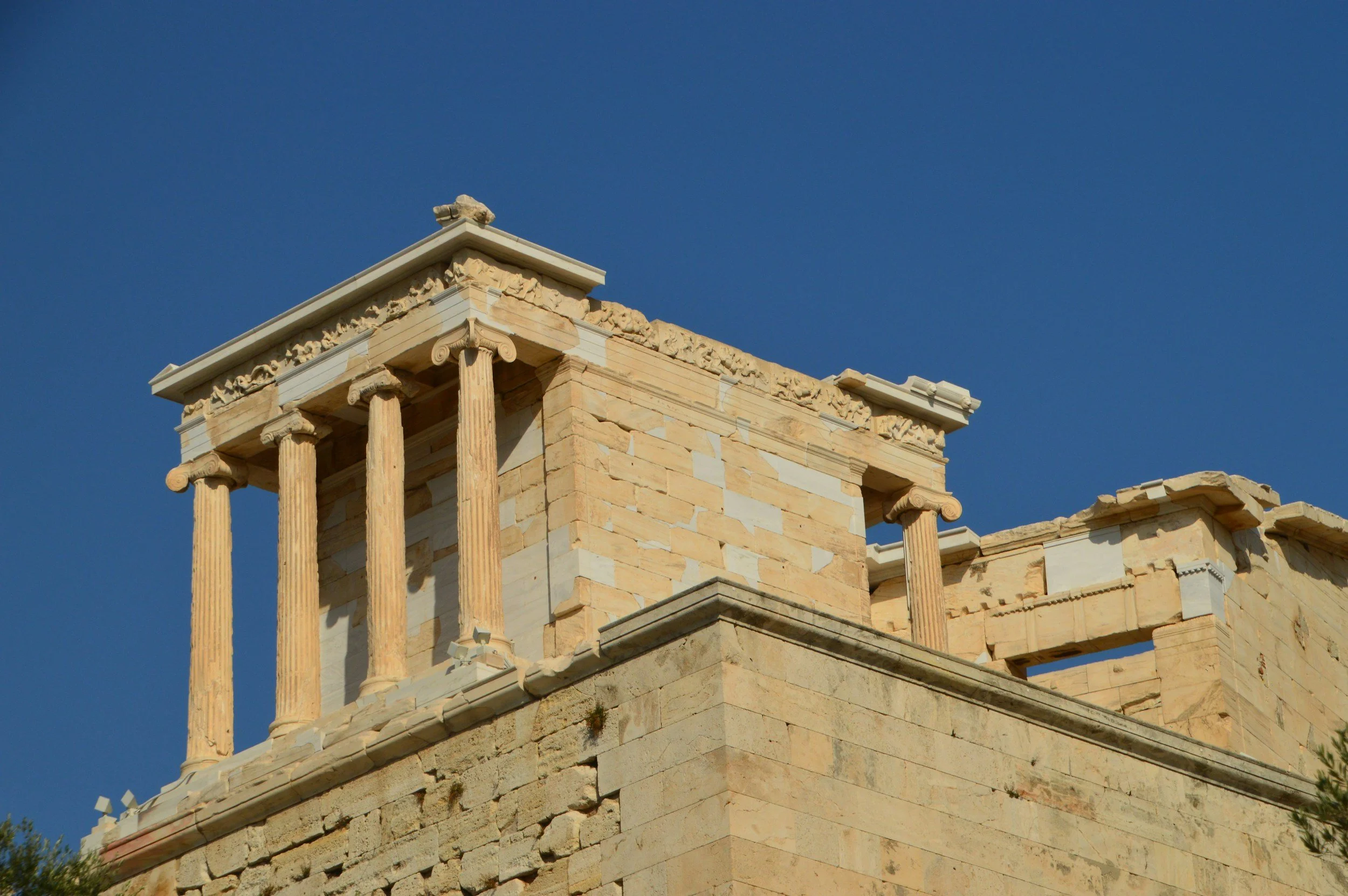
A small but beautifully preserved temple at the entrance to the Acropolis dedicated to the goddess of victory. Easy to walk past without stopping. Do not.
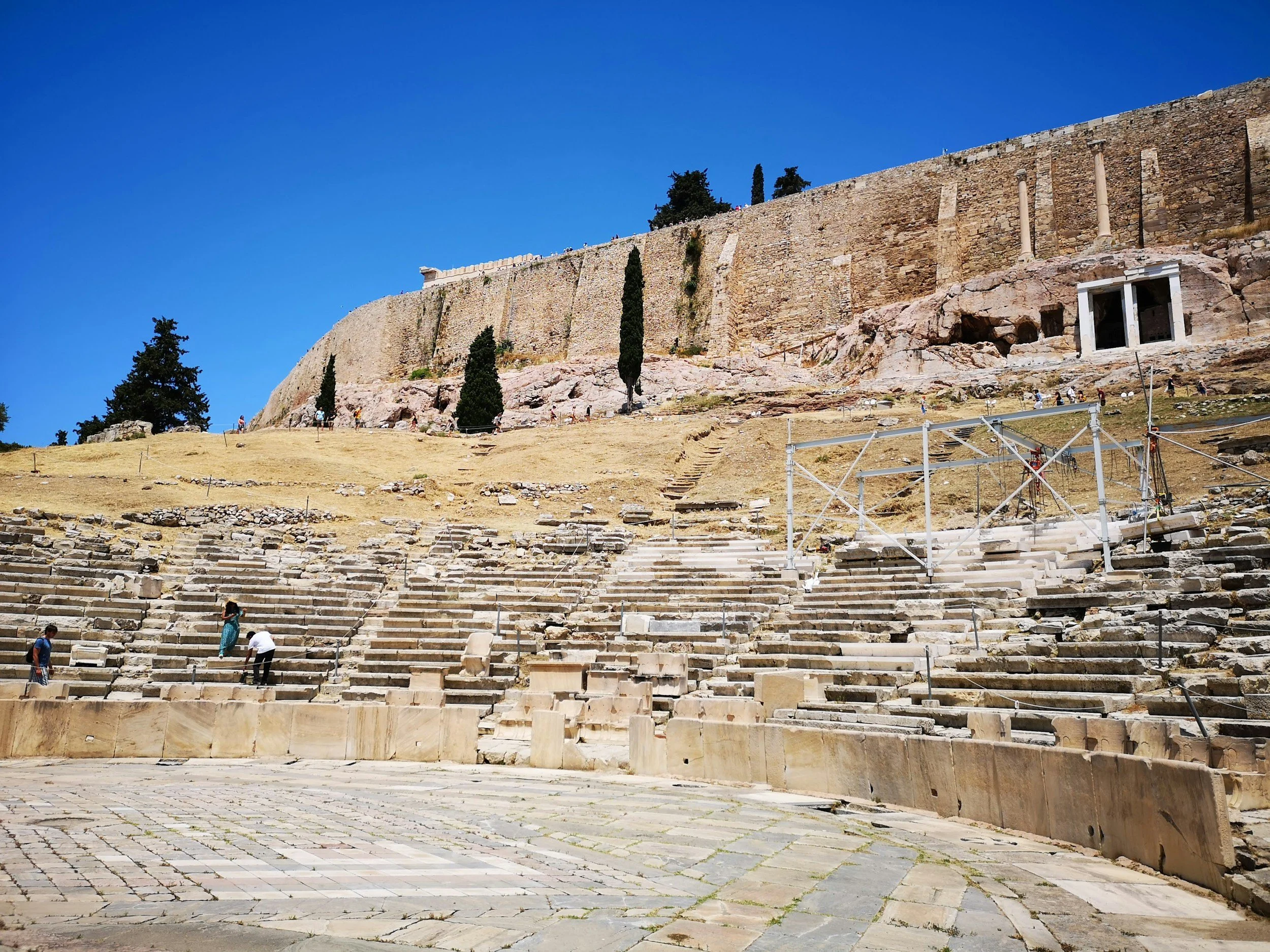
On the southern slope of the Acropolis, the Theater of Dionysus is considered the birthplace of theater as an art form. Built in the 6th century BC, it is where the plays of Sophocles, Euripides, and Aristophanes were first performed. The scale of it in person is remarkable.
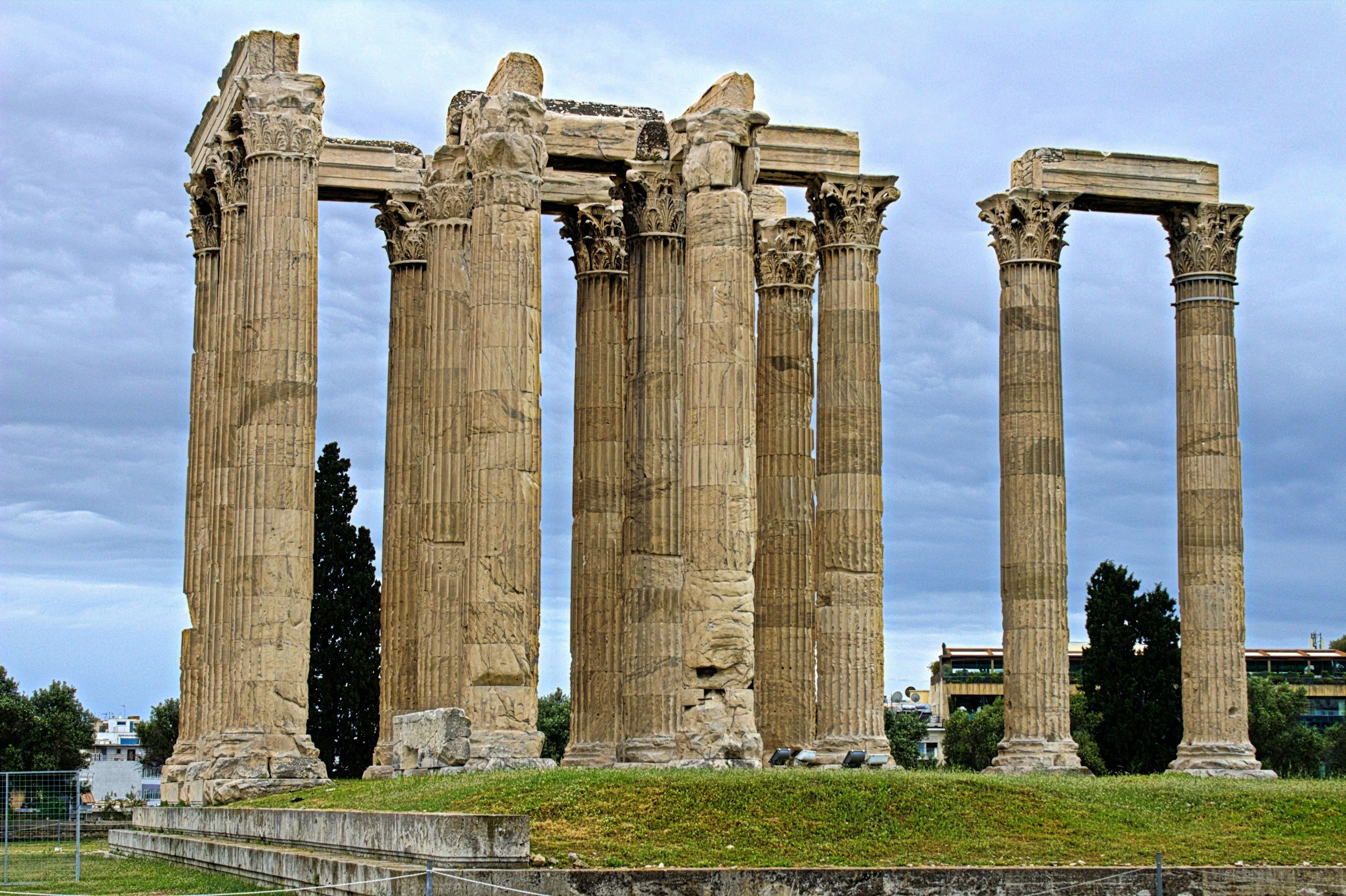
The Temple of Olympian Zeus
At the base of the Acropolis, the Temple of Olympian Zeus is where most guided tours begin. Only fifteen of the original 104 columns remain standing but each one is enormous, nearly seventeen meters tall, and the scale of what the complete temple must have looked like is genuinely difficult to process. One of the largest temples ever built in the ancient world and a good introduction to the scale of everything else you are about to see.
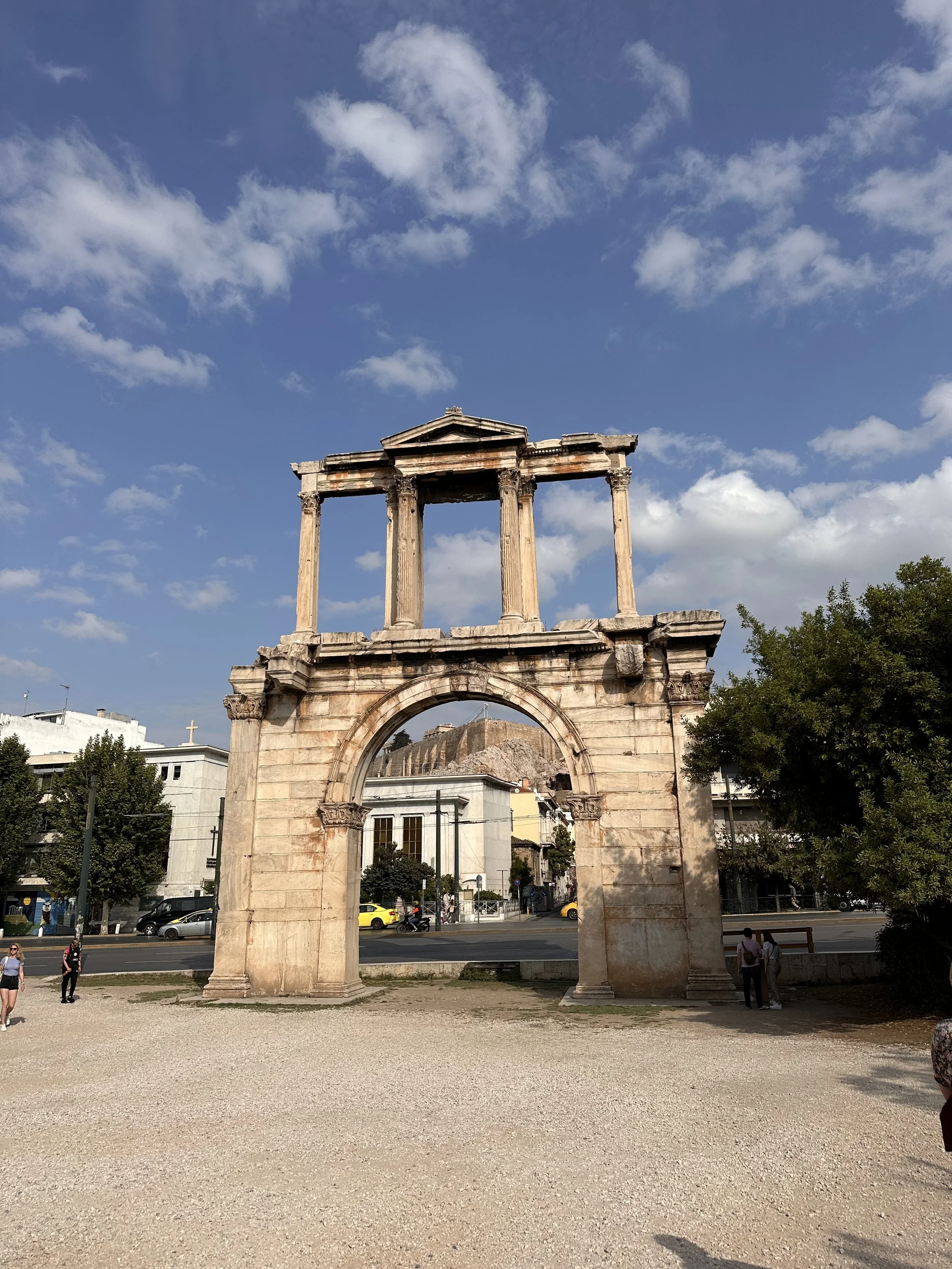
The Arch of Hadrian
Just outside the Temple of Olympian Zeus, the Arch of Hadrian is a somewhat well-preserved Roman gateway that once marked the boundary between the ancient Greek city and the newer Roman city. Small, but historically interesting and worth a few minutes on your way to the temple.
The Ancient Agora and Temple of Hephaestus
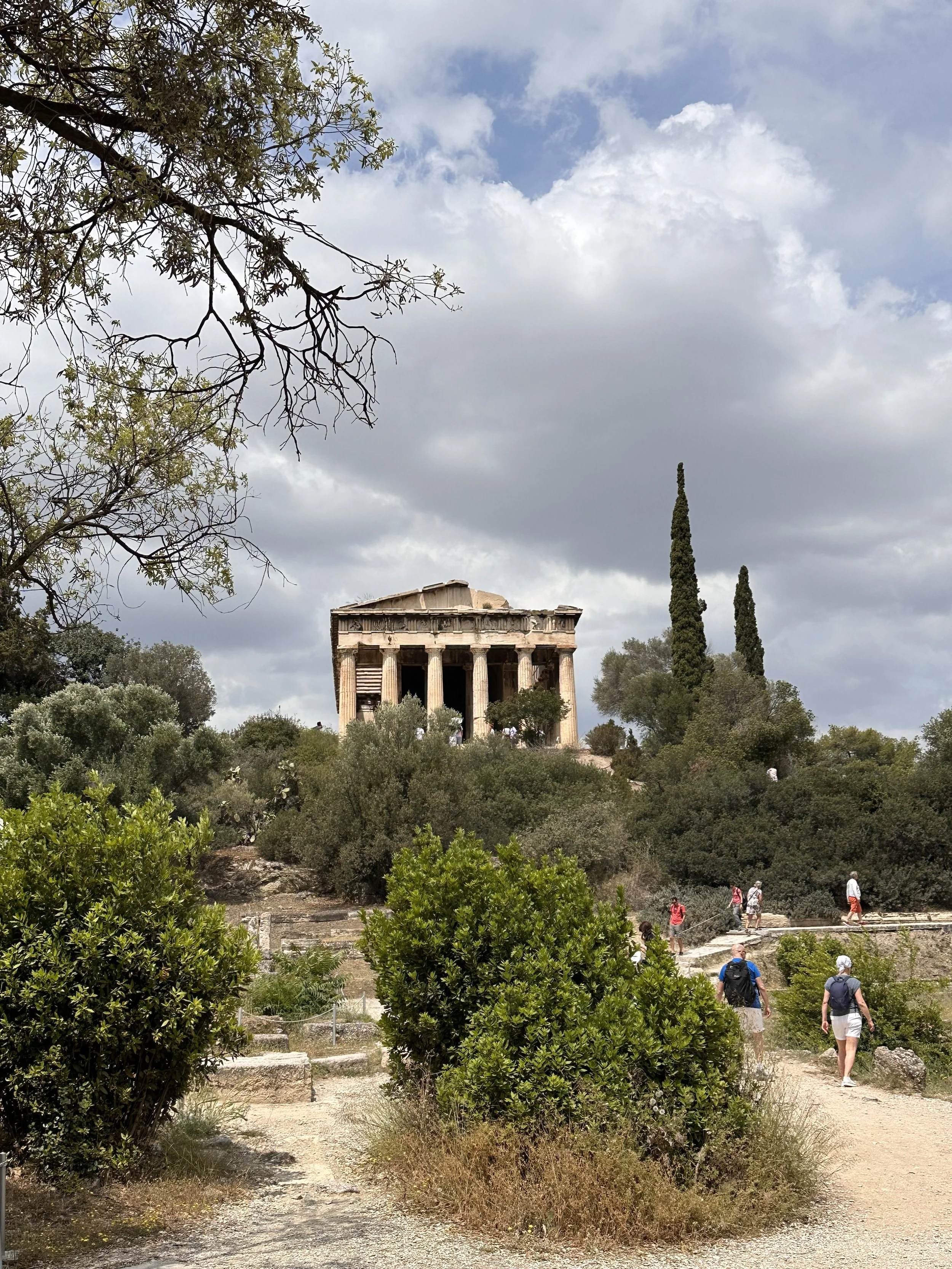
The Ancient Agora was the commercial and political heart of ancient Athens. Walking through it your guide will explain how democracy, philosophy, and public life actually functioned in the ancient city. The Temple of Hephaestus at the edge of the Agora is one of the best preserved ancient Greek temples in existence. Better preserved than the Parthenon and less visited. Worth the time.
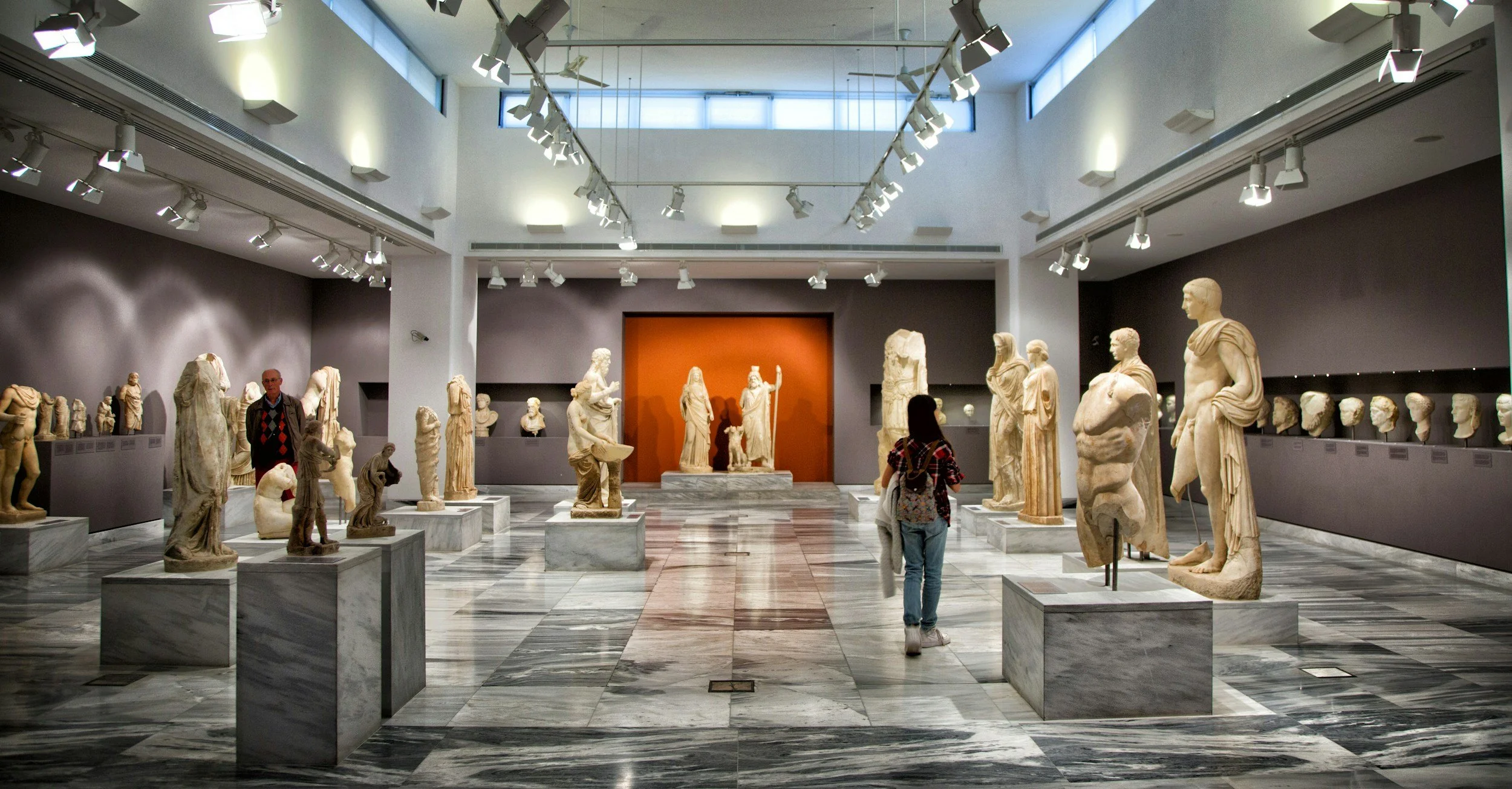
The Acropolis Museum
If you have more than a single day in Athens, the Acropolis Museum is the first thing to add. One of the finest museums in Europe, built directly over an ongoing archaeological excavation that you can see through the glass floors as you walk through. The original Caryatid sculptures from the Erechtheion are here, along with the Parthenon sculptures and artifacts from across the site. The building itself is extraordinary.
Plaka and Monastiraki
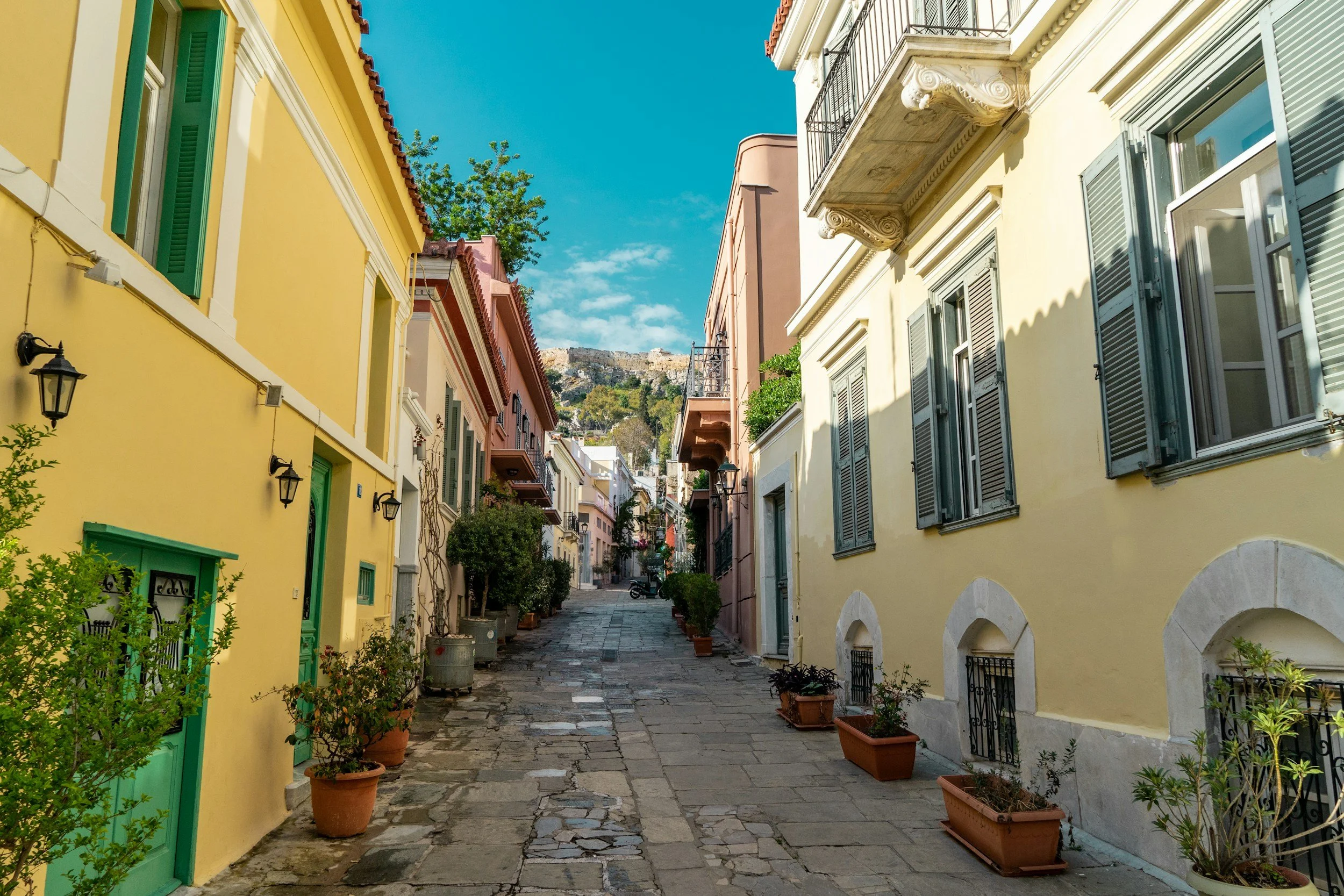
The oldest neighborhood in Athens sits directly at the foot of the Acropolis. Narrow cobblestone streets, traditional tavernas, small shops, and a pace that feels completely different from the ancient sites a few minutes walk away. Monastiraki next to it has a famous flea market and some of the best street food in the city. If you have an afternoon after the ancient sites this is where to spend it.
Getting To Athens
Athens is one of the most accessible cities in Europe and the logistics are straightforward whether you are arriving by cruise, by flight, or overland from elsewhere in Greece.
Most cruise ships dock at Piraeus, the main port of Athens, about 7.5 miles from the city center. From Piraeus you have several options. The metro Line 1 runs directly from Piraeus to central Athens and is the cheapest and most reliable way to get into the city. Taxis and private transfers are available at the port if you prefer door to door. Most cruise lines also offer shore excursions that handle all transport for you, which is how we did it and made the day significantly easier.
One practical note worth knowing. If you are arriving with luggage and need to store it for the day before a flight or onward journey, luggage storage lockers are available near the port and throughout the city center. They look slightly sketchy. They work fine. We used them and had no issues. Book in advance online if you can.
Coming from a Cruise Ship
Athens International Airport, officially Eleftherios Venizelos, is about 22 miles east of the city center. The metro Line 3 connects the airport directly to the city center in about 40 minutes. Taxis and rideshares are also available outside arrivals. The metro is the easiest and most reliable option for a first time visitor.
Coming by Flight
The ancient sites are concentrated enough that most of your time in Athens will be spent on foot. The Acropolis, the Temple of Olympian Zeus, the Ancient Agora, and the Arch of Hadrian are all within walking distance of each other. The metro covers the broader city well if you want to venture further. Taxis are affordable by Western standards but agree on a price or make sure the meter is running before you get in.
A licensed guide for the ancient sites is not optional on a first visit. The history is too layered and too specific to absorb without context. Book through GetYourGuide or a similar platform and look for small group tours rather than large ones. The difference in experience is significant.
Getting Around Athens
I did not personally have a standout meal in Athens. We were moving quickly, covering a lot of ground on a single day tour, and eating was not the priority. The best meal I had in Greece was in Santorini, where the freshness of the food was genuinely remarkable. Athens is a different kind of eating experience, more urban, more on the go, and better suited to street food than a long sit down lunch.
That said Athens has a genuinely good food culture and if you have more time than we did here is what is worth knowing.
Where to Eat & Drink on Your First Trip to Athens
Souvlaki and Gyros
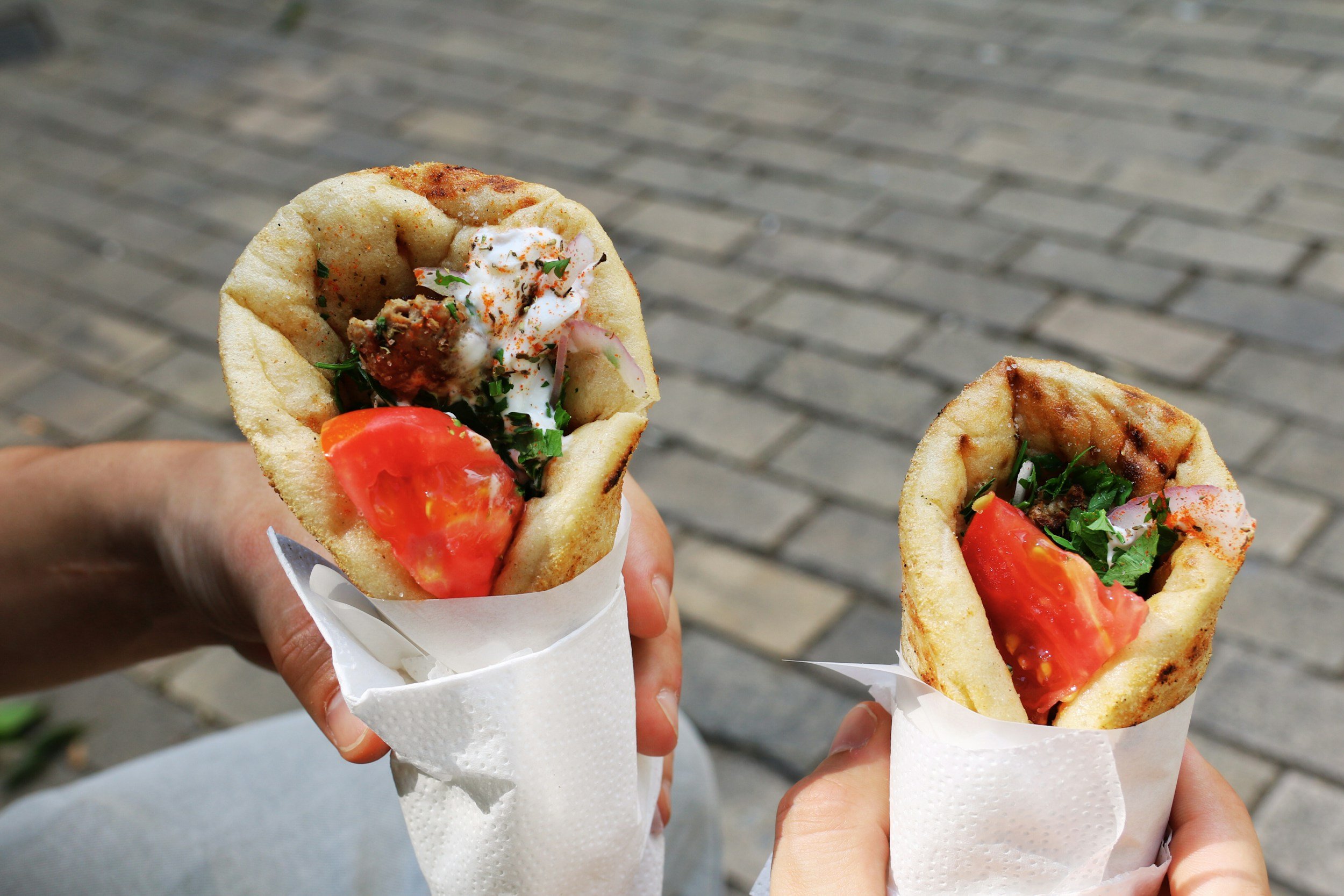
The thing to eat in Athens and the thing most worth seeking out anywhere in Greece. Souvlaki is marinated meat grilled on a skewer, served in a soft pita with tomatoes, onions, and tzatziki. A gyro is the same concept with meat sliced from a vertical rotisserie, wrapped the same way, eaten the same way, argued about endlessly by Greeks who have strong opinions about which is better. Both are everywhere, both cost almost nothing, and both are significantly better than any version you have had at home.
One note worth knowing if you are coming from the US. In Greece gyro meat is pork or chicken, not the lamb and beef mix you might expect from the versions sold at American Greek restaurants. The pork version is the classic and the one worth ordering first.
The best souvlaki and gyros in Athens are not at the tourist facing spots near the Acropolis. They are at the small no frills places a few streets away where locals are actually eating. Look for a line. The longer it is, the better the food. Pay in cash, eat it on the street, and do not think too hard about the napkins.

Spanakopita
A flaky phyllo pastry filled with spinach, feta, and herbs. Found at almost every bakery and taverna in the city. One of those things that sounds simple and turns out to be completely satisfying, especially eaten on the go between sites.

Moussaka
The most iconic Greek dish and one worth sitting down for if you have the time. Layers of eggplant, minced meat, and béchamel sauce baked together into something that tastes like Greek comfort food has always tasted. Order it in a taverna in Plaka if you can.
Greek Coffee and Frappe
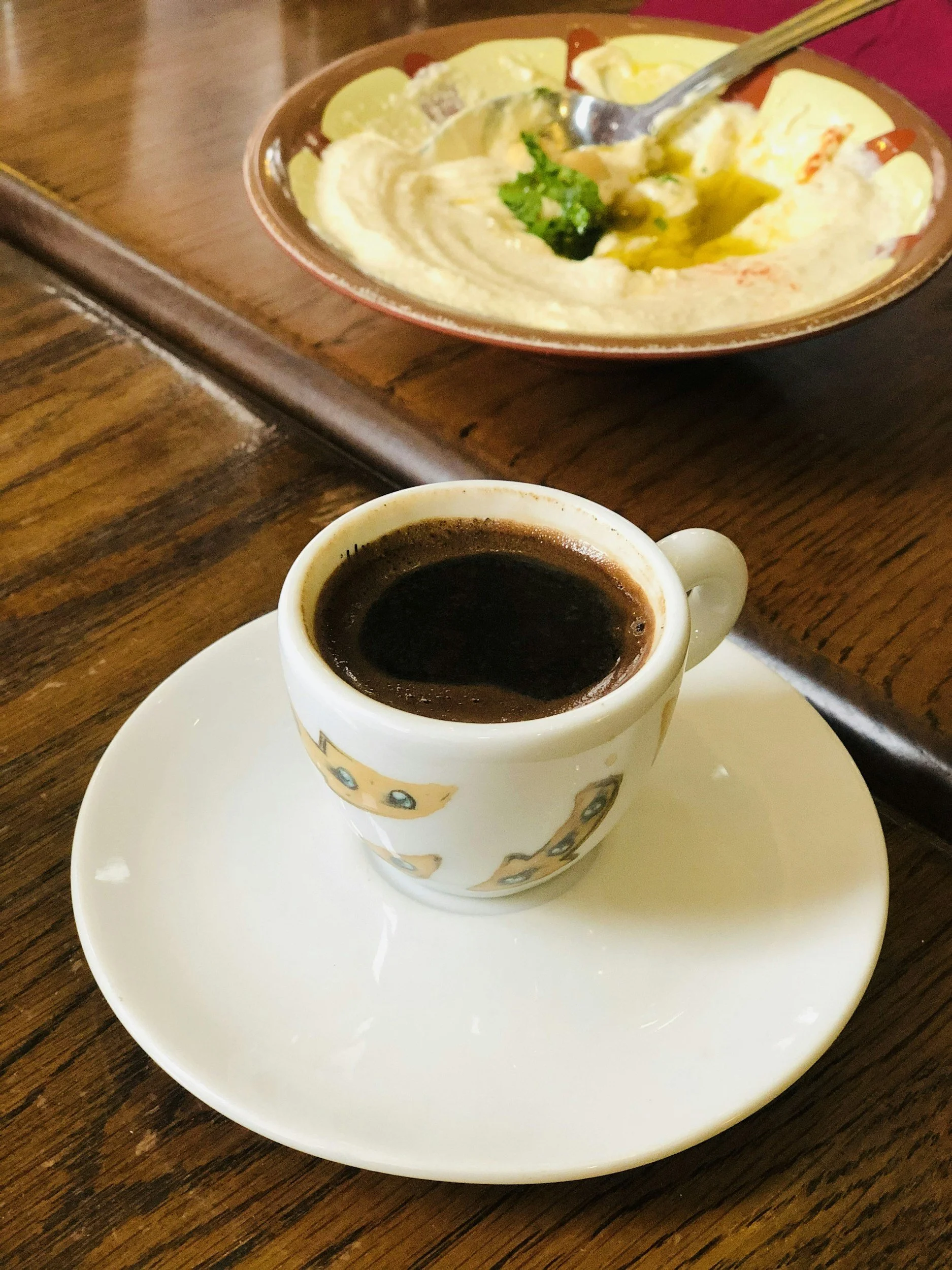
Greek coffee is strong, thick, and served with the grounds settled at the bottom of the cup. Do not drink the last sip. The frappe is the cold version, an iced frothy coffee that Greeks drink slowly at any time of day. Both are worth trying. Both will recalibrate your understanding of what coffee can be, which seems to be a theme across the countries on this site.

Loukoumades
Small fried dough balls drizzled with honey and cinnamon. Greece's answer to donuts and one of the best street food snacks in the city. Find them fresh and eat them immediately.
What to Pack for Your First Trip to Athens
Athens is a walking city built on and around hills with ancient marble surfaces that have been worn smooth over centuries. Pack accordingly.
Weather
Athens is warm from late spring through early fall with summer temperatures regularly reaching the high 80s and into the 90s Fahrenheit. May and June are the sweet spot, warm enough to enjoy the city comfortably without the brutal heat of July and August. The ancient sites are almost entirely exposed with very little shade so sun protection is not optional regardless of the time of year.
Core Items for Athens
Comfortable shoes with grip. The marble surfaces throughout the Acropolis and surrounding sites are worn smooth and genuinely slippery, especially if there has been any moisture. This is the same issue as Ephesus and the same advice applies. Leave the sandals and fashion sneakers behind for this day.
If You Are Coming Off a Cruise
You will likely be storing luggage for the day. Pack a smaller daypack with everything you need and leave the rest in storage. Luggage storage lockers are available throughout the city center, convenient to pick up after your tour ends rather than hauling back to the port. They may look slightly sketchy. They work fine. Walking the ancient sites with a full suitcase is not a viable option and sorting your storage in the city rather than at the port means one less trip back before your onward journey.
I Grew Up Seeing This in Textbooks
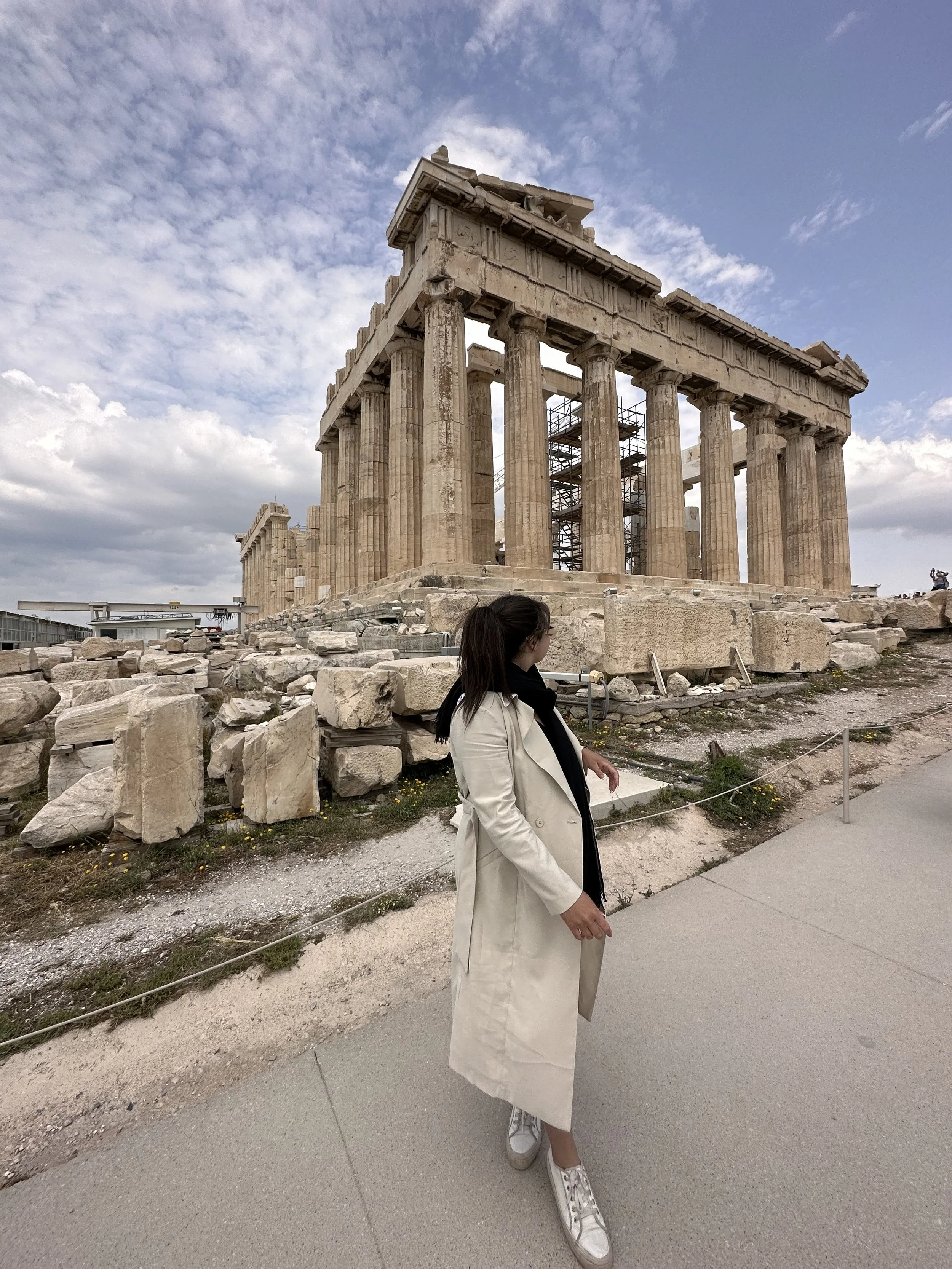
I grew up seeing the Acropolis in textbooks. Every history class, every ancient civilizations unit, the same photograph of the Parthenon on the same glossy page. And then you are standing there in front of it and none of that preparation actually prepared you for anything.
The weight of it lands differently in person. Democracy. Philosophy. Theater. Architecture. You learned all of it in a classroom and it stayed there, abstract and distant, the kind of history that belongs to a textbook page. Standing on the hill where it actually happened does something to that. It stops being history and starts being a place. A real place where real people argued over ideas that are still shaping the world you live in. That shift happens somewhere between reading about it and standing in it and there is no way to manufacture it from a photograph.
The scale of the Parthenon is the first thing that gets you. The columns are enormous in a way that photographs do not capture because photographs have nothing to give them context. Standing next to one and looking up you understand immediately that the people who built this were not working on a human scale. They were building something intended to outlast everything around it. And it did. Nearly 2,500 years and it is still the most commanding thing visible from almost anywhere in Athens.
One day was enough for me. Not because there is not more to see but because the Acropolis delivered everything it was supposed to and I left feeling like I had actually been somewhere rather than just passed through it.
That does not happen every time. When it does it is worth noting.
Itinerary for Your First
Trip to Athens
Athens rewards an early start. The ancient sites get crowded quickly and the midday heat makes outdoor walking significantly harder than it needs to be. Get there early and let the city come to you slowly.
Before You Go
Book your guided tour in advance. A licensed guide makes an enormous difference at the ancient sites and the good ones fill up quickly especially in peak season. We booked through GetYourGuide and the small group format meant we could actually hear our guide and ask questions throughout the day. Book luggage storage in the city center in advance if you are coming off a cruise or need your hands free for the day.
Morning: The Ancient Sites
Start at the Arch of Hadrian and the Temple of Olympian Zeus. Both are at the base of the Acropolis and a good introduction to the scale of what ancient Athens actually built before you climb to the main event. Your guide will give you the historical context here that makes everything that follows make more sense.
From the Temple of Olympian Zeus walk toward the Acropolis. The climb is steady but manageable. Wear shoes with grip. The marble is worn smooth and slippery in places and this will matter more than you expect.
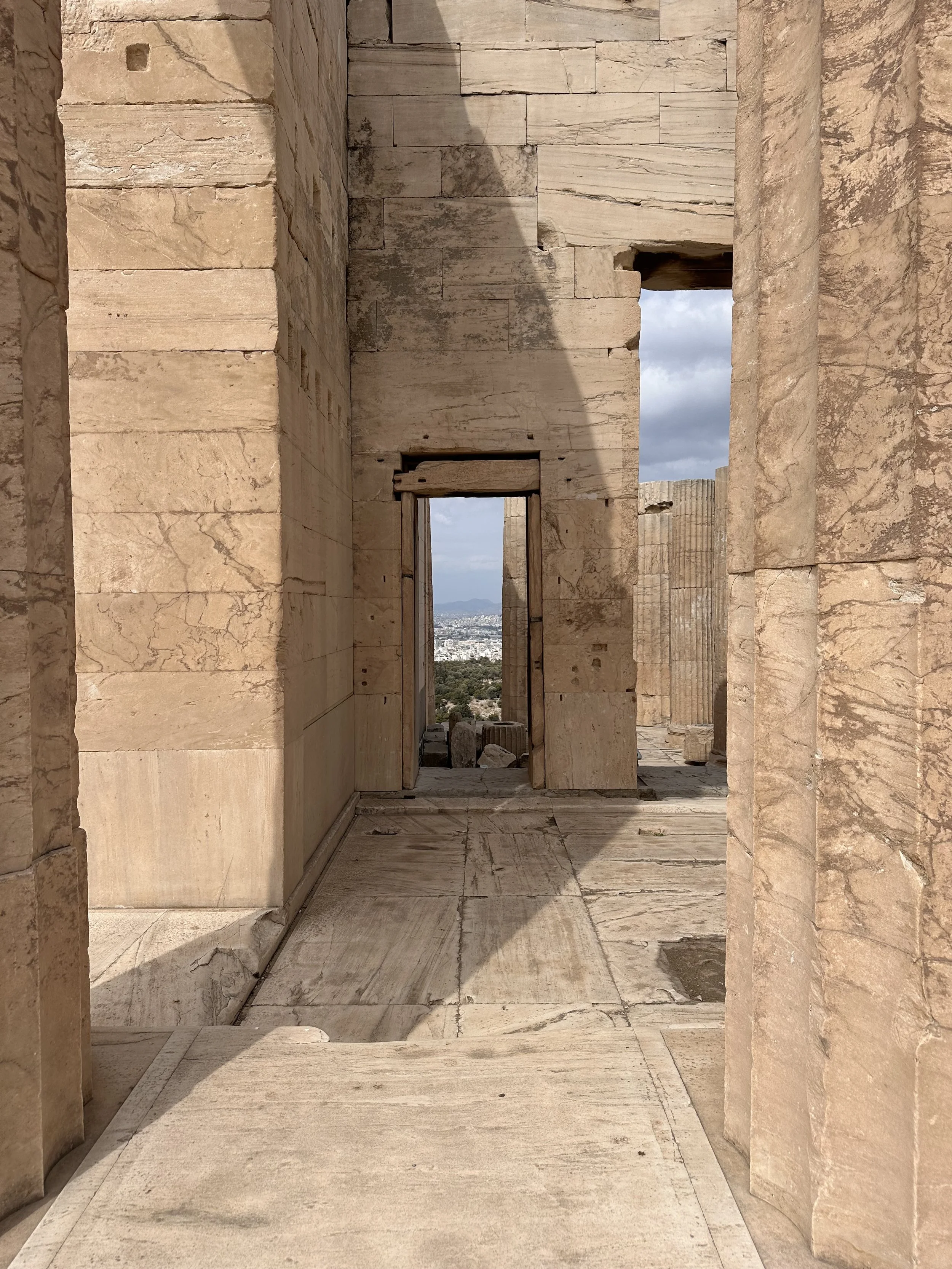
At the top spend time at each structure rather than moving through them quickly. The Parthenon deserves more than a photograph. Stand next to a column and look up. The Erechtheion and its Caryatid porch are worth stopping at even though what you are seeing are replicas, the originals are in the Acropolis Museum. The Temple of Athena Nike at the entrance is easy to walk past. Do not.
The Theater of Dionysus on the southern slope of the Acropolis is where theater as an art form was born. Your guide will cover this on the way down and it is worth paying attention to.
Midday: The Ancient Agora and Temple of Hephaestus
From the Acropolis make your way to the Ancient Agora. This was the commercial and political heart of ancient Athens and walking through it with a guide who can explain how democracy and public life actually functioned here changes how you understand everything you have already seen. The Temple of Hephaestus at the edge of the Agora is one of the best preserved ancient Greek temples in existence. Better preserved than the Parthenon and significantly less visited. Spend time here.
Grab souvlaki or a spanakopita from a nearby vendor for lunch. You are on the move and street food is the right call for a single day visit.
Afternoon: Plaka or the Acropolis Museum
If you have energy after the morning, two options depending on what you want from the afternoon.
Plaka, the oldest neighborhood in Athens, sits directly at the foot of the Acropolis. Narrow cobblestone streets, traditional tavernas, small shops, and a pace that feels completely different from the ancient sites a few minutes walk away. Good for a coffee, a meal, or just wandering without a plan.
The Acropolis Museum is the alternative and the better choice if history is the reason you came. One of the finest museums in Europe with the original Caryatid sculptures, the Parthenon friezes, and artifacts from across the site. Build in at least two hours.
If You Are Continuing Onward
Pick up your luggage from storage and make your way to the airport or your next destination. The metro from the city center to Athens International Airport takes about 40 minutes on Line 3. Give yourself more time than you think you need. Athens traffic can be unpredictable and missing a flight out of Greece is a specific kind of stress nobody needs.