
Your First Time in
Budapest, Hungary
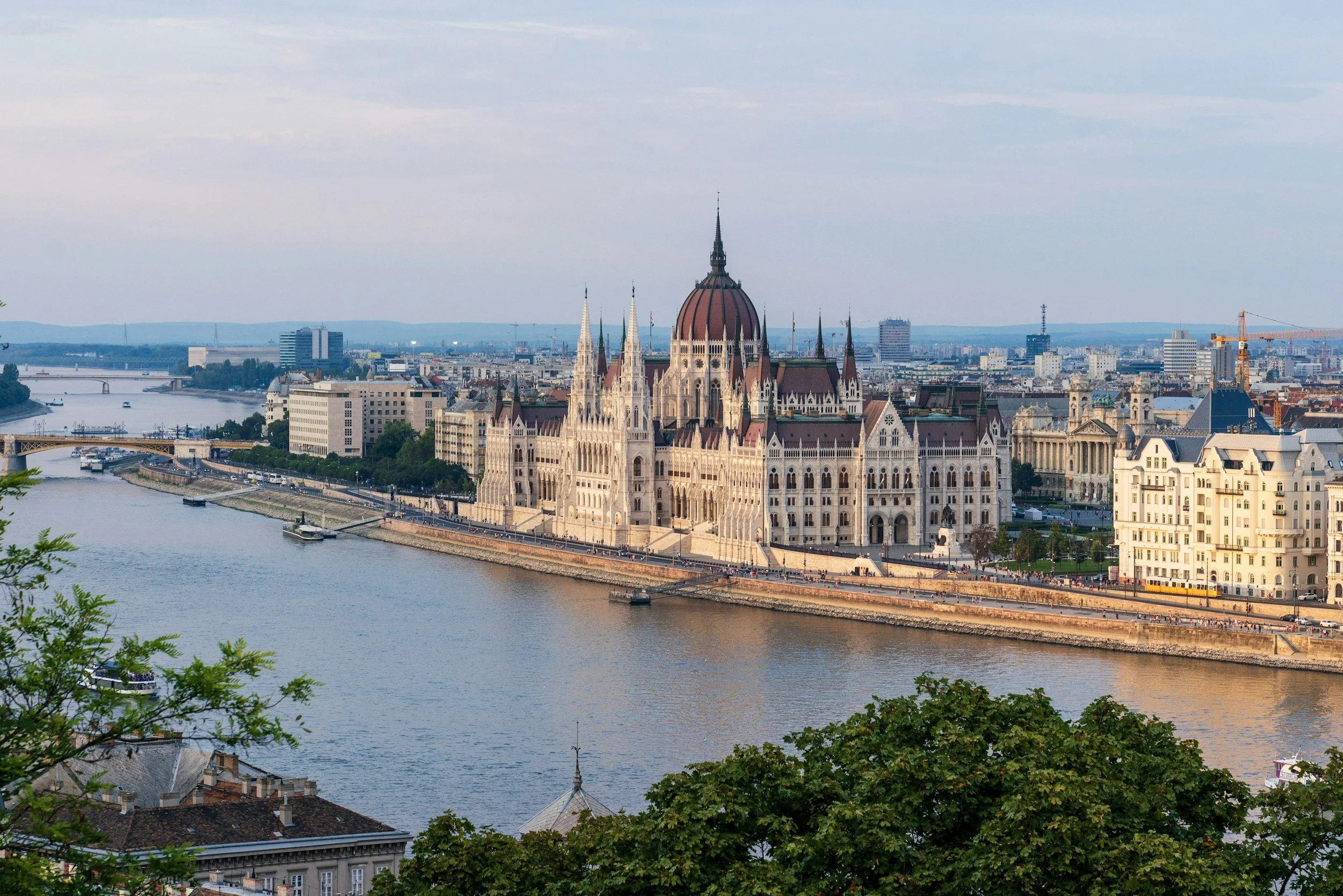
Budapest is the city that keeps getting pushed to next time. Not because anyone has a reason not to go. Just because Vienna sounds more familiar, Prague sounds more manageable, and the rest of Western Europe keeps cutting the line. Most people who have actually been to Budapest will tell you this is one of the great mistakes in European travel planning. They are right.
What I found when we finally got there was one of the grandest cities I have ever walked through. Grand in the way that very old, very serious architecture makes a place feel grand. Not obnoxious about it, not trying to impress you. Just built that way, to a standard that most cities stopped reaching for a long time ago. Every building, every boulevard, every interior we walked into operated at a level of detail and craft that made us slow down and actually look at things. That does not happen everywhere.
The city is split in two by the Danube. Buda on the west side, hilly and historic, home to the castle and the best views. Pest on the east side, flat and energetic, where most of the eating and drinking and wandering happens. Knowing that before you arrive matters. It changes how you plan your days and how you read the city when you are inside it.
What caught me most off guard was how immediately liveable it felt. The variety of food went well beyond Hungarian. The streets were easy to move through. And everywhere we went the people seemed genuinely content, not performing happiness for tourists, just going about their days with a quiet ease that made the whole city feel relaxed rather than on display. Budapest did not feel like a place putting itself on for visitors. It felt like a place that had been this way for a long time and intended to keep being this way.
Three days is the right amount of time for a first visit. Enough to get the shape of both sides, to sit in a thermal bath for an afternoon, to find the ruin bar that makes you realize you have been doing nightlife wrong, and to stand inside the Hungarian Parliament Building and genuinely not have words for what you are looking at.
Stop pushing it to next time. Next time is now.
A Brief Look At
Your Itinerary
The full itinerary is at the bottom of the page when you are ready.
-
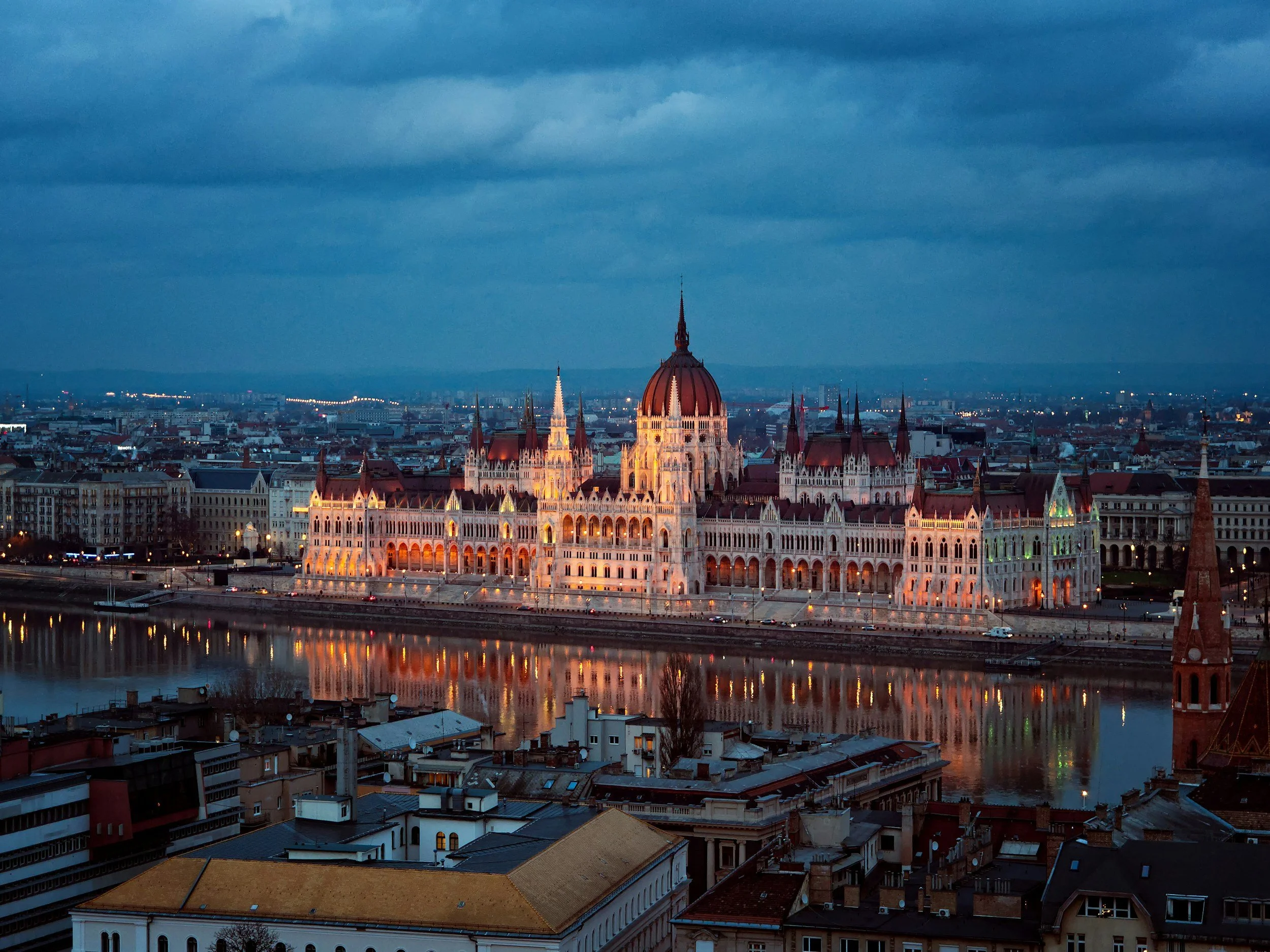
The gentler introduction. The Central Market Hall, lángos, the Danube at night with the Parliament lit up across the water, and the ruin bars of District VII when the city finally comes alive. This day is about arriving properly and letting Budapest show you what it is working with.
-
The day the city earns everything you came for. Breakfast at the New York Café, the Hungarian Parliament Building and the Crown Jewels room, the Shoes on the Danube, across the Chain Bridge into Buda, Castle Hill, Matthias Church, and sunset from Fisherman's Bastion with the Parliament across the river turning gold. The most complete day in Budapest.
-
The day that makes you wish you had booked one more night. Andrássy Avenue, Heroes' Square, St. Stephen's Basilica, an espresso martini at KOLLÁZS, and then the whole afternoon at Széchenyi Thermal Baths. End at Gellért Hill if the legs have anything left. The view from the top is worth the climb.
What to See on Your Visit to Budapest
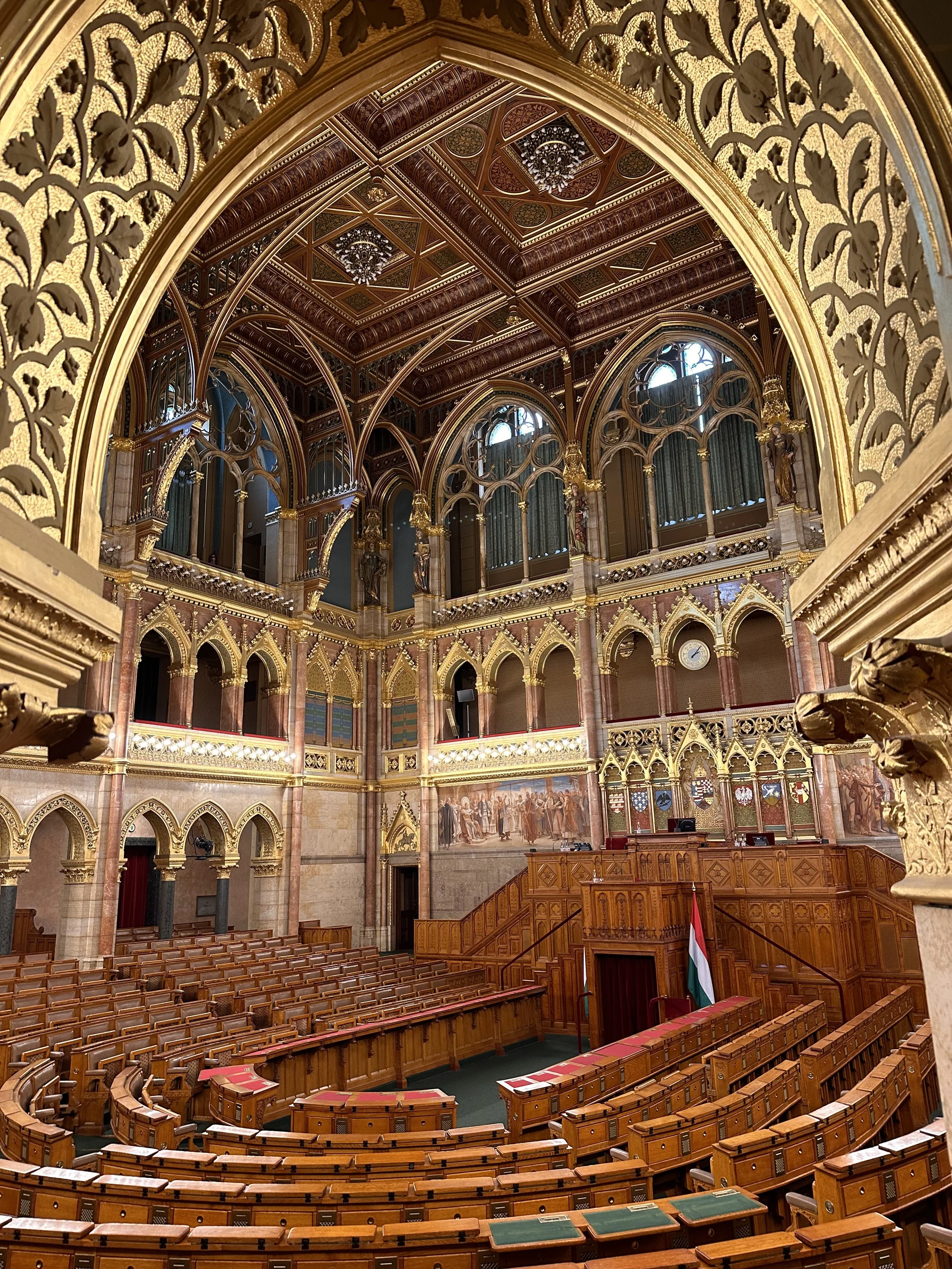
This was one of the most memorable interiors I have encountered in Europe. That is not a sentence I use lightly after Rome, after the Vatican, after everywhere else on this trip. The Hungarian Parliament Building earns it completely.
Designed by architect Imre Steindl and modeled in part after the Palace of Westminster, it sits on the Pest bank of the Danube and dominates the skyline in a way that photographs simply do not prepare you for. The exterior alone, Neo-Gothic, symmetrical, enormous, would be enough to justify stopping. The interior is something else entirely.
The gold ceilings. The long corridors lined with frescoes. The grand staircase under red carpet. The painted domes. Every surface decorated with a level of craft and intention that makes you slow down and look up constantly, the way you do in places that were built to make you feel something specific about where you are standing.
The Crown Jewels are kept here, including the Hungarian Holy Crown, a relic of such national significance that photographing it is not permitted. Standing in front of it in that vaulted room, lit and sealed behind glass like something out of a spy film, is one of those travel moments that does not translate into a photo anyway. You just have to be there.
Book the Grand City Tour with Parliament Visit on GetYourGuide in advance. It covers the Castle District and the Parliament interior in a single morning, which is the most efficient way to get the historical context you need for both sides of the river. The history of this building, of the Hungarian state, of the crown itself, makes everything you are looking at land differently.
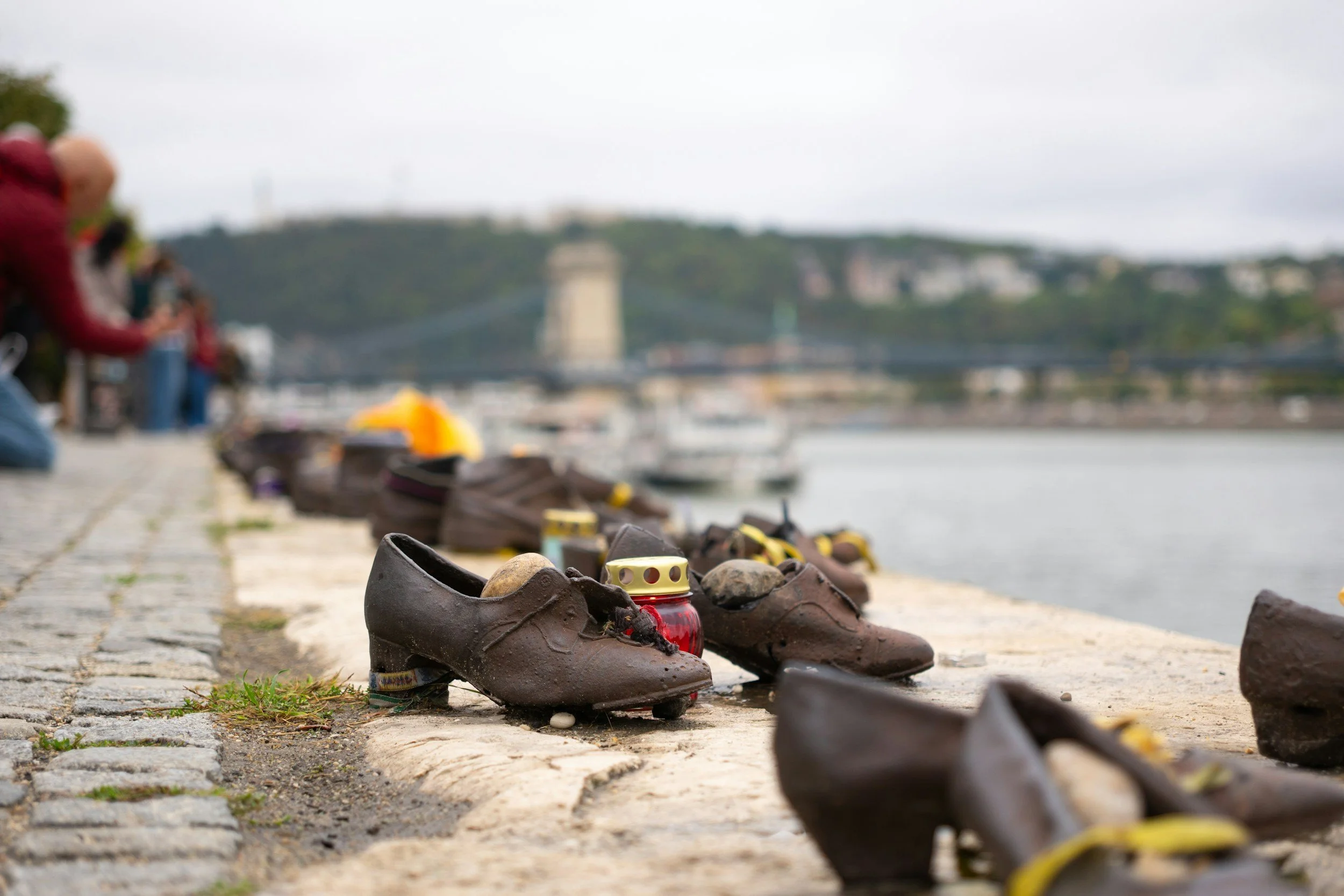
A short walk from the Parliament along the Pest riverside is one of the most quietly devastating memorials I have seen anywhere.
Sixty pairs of iron shoes, cast to look worn and abandoned, sit at the edge of the Danube exactly where they were left. During World War II, Hungarian Jews were brought to this bank, ordered to remove their shoes, and shot into the river. The shoes are all that remain.
There is no dramatic structure, no grand monument. Just the shoes and the water and whatever you bring to it.
It stopped me in a way that larger, more formal memorials sometimes do not. Something about the scale of it, so small against the river and the Parliament behind it, makes the weight of what happened here feel more real, not less.
Do not walk past it.
The Danube River Cruise
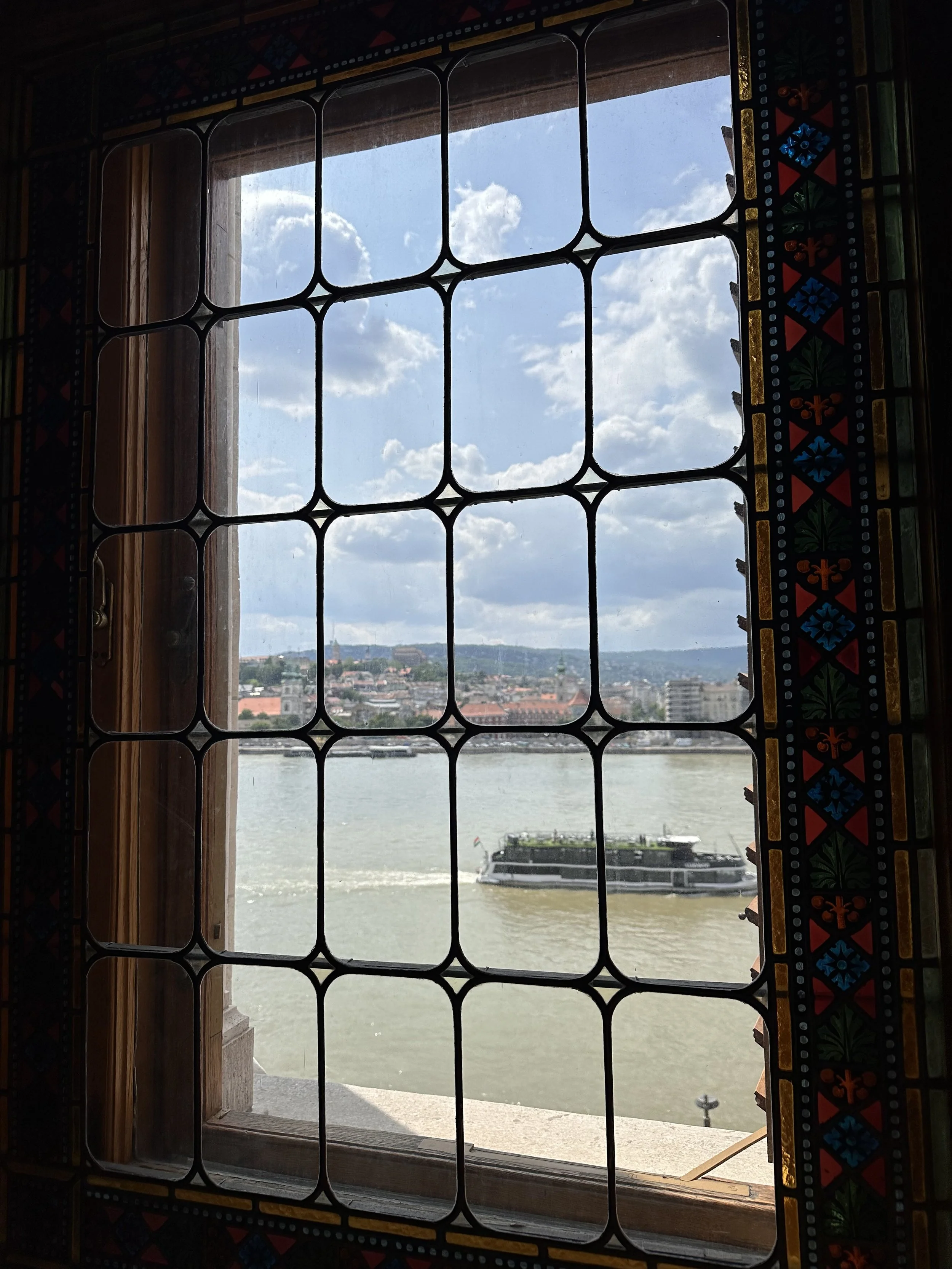
We had the evening cruise booked for our first night and missed it when our flight was delayed by several hours, which I am still disappointed about. From everything we saw of the river at night on foot, with the Parliament lit up across the water and the bridges glowing between both sides of the city, it is on the list for the next visit without question. Budapest from the water after dark is one of those views that earns its reputation. If you are there on a clear evening, book it.
Buda Castle and Castle Hill
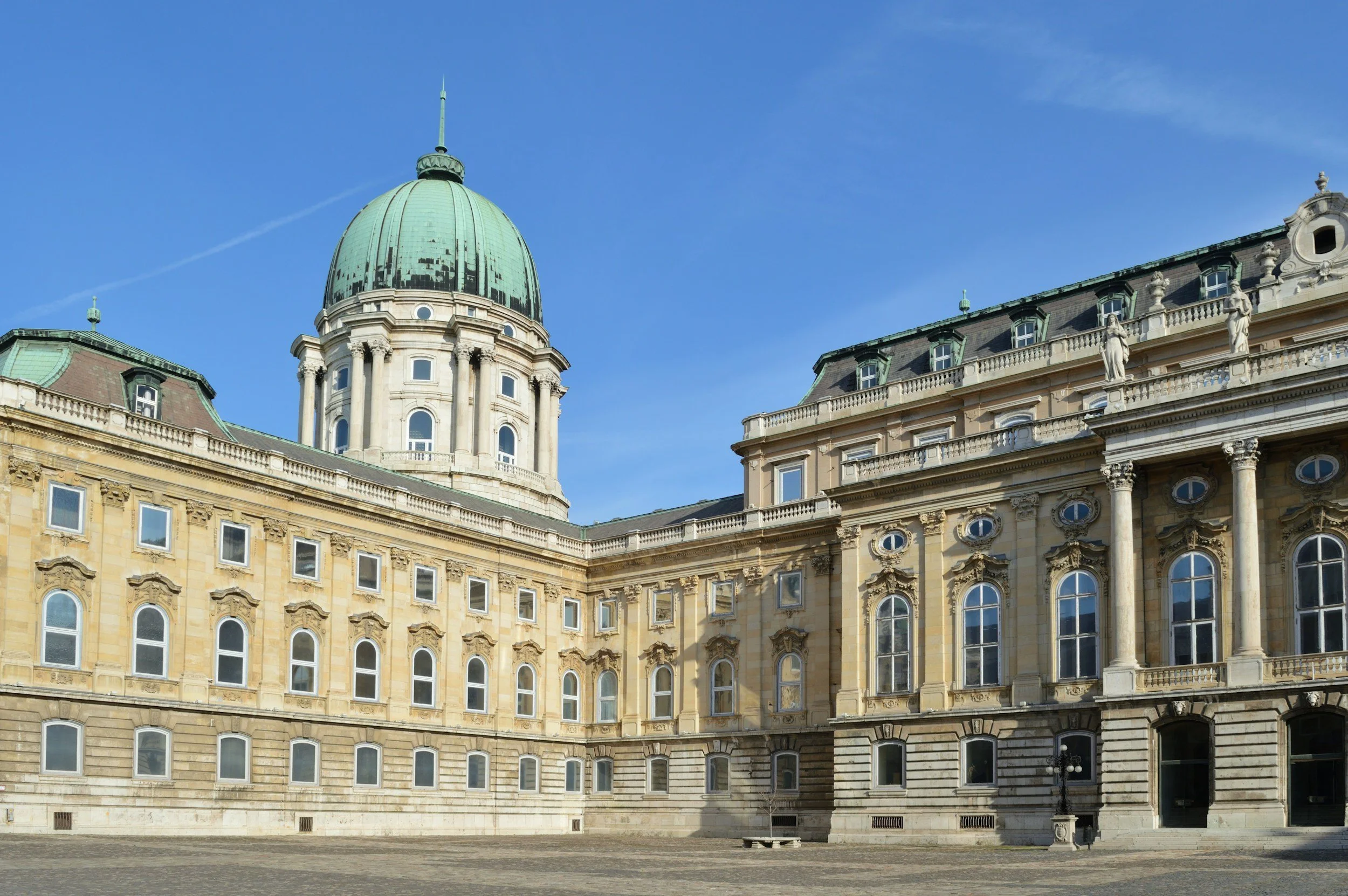
Cross the Danube and the city changes. Buda is quieter, older, elevated, and the views from Castle Hill over Pest and the river are the best you will find in Budapest.
Buda Castle sits at the top and is worth exploring on its own terms, though the approach and the surrounding grounds reward time as much as the castle itself. The funicular from the Chain Bridge is the easiest way up. The steep walk is possible and earns the view.
Wander Castle Hill without a fixed plan. There are shops, restaurants, and small streets that feel completely removed from the energy of Pest below. The contrast between the two sides of the city is sharpest from up here.
Fisherman's Bastion
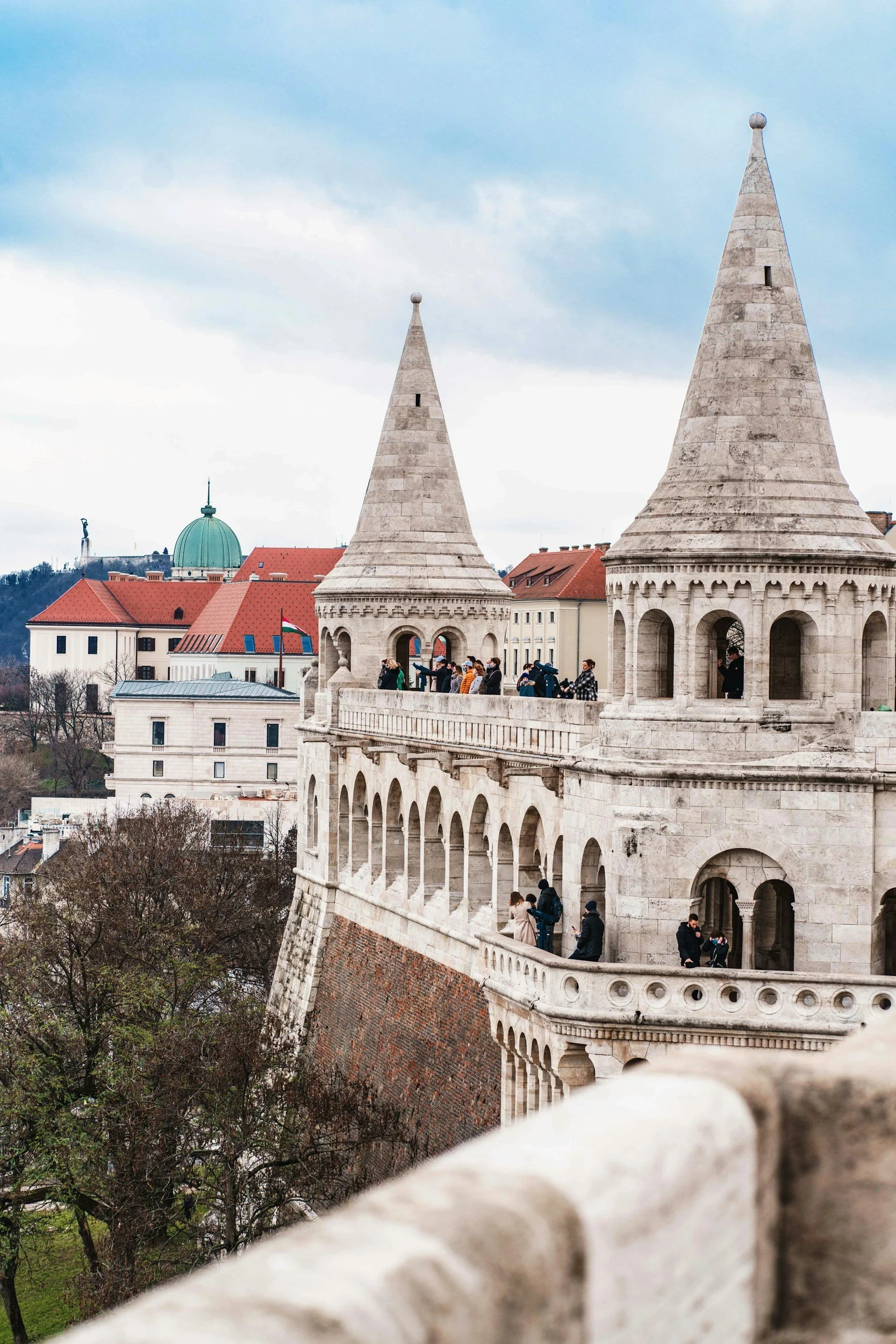
Just behind Matthias Church on Castle Hill, Fisherman's Bastion is a Neo-Romanesque terrace built in the early 20th century with seven towers representing the seven Magyar tribes that founded Hungary. It sounds like a tourist attraction and it is, in the best sense, because the views from its ramparts over the Danube and the Parliament across the river are among the finest in the city.
Go at sunset. The light on the Parliament from this angle is the postcard image of Budapest and it earns that reputation completely. Arrive early enough to find a spot before the crowds do.
Matthias Church directly behind it is worth stepping inside. The interior tile work and painted ceilings are extraordinary and easily missed if you are focused on getting to the view.
Heroes' Square
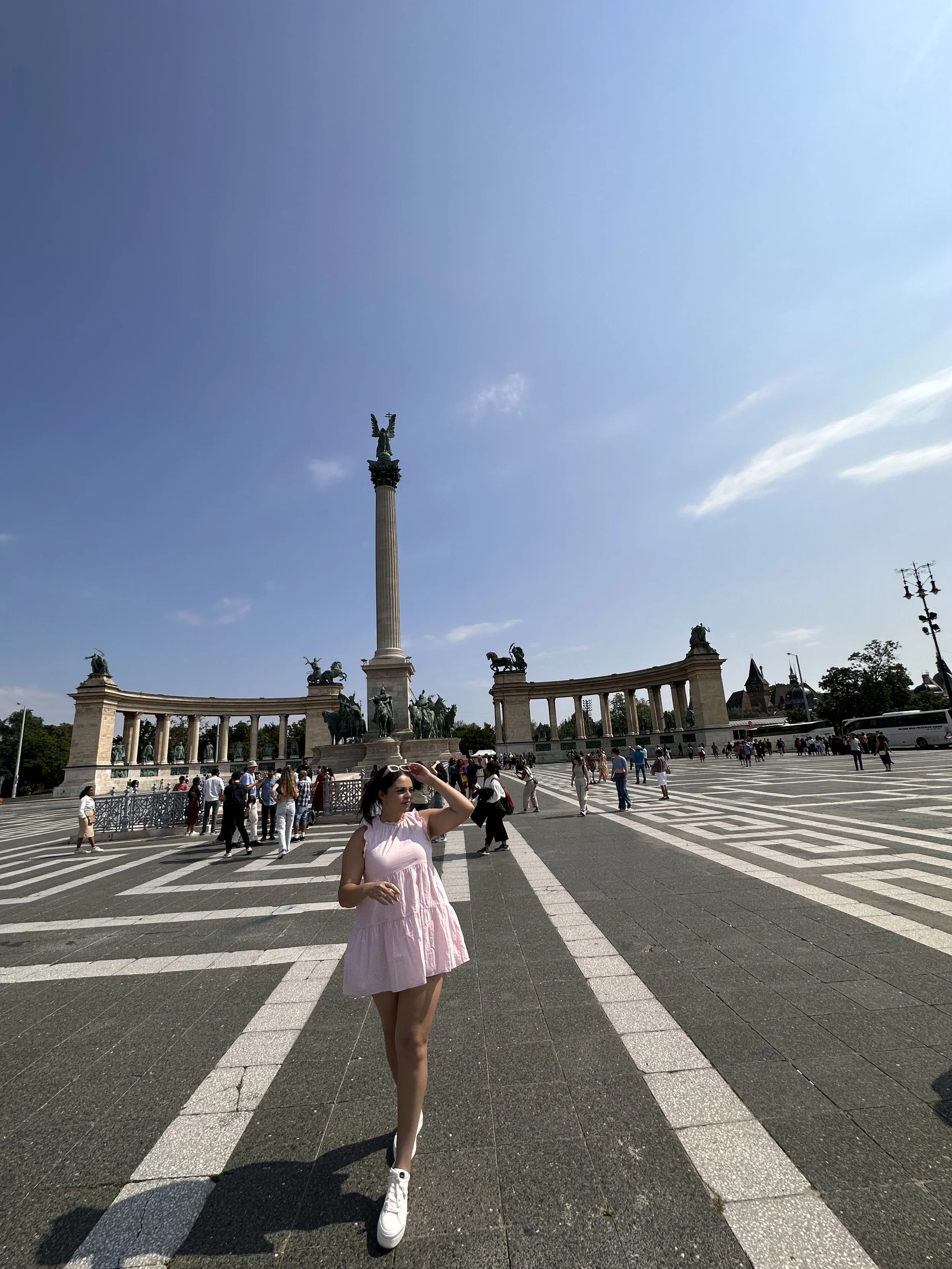
At the end of Andrássy Avenue, Heroes' Square is the kind of landmark that makes more sense once someone explains what you are looking at. The Millennium Monument at its center, flanked by two colonnaded semi-circles, was built in 1896 to mark the thousandth anniversary of the Magyar conquest of the Carpathian Basin. The statues represent the seven chieftains of the Magyar tribes and fourteen significant Hungarian kings and leaders.
It is impressive on its own. With context it is genuinely moving. If your visit includes a guided tour that covers the square, pay attention. Hungarian history is layered and specific and the people who built this monument knew exactly what they were saying with it.
Széchenyi Thermal Baths
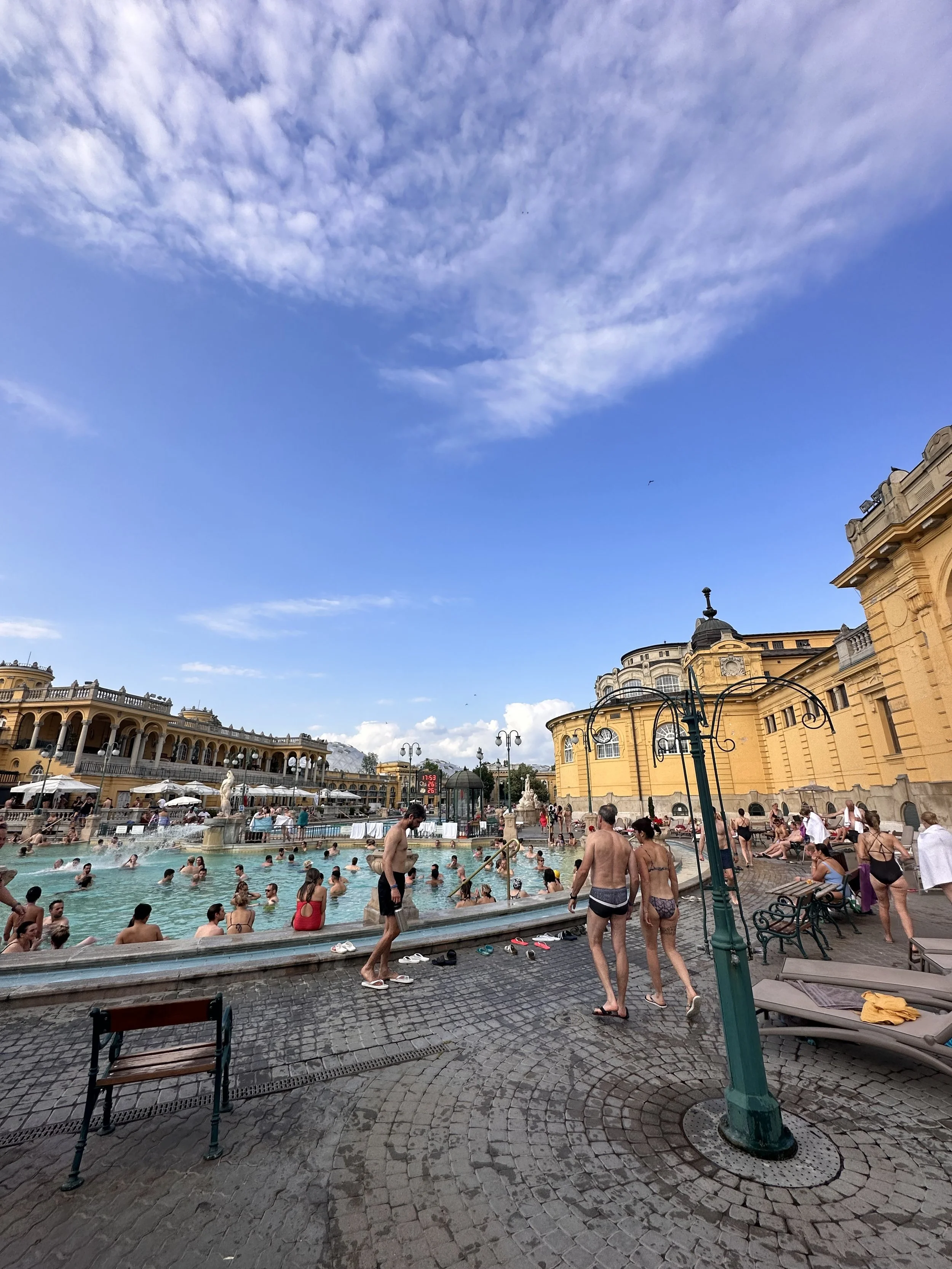
Budapest sits on top of more than a hundred thermal springs and the city has been bathing in them since the Roman period. Széchenyi is the largest and most famous of the thermal bath complexes, a Neo-Baroque palace of yellow stone in City Park that opened in 1913 and has not stopped impressing people since.
The outdoor pools are the images you have seen. The indoor halls are equally extraordinary. The water varies significantly in temperature between pools, which means you will spend the afternoon moving between hot and cooler water rather than settling into one place, unable to stay in for more than a few minutes at a time before the heat sends you somewhere else.
Go in the afternoon and give yourself at least three hours. Book your full day entrance pass through GetYourGuide in advance, especially on weekends. Rent a towel and locker on site if you do not want to carry them.
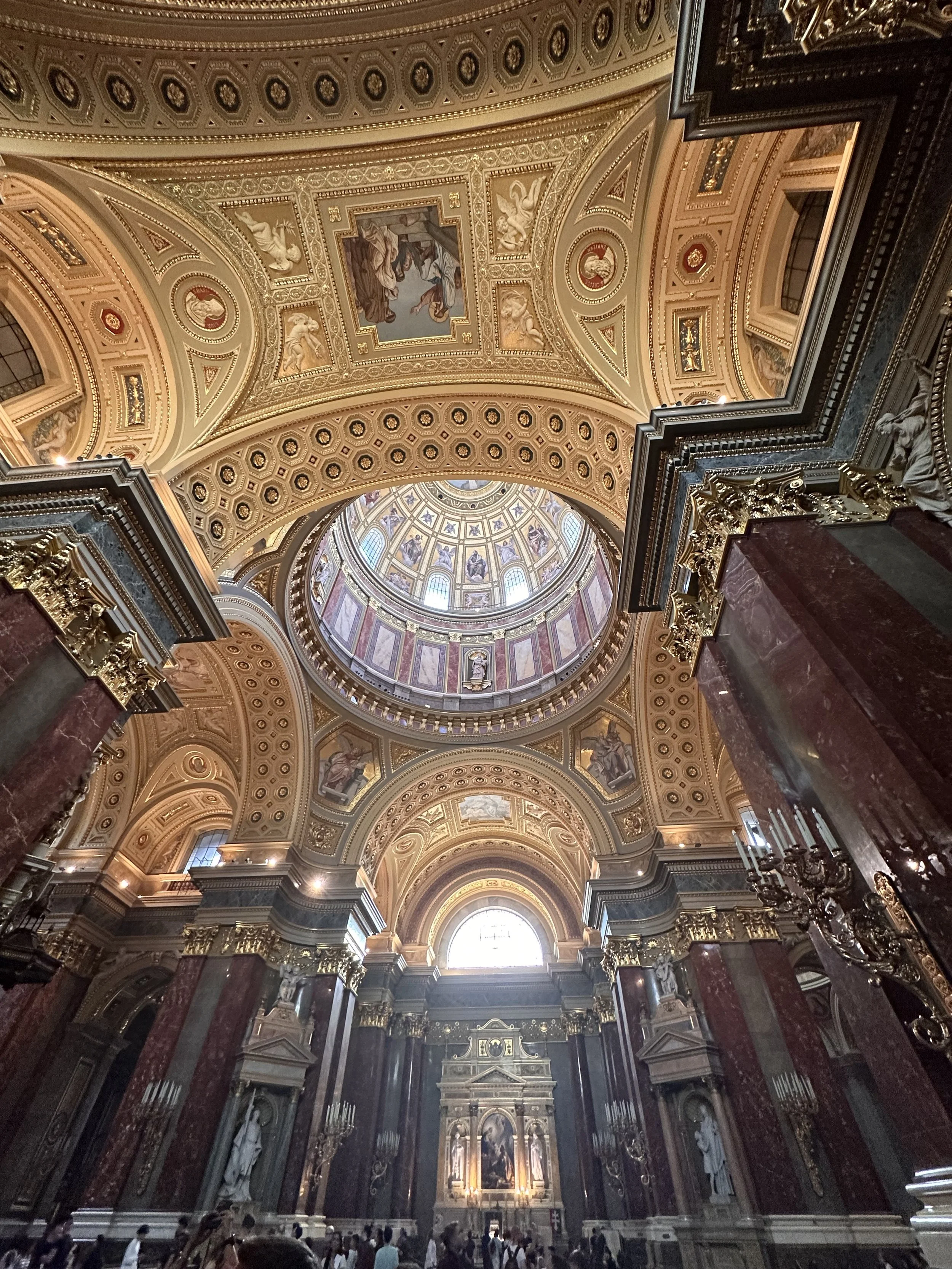
The most important Catholic church in Hungary and, once you step inside, immediately understandable as such. The Neo-Renaissance exterior is monumental. The interior is rich with gold mosaic and fresco in a way that recalls the Vatican without imitating it, a smaller scale but no less serious about what it is doing.
The Holy Right is kept here: the naturally mummified right hand of Saint Stephen, Hungary's first king, who ruled in the 11th century and converted the country to Christianity. It is kept in an ornate reliquary and is exactly as strange and significant as it sounds.
Climb the dome for views over Pest. They are excellent and the climb is manageable. The treasury below the church is worth the extra time if you have it. Book a guided tour through GetYourGuide, which includes the guided church tour plus tickets to the dome and treasury so you are not managing separate queues for each.
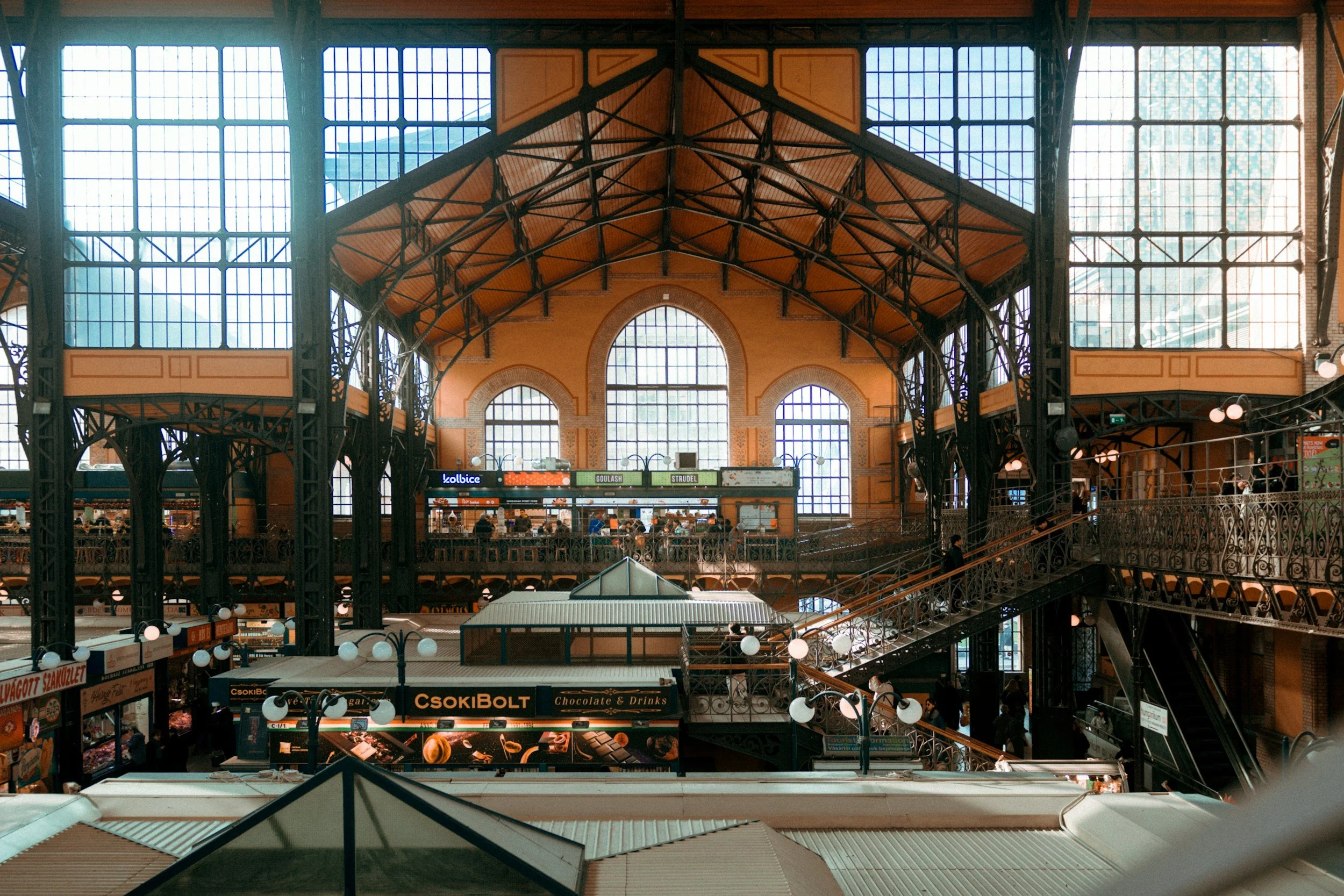
The largest and oldest market in Budapest, built in the late 19th century, and still exactly what it was built to be. A real working market on the ground floor with produce, meat, dairy, pastries, paprika in every variety, Tokaji wine, and more types of sausage than you knew existed. The floor above has food stalls, the most famous of which is the lángos stand.
Lángos is deep-fried dough, pulled thin and hot from the oil, smothered in sour cream and cheese. It is the thing to eat here and the thing to eat in Budapest generally. Get it from this stall. Eat it immediately. The basement holds a fish market, pickle stalls, and a supermarket, which sounds like a step down and is somehow also worth seeing.
Come in the morning when the market is at its most alive. Come with cash. Most of the ground floor operates that way.
The Ruin Bars
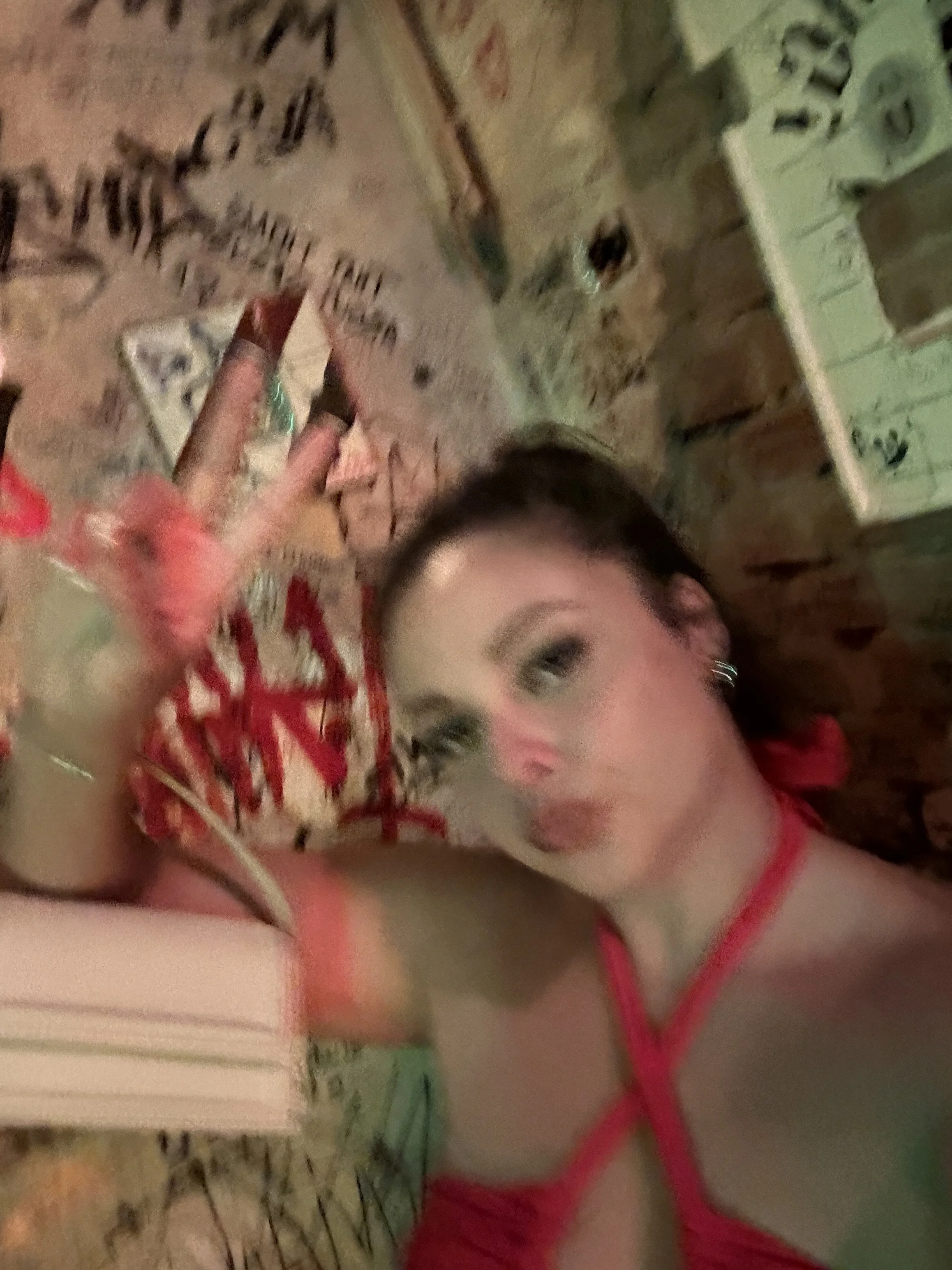
Budapest invented this. The ruin bars of District VII grew out of the abandoned buildings of the old Jewish Quarter in the early 2000s, when a generation of young Hungarians turned derelict courtyards and crumbling interiors into some of the most interesting nightlife spaces in Europe.
Szimpla Kert is the original and still the one most worth visiting. It takes up an entire city block, its interior a layered accumulation of mismatched furniture, hanging plants, vintage signs, old bathtubs repurposed as seating, and rooms that lead into more rooms. The crowd when we were there was maybe ten percent English speakers. The rest were Hungarian, or from somewhere else in Europe entirely. It was chaotic and fun and felt nothing like a tourist trap despite being on every tourist's list.
The comparison that came to mind was a very good version of a college party, which is both accurate and completely undersells it. The energy is right but the setting is unlike anything you will encounter at home.
Go late. These places do not fully come alive until after ten. Drink the local beer. Wander every room before you settle somewhere.
Where to Stay Your First Time in Budapest
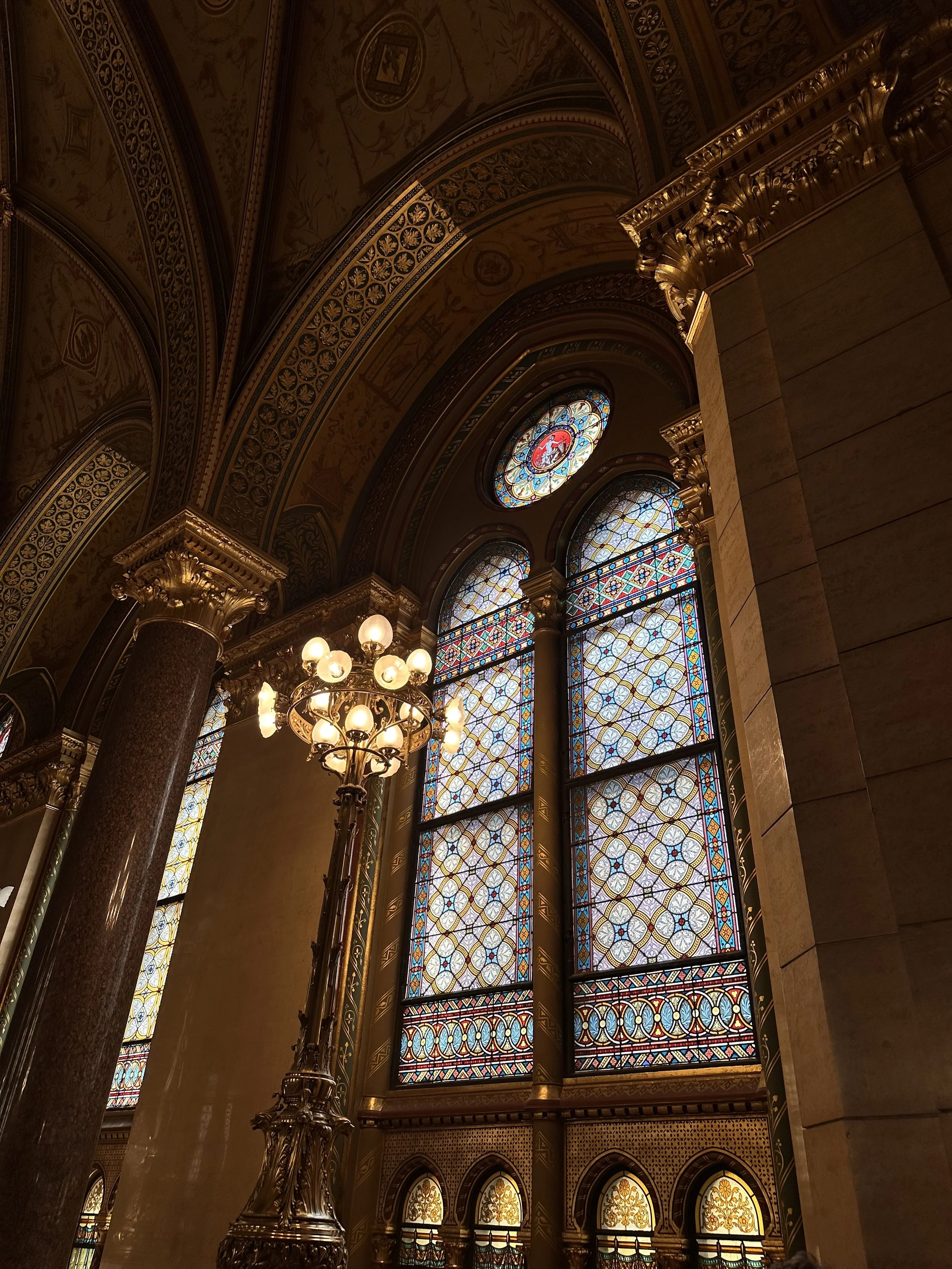
Budapest rewards staying central. The city is walkable enough that the right neighborhood puts almost everything within reach, and the wrong one costs you time you could be spending somewhere better. Here is how to think about it.
Know the Neighborhoods
Stay in Pest. For a first visit it is the obvious choice and the right one. It is flatter, more walkable, better connected, and where most of what you will spend your time doing is located. Buda is beautiful and worth an entire afternoon, but it is quieter in the evenings and further from the restaurants, bars, and nightlife that make up a significant part of why Budapest is worth visiting.
Within Pest, two districts make the most sense for a first trip.
District V is the most central base in the city. The Parliament, St. Stephen's Basilica, the Chain Bridge, the Shoes on the Danube, and the Danube promenade are all within walking distance. The most straightforwardly practical choice and the one that minimizes time spent figuring out where you are.
District VII is where the ruin bars are, and where the old Jewish Quarter gives the city a completely different character from the grand boulevards of central Pest. Staying here puts you in the middle of the nightlife without needing to travel for it. Slightly less convenient for the major landmarks but still very manageable on foot.
Hotel Suggestions
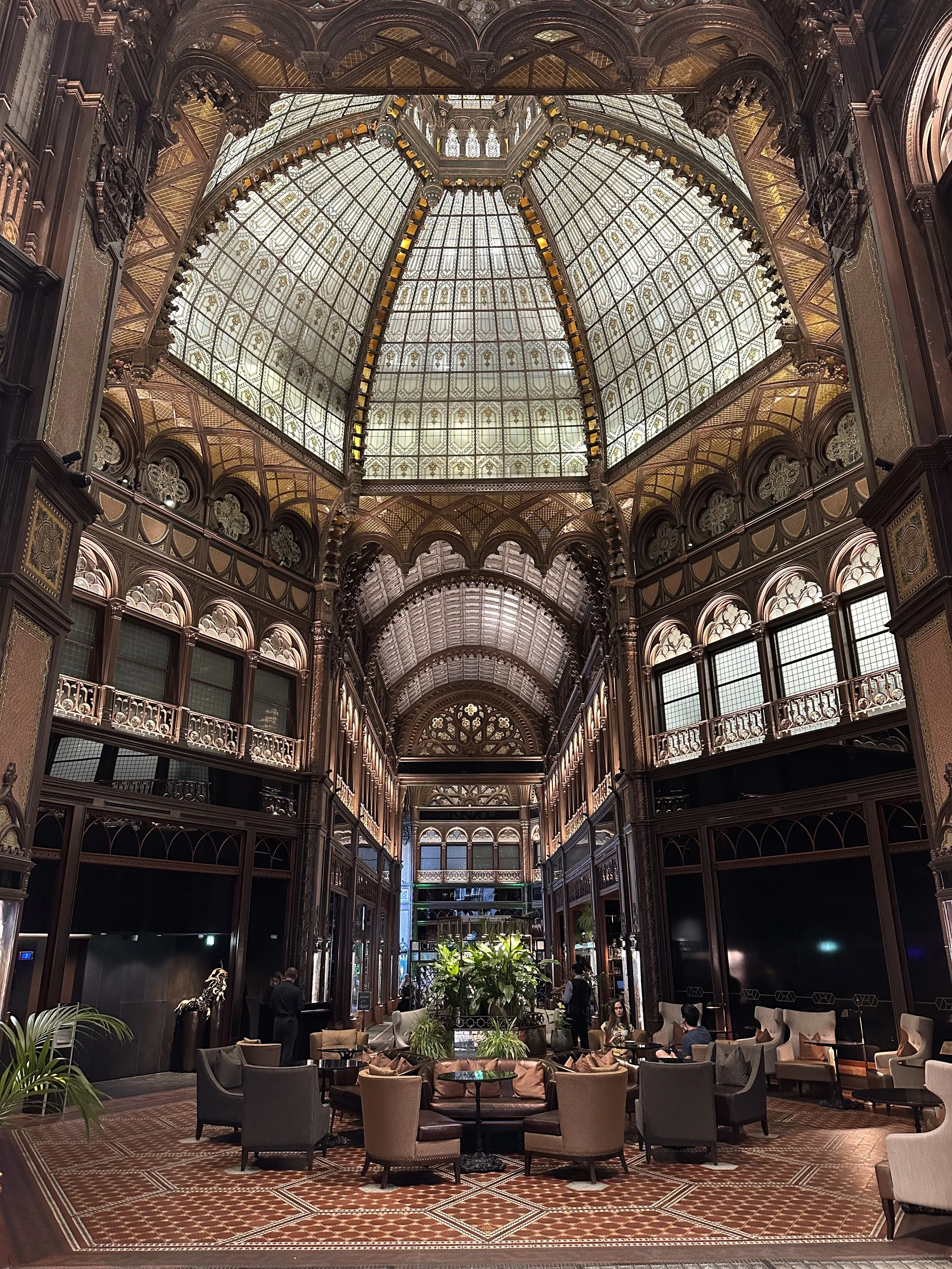
Párisi Udvar Hotel Budapest (Hyatt)
This is where we stayed and it set the tone for the entire trip. The hotel occupies a historic arcade building in the heart of District V, originally built in the early 20th century, and the atrium alone is worth standing in for a few minutes before you go anywhere. Glassed over, lined with ornate ironwork and stone, light filtering down through the ceiling in a way that changes through the day. Budapest as a city is detailed and grand everywhere you look. This hotel is the indoor version of that.
Matild Palace
A five-star property in District V that looks exactly like its name suggests. One of the most lavish hotels in the city, with an interior that holds its own against the grand architecture surrounding it and walkable to Parliament, the basilica, and the river. The splurge option for central Pest.
Anantara New York Palace Budapest
Built around the same New York Palace that houses the café listed above. Palatial lobby, indoor pool, and a cocktail bar with live piano music. If staying somewhere that feels like an event in itself is the goal, this is the one.
W Budapest
A newer, design-forward property in District VI close to Andrássy Avenue, a short walk from both the basilica and the ruin bar district. Less historically grand than the others but a strong contemporary alternative.
Continental Hotel Budapest
A solid mid-range option in District VII that puts you in the heart of the ruin bar neighborhood and close to the Great Synagogue. More practical than grand, but the location does a lot of the work.
Where to Eat & Drink on Your First Trip to Budapest
Hungarian food is not something most Americans think much about before they go. It should be. The paprika depth, the richness, the portions that assume you arrived hungry. Every meal we had in Budapest operated at a level of care and intention that matched the city around it. The ingredients were simple. Nothing about what came out of the kitchen was.
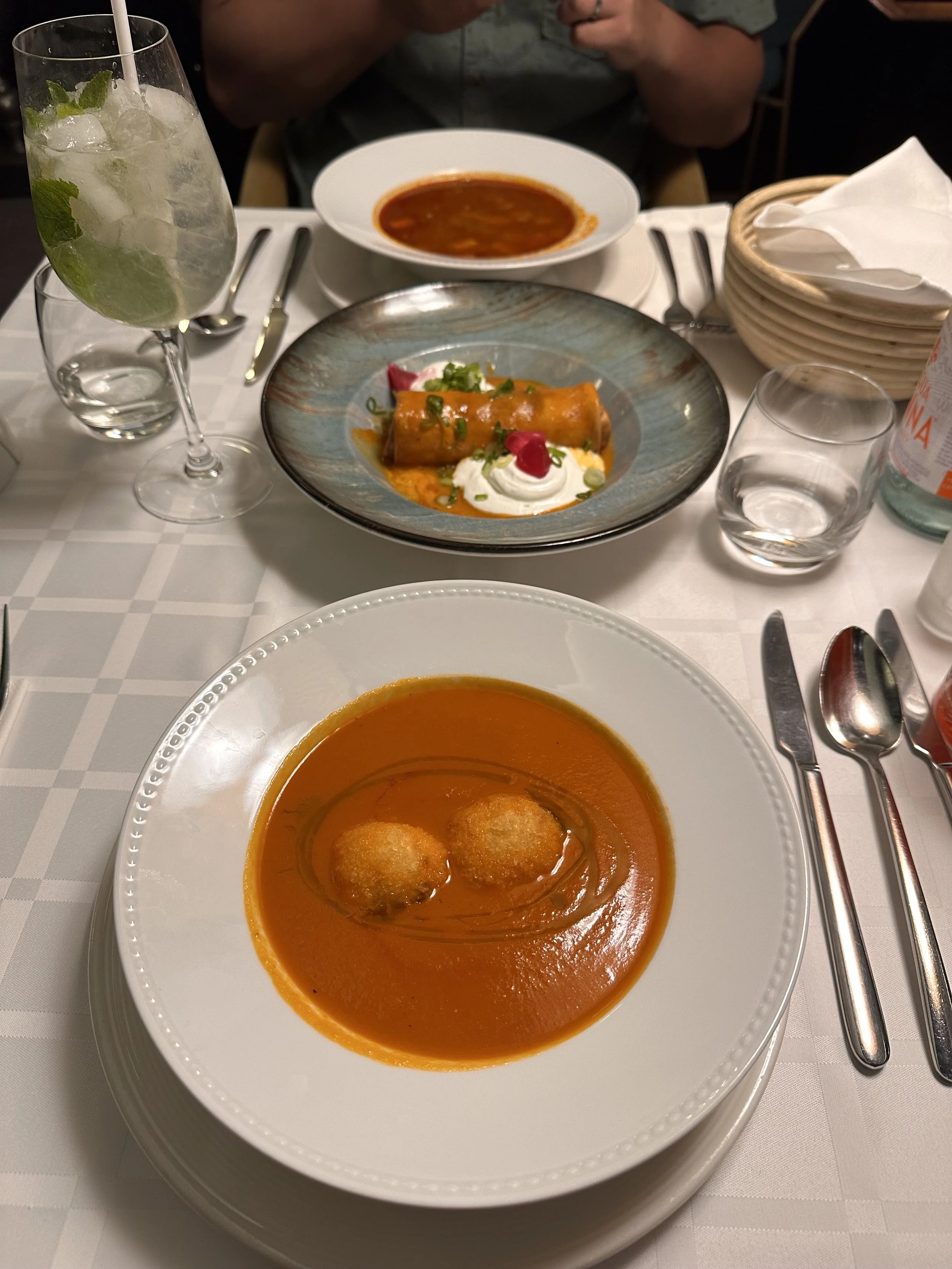
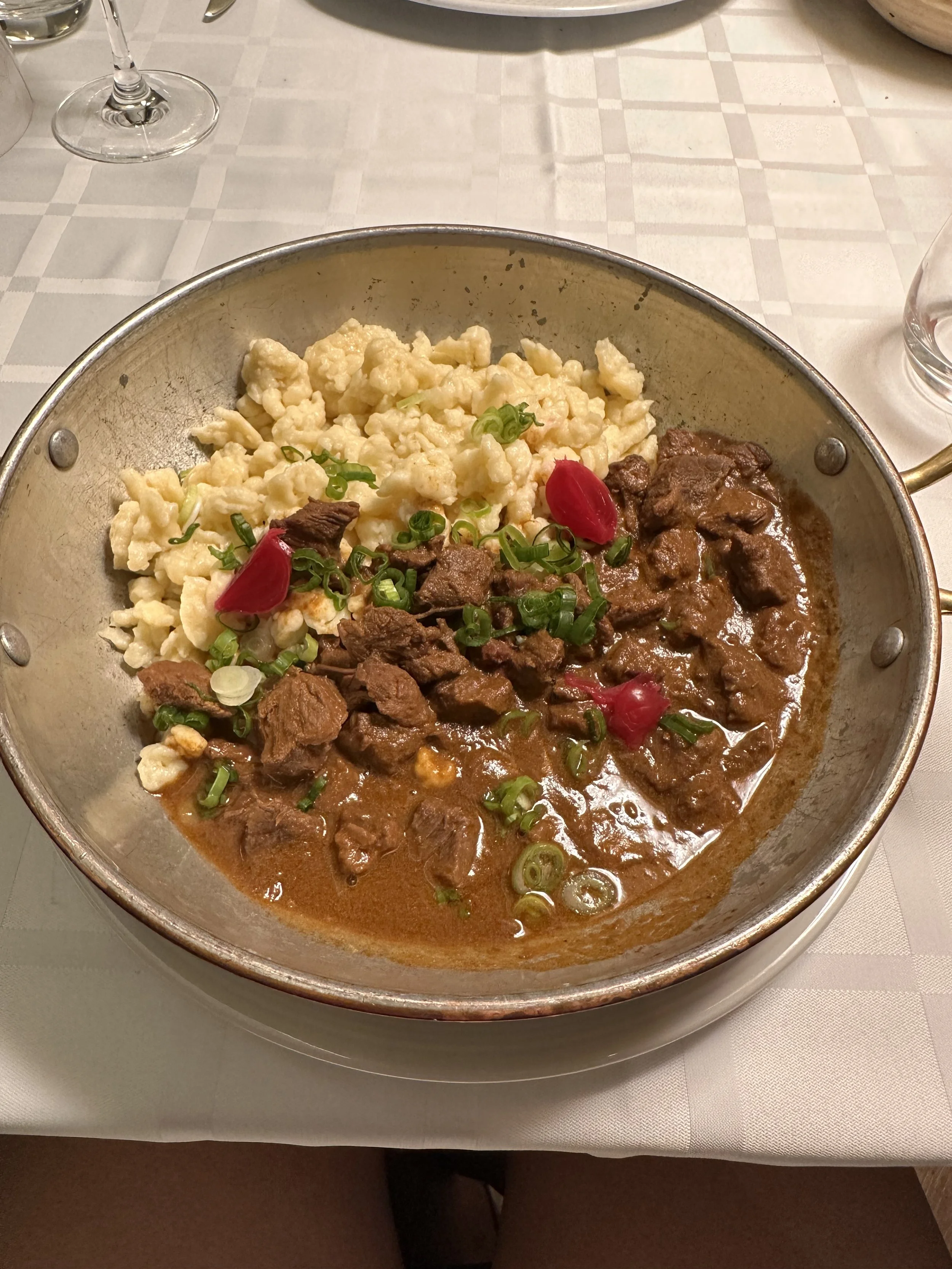
Traditional Hungarian food in a setting that feels like it belongs to the neighborhood rather than the tourist circuit. We had the Hortobágyi palacsinta, thin savory crepes filled with meat and served in a paprika sauce that is richer and more complex than it looks on the plate. The Pörkölt followed, a slow-cooked meat stew that is Hungary's answer to goulash and the dish most worth ordering if you want to understand what Hungarian cooking actually is.
The espresso martinis were good. The food was better. This is the meal that gives you the baseline for Hungarian flavor, the paprika depth, the richness, the portions that assume you arrived hungry.
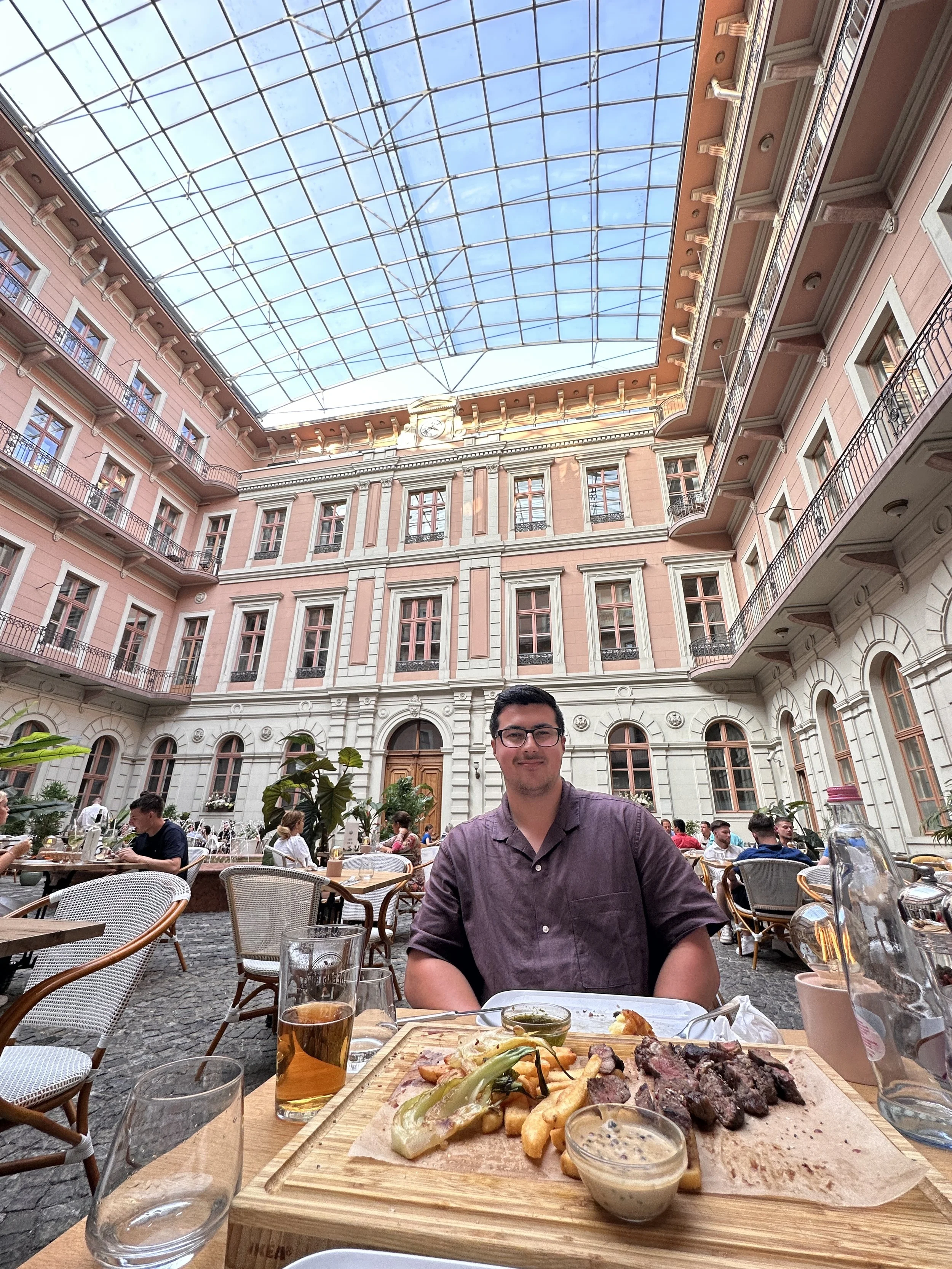
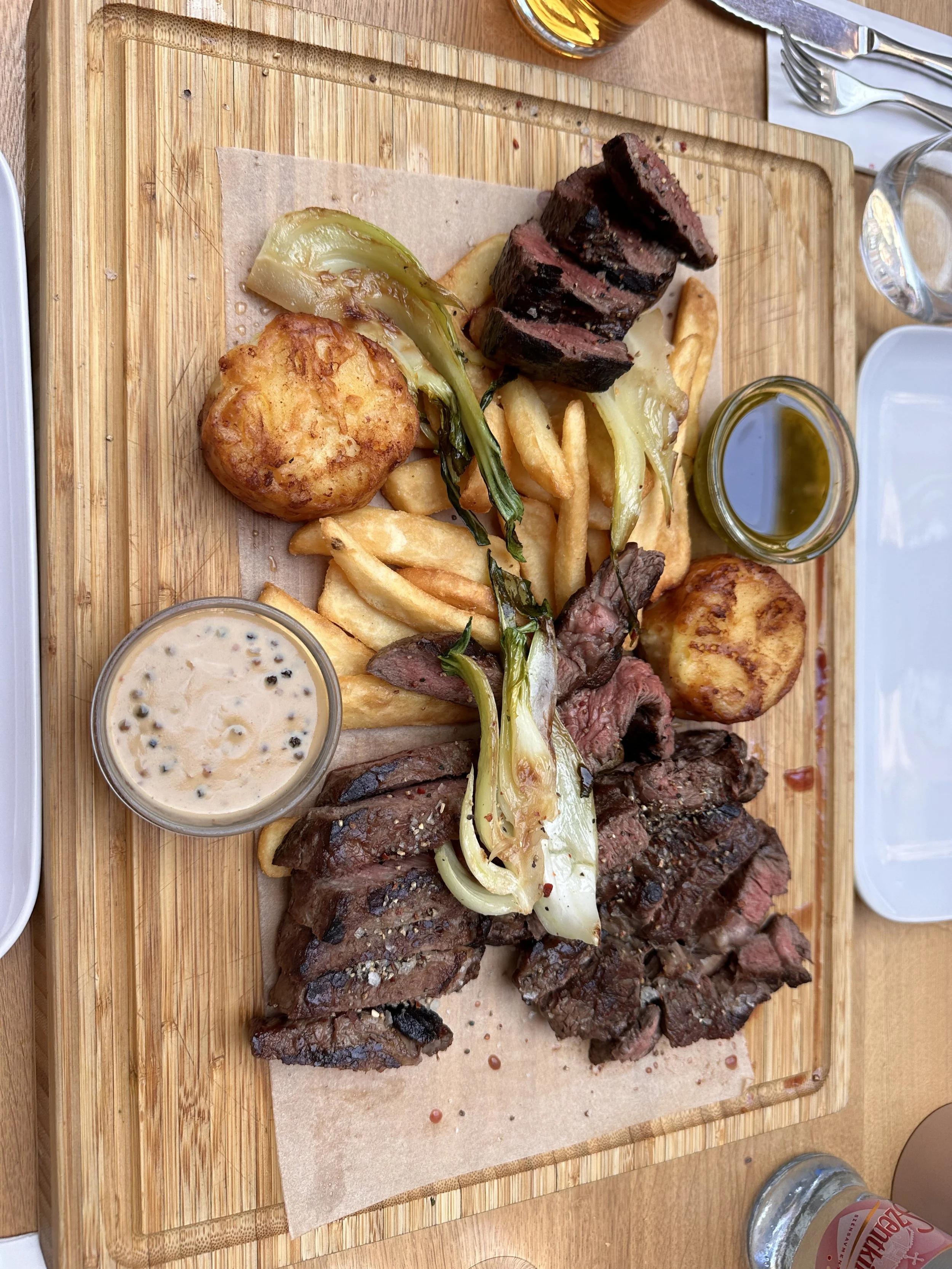
One of the best meals of the Budapest leg and one of the more memorable ones of the entire trip.
The setting is a beautiful plaza and the table outside benefits from it. The soup arrived first, then a pretzel that was better than it had any right to be, then a meat plate with potatoes that was the kind of dish where every component on the plate was there on purpose. The dessert came in a mason jar layered with fudge, whipped cream, and something else that the table spent a few minutes trying to identify before giving up and finishing it.
The plating, the service, the atmosphere of the square around it. Everything had the kind of attention to detail that makes you slow down and notice what you are eating rather than just consuming it.
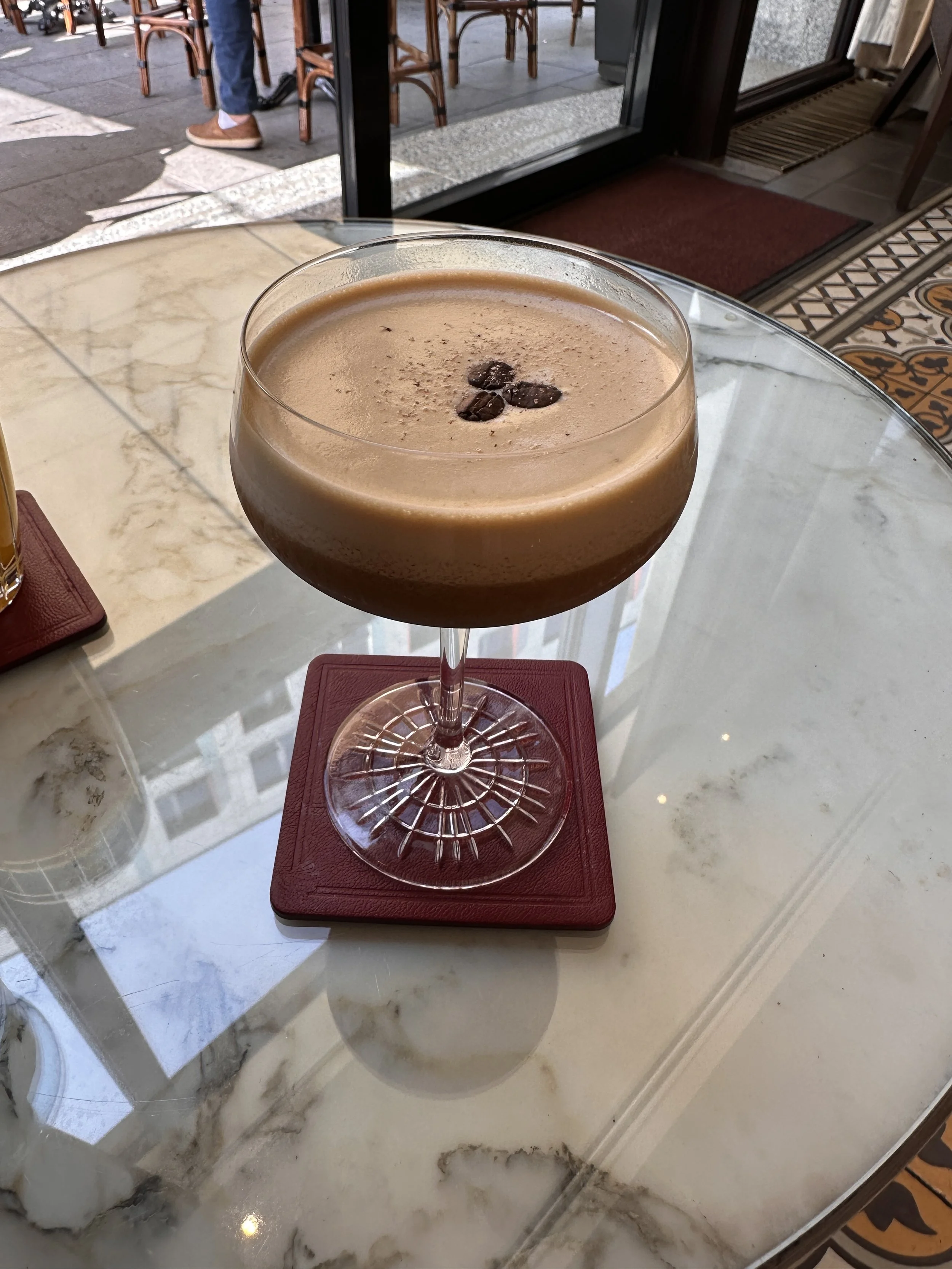
Inside the Four Seasons Gresham Palace, one of Budapest's most beautiful hotel buildings, KOLLÁZS is worth going to for a drink even if a full meal is not on the agenda. We stopped for espresso martinis and they were a ten out of ten. The room around you while you drink them does not hurt.
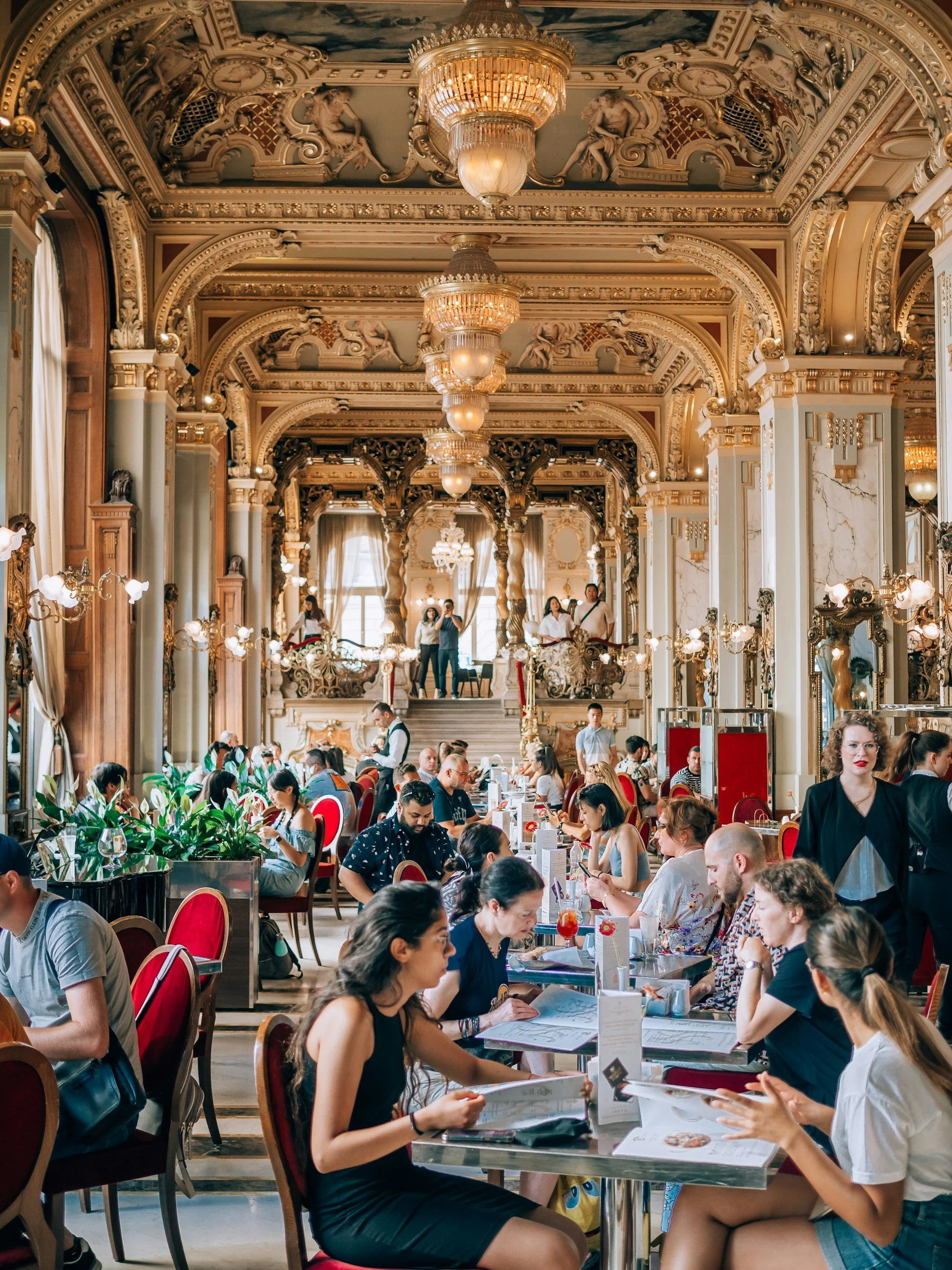
We had breakfast here on the itinerary and missed it because of a travel delay, which I am still annoyed about. Built in 1894 inside the New York Palace hotel, it is consistently ranked among the most beautiful café interiors in the world. Frescoed ceilings, gilded columns, chandeliers, marble floors, the kind of room that makes you feel like you arrived somewhere rather than just sat down somewhere. The cake selection is apparently exceptional and the coffee matches the surroundings. It is on the list for the next visit without question. Go for breakfast, go slowly, and do not make the mistake of rushing through a room like that.
Covered earlier, but worth repeating here because the lángos from the upstairs stall is as much a food experience as anything you will sit down for. Deep-fried dough, sour cream, cheese, eaten standing up in a 19th century market hall. This is the Budapest meal that costs almost nothing and stays with you.
What to Try at Least Once in Budapest
In addition to everything mentioned above, two things are specific enough to Hungary that they deserve a separate callout.
Tokaji wine, the famous sweet dessert wine from northeastern Hungary, produced in the region for centuries and one of the most distinctive things you can drink in the country. Order it anywhere that has it on the menu.
Pálinka, the Hungarian fruit brandy made exclusively from fruit and nothing like vodka despite what the bottle might suggest. Try it once. Try the plum. Make a decision about how you feel about it.
What to Pack for Your First Trip to Budapest
Budapest is a walking city built around detailed architecture, thermal baths, and late nights. Pack for all three without overcomplicating it.
Weather (Quick Reality Check)
We visited in late May, which was close to ideal. Warm enough for light layers during the day, cool enough in the evenings that a jacket was comfortable and occasionally necessary. Budapest summers get genuinely hot from July onward. Spring and early fall are the windows where the city is most enjoyable on foot.
Core Items for Budapest
Comfortable walking shoes. You will cover significant ground on both sides of the river and Castle Hill involves a real climb if you skip the funicular.
A swimsuit and sandals for the thermal baths. Towels and lockers are rentable on site but having your own towel saves time.
A light jacket for evenings regardless of the forecast. The city cools off faster than you expect after sunset.
Something slightly dressier for dinner if you are going somewhere like KOLLÁZS or Gundel. Budapest restaurants at the higher end take their atmosphere seriously and the dress code reflects it.
Cash. Hungarian forints are the currency and smaller restaurants, market stalls, and some bars are cash only. ATMs are easy to find throughout Pest but having forints before you need them saves the scramble.
A portable charger. You will take more photos than you planned, especially inside the Parliament and at Fisherman's Bastion at sunset.
No Photographs Permitted
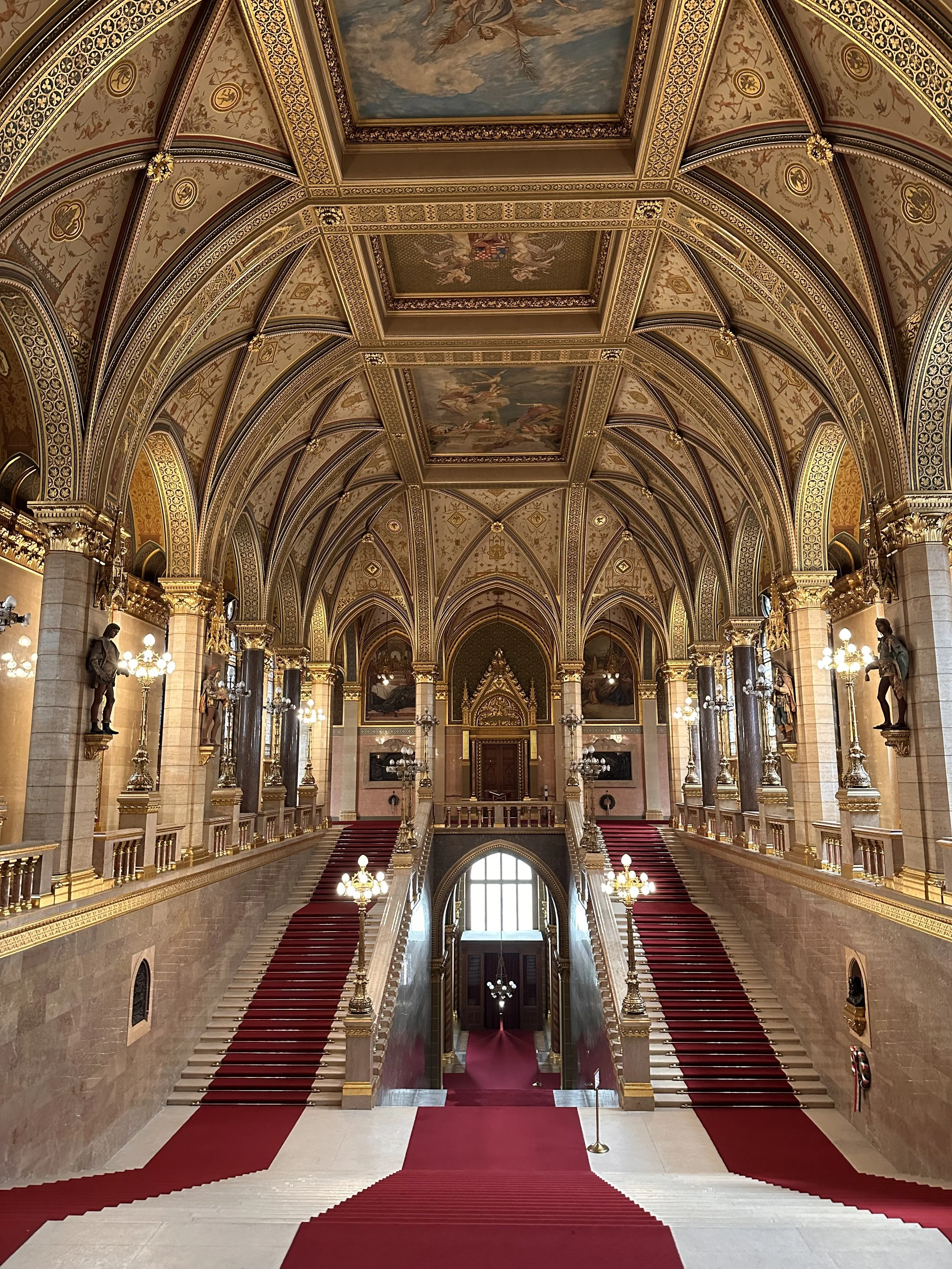
I have been inside a lot of significant buildings. The Colosseum. The Duomo in Milan. The Vatican. The kind of list that starts to make you think you know what grand means and how it feels to stand inside it.
The Hungarian Parliament Building stopped me in a way that I am not entirely sure how to explain.
The scale is enormous but it is not the scale. The gold is everywhere but it is not the gold. Something about the combination of the painted ceilings and the long corridors and the red carpet on the staircases and the light coming through those tall windows creates an atmosphere that feels simultaneously like a museum and like a place where things actually happened. Where decisions were made. Where the country was governed and argued over and contested for more than a century. I took a lot of photographs inside that building. None of them came close.
And then we turned a corner and there was the Hungarian Holy Crown, sitting in a vaulted room under careful light. No photographs permitted.
I put my phone away. And something shifted.
There is a specific thing that happens when you cannot document something. The part of your brain that is always slightly outside the experience, framing it, deciding how it will look later, goes quiet. What is left is just you and the thing in front of you. The crown and the room and the history of what it represents, a thousand years of a country insisting on its own existence, sitting behind glass in a building built to make sure nobody forgot it.
I stood there longer than I would have if I had been allowed to take a photo. I think most people do.
That is the thing the Parliament taught me about Budapest. The city rewards the people who stop reaching for their phone long enough to actually look. The architecture, the history, the details on buildings that most cities stopped bothering with generations ago. It is all there. You just have to be willing to stand still for a minute and let it land.
Itinerary for Your First
Trip to Budapest
Budapest does not ease you in. You arrive and the city is already happening around you, grand and detailed and completely itself. Three days is enough to understand it. It is not quite enough to feel finished with it.
Here is how to use those three days well.
Day 1 - Arrival, the River, and Your First Ruin Bar
Afternoon: Check In and the Central Market Hall
Arrive and check into your hotel. If you are staying at the Párisi Udvar, take a few minutes to actually look at the atrium before you go anywhere. It earns them.
From there, the Central Market Hall is a short walk. Go in the late afternoon when the market is still active but the tourist crowds have thinned slightly. Walk the ground floor first: the produce, the sausage, the paprika, the pastries. Then go upstairs to the food stalls and get the lángos. Eat it there. This is the right introduction to how Budapest feeds people.
Evening: The Danube at Night
Walk down to the river after dinner. Budapest at night along the Pest bank, with the Parliament lit up across the water and the bridges illuminated between the two sides of the city, is one of those views that makes you understand immediately why people come here. The river cruise, if you book it, gives you this from the water with a drink in hand. Either way, spend time at the river before you go anywhere else for the evening.
Late: The Ruin Bars
Head to District VII. Szimpla Kert is the one worth finding on your first night if you only go to one. Go after ten, wander every room before you settle on one, and drink the local beer. The crowd will be mostly European and mostly not worried about the same things you are. Match that energy.
Day 2 - Parliament, Castle Hill, and Sunset at Fisherman's Bastion
Morning: New York Café
Start at the New York Café, one of the most ornate and absurdly beautiful breakfast rooms in Europe. The interior is Baroque in the way that a film set is Baroque, except it is real and has been there since 1894. Order something with the coffee and eat slowly. The room deserves the time.
Mid-Morning: Hungarian Parliament Building
Book a guided tour in advance. The exterior from the river is spectacular. The interior requires a guide to fully understand and a certain willingness to just stop moving and look up. The Crown Jewels room comes near the end of the tour and is the moment the visit becomes something you will still be thinking about later.
After the tour, walk south along the Danube bank toward the Chain Bridge. The Shoes on the Danube memorial is along this stretch. Stop. Read the small plaque if you need context. Then just stand there for a minute.
Afternoon: Across the River
Cross the Chain Bridge on foot into Buda. The bridge itself is worth the walk. From the Buda side you can take the funicular up to Castle Hill or walk up if the weather and your legs cooperate.
Explore Buda Castle and the surrounding grounds. Walk through the streets of Castle Hill without a fixed plan. Find somewhere for lunch. The energy is quieter than Pest and that contrast is part of why the afternoon works here.
Make your way to Matthias Church and go inside. Then find your spot at Fisherman's Bastion before the crowd does.
Sunset at Fisherman's Bastion
The view of the Parliament across the river at golden hour is the image Budapest is known for. It earns that reputation. Stay until the light is gone.
Evening: Dinner and Ruin Bars
Dinner at Véndiák Étterem for traditional Hungarian food, or Beerstro14 if the atmosphere of a beautiful plaza and exceptional plating is what the evening calls for. Then back to District VII for another pass through the ruin bars.
Day 3 - Pest, the Baths, and a Proper Farewell
Morning: Andrássy Avenue and Heroes' Square
Walk Andrássy Avenue from downtown Pest toward City Park. The boulevard is lined with Neo-Renaissance buildings and feels like a city that knew exactly what it was doing when it built itself. Stop at Heroes' Square. Stand in the middle of the Millennium Monument and look at the statues around you. Learn the names before you go if you can. The context changes what you are looking at.
Mid-Morning: St. Stephen's Basilica
Double back toward Pest's center and spend time at St. Stephen's Basilica. We booked the extended guided tour through GetYourGuide, which includes the church, the dome, and the treasury on a single ticket so you are not managing separate queues for each. Go inside. Climb to the dome. Find the Holy Right in its reliquary and consider what it means for a country to keep a king's hand as a national treasure for a thousand years. That kind of continuity is not something you encounter everywhere.
Stop at KOLLÁZS after for an espresso martini. The building is the Four Seasons Gresham Palace and the bar inside it matches.
Afternoon: Széchenyi Thermal Baths
Give the afternoon to Széchenyi. Book your full day entrance pass through GetYourGuide in advance, especially on weekends. Bring a swimsuit, rent a locker and towel if you did not bring your own, and settle into the rhythm of moving between pools. Hot water, cooler water, the outdoor pools if the weather is good. You will not be able to stay in one place for long. That is the point.
Three hours minimum. Four is better. This is not an activity to rush.
Sunset: Gellért Hill
If you have the energy after the baths, Gellért Hill on the Buda side offers a different and equally compelling view of the city. The Citadel at the top looks out over both sides of the river and the full spread of Budapest below. A good place to end the trip.
Evening
Dinner somewhere you have not been yet. Then one last walk along the Danube before you leave in the morning.
Budapest does not feel finished when you go. That is probably the most honest thing I can tell you about it.