
Your First Time in
Belgrade, Serbia
From the window of the car from the airport, Belgrade looks familiar. Wide boulevards, old stone buildings, a city going about its evening. If you have done any amount of European travel you will spend the first few minutes placing it against somewhere else you have been. It has the bones of Budapest, maybe, or the energy of somewhere in the Balkans you cannot quite name. Familiar enough that you stop looking out the window before you should.
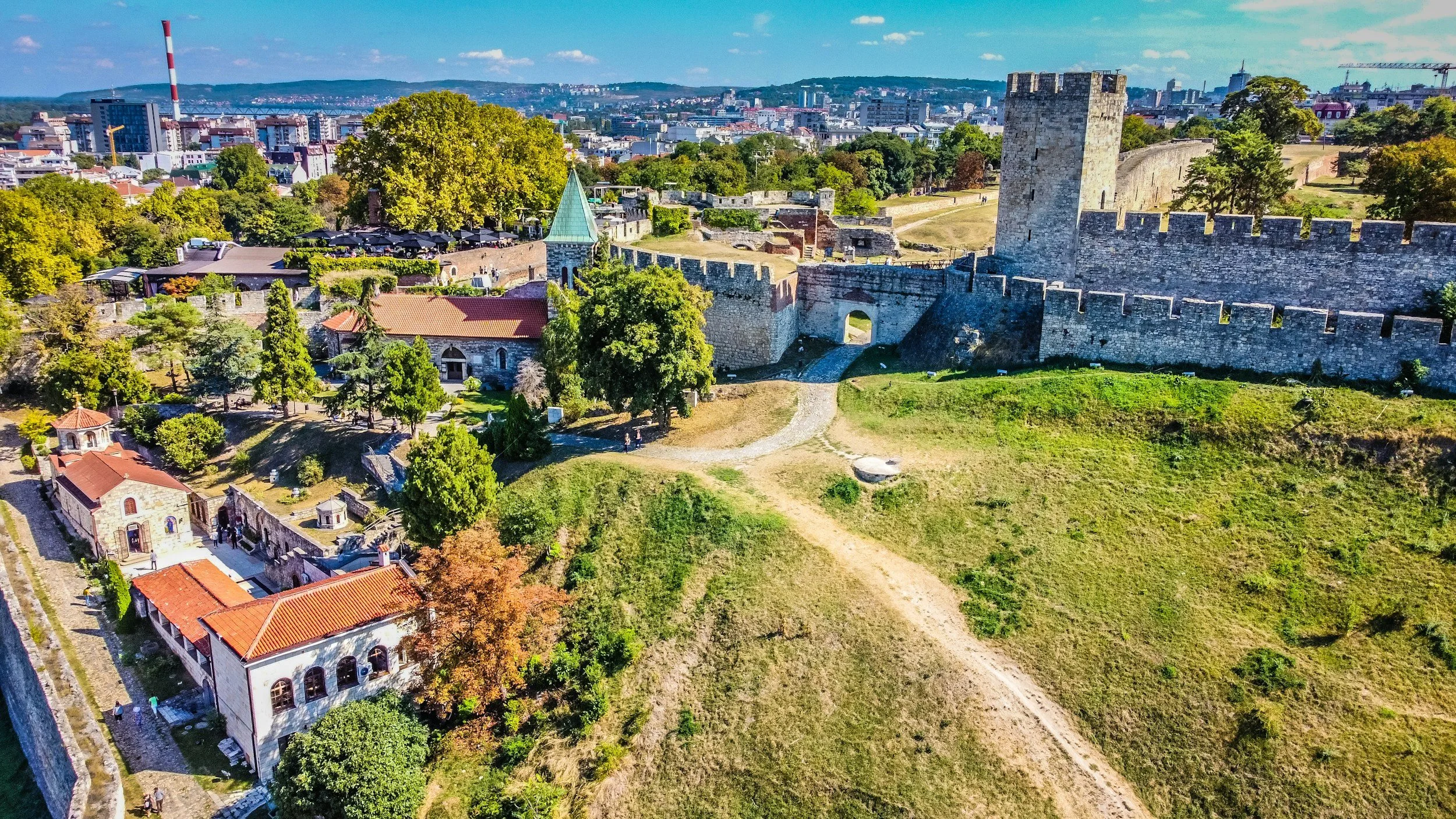
The city sits at the confluence of the Sava and the Danube, two rivers meeting at the edge of a fortress that has been fought over since the Romans built the first version of it. The Ottoman walls are still there, crumbling in places, patches of Roman foundation visible underneath if you know where to look. Austro-Hungarian facades line the boulevards in the center. Communist-era blocks appear between them without apology. Glass office buildings beside all of it. The whole thing should look like a mistake and does not.
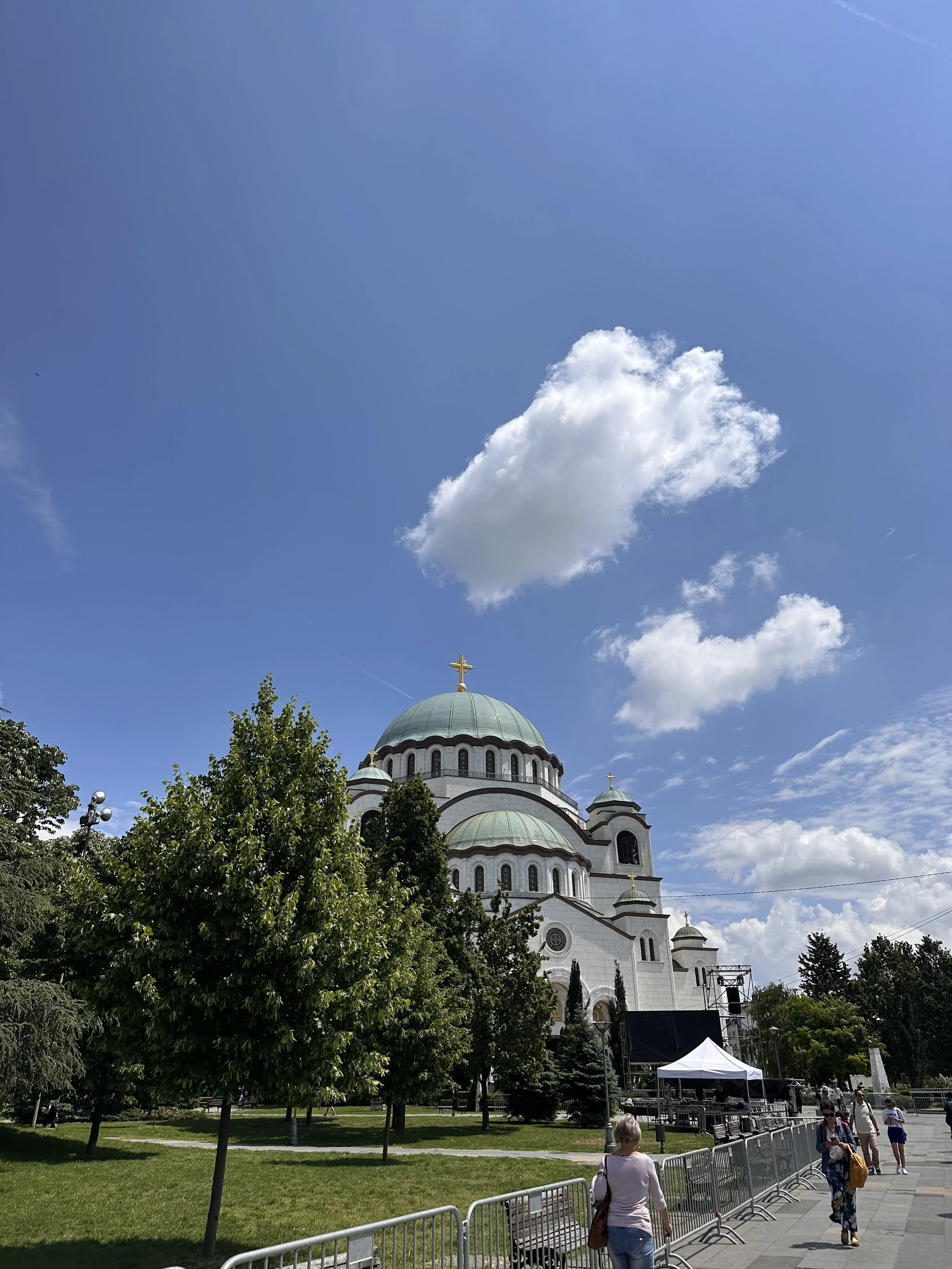
Skadarlija is cobblestone and kafanas and has been since the 19th century. The Temple of Saint Sava is one of the largest Orthodox churches in the world and is still not finished after ninety years of construction. The National Museum was closed for twenty years and reopened in 2018. The fortress has been destroyed and rebuilt forty times by some counts.
Belgrade is a city you read slowly, in layers, the way you read anything that has been written over a very long time by a very large number of people with completely different intentions.
Three days gives you the shape of it.
A Brief Look At
Your Itinerary
The full itinerary is at the bottom of the page when you are ready.
-
The gentler introduction. Get your bearings at Republic Square, walk Kneza Mihaila toward the fortress, and let the city introduce itself before dinner. The evening at Tri Šešira is where Belgrade stops being a place you are visiting and starts being a place you are actually in.
-
The day the city earns everything you came for. The rose garden, the fortress walls, Crkva Ružica, lunch above the Danube, and an afternoon in Zemun that feels completely removed from everything you did in the morning.
-
The morning belongs to one of the largest Orthodox churches in the world and it earns every minute you give it. The rest of the day is yours. Skadarlija in the afternoon looks nothing like Skadarlija at night. See both versions before you leave.
What to See on Your Visit to Belgrade
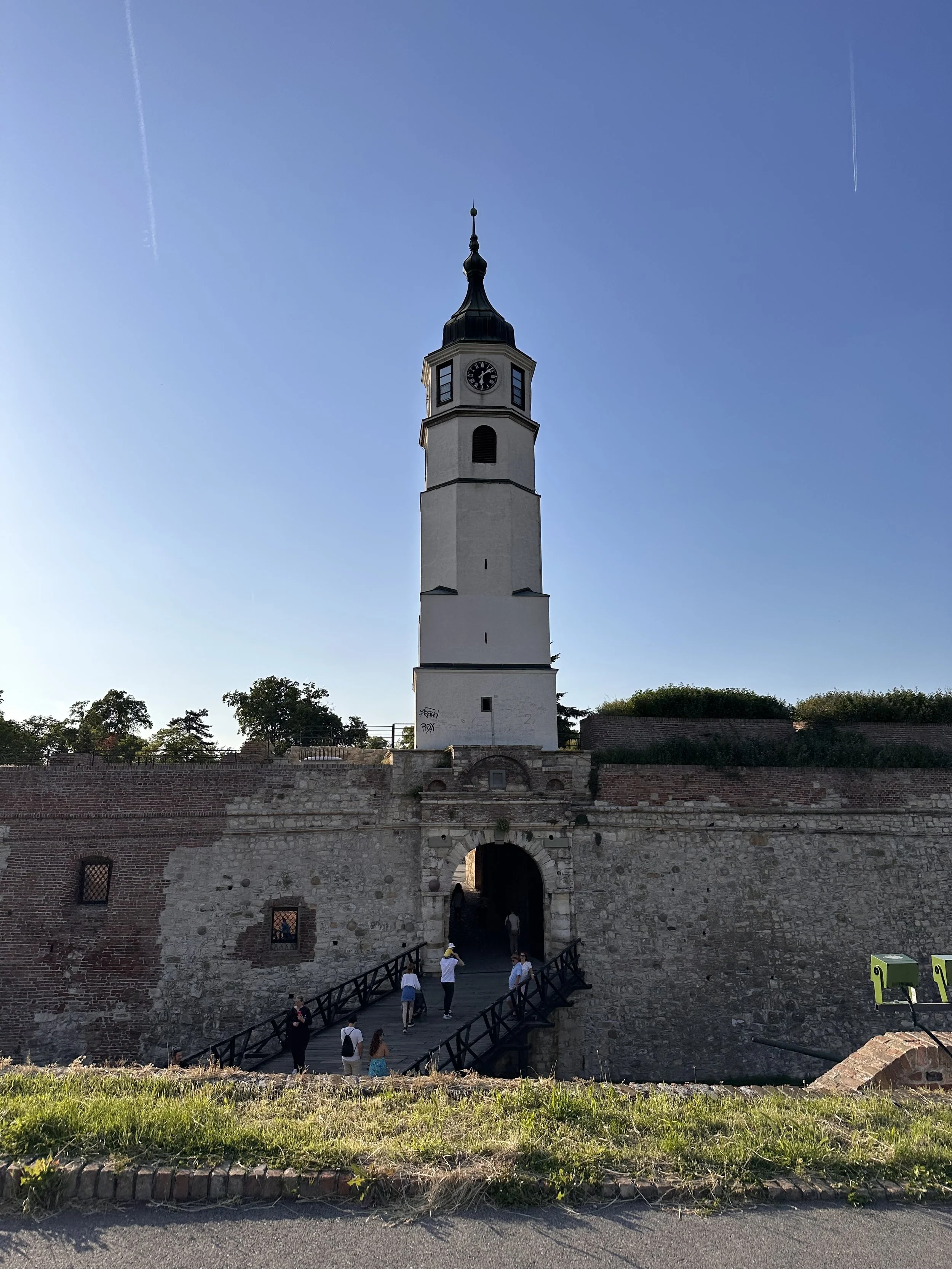
Kalemegdan sits at the confluence of the Sava and Danube rivers, a fortress complex that has been fought over, destroyed, and rebuilt by Romans, Byzantines, Ottomans, and Austro-Hungarians across more than two thousand years. The layers of history in the walls read almost like geology if you know what you are looking at, which is exactly why going with a guide or doing some reading before you arrive changes the whole experience.
What the photographs do not prepare you for is the rose garden. Before you reach the main fortress walls there is a formal garden in full bloom that stops you before the history even starts. It has no right to be as beautiful as it is given everything that happened on this ground. Let it land before you move on.
From the upper ramparts the views over the Danube are the best in the city. Two rivers meeting below you, the flat Vojvodina plain stretching north, Belgrade spreading out in every direction. The light changes the whole thing and there is no reason to be anywhere else while it does.
Crkva Ružica - The Church of the Holy Mother of God

Inside the fortress walls, tucked against the stone and easy to walk straight past, is one of the oldest churches in Belgrade. Small, dark, and quietly extraordinary. The chandeliers inside are made from weapons and bullet casings collected after the First World War, which takes a moment to fully process when you are standing underneath them.
I had attended a Serbian Orthodox church in San Diego many times before I stood inside this one. The iconography, the candles, the specific quality of light through those windows. All of it familiar in a way that felt completely different from being a tourist in a religious building. Less like visiting something and more like recognizing it.
Go inside even if churches are not usually your thing. The scale of it, so small against the fortress around it, makes it feel more intimate and more genuinely holy than something ten times its size would. Five minutes is enough. Most people end up staying longer.
Republic Square and the National Museum of Serbia
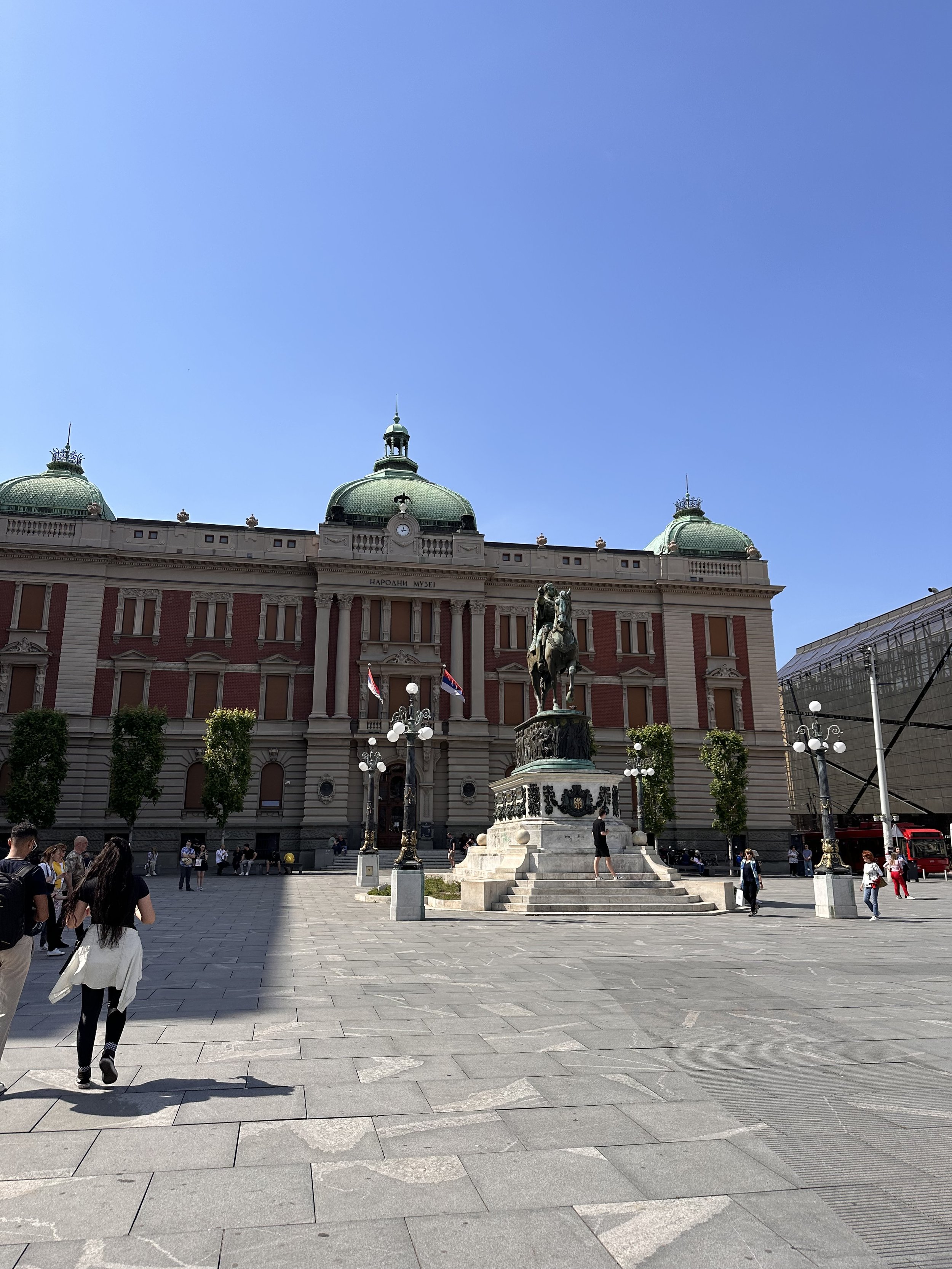
Republic Square is the natural starting point for any day in central Belgrade. The large equestrian statue at its center is Prince Mihailo Obrenović, the 19th century ruler credited with negotiating the withdrawal of Ottoman forces from Serbia's remaining fortresses. Worth knowing before you stand there so it means something rather than just being a landmark to orient yourself by.
The National Museum on the square reopened in 2018 after a twenty year closure and the collection spans prehistoric artifacts through medieval Serbian history to 19th and 20th century painting. Give it an hour and a half.
The exhibits covering Yugoslavia and the economic chaos of the 1990s are the ones that take longest to leave you. Not because of how they are presented but because of what they contain. The currency from that period sits behind glass, denomination after denomination printed in increasingly absurd numbers as the inflation compounded. It does not need a label. You understand immediately what it means for a country to go through something like that. What it means for the people who were living on that money when it became worth nothing.
Mateja's parents remember it. They were here for it. Standing next to someone for whom that glass case is not history but memory changes what you are looking at completely.
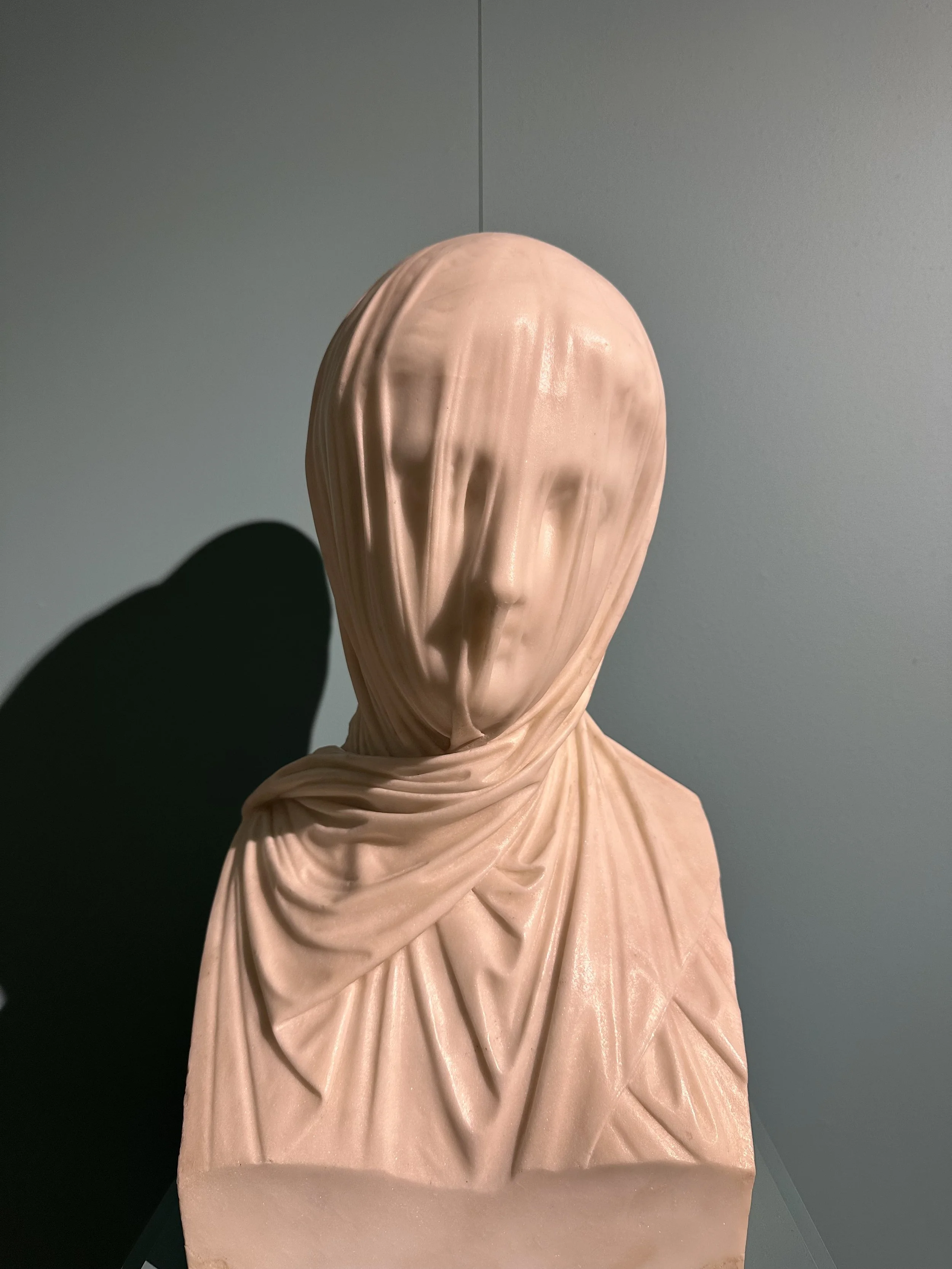
Elsewhere in the collection there is a marble bust called The Veiled Woman, a 19th century Italian marble sculpture of a woman's face, the stone worked so finely it reads like layers of silk pulled tight across the bone. I took one photograph in the entire museum. It was of that.
Kneza Mihaila
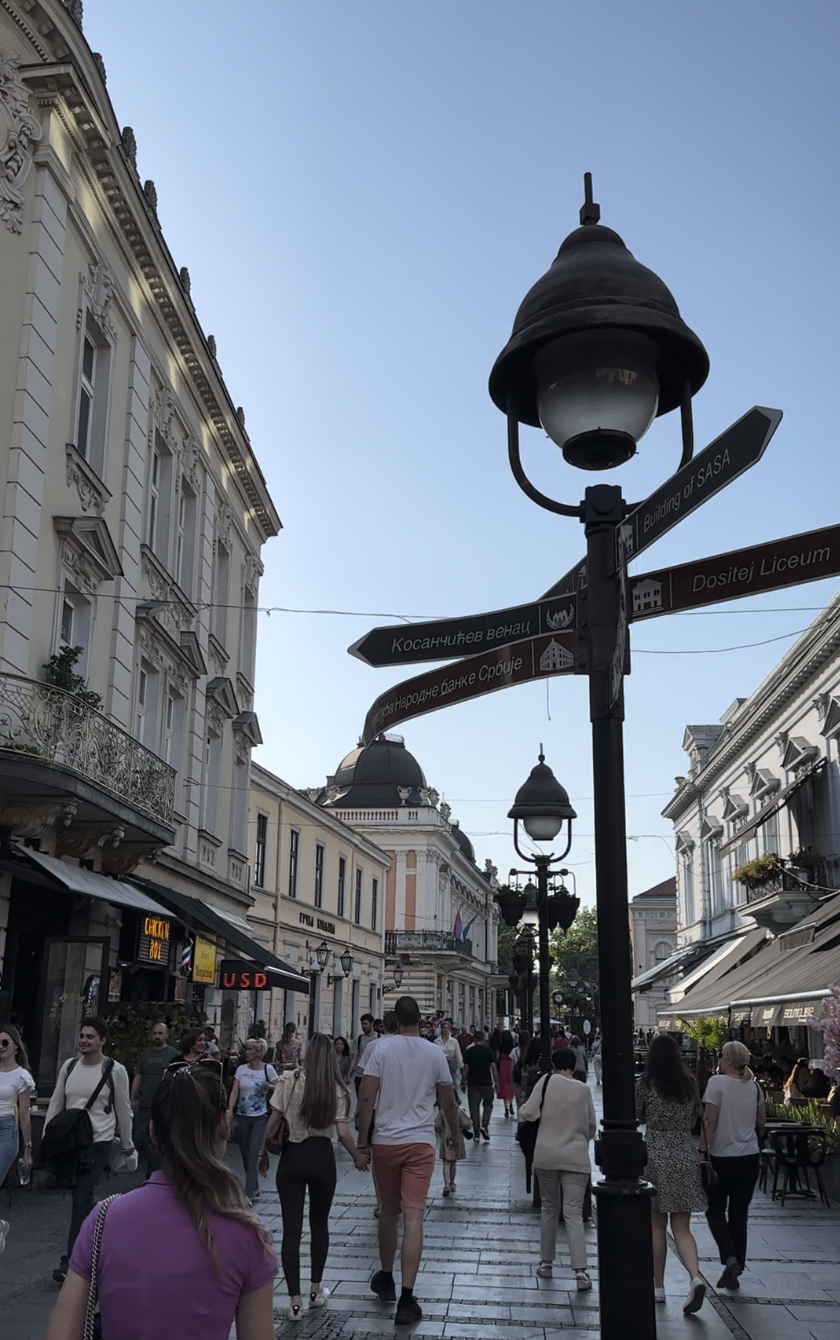
The main pedestrian street running from Republic Square toward Kalemegdan is lined with 19th century buildings, outdoor cafés, and street musicians. Thoroughly European and pleasant without being remarkable. Think of it as the connective tissue between the things that actually stop you. Walk it slowly and turn off it when something catches your eye. The side streets on either side are where the residential city starts and the tourist version ends.
Skadarlija
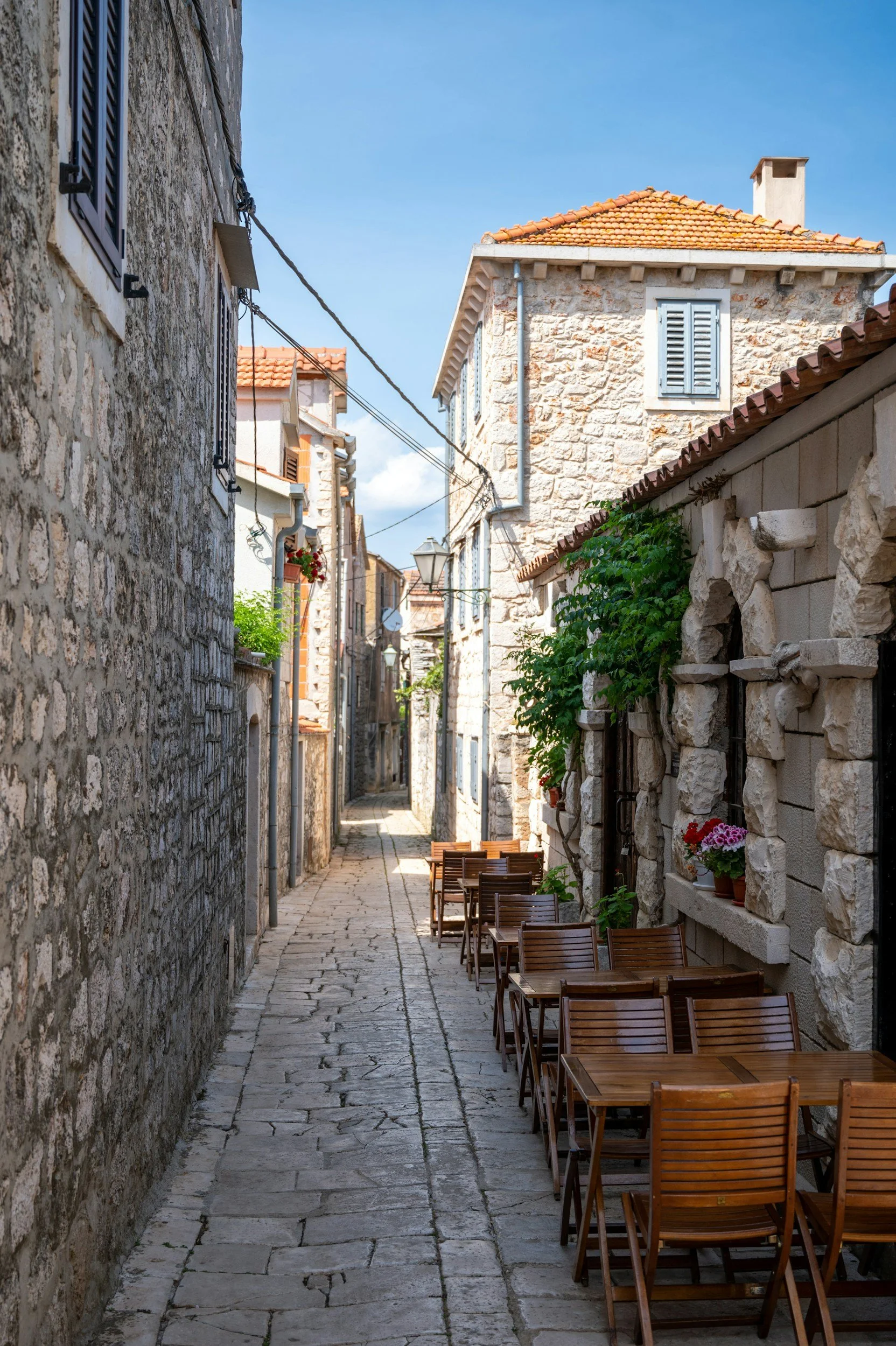
You hear it before you see it.
The cobblestone bohemian quarter announces itself from around the corner, music and noise and the smell of grilled meat arriving before the street does. Then you turn and it is all of it at once. Lantern light on old stone. Musicians moving between tables. The sound of a room that has been going since before you arrived and will keep going long after you leave.
Skadarlija has been the artistic and social heart of Belgrade since the 19th century, when writers, painters, and musicians made it their neighborhood. The kafanas lining the street have been here in various forms since then and you can feel the continuity of it when you sit down. This is not a street built to look like the real thing. It is the real thing, which is why it feels different from every other bohemian quarter you have been to that was.
Come for dinner. Stay for whatever comes after. The street will take care of the rest.
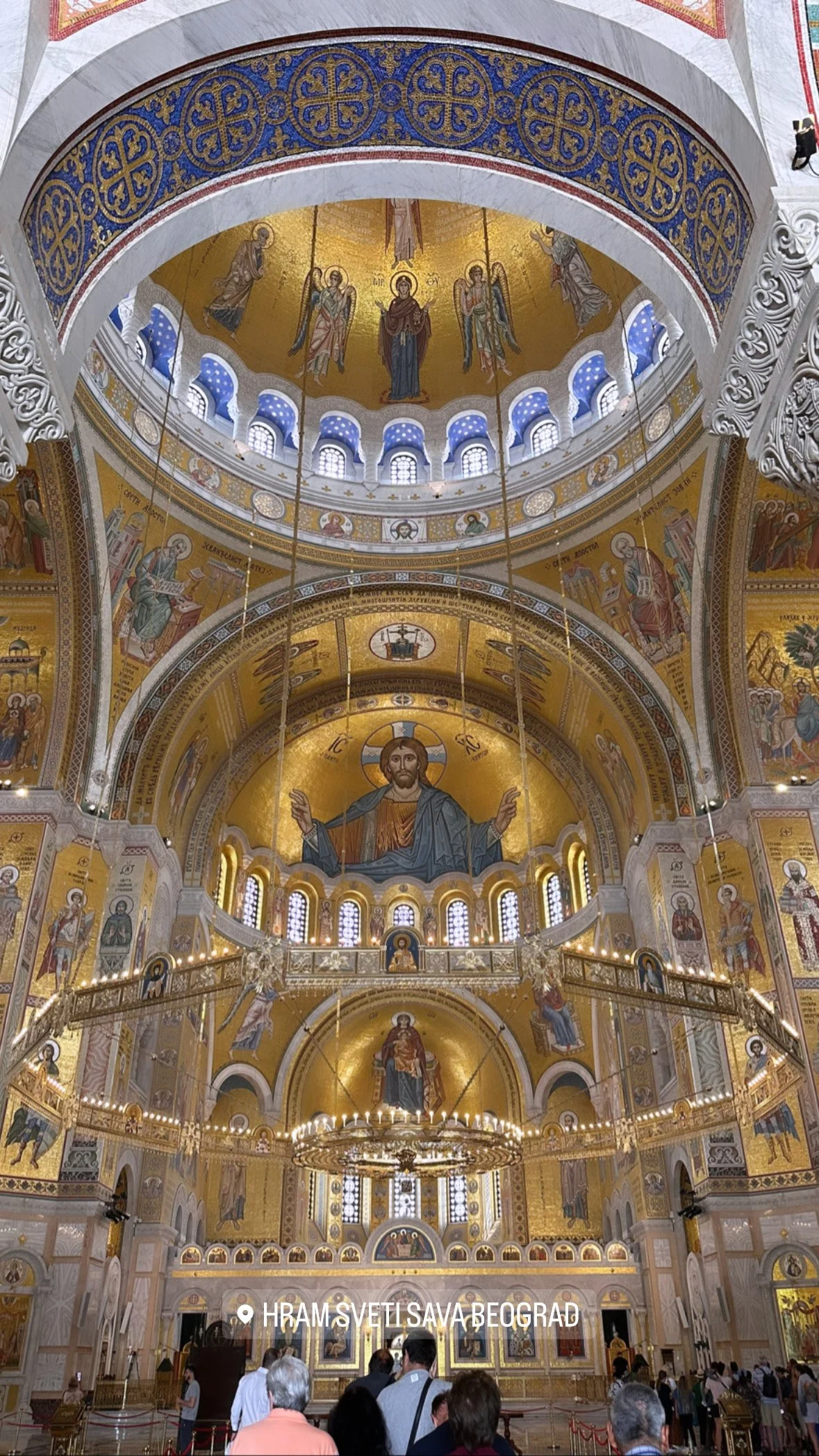
One of the largest Orthodox churches in the world, sitting on Vračar plateau on the spot where the Ottomans burned the remains of Saint Sava in 1595. Construction began in 1935 and is still not complete, which tells you something about the scale of what was attempted.
Walk the full perimeter of the exterior before you go inside. This is not optional. The size of it needs time to actually register and the walk gives you that. Then go in.
The interior stops you immediately. Gold and deep blue mosaic covering surfaces so vast that your eye keeps finding new sections of it long after you think you have seen the whole thing. It is the kind of space that makes you move more slowly than you normally would, not out of reverence necessarily, just because rushing through it feels physically wrong. The crypt below is complete and worth the descent.
For anyone who has spent time in Serbian Orthodox churches elsewhere, this one puts everything into context. For first time visitors with no prior exposure, it is simply one of the most impressive religious interiors in Europe, and one that gets a fraction of the attention it would receive if it were located somewhere more obvious on the tourist map.
Give it a genuine hour. Do not treat it as a quick stop on the way to something else.
Zemun and Gardoš Tower
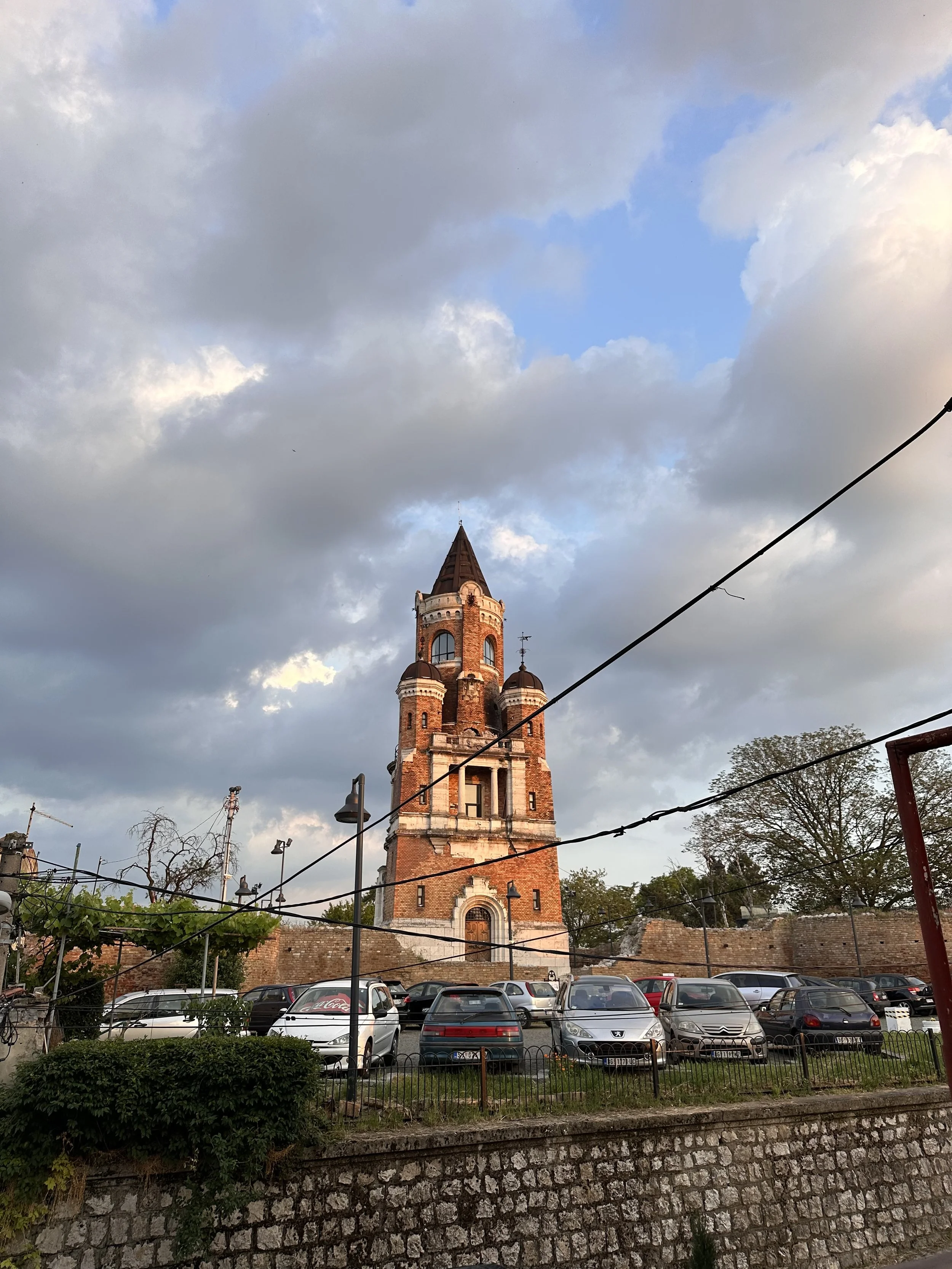
The neighborhood of Zemun sits along the Danube just outside central Belgrade, technically a separate city until it was incorporated in the 20th century, and it still feels like its own place. Quieter, more residential, with an Austro-Hungarian architectural character that is completely different from the Ottoman-influenced older parts of Belgrade.
Gardoš Tower at the top of the hill is the nominal reason to come. It is not the actual reason to come. The actual reason is the walk up through the narrow streets, the riverfront promenade at the bottom, the specific quality of a neighborhood going about its day completely removed from the tourist center twenty minutes away. There are no landmarks demanding your attention and no particular route to follow. That is the point.
Come here when you want Belgrade without the Belgrade of it.
Where to Stay Your First Time in Belgrade
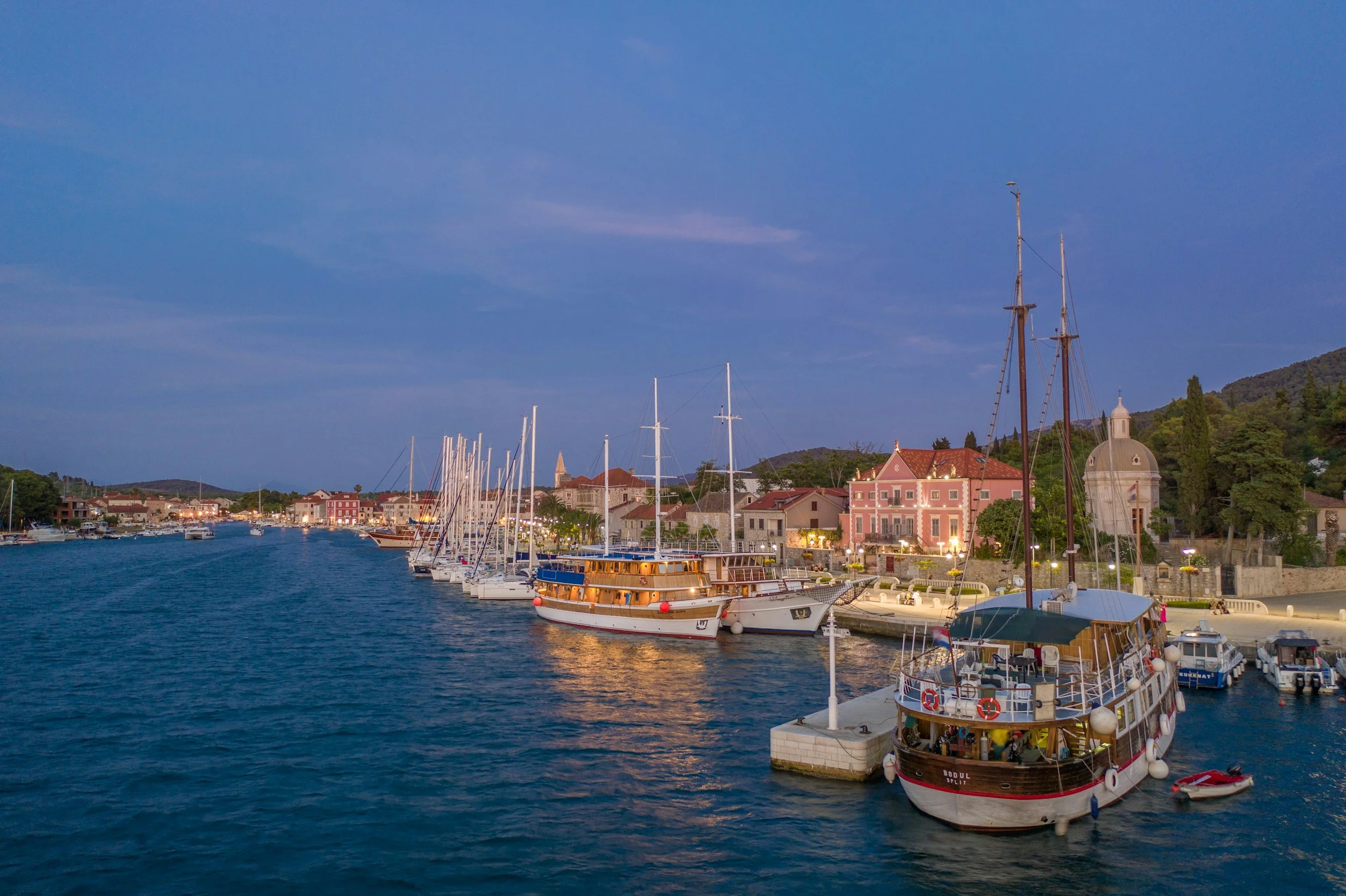
Belgrade is a straightforward city to base yourself in. Stay in or near the center and everything is walkable. The two neighborhoods that make the most sense for a first visit are Stari Grad, the old town that includes Skadarlija and the area around Republic Square, and Savamala, the waterfront creative district that has transformed in the last decade into one of the more interesting neighborhoods in the city.
Know the Neighborhoods
Stari Grad is the most immediate version of Belgrade. You walk out the door and you are already in it. Republic Square, Kneza Mihaila, Skadarlija, and Kalemegdan are all within walking distance. The right choice if you want the city to be right there from the moment you leave your hotel.
Savamala sits along the Sava riverfront south of the old town and has a younger, more creative energy than the historic center. Converted warehouses, street art, bars, and clubs that go until morning. Worth knowing about if nightlife is part of the plan. Less convenient for the main sights but still very manageable.
Vračar is quieter and more residential, sitting south of the center near the Temple of Saint Sava. Good if you want something calmer and more local feeling, though you will use taxis more than you would staying centrally.
Hotel Suggestions
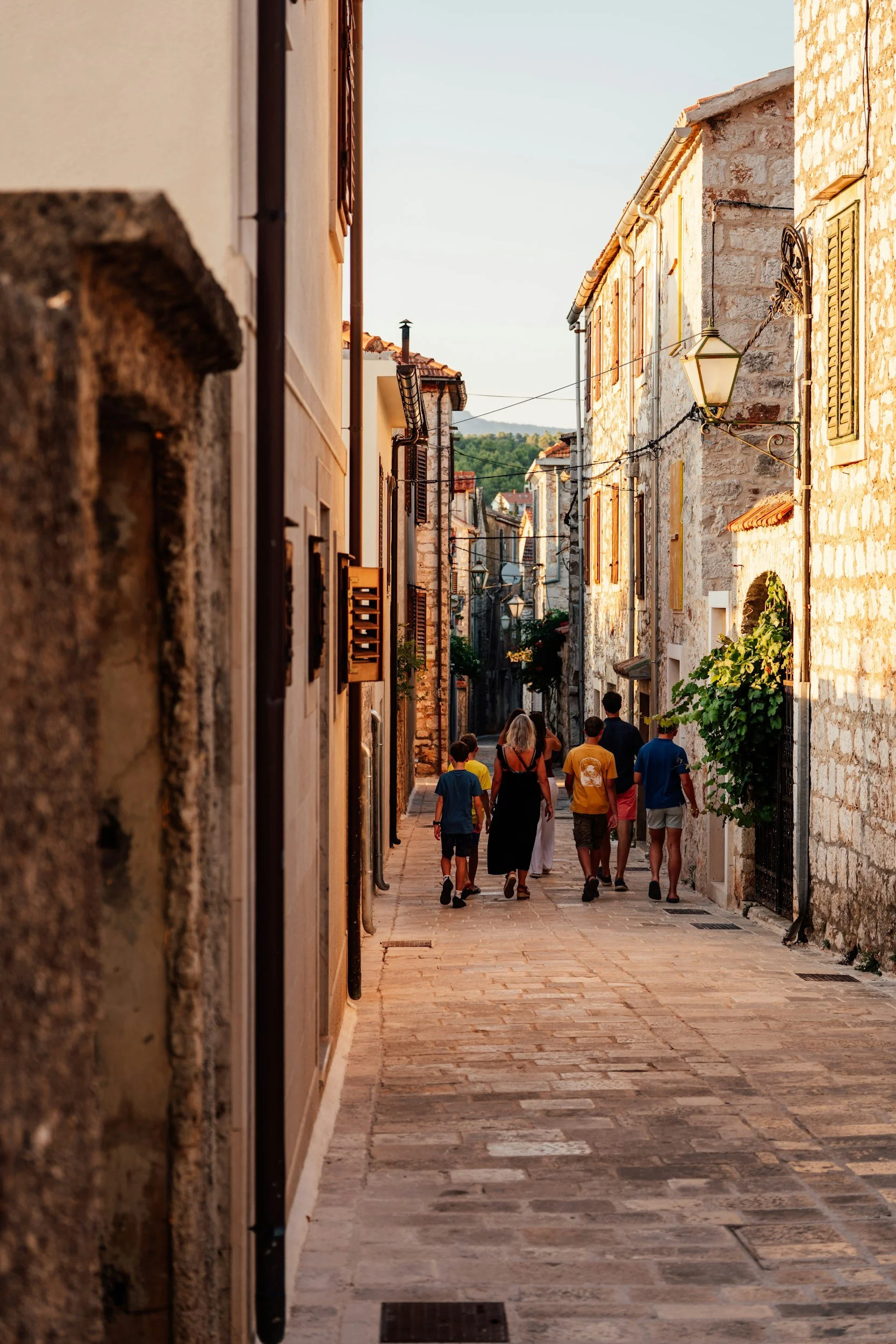
Hyatt Regency Belgrade is where we stayed and it does everything it should. Well located, genuinely comfortable, and a reliable base for moving around the city. There was an international conference happening during our stay, a detail that felt oddly fitting given how thoroughly Belgrade defies the expectations most visitors arrive with. The hotel sits in Novi Beograd, the newer part of the city across the Sava, which sounds less convenient than it is. The drive into the old town takes minutes and the property itself is one of the strongest options in the city at its price point.
Square Nine Hotel is widely considered the best boutique option in Belgrade, sitting directly on Students' Square in Stari Grad. Small, design-forward, and in the middle of everything. You walk out the door and the city is already happening around you.
Hotel Moskva is the historic choice, a Vienna Secession building on Terazije square that has been operating since 1908. The interior has been maintained with enough of its original character that staying here feels like sleeping inside a piece of the city's history rather than just near it. The Moskva cake, a layered chocolate and vanilla slice that has been made in the hotel's café since it opened, is worth stopping for even if you are not a guest.
Where to Eat & Drink on Your First Trip to Belgrade
Serbian food does not get the attention it deserves and that is genuinely difficult to explain once you have eaten it. It is generous and honest and built around good meat and dairy and bread, and it is completely defined by the culture surrounding it. A meal in Belgrade is not something you finish and leave. It is something that keeps going for as long as you let it.
Note: I have almost no photos from any of the restaurants. It simply never occurred to me.
The name means Three Hats and the restaurant has been on Skadarlija since 1864. We came here on our first night and it set the tone for everything that followed. Live music filling the room, long tables, the specific noise of people who are genuinely enjoying themselves.
What struck me was not the food, which was excellent, but the recognition. This was the same meal Mateja's parents make every week at his parents' home in San Diego. The same flavors, the same spirit around the table, the same music in the background that feels less like entertainment and more like something the room requires to function properly. I had been experiencing a version of this for years without knowing exactly where it came from. Tri Šešira answered that.
Go for dinner. Order the roast meat and the kajmak and the bread. Let the evening run longer than you planned because it will anyway.
Further down the same street and a slightly larger, more traditional kafana. We came here on our second night and worked through the full range: pljeskavica, kajmak, fresh salad, and rakija to finish. The cherry rakija specifically. If you have only had rakija in its plum version, the cherry is different and worth trying. It is still strong and still not something you approach carelessly, but it has a brightness to it that makes it feel slightly more forgiving than it actually is. The portions here assume you arrived hungry. The atmosphere assumes you are not watching the clock. Both assumptions are correct.
Inside the fortress grounds with the Danube below. We came here after a full morning of walking the fortress and the church and sat down and did not want to get up for a long time. The food is traditional Serbian cooking, solid and generous. The view is the river and the city spreading out beyond it. There was nothing complicated about how it felt to be sitting there. Just pure contentment, which after everything the morning asked of you is exactly the right thing.
Book ahead in summer. The terrace fills quickly on clear days.
What to Try at Least Once in Belgrade
Pljeskavica, the spiced grilled meat patty that is Serbia's answer to comfort food. It bears almost no resemblance to a burger despite what the description suggests and everything about it is better than the description prepares you for.
Kajmak on everything. A creamy, slightly tangy cultured dairy spread that is as fundamental to Serbian cooking as butter is to French cooking. If it is on the table, use it on everything.
Ćevapi, small grilled minced meat sausages served with flatbread, raw onion, and kajmak. Found everywhere in Belgrade and never disappointing.
Ajvar, a roasted red pepper spread that appears alongside almost everything and that most visitors assume is just a condiment until they taste it. It is not just a condiment.
Sarma, stuffed cabbage rolls slow cooked with minced meat and rice. The kind of dish that appears at every family table and every celebration and that tastes like it has been made the same way for a very long time, because it has.
Burek from a bakery in the morning. Flaky pastry filled with meat or cheese, hot from the oven, eaten standing up. The Serbian version of the thing you grab when you need something fast that turns out to be the thing you think about later.
Rakija, the fruit brandy that is essentially the national drink and the thing that appears at every table at every occasion regardless of the time of day. Try the cherry. Approach it carefully.
And at least one full evening in Skadarlija with live music. Not because the music is always exceptional but because the combination of the cobblestones and the kafana and the specific noise of a Belgrade night is something that belongs entirely to this street.
What to Pack for Your First Trip to Belgrade
Belgrade is a walking city with a lot of uneven cobblestone, some grand religious sites that require modest dress, and a nightlife culture that goes considerably later than most visitors are used to. Pack for all three without overcomplicating it.
Weather (Quick Reality Check)
We visited in late May, which was close to ideal. Warm enough for light layers during the day, cool enough in the evenings that a jacket was welcome. Belgrade sits in a continental climate which means genuinely hot summers and cold winters. July and August get hot in a way that makes the cobblestone streets and the fortress harder work than they need to be. Late April through June and September through October are the strongest windows for a first visit.
Core Items for Belgrade
Comfortable shoes with grip. Kalemegdan and Skadarlija are cobblestone throughout and uneven enough that flat thin-soled shoes will cost you by midday. This matters more than almost any other packing decision you will make for this city.
A light jacket for evenings. Late spring evenings in Belgrade cool off faster than the afternoon temperature suggests and the kafanas in Skadarlija spill outside when the weather cooperates, which means you will want a layer once the sun goes down.
Modest clothing for the churches. Both Crkva Ružica and the Temple of Saint Sava require covered shoulders and knees. A light scarf or layer you can add at the door handles both without adding anything significant to your bag.
Cash in Serbian dinars. Cards are accepted at hotels and larger restaurants but smaller kafanas, bakeries, and street vendors operate on cash. The dinar is the currency and unlike some neighboring countries euros are not widely accepted. Sort your currency before you need it rather than after.
A portable charger. The fortress, the river views, the church interiors, Skadarlija at night. You will take more photos than you planned and the days are long.
Local Details Worth Knowing
Belgrade is a late city. Dinner does not start at six. Restaurants fill from eight or nine onward and the kafanas in Skadarlija are at their best after the sun goes down and the music gets louder. Fighting the schedule means missing the city at its best. Adjust and everything falls into place.
Serbian is the language and while English is spoken at hotels and in tourist areas, stepping off the main streets means the gap becomes real quickly. A few words go further than you expect. Hvala means thank you. Molim means please. Dobar dan is good day. Nobody expects you to know them and everyone notices when you try.
Tipping is appreciated and expected at sit down restaurants. Ten to fifteen percent is standard. Leave it in cash rather than adding it to a card payment.
No One Told the Night It
Had to End
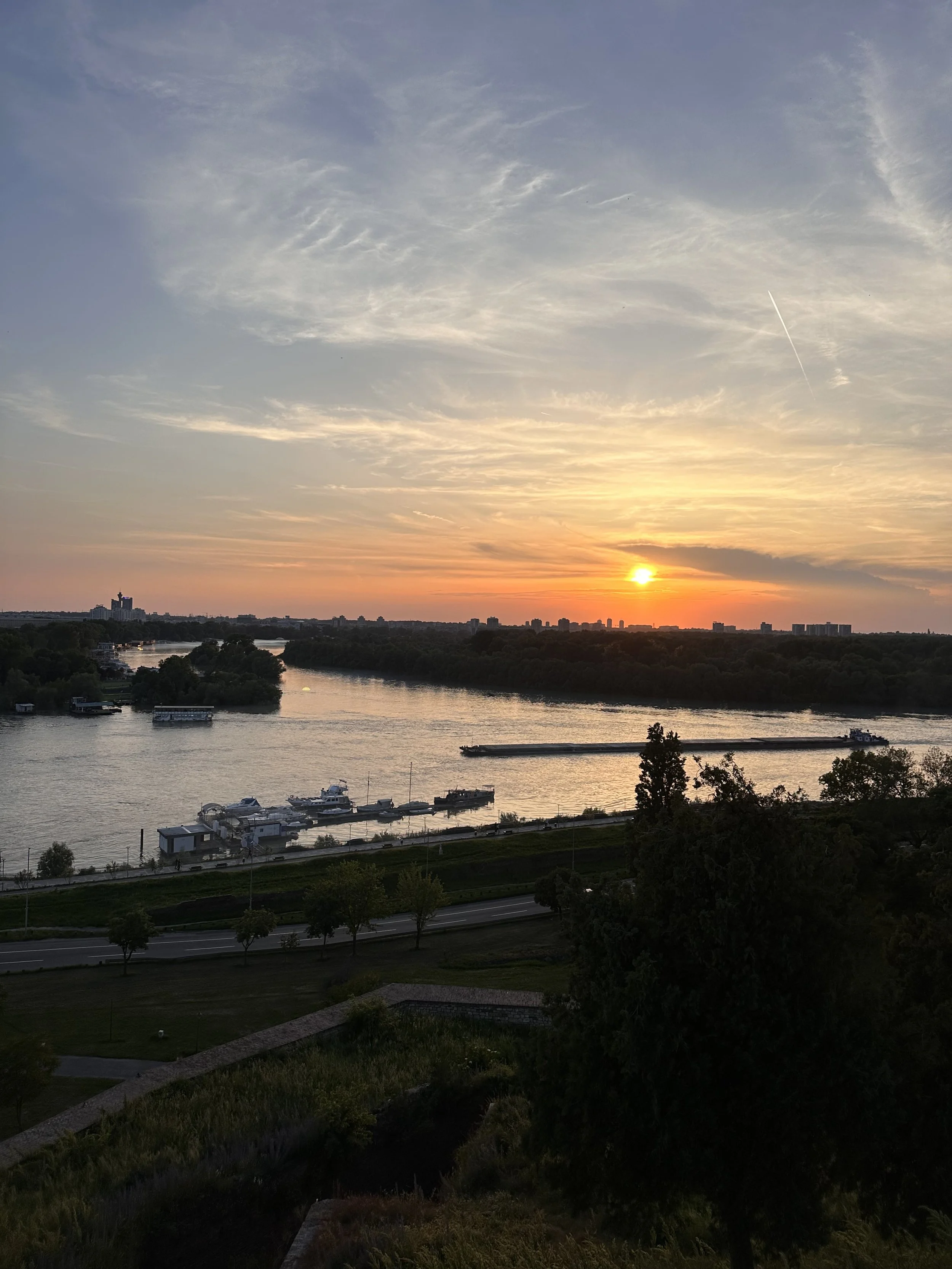
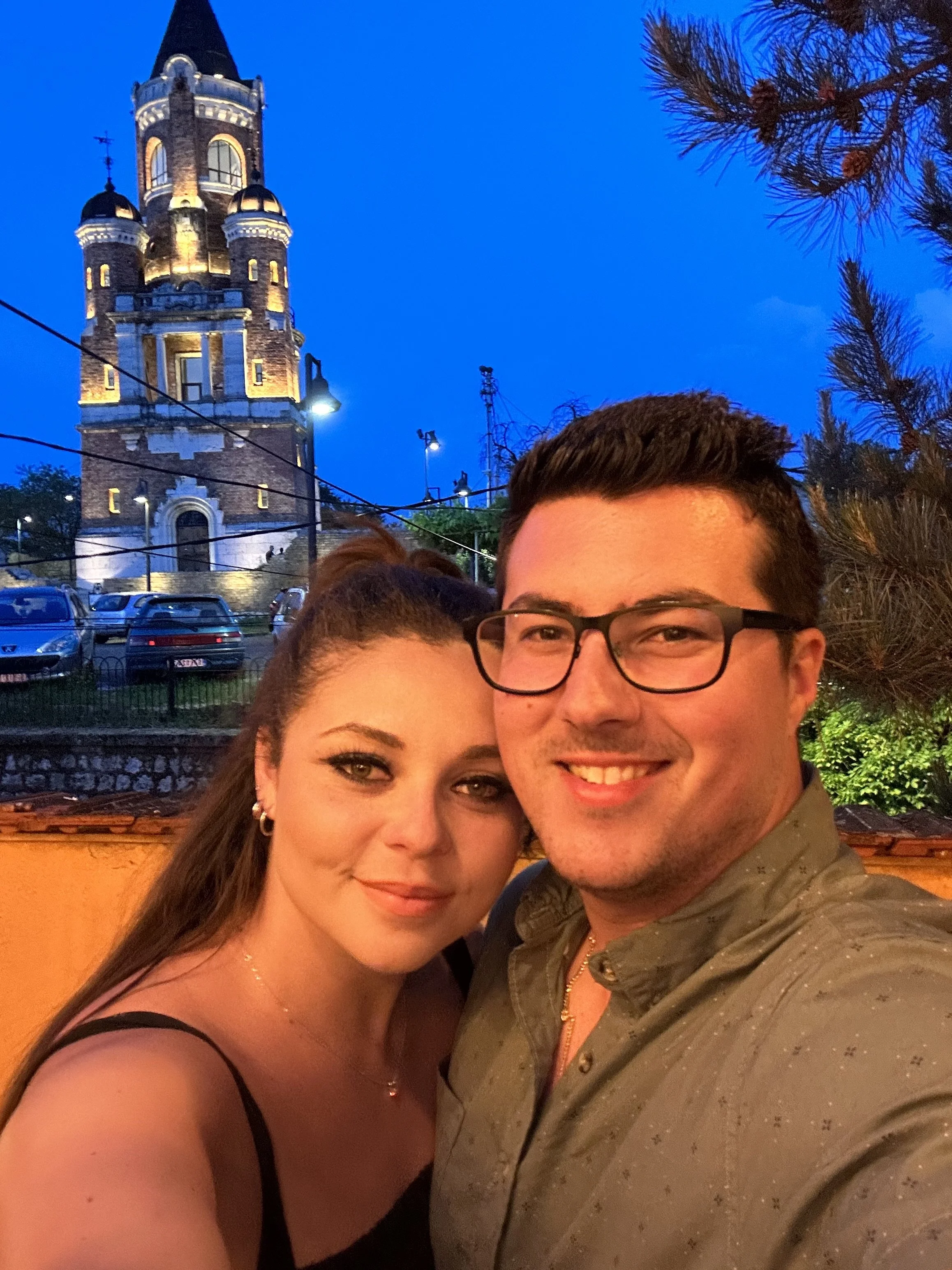
You have done the reading. You know about Kalemegdan and the kafanas and the food. You sit down at a table in Skadarlija and order what you were told to order and the food arrives and it is good, genuinely good, and you think you understand what you are experiencing. Then someone pours rakija without asking and the music starts and the table next to you erupts over something and pulls your table into it somehow, and two hours later you are still there and the evening has gone somewhere that no amount of reading prepared you for.
That is Belgrade. Not the fortress, not the cobblestones, not the Temple of Saint Sava. The thing that happens at the table after the food arrives.
My husband Mateja is Serbian. His parents left during the war and rebuilt their lives in San Diego with a faithfulness to everything they had left that I had spent years benefiting from without fully understanding. The food, the church, the music, the way a dinner table operates. I thought I knew what I was experiencing. I did not know yet that I was experiencing a copy and that the original was a city I had not been to.
The morning we visited his grandfather's grave was cold for late May. We drove out with family and stood at the grave while Mateja and his relatives did what families do in those moments. I was there and also very aware of being outside something. Not excluded. Just positioned correctly, at the edge of something that belonged entirely to them. Some moments are not yours to be inside. You hold the space and you let it be what it is.
That evening we went to Nemanja's house near Gardoš Tower. Nemanja is a guitarist, well known in Serbia, and at some point he picked up the guitar and simply did not put it down again. No announcement. No performance. Just a man playing because the alternative did not occur to him. We were on an outdoor patio above the Danube. Someone was smoking. Someone was dancing. Stories moved around the table in Serbian and Mateja translated the ones he remembered to, which was not all of them. It was every Serbian evening I had ever been to in San Diego, except the river below us was the Danube and this was where all of it had come from.
But here is the thing. You do not need a Serbian spouse to have that evening. You do not need the backstory or the family or the history that made it mean what it meant to me. You just need to sit down at a table in Skadarlija and stay long enough for the city to do what it does.
Belgrade is warm in a way that is not directed specifically at tourists. It is just what the city is, what the culture is, what happens when you put people around a table and stop watching the clock. You will be included in that without earning it or explaining yourself or knowing the right things to order. Someone will pour the rakija. The music will start. The evening will go somewhere you did not plan for.
That is the only thing you need to know before you go.
Itinerary for Your First
Trip to Belgrade
Almost nothing about our time in Belgrade was planned. The itinerary was largely blank when we landed and the days filled themselves in ways that no amount of research would have produced. That turned out to be exactly the right way to do it.
Belgrade is not a city that punishes you for not having a plan. It is a city that rewards you for not needing one. The structure below is looser than the other itineraries on this site and that is intentional. Leave room in it. The best parts of Belgrade will not come from a list.
Day 1 - Arrive, Republic Square, and Your First Night in Skadarlija
Afternoon: Arrival
Fly into Belgrade Nikola Tesla Airport. Taxis and rideshares are available at arrivals. The drive into central Belgrade takes about twenty minutes in normal traffic. Use the Bolt app rather than flagging a cab to avoid being overcharged.
Check in, get outside, and walk to Republic Square. Stand in front of the Prince Mihailo statue and get your bearings. The National Museum is on the square and worth going into now if the energy is there after the journey. If not, come back tomorrow morning. Give yourself an hour and a half when you do.
Walk down Kneza Mihaila toward the fortress. You are not looking for anything specific. You are just letting the city introduce itself before the evening starts.
Evening: Tri Šešira
Dinner at Tri Šešira in Skadarlija. Go without a fixed plan beyond ordering the roast meat, the kajmak, and the bread. If there is live music, and there usually is, let the evening run longer than you intended. There is no better introduction to what Belgrade actually is.
Day 2 - Kalemegdan, the Fortress, and the River
Morning: The National Museum and Kneza Mihaila
If you did not go into the National Museum yesterday, start here. An hour and a half covers the collection well. Then walk Kneza Mihaila toward the fortress at whatever pace feels right. Stop for coffee somewhere along the way. Belgrade takes its coffee seriously and a slow morning café stop is part of how the city operates.
Midday: Kalemegdan Fortress
Enter the fortress grounds and take your time. The rose garden before the main walls. The path up through the old fortifications. The views over the Danube from the upper ramparts. Crkva Ružica inside the walls, small and easy to miss, step inside even if you only have a few minutes. The Porta Despota gate at the far end of the complex.
Lunch at Kalemegdanska Terasa inside the fortress grounds. Book ahead in summer. Sit down, look at the river and the city beyond it, and do not be in a hurry to leave.
Afternoon: Zemun and Gardoš Tower
Take a taxi to Zemun, about twenty minutes from the fortress. Walk up through the neighborhood to Gardoš Tower and take in the views over the rooftops and the Danube below. Walk back down through the narrow streets at whatever pace the afternoon calls for. The riverfront promenade at the bottom is a good place to end up before heading back into the city.
Evening: Restoran Velika Skadarlija
Dinner at Restoran Velika Skadarlija. Order the pljeskavica, the ćevapi, the ajvar, the kajmak. Try the cherry rakija at the end. Make your own decision about it.
Day 3 - The Temple of Saint Sava and Last Hours
Morning: Temple of Saint Sava
Take a taxi to Vračar. Go in the morning before the midday heat and before the tour groups arrive. Walk the full perimeter of the exterior first and let the scale actually register before you go inside. Then go in. Look up at the mosaic ceilings. Go down to the crypt. Give it a genuine hour rather than treating it as a quick stop on the way to something else.
Midday: Last Wander
Walk or taxi back toward the old town. Find somewhere for a last lunch. Burek from a bakery if you have not had it yet. A final coffee somewhere with outdoor seating. Skadarlija in the afternoon is quieter than it is at night and worth seeing in that version too before you leave.
Afternoon: Departure
Belgrade Nikola Tesla Airport is about twenty minutes from the city center. Leave more time than the math suggests you need. Traffic moves unpredictably and the calm of a Belgrade afternoon has a way of making departure feel less urgent than it actually is.
If you are continuing to another destination, the weather in the Balkans can be unpredictable in spring and early summer. Build in a buffer. We learned that the hard way.