
Your First Time in
Ephesus, Turkey
I was nervous about Turkey before we arrived. I will be honest about that.
Not because of anything specific I could point to. Just a general unease that comes from going somewhere that does not feel familiar in the way that Western Europe does. We were coming in on a Royal Caribbean cruise, docking at Kusadasi for the day, and I had spent more time than I want to admit second guessing whether to do the shore excursion at all.
I felt silly about that within about ten minutes of getting off the ship.
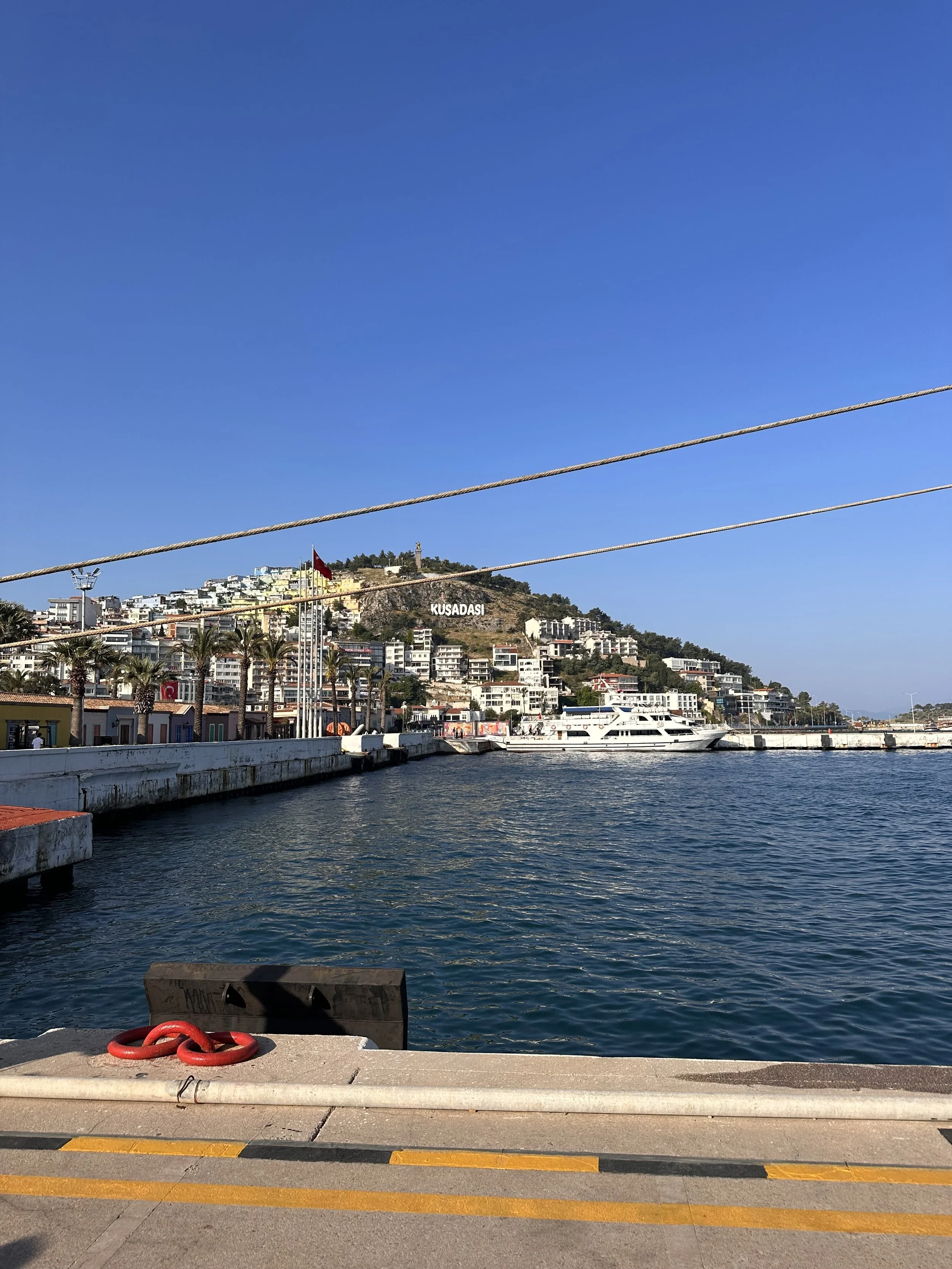
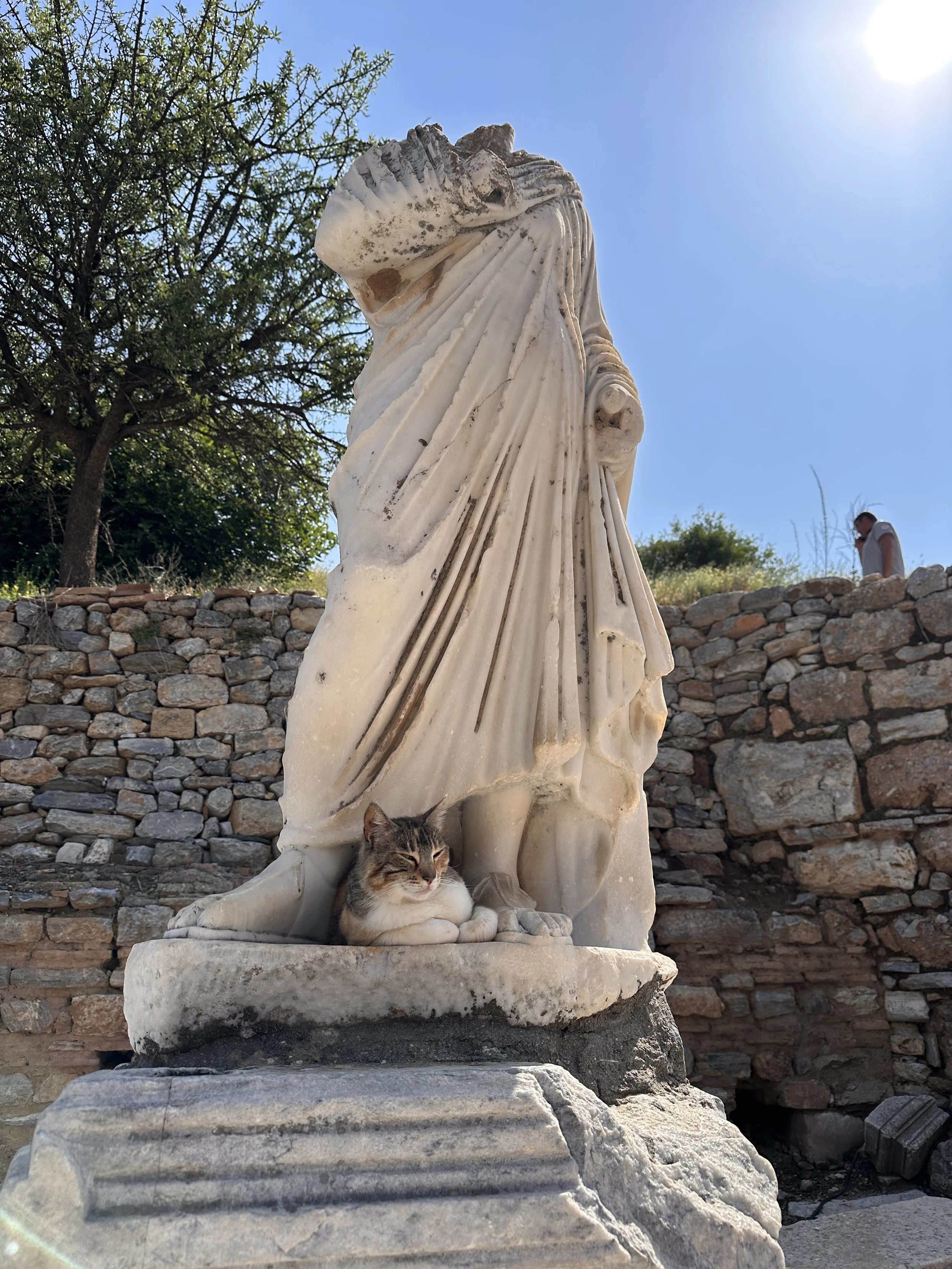
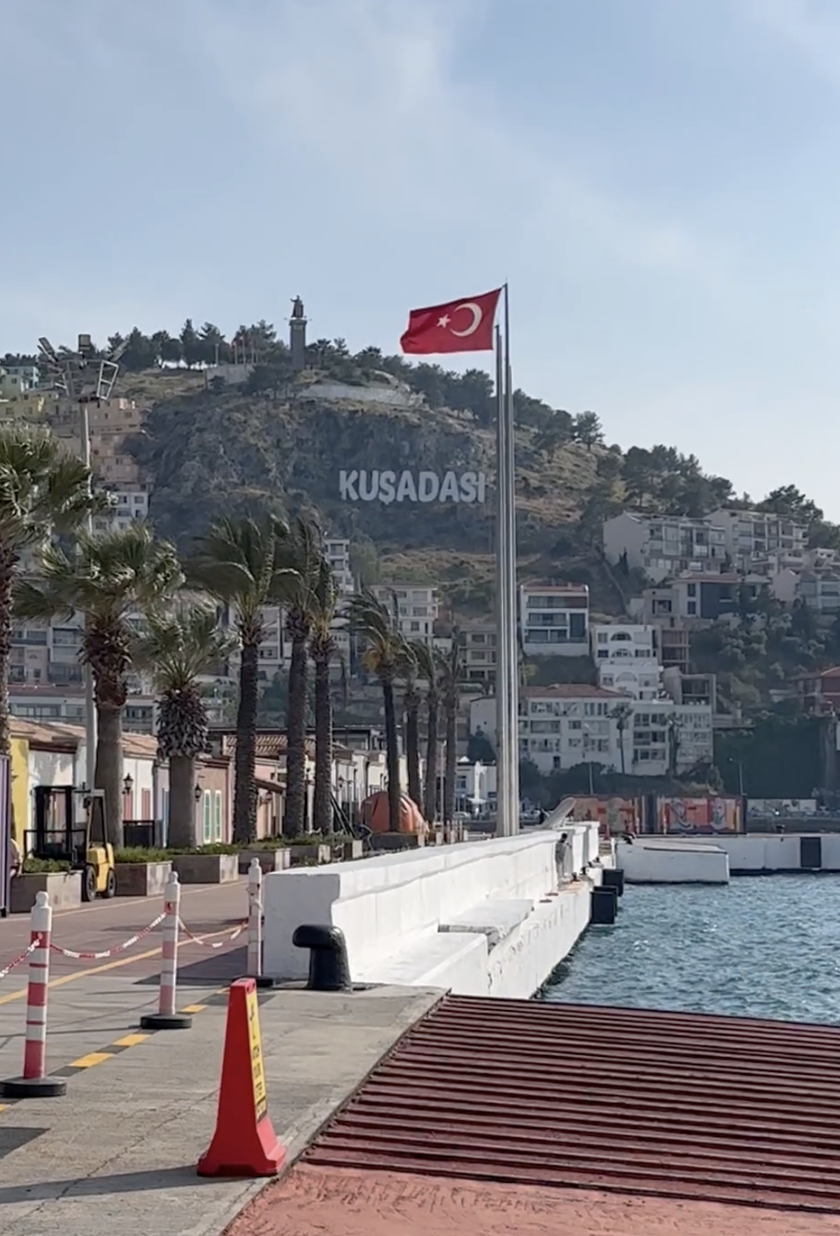
The port at Kusadasi has a Hollywood style sign on the hills when you pull in, the kind of thing that makes a place feel immediately more welcoming than you expected. And then we stepped off the ship and there were cats everywhere. Just wandering around the port, completely unbothered, the way cats in Turkey apparently just do. If you love cats, and I do, Turkey starts well.
The nervousness did not survive the morning. What replaced it was genuine curiosity and then genuine delight and then the specific feeling you get when you realize a place you had written off in your head is actually somewhere you want to know better.
Ephesus itself is one of the best preserved ancient cities in the world, a UNESCO World Heritage Site, and walking through it feels like walking through somewhere that was a real functioning city not that long ago in the grand scheme of things. We had been to Pompeii and the Colosseum and ruins throughout Italy and Greece, so the bar was high. Ephesus does not overwhelm the way those places do. It is quieter, less frantic, and in some ways more intimate. What it lacks in sheer scale it makes up for in detail and in the feeling that you are actually inside history rather than looking at it from behind a rope.
The day also came with things I did not expect to enjoy. A carpet presentation that turned out to be genuinely fascinating. Turkish coffee so strong it rewired something. A moment on the street where a shopkeeper asked where we were from, my husband said Serbia, and the shopkeeper responded in Serbian, which is not a language you expect to encounter in Turkey and which stopped us both completely in our tracks.
Turkey surprised me. Ephesus surprised me. The whole day surprised me.
That is the best version of travel and it is exactly what this day delivered.
What to See on Your Visit to Ephesus
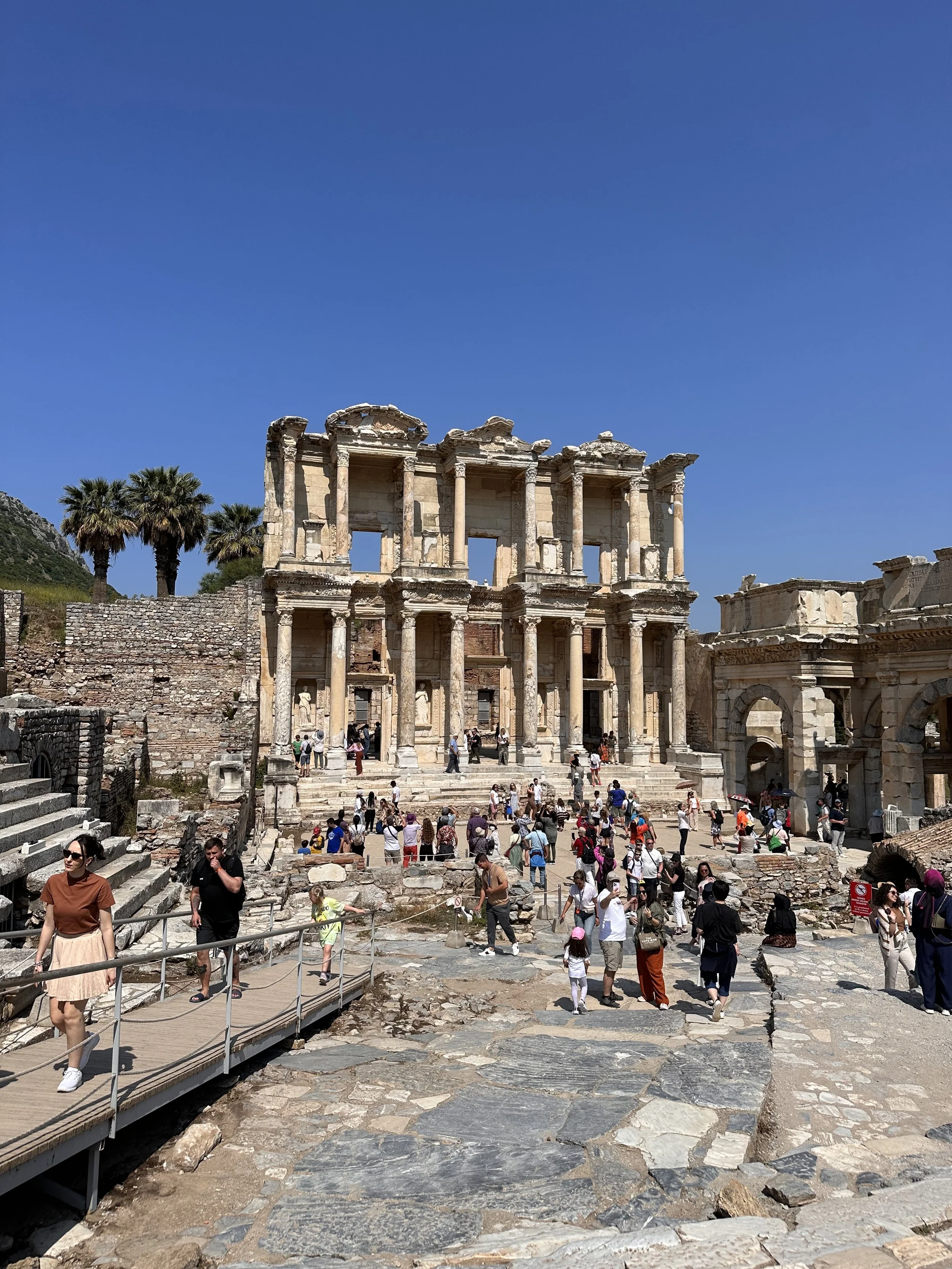
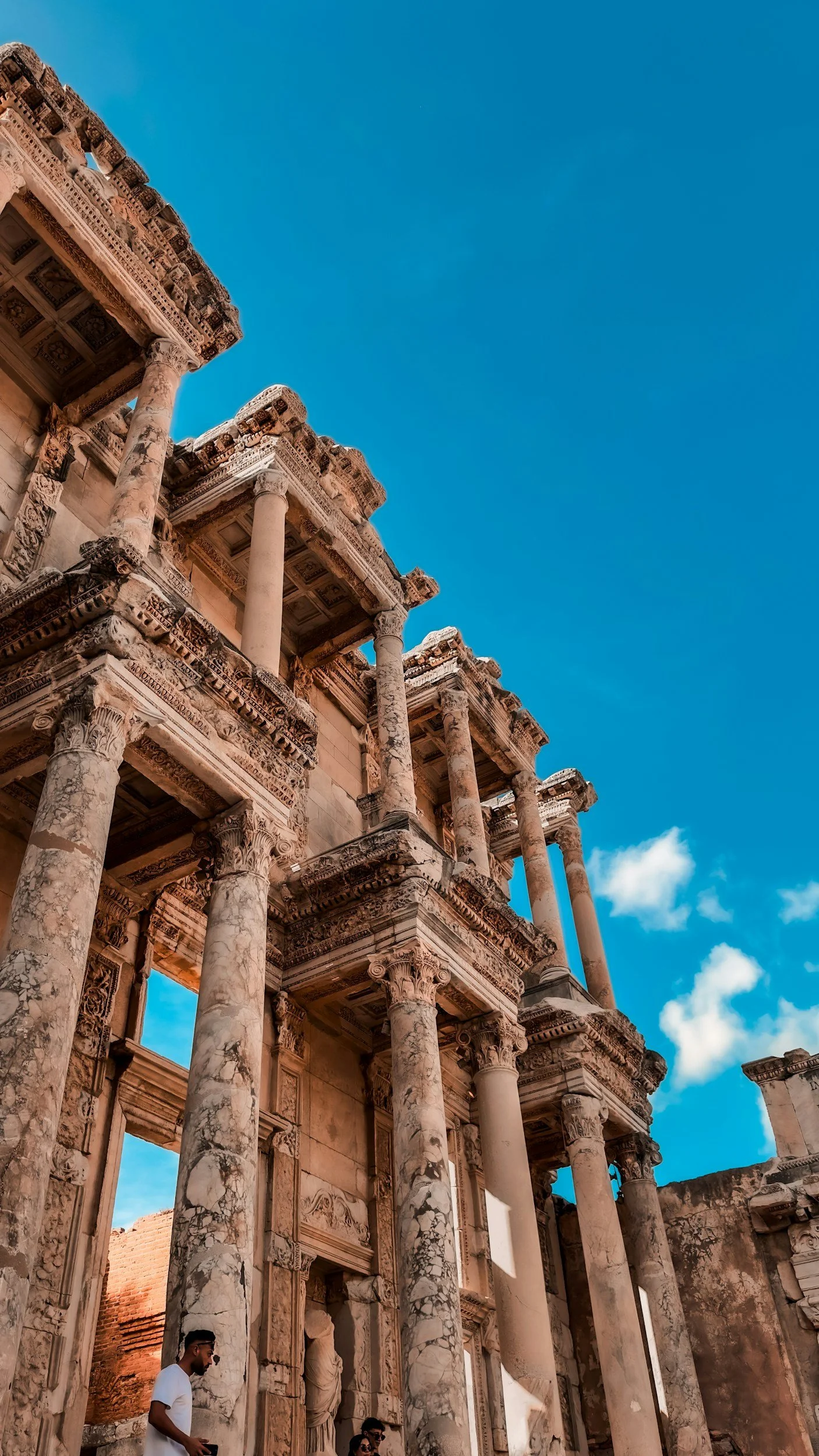
This is the image you have seen from Ephesus without knowing it was Ephesus. A two story Roman facade, ornate columns, four statues representing wisdom, virtue, intelligence, and knowledge, standing almost completely intact in the middle of a ruined city. It was built in 117 AD to honor a Roman governor and once held 12,000 scrolls, making it the third largest library in the ancient world. What remains today is the facade, reconstructed carefully enough that it still stops you mid-stride.
Standing in front of it is one of those moments where you reach for your camera and then put it down for a second because the photograph is not going to capture what you are actually looking at. It is too big and too detailed and too unlikely to translate properly. Take the photo anyway. Just make sure you also just stand there for a moment first.
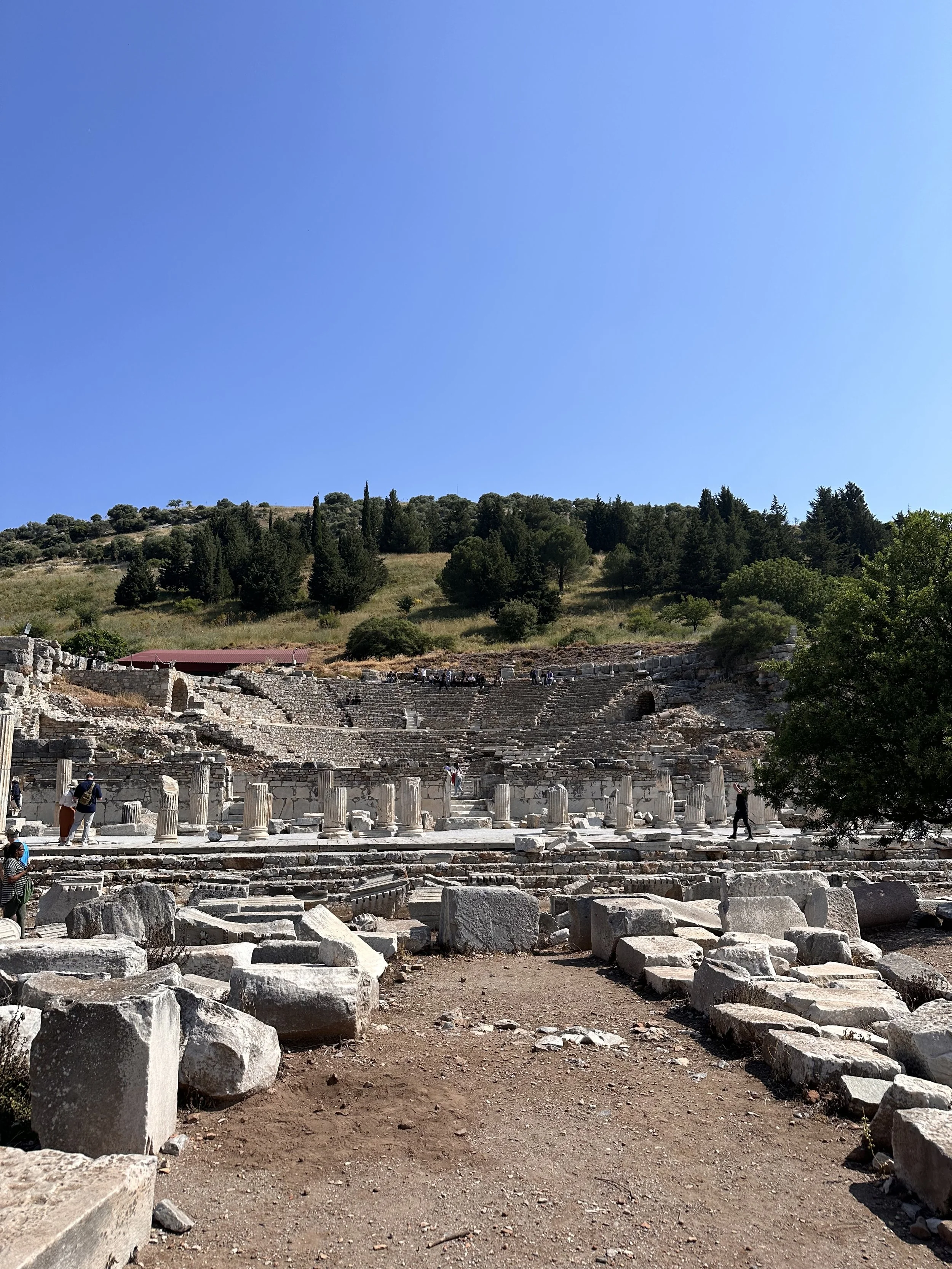
Carved into the side of a hill, the Great Theater seated 25,000 people and is one of the largest ancient theaters in the world. St. Paul preached here. Looking up at row after row of stone seating climbing the hillside gives you a sense of the scale of Ephesus as a city in a way that nothing else on the site does. This was not a small outpost. This was a major Roman city and the theater makes that undeniable.
Walk down to the stage area and look back up at the seating. The acoustics are still remarkable. Say something out loud. It sounds exactly like it should.
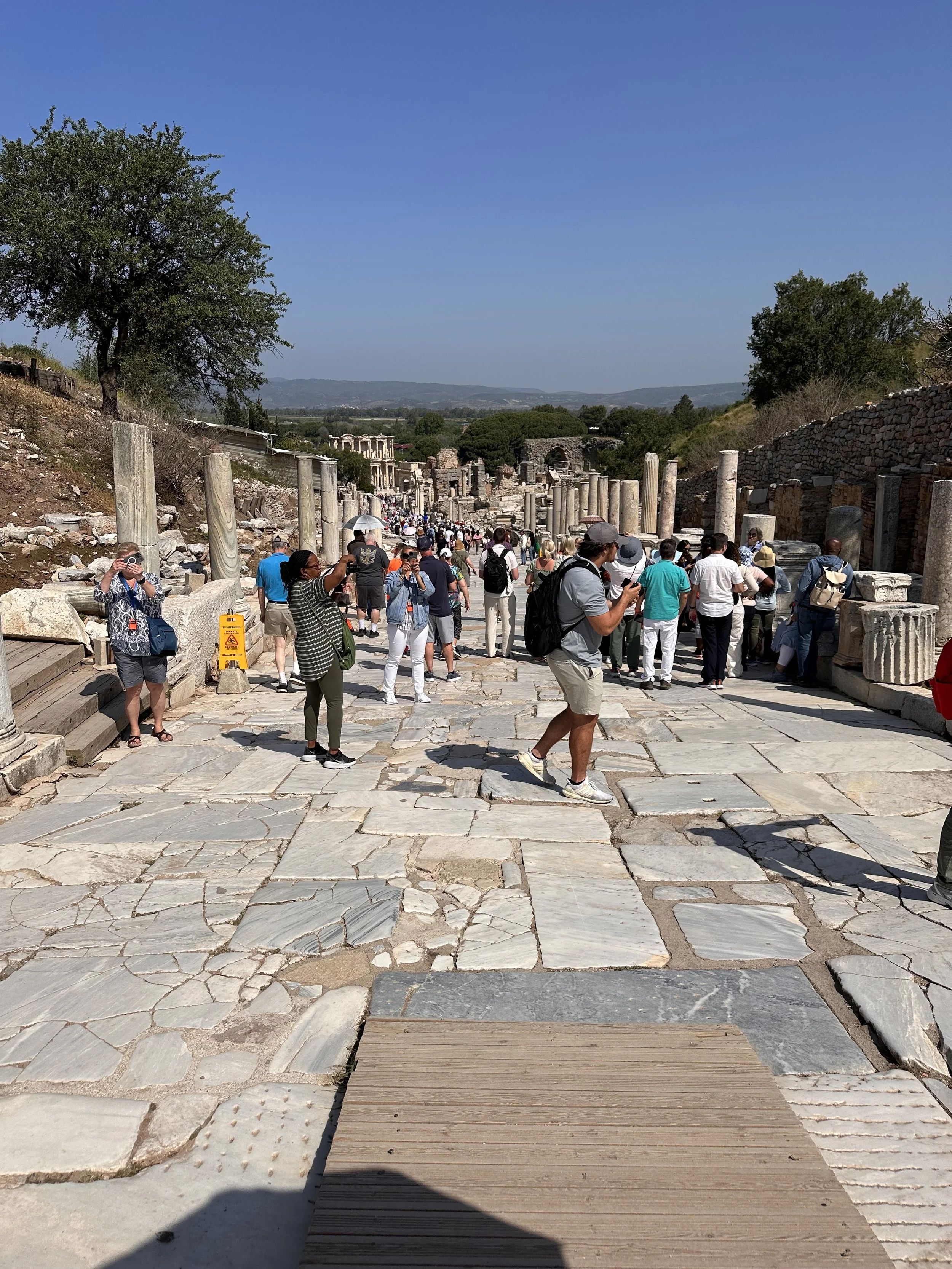
The wide marble road that runs from the Great Theater toward what was once the harbor. Walk it slowly and look down at the stone beneath your feet. The grooves worn into the marble by centuries of chariot wheels are still visible. It is one of those details that makes the place feel inhabited rather than just historical.
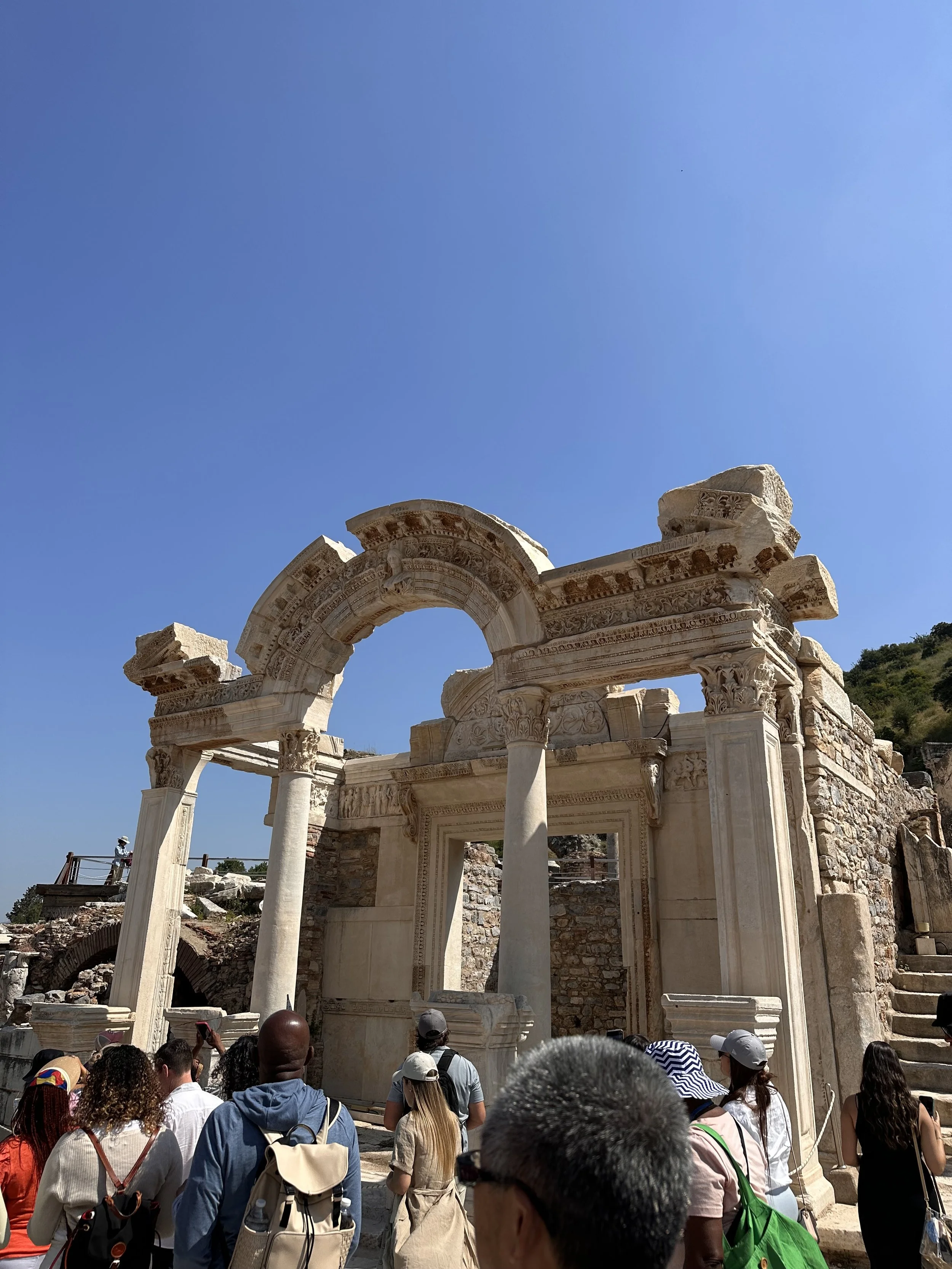
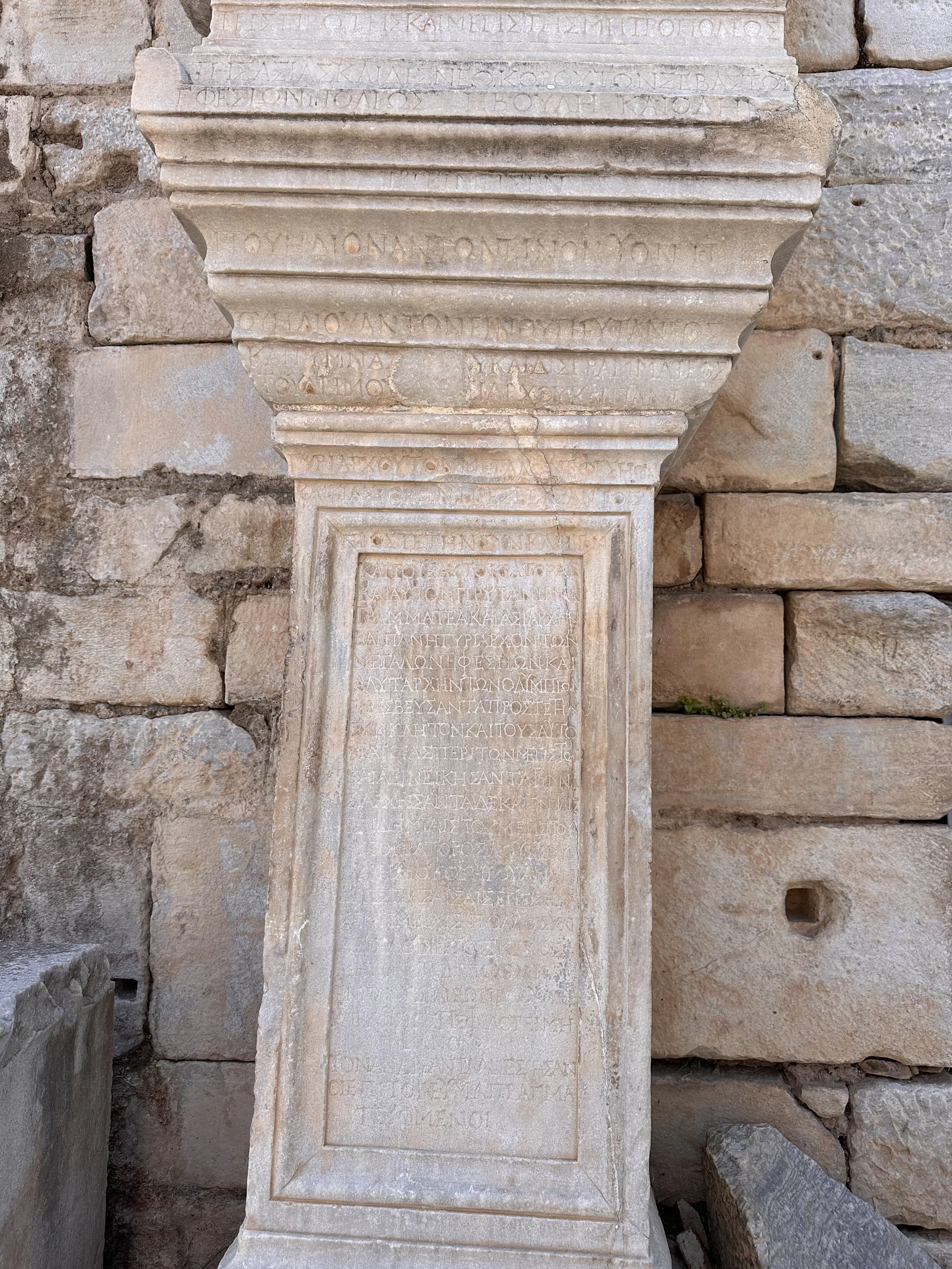
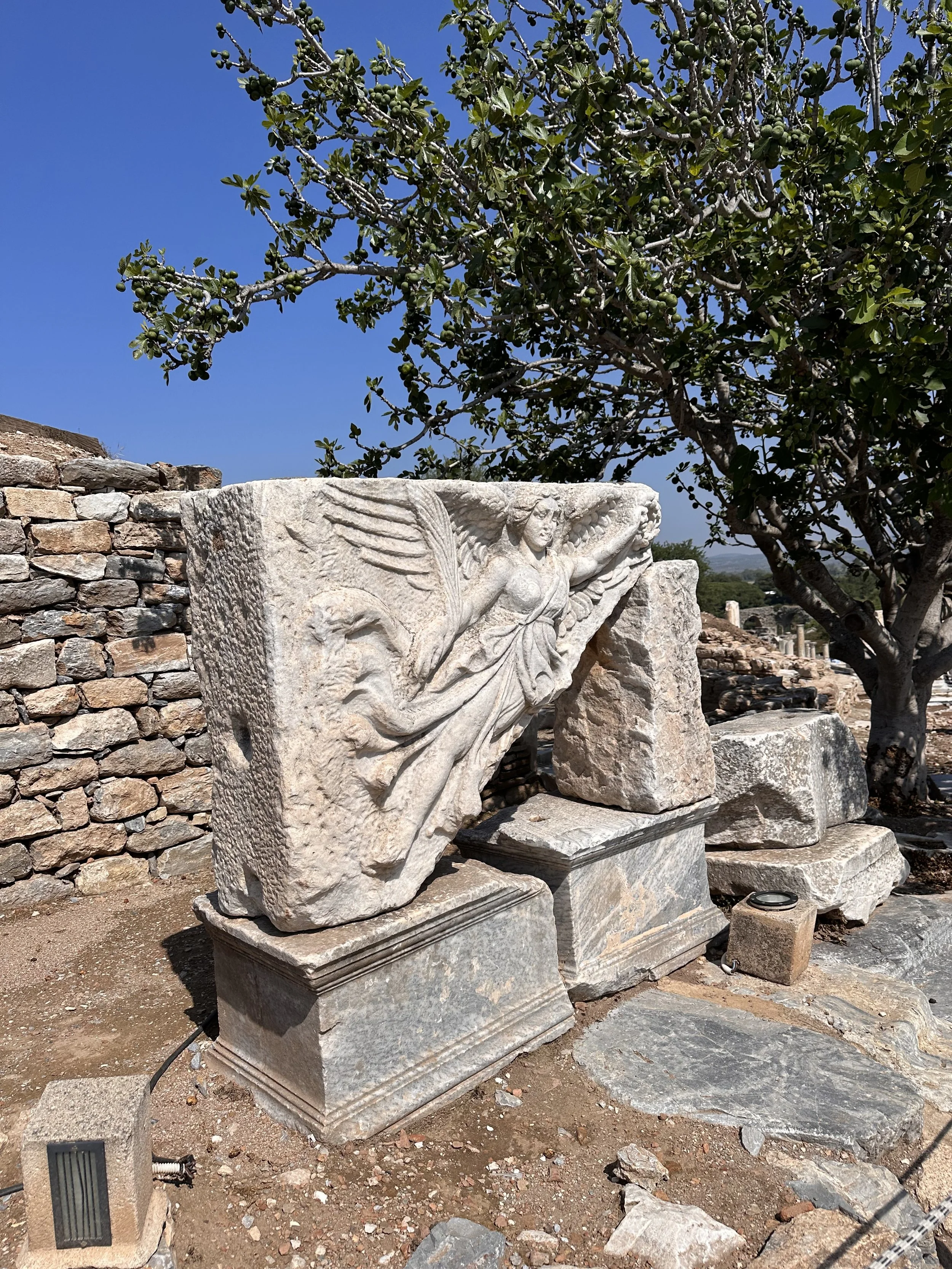
Along Curetes Street, smaller than you expect but more detailed than almost anything else on the site. Look for the Medusa head carved into the arch above the entrance. The level of craftsmanship in something this old and still this intact is genuinely difficult to process.
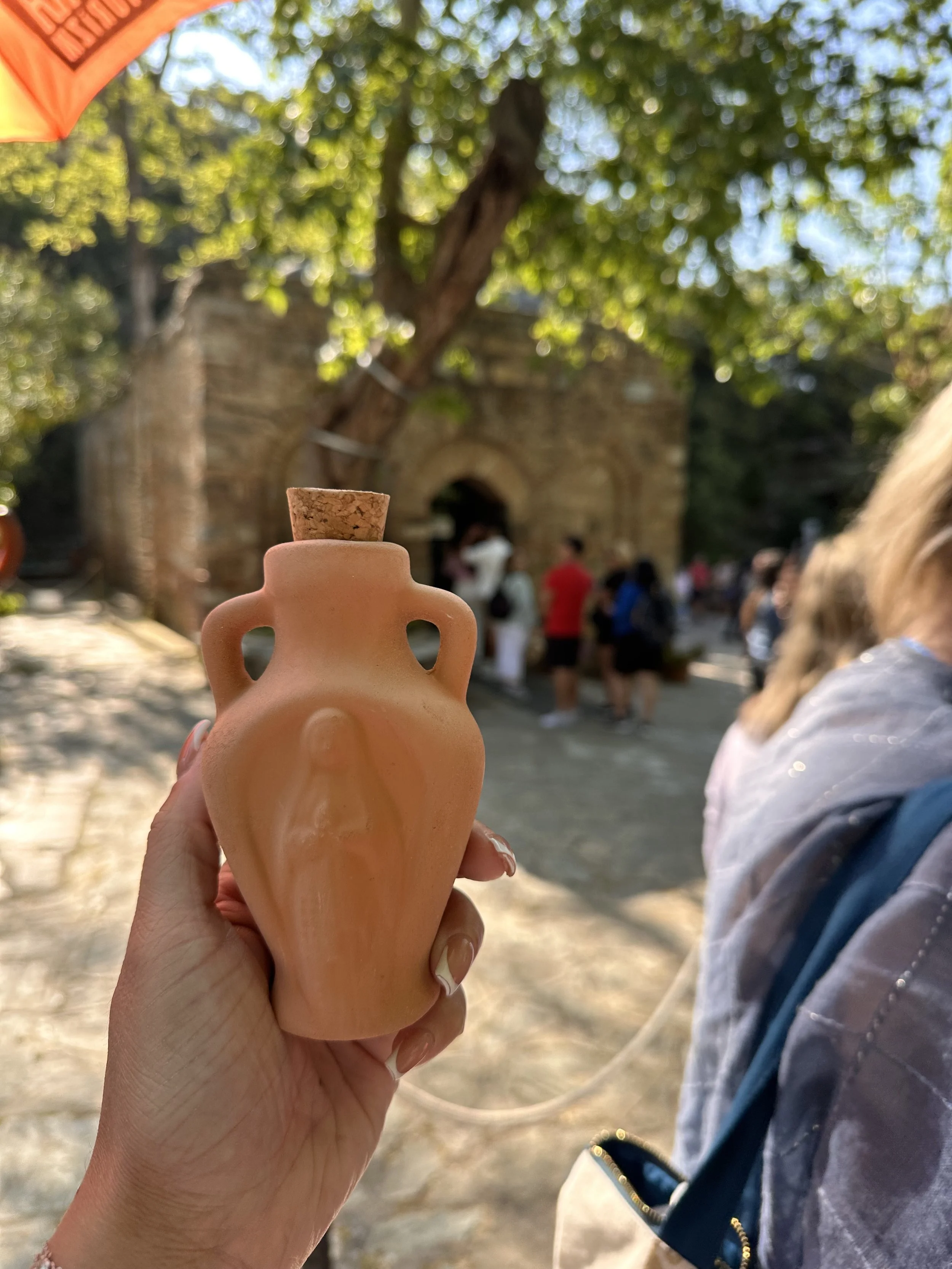
About forty five minutes from the main ruins, up in the hills above Ephesus, sits a small stone chapel believed to be where the Virgin Mary spent her final years after the death of Jesus. It has been visited by multiple popes and is considered a pilgrimage site by both Christians and Muslims.
Whatever your beliefs, the place feels holy. That is the only word for it. Quiet in a way that is different from regular quiet. We collected water from the fountain outside and tied a wish to the Wishing Wall, a wall near the entrance covered in fabric and paper wishes left by visitors from all over the world. Neither of those things felt like a tourist activity. They felt like the right thing to do in that particular place.
Do not rush this stop. The ruins are the spectacle. This is the part of the day that stays with you.
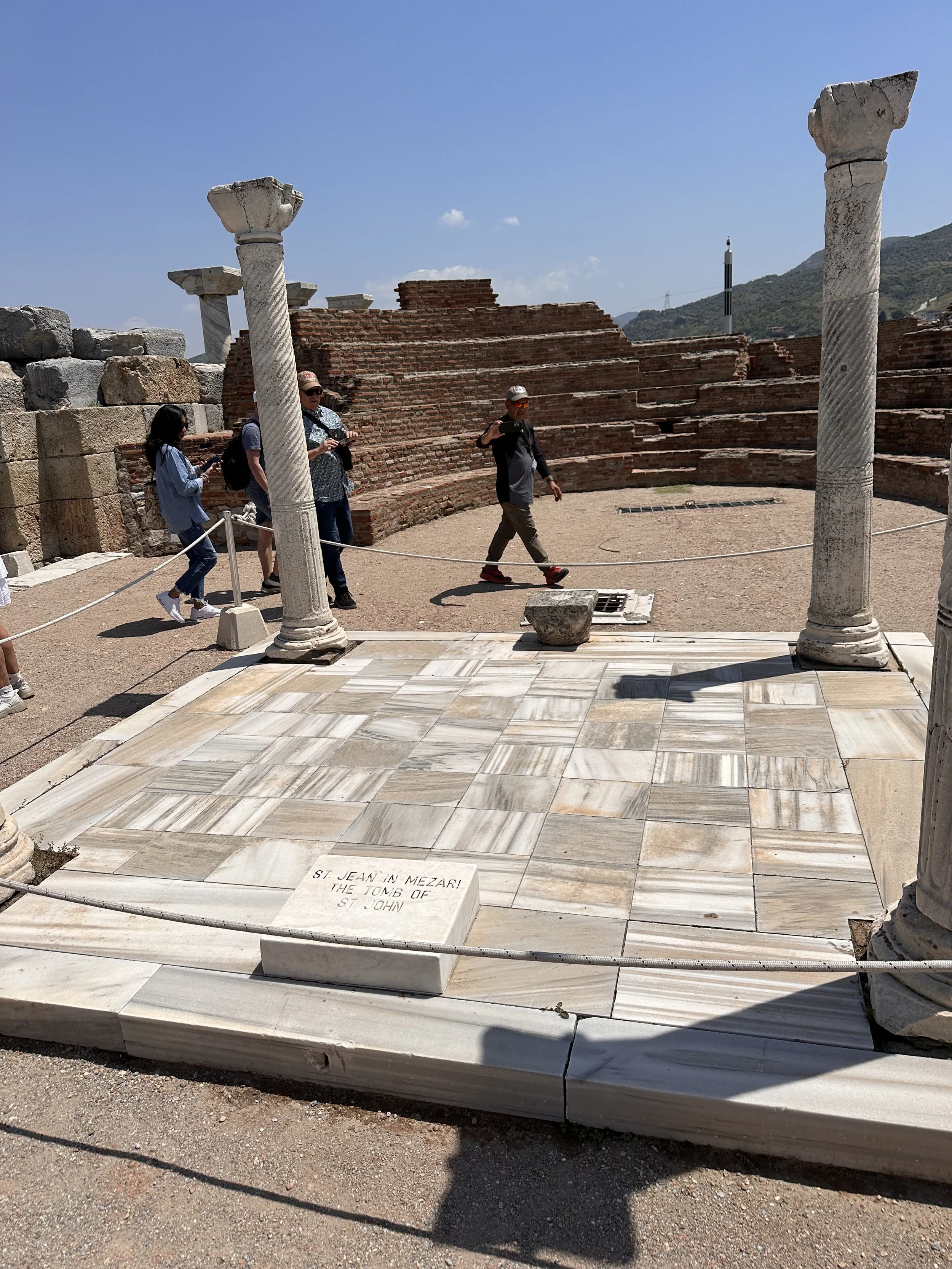
Built over the believed burial site of St. John the Apostle in Selçuk, just outside the main Ephesus site. Largely in ruins now but the scale of what it once was is still visible. Your guide will tell you about the life and death of St. John while you are standing in front of his tomb, which is one of those experiences that hits differently when you are actually there versus reading about it at home.
Getting To Ephesus
Ephesus is not a place you stumble into. It requires a plan, and the plan you make depends on how you are arriving in Turkey.
Most first time visitors to Ephesus arrive exactly the way we did, off a cruise ship docking at Kusadasi. The port is about 45 minutes from the ruins by road and every major cruise line offers shore excursions that cover the highlights in a single day. This is the easiest way to do it. The logistics are handled, a guide is included, and you will be back at the ship on time.
If you want to skip the cruise excursion and do it independently from Kusadasi, taxis and private tour operators are available directly at the port. Agree on a price before you get in. Independent tours from the port are often significantly cheaper than the official cruise excursions and cover the same ground. Just make sure whoever you book with guarantees you back at the port before your ship leaves. That is not a flexible deadline.
Coming from a Cruise Ship
If you are not on a cruise, the nearest base is Selçuk, a small town about three kilometers from the main Ephesus entrance. Selçuk is easily reachable by train from Izmir, about an hour away, and from there you can walk, take a taxi, or join a local tour to the ruins. Izmir has its own airport with connections from Istanbul and several European cities, making it a practical entry point for a dedicated Ephesus trip.
From Istanbul, Ephesus is accessible by a short domestic flight to Izmir or by a long bus journey. Flying is the practical choice if time matters.
Coming Independently
Ephesus is a large site and you will walk approximately two and a half miles over uneven marble surfaces with inclines and steps throughout. The marble is genuinely slippery in places. Wear proper shoes, not sandals, not fashion sneakers. This is the one piece of advice that matters more than any other on this particular day.
One Thing Worth Knowing Regardless
Where to Eat & Drink on Your First Trip to Ephesus
The Turkish meal that came with our tour was a buffet served in a hotel near the ruins and it was one of those meals where you go back three times before you admit to yourself that you are full. Turkish food is not something most Americans think about before they go. It should be. The spread was generous and the quality was consistently higher than you expect from a tour group buffet.
What stayed with me most was the desserts, which in Turkey are their own category entirely.
Baklava
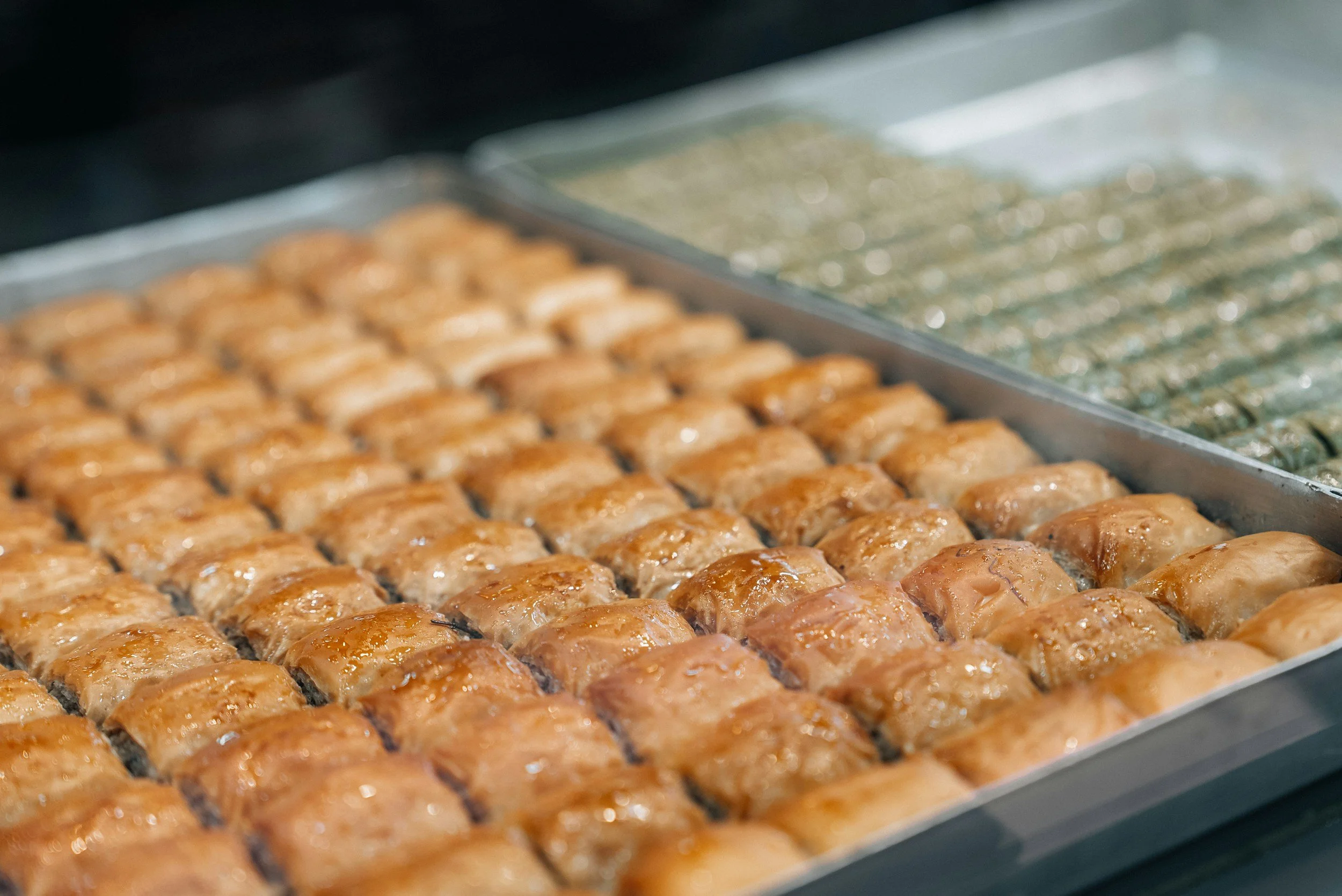
Baklava is the one everyone knows and the one that tastes completely different in Turkey than any version you have had at home. Layers of paper thin phyllo pastry, pistachios or walnuts, butter, and a sugar syrup that soaks through every layer. Crispy and sticky and rich in a way that earns the reputation. We ate a lot of it.
Turkish Delight
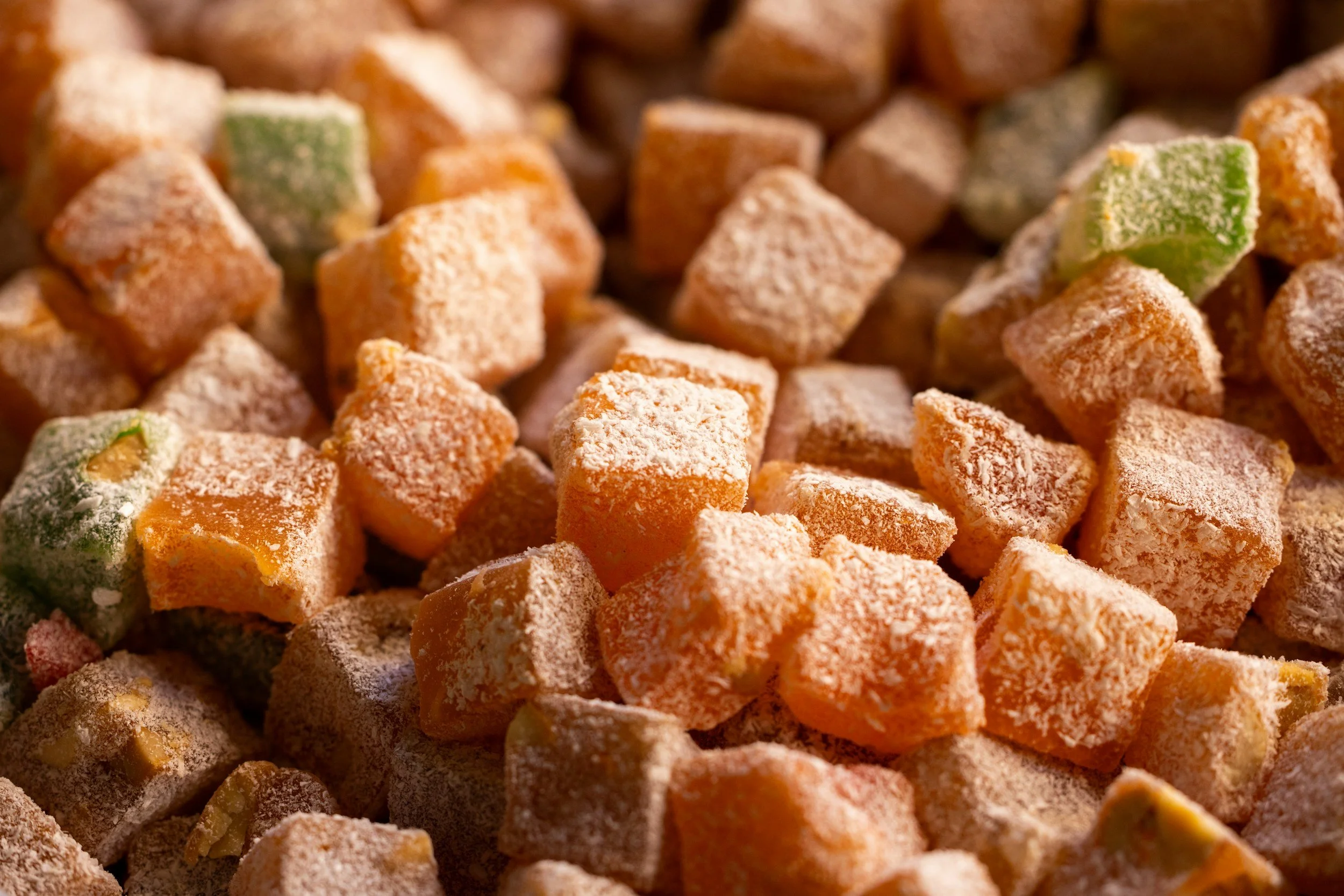
Turkish delight, or lokum, is something most people only know from a box of the grocery store version which bears very little resemblance to the real thing. Soft, chewy, dusted in powdered sugar, flavored with rosewater or pistachio or lemon. Try every flavor on the table.
Coffee and Tea
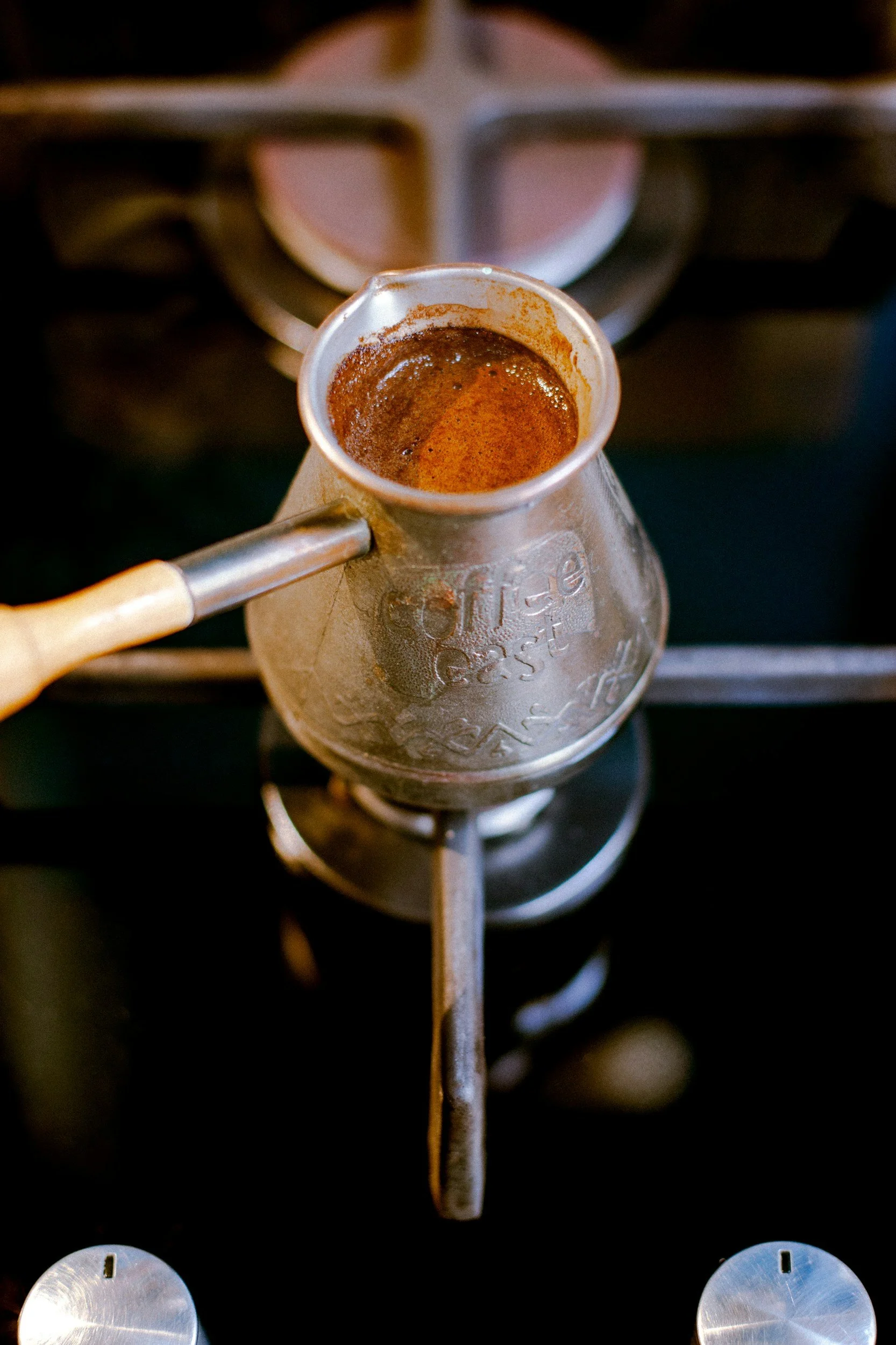
The coffee and tea deserve their own mention. Turkish coffee is served in a small cup and is strong enough to make you reconsider how you have been drinking coffee your entire life. Thick, dark, and intensely flavored, served with the grounds settled at the bottom. Turkish tea, or çay, comes in a small tulip shaped glass and is equally strong and equally good. Neither comes in large quantities and neither needs to.
If you are traveling through Ephesus independently and eating on your own rather than as part of a guided excursion, the town of Selçuk just outside the ruins has good local restaurants worth seeking out over anything near the tourist entrance to the site.
What to Pack for Your First Trip to Ephesus
Ephesus is a full day of outdoor walking across an ancient marble city in typically warm to hot weather. The Aegean coast runs hot from late spring through early fall with summer temperatures regularly reaching the high 80s and into the 90s Fahrenheit. Most of the site is completely open with very little shade. Pack for heat and sun exposure regardless of what the forecast says when you leave the ship.
Weather
Closed toe shoes with grip. The marble is worn smooth and genuinely slippery and this matters more here than almost anywhere else you will walk.
Sunscreen applied before you leave, not when you arrive. A hat. Sunglasses. More water than you think you need. Light breathable clothing that covers your shoulders for the House of Virgin Mary. A small crossbody bag or daypack, nothing heavy. Cash in Turkish lira for vendors and smaller purchases. A portable charger because you will take more photos than you expect.
Core Items for Ephesus
A Doorway in Kusadasi Changed How I See the World
The shopkeepers along the streets of Kusadasi have a system. As you walk past they ask where you are from. It feels like friendliness, and it is, but it is also information. They want to know what language to speak to you in and, we noticed quickly, what price to start at. Say you are from America and the opening number is higher. It is not personal. It is just how it works and once you understand that it becomes less uncomfortable and almost impressive.
My husband is Serbian. When a shopkeeper asked where he was from and he said Serbia, the shopkeeper responded in Serbian.
We both stopped. Neither of us said anything for a second because neither of us knew how to process it. Serbian is not a language you expect to encounter in Turkey. It is not a language most people outside the Balkans have ever heard. And this man, standing in a shop doorway in Kusadasi, had it. Along with English and German and at least two other languages we heard him use before we walked on.
That moment is the one I keep coming back to when I think about that day. Not because it was the most spectacular thing that happened, the ruins were spectacular, the Library of Celsus was spectacular, the House of Virgin Mary was quietly extraordinary in a way that has nothing to do with spectacle. But the Serbian moment was the one that cracked something open. It was the moment Turkey stopped being a place I had assumptions about and became a place I was actually inside.
The carpet presentation did the same thing in a different way. I had mentally filed it under things to endure before we could get back to the ship. Watching the weavers demonstrate the craft changed that completely. Understanding the difference between hand knotted and machine made, seeing the hours behind something you could fit in a suitcase, made the rugs look completely different from how they had looked before. We did not buy one. I have thought about that more than once since we got home.
I was wrong about Turkey before I arrived. Wrong about what it would feel like, wrong about whether I would feel comfortable, wrong about the food and the people and the coffee, which is served in a cup small enough to finish in three sips and strong enough to make you question every large American coffee you have ever ordered.
That is what happens when you let a place be what it actually is instead of what you assumed it would be.
Itinerary for Your First
Trip to Ephesus
Ephesus is a full day off the ship. Plan for about eight hours from the time you disembark to the time you return. It sounds like a lot and it goes faster than you expect.
Morning: The Drive and the House of Virgin Mary
The drive from Kusadasi to the House of Virgin Mary takes about 45 minutes. Use it to get your bearings, ask your guide questions, and let Turkey introduce itself through the window.
The House of Virgin Mary is the first stop and the right one to do first while you have the energy and the quiet morning hours. It gets busy and if you are visiting during peak season expect a wait. Move slowly through the chapel, collect water from the fountain if that feels right, and spend time at the Wishing Wall before you leave. Do not rush this stop. The ruins are the spectacle. This is the part of the day that stays with you.
Mid Morning: The Ephesus Ruins
From the House of Virgin Mary you will make your way into the main Ephesus site and begin walking downhill through the ancient city. The tour moves from the upper entrance toward the lower gate which means you are walking with the natural slope of the site rather than against it.
Key stops along the way:
The Temple of Hadrian - Along Curetes Street. Small but beautifully preserved. Look for the Medusa head carved into the arch above the entrance.
The Library of Celsus - The centerpiece of the site and the image you have seen without knowing where it was from. Stand in front of it before you reach for your camera. It earns that moment.
Arcadian Way - The wide marble road leading from the theater toward the ancient harbor. Walk it slowly and look down at the chariot wheel grooves still visible in the stone.
The Great Theater - Walk down to the stage and look back up at 25,000 seats climbing the hillside. Say something out loud. The acoustics still work.
The Basilica of St. John - Built over the believed tomb of St. John the Apostle. Your guide will put it into context while you are standing in front of it which is worth paying attention to.
The marble is slippery throughout. Watch your step especially on inclines and in any areas that have been polished smooth by foot traffic.
Midday: Lunch
A buffet lunch is served at a hotel near the ruins. Go back for the desserts. The baklava and Turkish delight are not an afterthought. They are the point. Have the coffee after. You have been warned about the strength.
Afternoon: The Carpet Presentation and Free Time in Kusadasi
Back in Kusadasi, the carpet presentation is the last organized stop of the day. Go in with an open mind rather than your guard up. Watch the demonstration, ask questions, and let yourself be genuinely interested in what you are looking at. Whether you buy anything is entirely up to you. The rugs are stunning and the craft behind them is real.
After the presentation you will have some free time before returning to the ship. Walk the streets, let the shopkeepers ask where you are from, and see where the afternoon takes you. This is the part of the day that is not on the itinerary and often ends up being the most memorable.
Get back to the ship on time. That deadline is not flexible.