
Your First Time in
The Golden Circle, Iceland
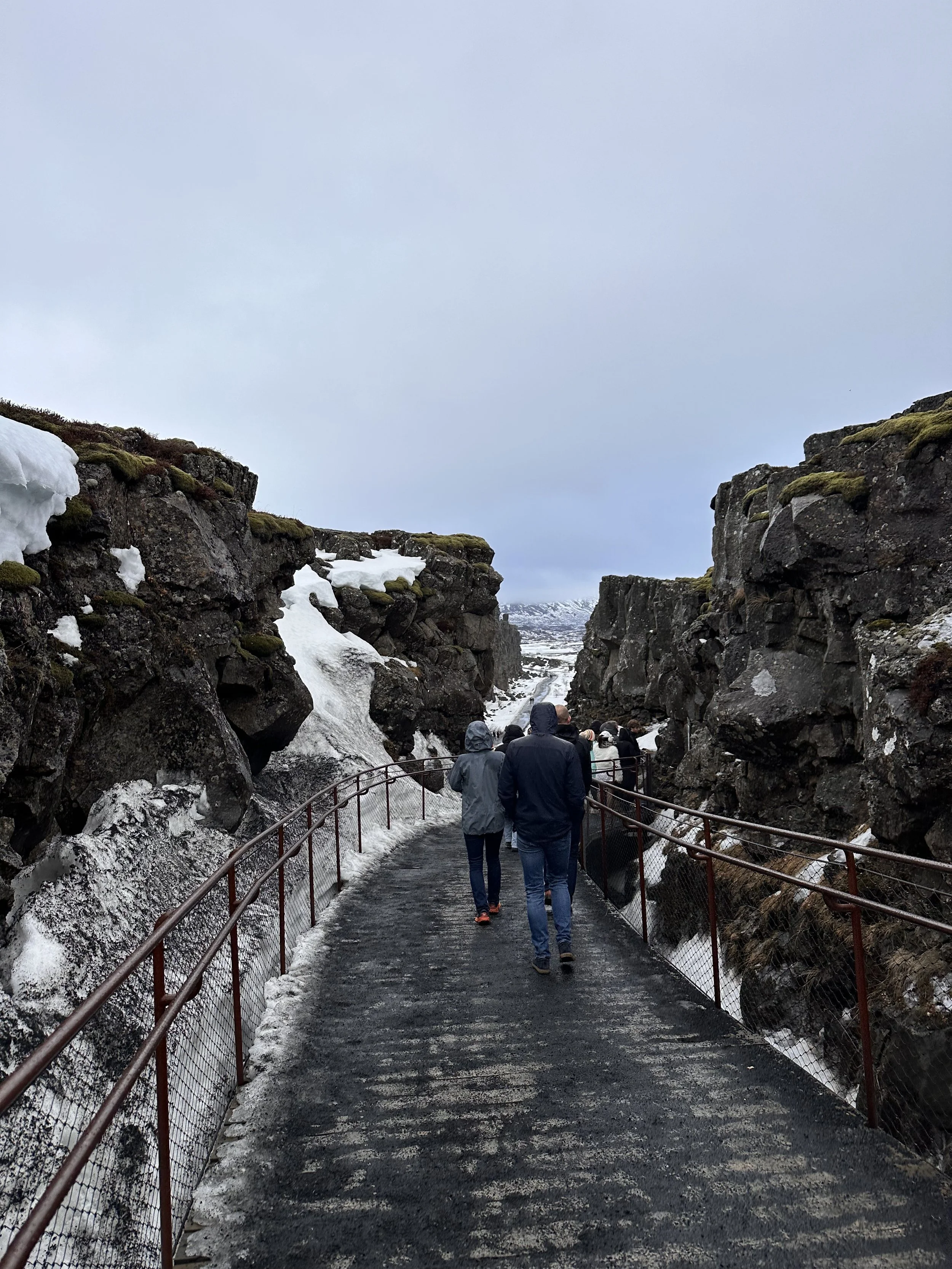
The Golden Circle is the day trip almost every first-time visitor to Iceland does, and for good reason. It is close to Reykjavik, it is easy, and it packs a remarkable amount of Iceland's range into a single loop, a continental rift valley, an erupting geyser, a thundering waterfall, and a volcanic crater, all within a couple of hours of the city.
Here is my honest take. The Golden Circle is the reliable greatest-hits day. It is not the most breathtaking thing we did in Iceland, the wilder, emptier landscapes of the south and the peninsulas had more of that, but it is the smartest day to do first. It gives you a fast, varied introduction to what this country is geologically capable of, and it does it without long drives or hard hiking, which makes it ideal early in a trip or for anyone who wants a lot of Iceland without much effort.
The classic loop has three main stops, Thingvellir National Park, the Geysir geothermal area, and Gullfoss waterfall, with Kerið crater often added on. Most tours run it in eight to nine hours round trip from Reykjavik. We did it as a guided bus tour through Get Your Guide, and for a day this popular and this well-trodden, letting someone else handle the winter driving was the right call.
Do the Golden Circle. Just know what it is. The dependable, accessible introduction, not the emotional peak. Save room to be more impressed later.
What to See on Your Visit to the Golden Circle
Geysir and Strokkur
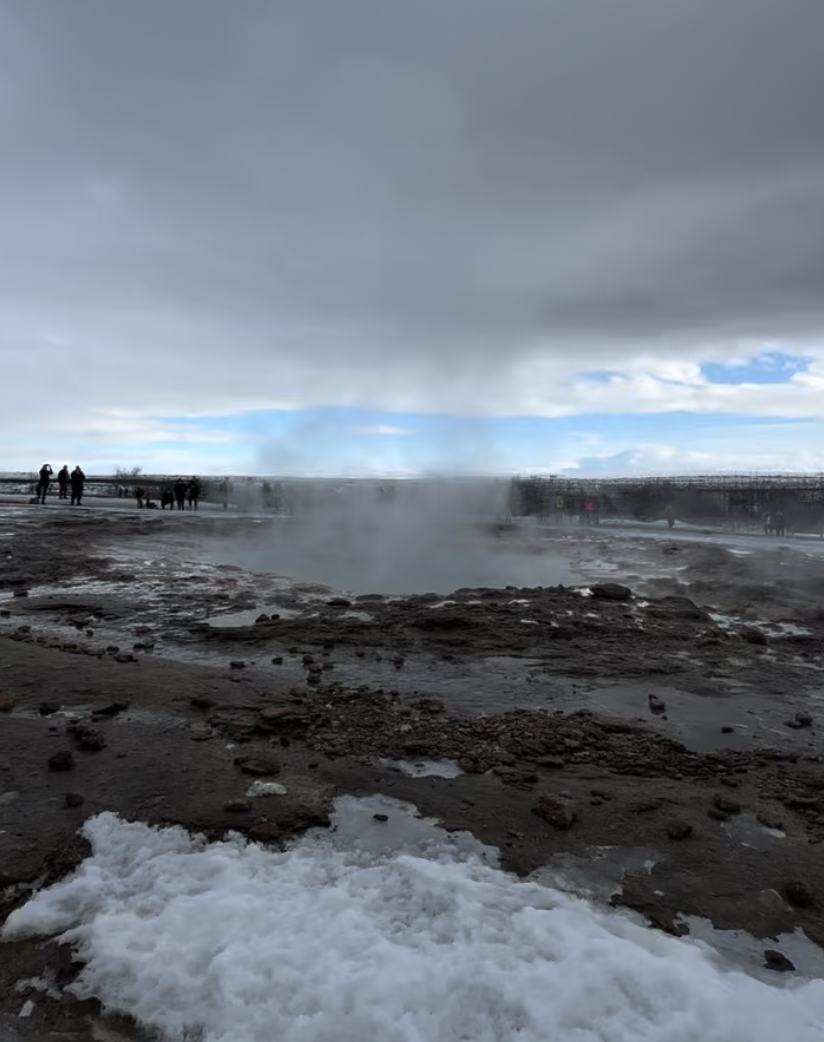
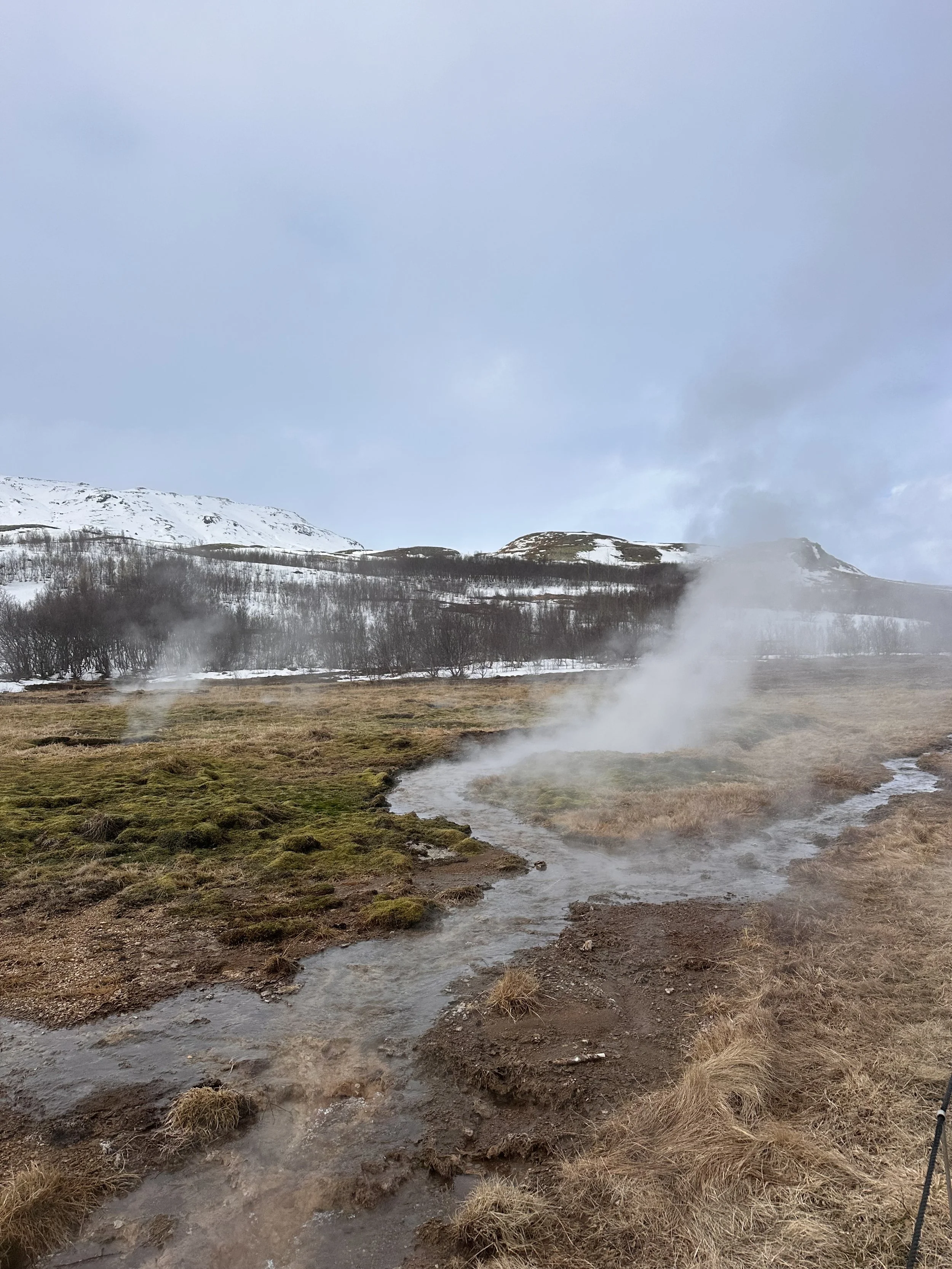
This was my favorite stop on the Golden Circle, and one of the coolest things we saw in all of Iceland. I had never seen an erupting geyser in real life, and standing in the steaming, sulfur-smelling geothermal field at Haukadalur watching the ground throw boiling water into the air is genuinely thrilling.
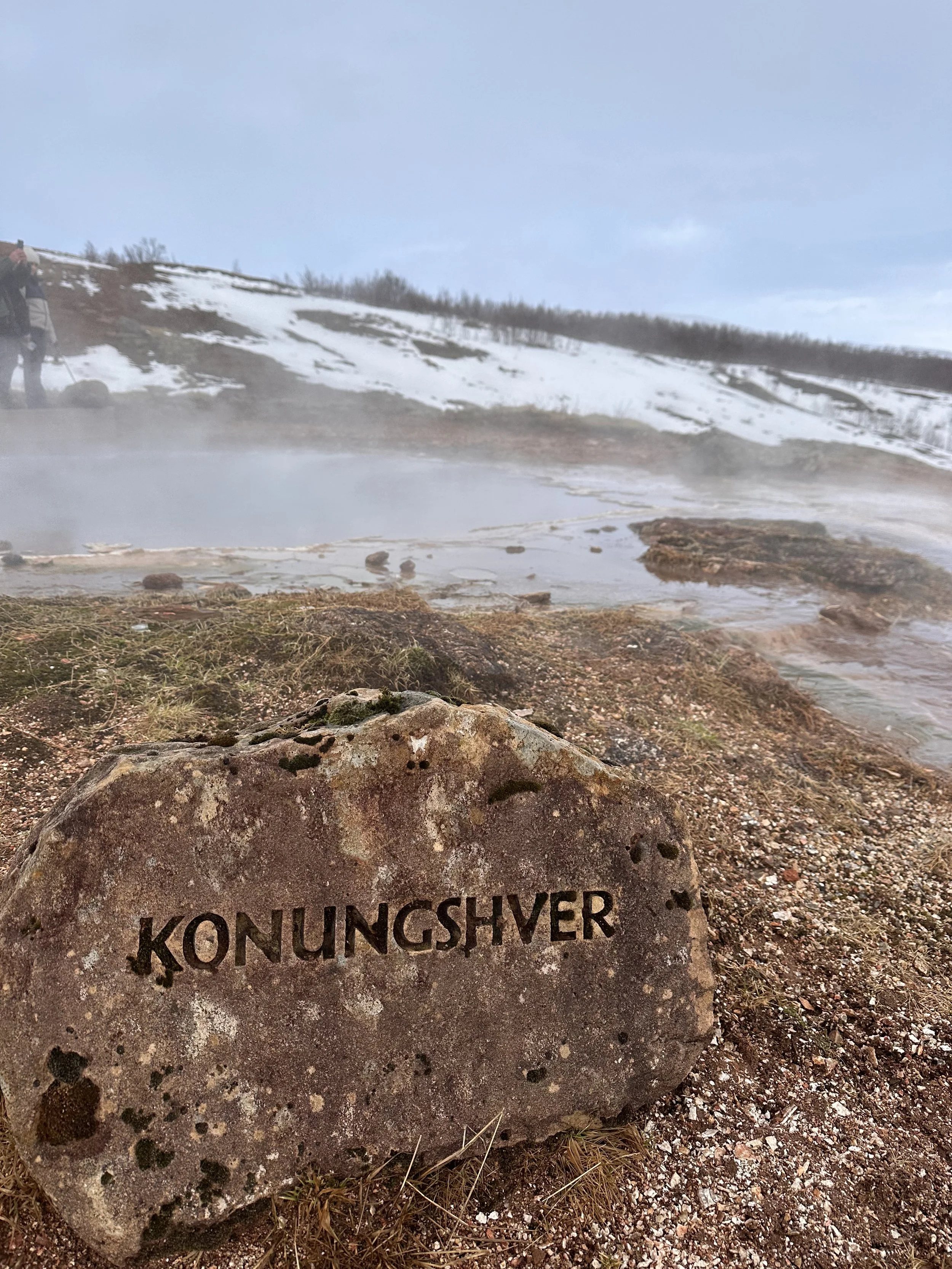
The famous geyser this place is named for, Geysir, the one that gave the entire English language the word "geyser," is now mostly dormant and rarely erupts. The one you will actually watch is its neighbor, Strokkur, which goes off reliably every five to ten minutes, shooting water up to around thirty meters. Stand back, watch the pool swell and dome up just before it blows, and have your camera ready, because it happens fast. The sulfur smell is strong and the whole area steams and bubbles. It is Iceland's raw geothermal power on full display, and it is mesmerizing.
Gullfoss
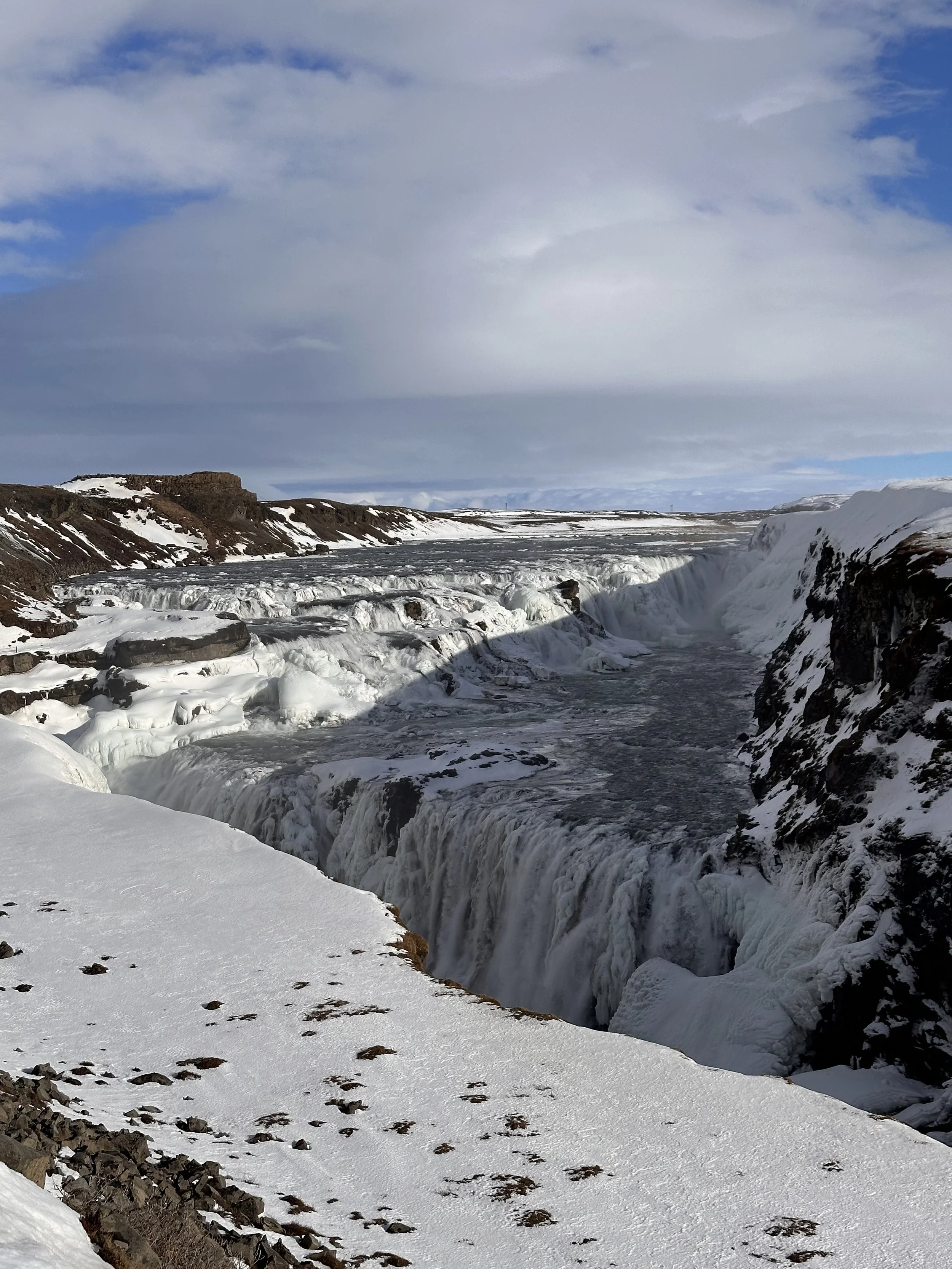
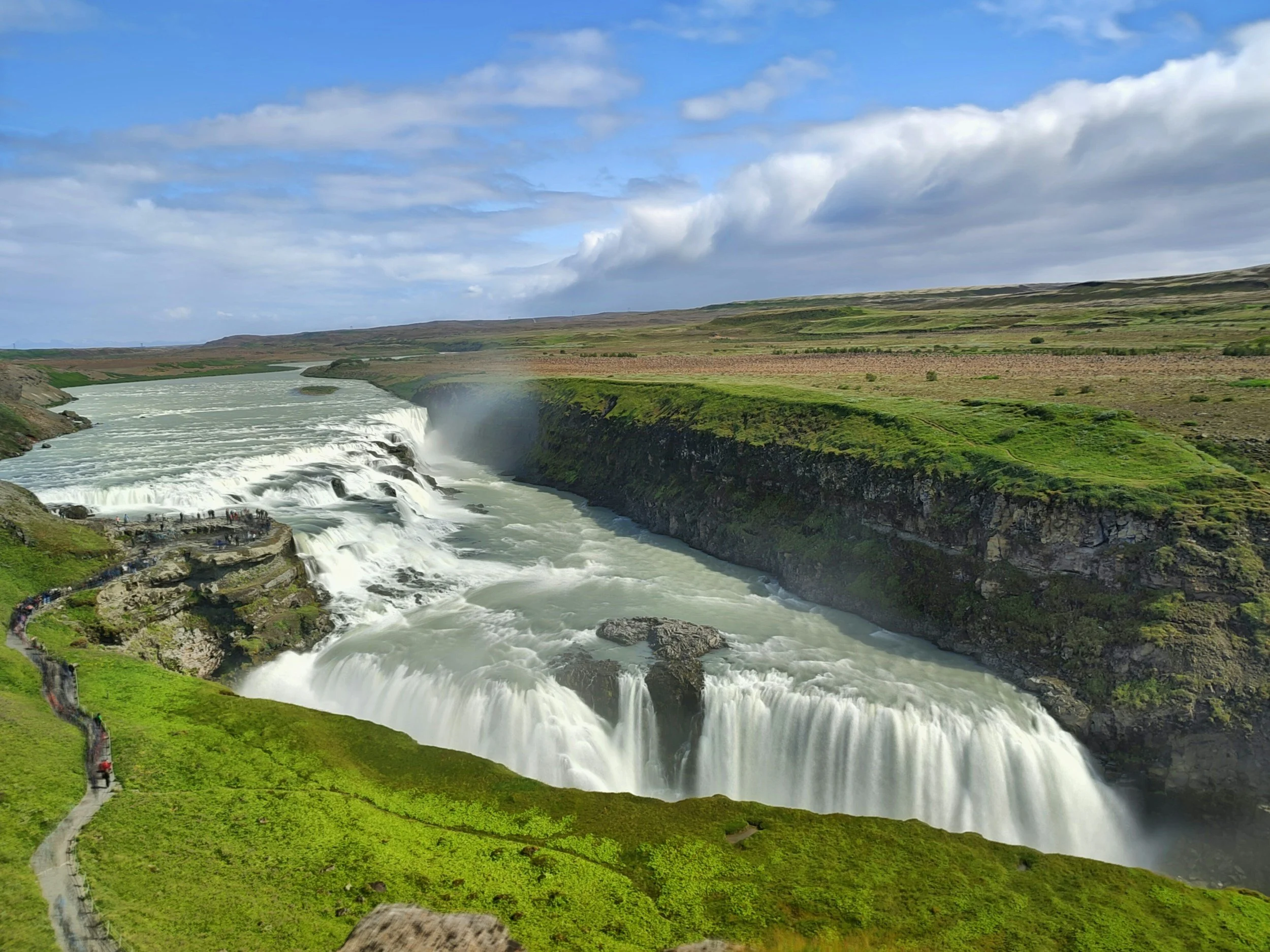
Gullfoss is the big, thundering two-tiered waterfall of the Golden Circle, and it is genuinely stunning. There are viewing platforms at a few levels to see it from up close and above, and you will want to bundle up, because the spray and the canyon wind are bitterly cold.
But I have a soft spot for it for another reason. My best friend, one of my favorite people in the world, got engaged to his now-fiancée right here in August. Proposing is a huge, nerve-wracking thing, and I think a place like this helps carry it. When you are standing in front of something this powerful, the roar of it drowning out everything else, the whole world kind of narrows down to the two of you and the moment you are in. A place this big makes a big moment feel like it fits. He could not have picked better. I already loved Gullfoss. Now it is where my best friend started the rest of his life, which is the part I think about every time.
Thingvellir National Park
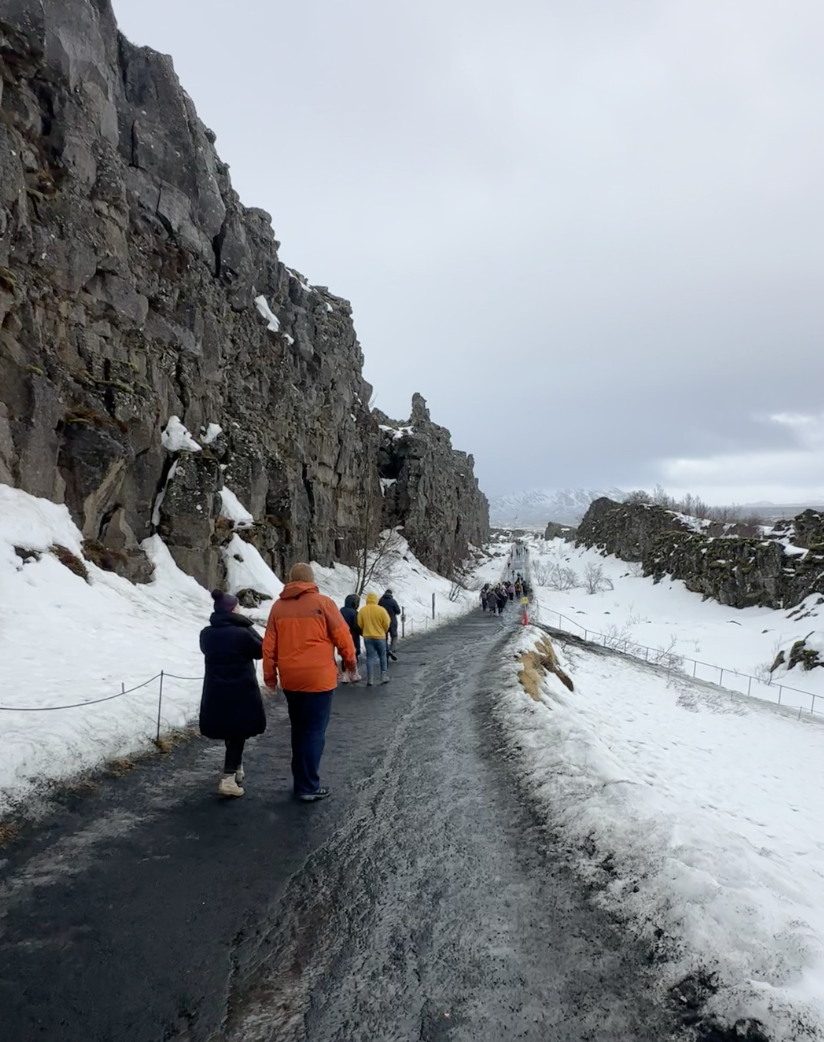
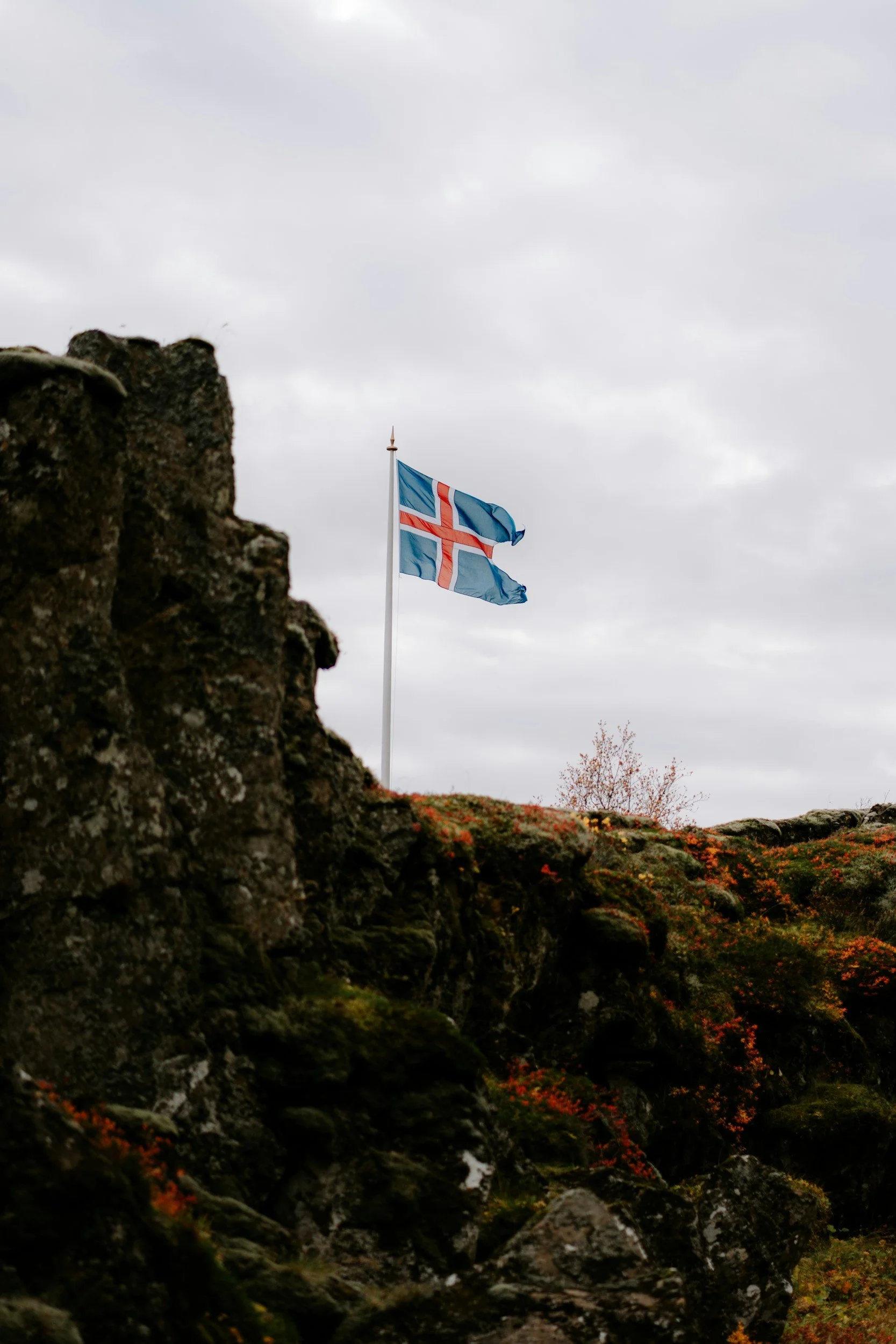
The most significant stop, where Iceland's geology and history meet in one place. Thingvellir sits in a rift valley on the Mid-Atlantic Ridge, where the North American and Eurasian tectonic plates are slowly pulling apart, about two and a half centimeters a year. You can walk through the Almannagjá gorge with North America on one side and Eurasia on the other, which is a genuinely strange and wonderful thing to do.
It is also the birthplace of the Icelandic nation. The Alþingi, the parliament whose modern home you may have seen in Reykjavik, was founded right here around 930 AD and met in this valley for centuries. So the unassuming grey parliament building downtown traces its roots to this dramatic rift in the earth. I wished we had more time here than the tour allowed, the landscape is huge and there is far more of it to walk than a single stop permits. If you are the kind of traveler who likes to wander, this is the stop to give your extra minutes to.
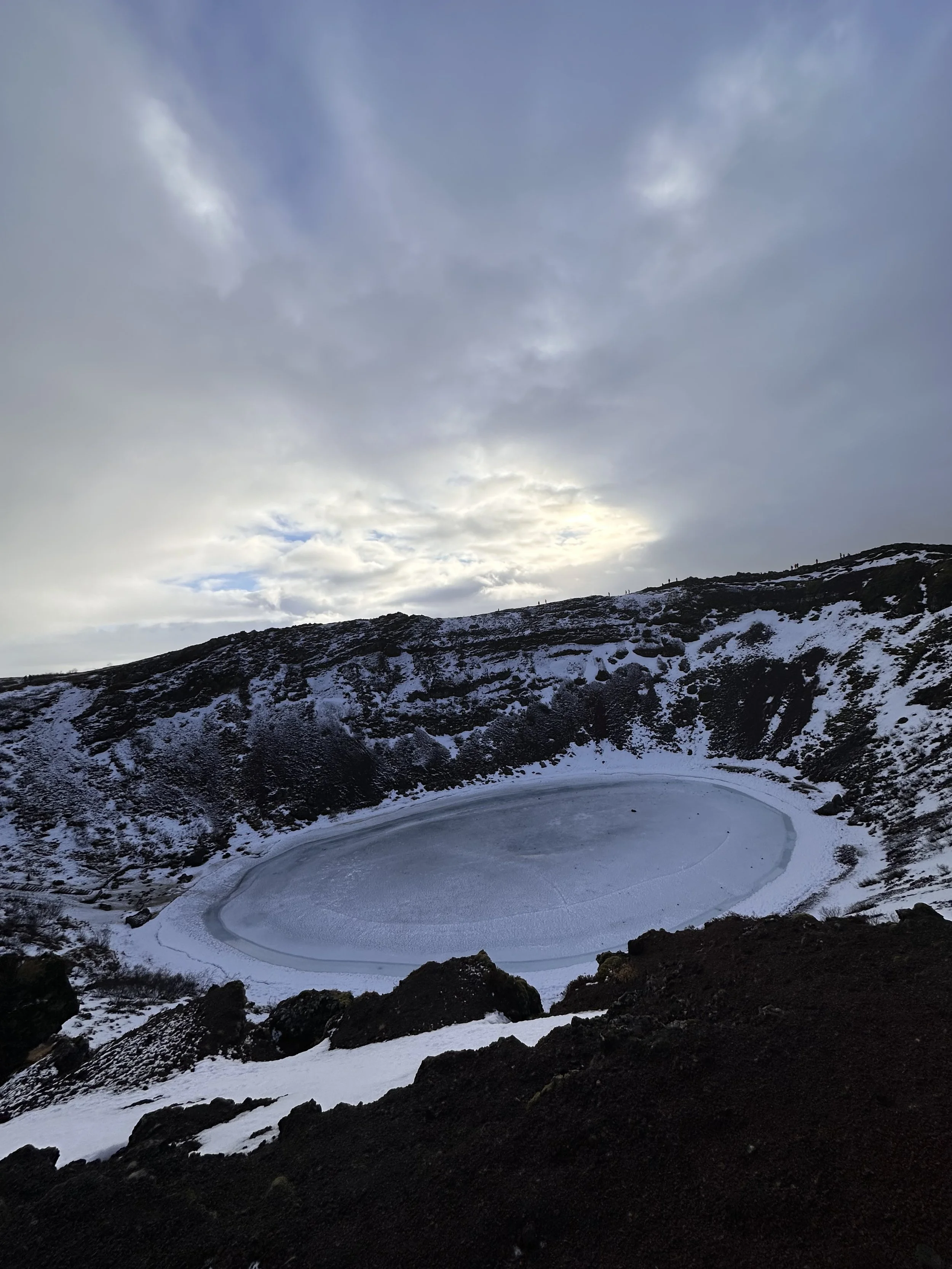
Kerið Crater
Often added to the Golden Circle loop, Kerið is a volcanic crater with a small lake at the bottom, ringed by red and black volcanic rock. It is cool, in an honest "it looks like a crater" way. A quick, worthwhile stop rather than a destination in itself, and a nice bit of variety, but do not expect it to steal the day from Geysir or Gullfoss.
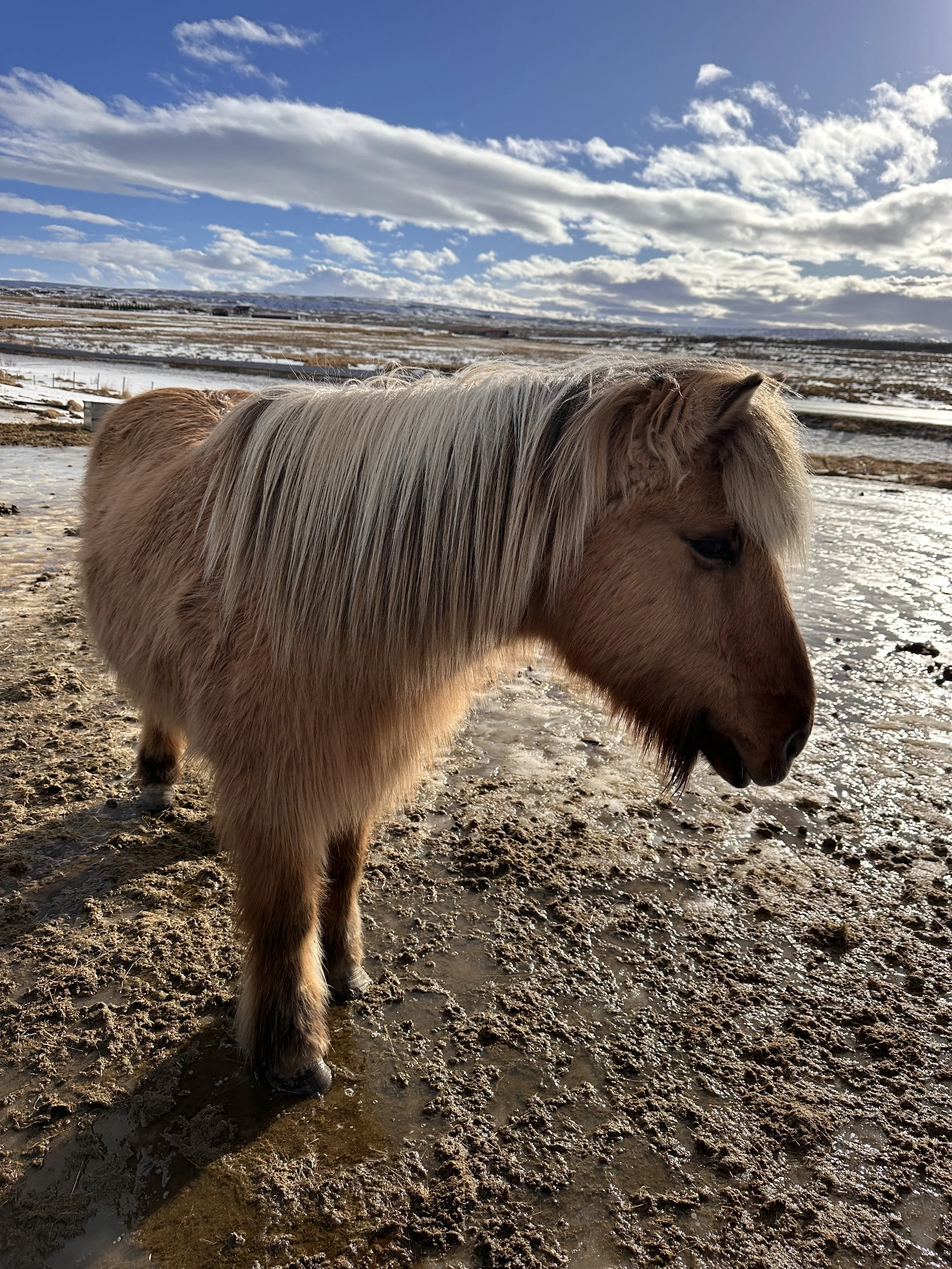
The Icelandic Horses
Not an official stop, but one of the small delights of the day. Driving between sights you will pass fields of Icelandic horses, and many tours pull over so you can meet and feed them. They are stout, shaggy, friendly, and famously full of personality.
One genuine cultural point. Never call them ponies. Despite being pony-sized by the technical height definition, Icelanders are firm that these are horses, on account of their strength, their weight-carrying ability, and their spirited temperament, and calling them ponies in Iceland will earn you a correction. The breed is extraordinary in its own right. It arrived with the Norse settlers over a thousand years ago, and since the year 982 Iceland has banned importing any horses at all, so the Icelandic horse has been bred pure for more than a millennium. The rule has a hard edge. Once an Icelandic horse leaves the country, it can never return, to keep the isolated, disease-free population protected. Funnily enough, our own guide, who was not Icelandic, cheerfully called them ponies the whole time. An actual Icelander would have winced.
How to Do the Golden Circle
There are two ways to do the Golden Circle, and the right one depends mostly on the season and how comfortable you are driving in Icelandic winter conditions.
By Guided Tour
This is what we did, and in winter I would recommend it. Dozens of companies run Golden Circle day tours out of Reykjavik, picking up from central stops and running the full loop in about eight to nine hours. You get a guide explaining the geology and history as you go, someone else handles the driving, and you can actually look out the window instead of watching the road.
For us, the driving was the deciding factor. We are from San Diego, where icy and snowy roads are not part of life, I was pregnant, and we did not want the stress of navigating winter conditions on unfamiliar roads. Handing that off was the right call and let us relax into the day. The honest tradeoff is the one we ran into all over Iceland. The tour bus pickup system is disorganized. Multiple companies gather at the same stops, names get called out in no particular order, and it is a small scramble each morning to get on the right bus and sit with your group. It is genuinely the most annoying part of doing Iceland by tour.
By Rental Car
If you are not on a cruise, Pompeii is easy to reach by train. The Circumvesuviana line runs frequently between Naples and Sorrento and stops at Pompeii Scavi, the stop right at the archaeological site entrance, not to be confused with the modern town's main station. From Naples it is about 35 minutes. From Sorrento, around 30. Naples also connects to the wider Italian rail network, making Pompeii a straightforward day trip from Rome if you are based there, roughly an hour and ten minutes to Naples by high speed train, then the local connection.
What to Pack for Your First Trip on the Golden Circle
The Golden Circle is a day of getting in and out of a warm bus or car and stepping into the open air at each stop, where Iceland's weather can do just about anything. The constant in every season is wind and the chance of rain, so the goal is layers you can adjust easily as you move between the heated vehicle and the elements.
The essentials are the same year-round. Warm layers you can throw on and off, and a windproof, waterproof outer shell, which matters most at Gullfoss, where the spray and the wind coming off the canyon are cold no matter the time of year. Bring a hat, gloves, and a scarf or neck buff, especially outside of high summer, and sturdy footwear with good grip, since the paths at Thingvellir and around the falls are uneven and often wet.
If you are visiting in winter, layer up much more seriously. You will be bundling up for ten minutes at a windy, freezing waterfall and then retreating to the bus, over and over, so warm thermal layers, a proper insulated jacket, and waterproof boots with real grip become essential. The paths get snowy and icy, and a pair of sunglasses helps with the glare coming off the snow. In summer, the same trip is far milder, you will still want the windproof layer and the rain shell, but you can leave the heavy winter gear at home.
A few day-trip specifics worth having on you any time of year. A fully charged phone and a battery pack, since you will want a lot of photos and video, especially for catching Strokkur mid-eruption, and the cold drains batteries fast in winter. And a card for the cafes at Geysir and Gullfoss, which are your main food and bathroom stops on the loop and, like everywhere in Iceland, are not cheap.
For the full Iceland packing breakdown and layering strategy, see the Reykjavik page, where I go through all of it in detail. This is the short version for a single day out of the city.
Where to Eat on Your First Trip to the Golden Circle
Food on the Golden Circle is not really about restaurants the way a city is. For most of the day, your options are the cafes at the major stops, the visitor center at Geysir and the cafe at Gullfoss, both of which do soup, sandwiches, and coffee at the usual steep Icelandic prices. On a guided bus tour, that is mostly what you will eat, and it is perfectly fine for refueling and warming up between sights. Pack a few snacks regardless, since the gaps between stops are long and food is expensive.
If you are self-driving, though, the route has quietly become one of the more interesting dining corridors in the country, and it is worth planning one proper stop around it.
Friðheimar is the famous one, and for good reason. It is a working tomato greenhouse where you eat lunch surrounded by the vines, warmed year-round by geothermal heat, with a menu built almost entirely around tomatoes. The tomato soup with fresh-baked bread is the signature, and you can snip your own basil at the table. After a day of lava and ice, stepping into a warm room full of growing green things is genuinely lovely. It sits on the route between Geysir and Thingvellir, it is lunch-only, and booking ahead is essential, since every tour bus in the area seems to stop here and it sells out.
Efstidalur is a working dairy farm turned restaurant, hearty local food with a window onto the cows, and homemade ice cream made from the farm's own milk. The most relaxed, family-friendly stop on the route.
Laugarvatn Fontana is worth a mention for a specific experience, rye bread baked underground using geothermal heat, which you can taste fresh. A small, distinctly Icelandic thing to work in if the timing lines up.
If I did the Golden Circle again on my own, I would build the day around a Friðheimar lunch. On a bus tour, do not stress about it, eat at the stop cafes, keep some snacks in your bag, and save your real meals for Reykjavik.
Watching the Earth Work
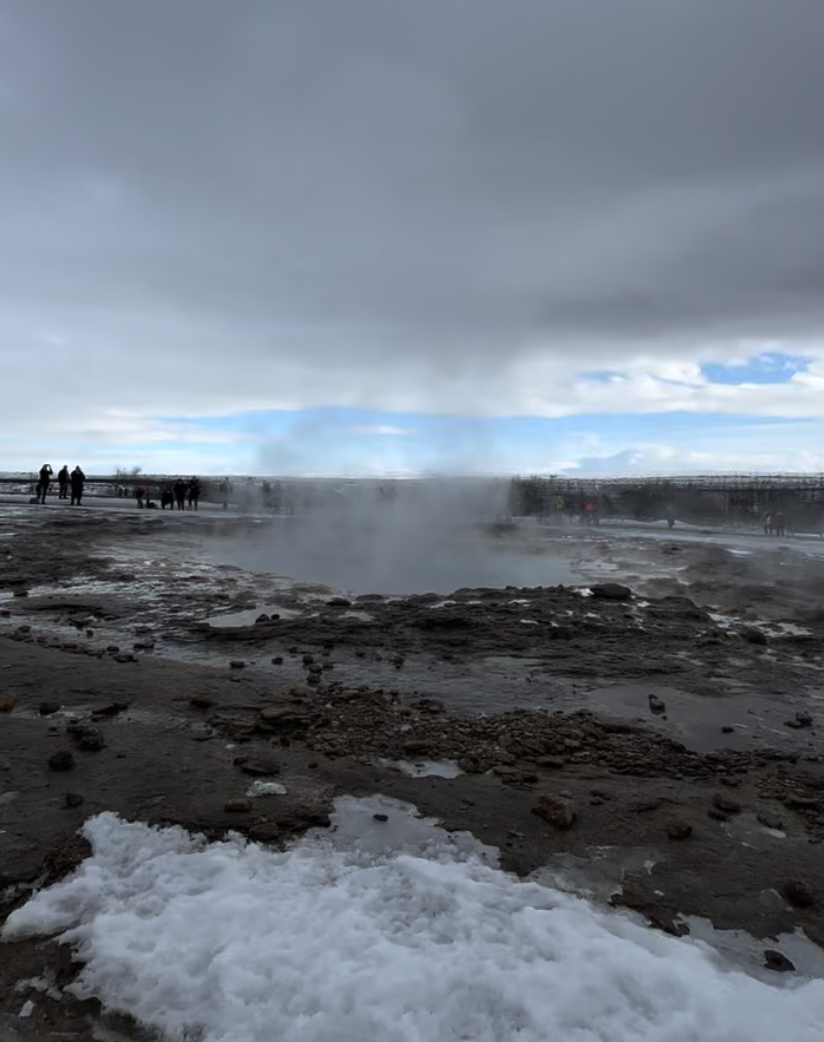
I had never seen a geyser in real life. I knew the mechanics of it, the steaming pool, the wait, the column of boiling water shooting up every few minutes, and I had watched it happen in videos plenty of times. None of that quite prepared me for standing in front of one.
What got me about Strokkur was not that it was beautiful. It was that the ground was so obviously, actively doing something. Steaming, hissing, smelling of sulfur, swelling up and bursting open from below on a loop, every few minutes, with no help from anyone.
The planet's activity is usually invisible, or slow, or catastrophic. You feel it in a sudden earthquake or you never catch it at all. Iceland is the rare place where it is none of those things. Here you can stand a few feet away and watch the earth work, on a loop, every few minutes, close enough to feel the heat and smell the sulfur, frequent and visible and somehow not a disaster.
The Golden Circle gets called the tourist day, the easy day, the greatest hits. And it is all of those things. But it is also the day Iceland first made me feel how alive the planet underneath me actually is. That is not a small thing to take from a bus tour.
Itinerary for Your First
Trip to the Golden Circle
The Golden Circle runs about eight to nine hours round trip from Reykjavik, whether you do it by tour or drive it yourself. Tours run the loop in different directions, so your stops may come in a different sequence than someone else's. Here is the order our day actually went.
Morning: Leaving Reykjavik
Most tours pick up between 8 and 9am from central Reykjavik stops. If you are on a tour, give yourself extra time for the pickup scramble, the buses gather at shared stops and the system is more chaotic than it should be. If you are driving, head out early to reach the first stop ahead of the bus crowds.
First Stop: Kerið Crater
We started at Kerið, a volcanic crater with a small lake at the bottom, ringed by striking red and black rock. It is a quick stop rather than a long one, and an easy, scenic way to begin the day. It looks exactly like what it is, a crater, and that is enough.
Second Stop: Gullfoss
Next was Gullfoss, the "Golden Falls," a powerful two-tiered waterfall dropping into a rugged canyon. Walk the viewing platforms, brace for the cold spray and the wind coming off the canyon, and take in the sheer volume of water, especially dramatic framed by snow and ice in winter. There is a cafe here for a warm-up and a bathroom stop.
Along the Way: The Icelandic Horses
Between stops we pulled over to meet a field of Icelandic horses, stout and shaggy and friendly, and got to feed them. A lovely, low-key break in the driving and one of the small delights of the day. Just remember, they are horses, not ponies.
Third Stop: The Geysir Geothermal Area
Then on to Haukadalur, the geothermal field, and the highlight of the day for me. Watch Strokkur erupt every few minutes, walk the steaming, bubbling, sulfur-smelling field, and have your camera ready for the moment the pool domes up and bursts. There is a visitor center with a cafe and restrooms here, a good place to warm up and eat, though like everywhere in Iceland it is not cheap.
Final Stop: Thingvellir National Park
The loop ended at Thingvellir, closest to Reykjavik on the way back. Walk the Almannagjá gorge between the North American and Eurasian tectonic plates, take in the vast rift valley, and stand where Iceland's first parliament gathered over a thousand years ago. I wished we had more time here than the tour allowed. If you are self-driving, this is the stop to give your extra minutes to.
Evening: Back to Reykjavik
Most tours return to the city between 5 and 6pm, leaving time to warm up, rest, and have dinner in Reykjavik. If you have a Northern Lights tour booked for the same night, this is a good day to recover before heading back out after dark.
If you are self-driving and want to extend the loop, the Golden Circle pairs well with a few add-ons. The Secret Lagoon or the Fontana geothermal baths at Laugarvatn let you soak in a hot spring along the route. The Friðheimar tomato greenhouse is a popular and genuinely charming lunch stop, growing tomatoes year-round under geothermal light. And Skálholt church is an easy addition for anyone with extra hours and their own wheels.