
Your First Time in
The South Coast, Iceland
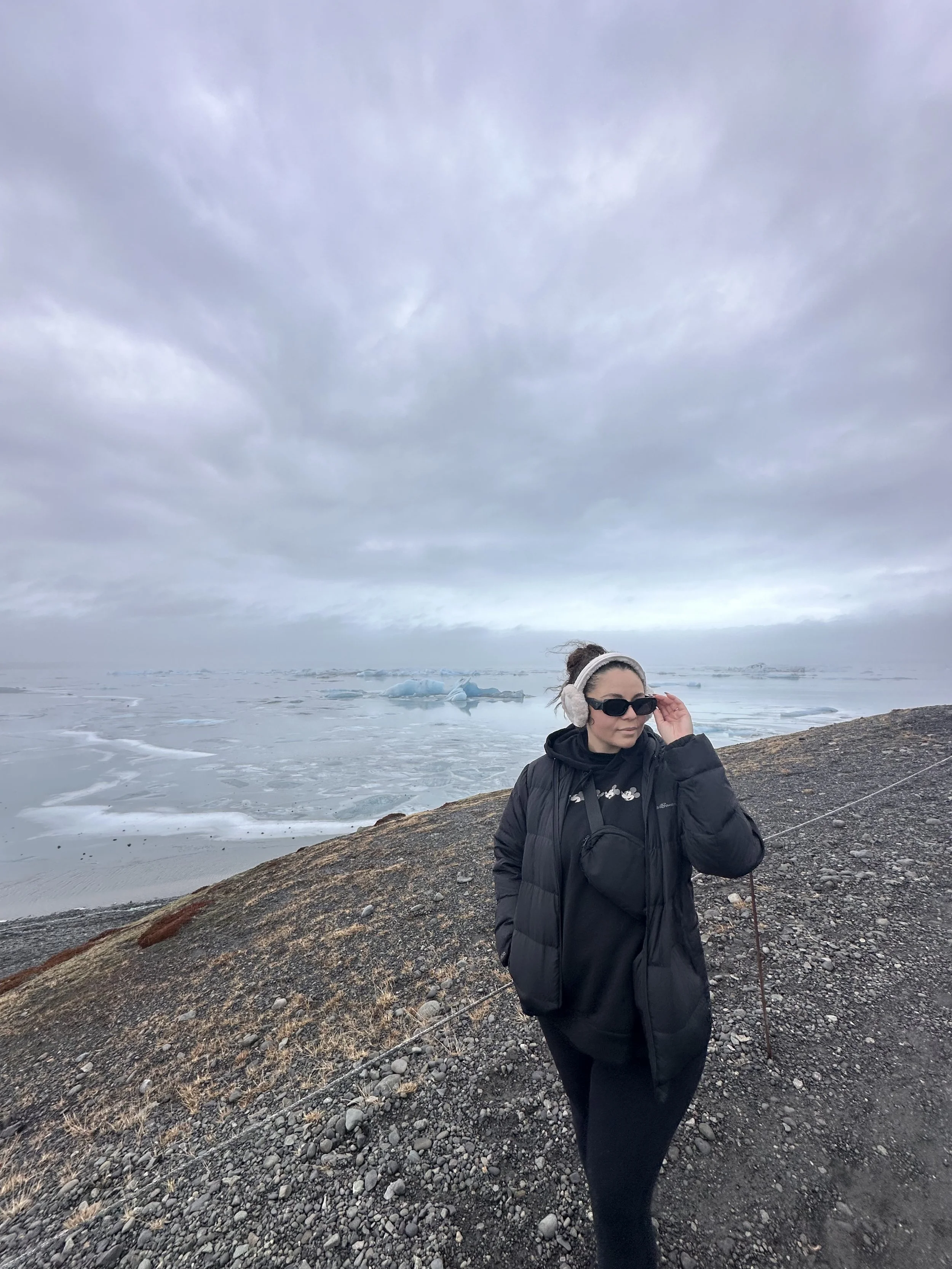
The South Coast was the best day we had in Iceland, and it is the day I think about when someone asks what the country actually looks like.
This is where Iceland stops looking like anywhere else on earth. In a single stretch of road you go from black sand beaches that look like the surface of another planet, to lava fields blanketed in soft grey-green moss, to a lagoon full of icebergs drifting toward the sea, to a beach where chunks of glacier wash up and sit glittering on the black sand like scattered diamonds. My husband and I both still rank this as our favorite day of the whole trip. Nothing else we did came close to this density of jaw-dropping, what-am-I-even-looking-at landscape.
It is also, and I want to be honest about this, a brutally long day. We did the South Coast as a guided trip out of Reykjavik, and it ran fourteen hours. Fourteen. Most of the best stuff is two to five hours east of the city, which means a lot of that day is spent on the bus getting there and back. The scenery is worth it. But if I did Iceland again, this is the region where I would not base myself in Reykjavik at all. I would stay out here, in Vík or somewhere along the coast, and give these sights the time and the daylight they deserve instead of racing the clock back to the city.
So take this page two ways. As a guide to the most spectacular stretch of Iceland we saw. And as the strongest argument on this whole site for not trying to do it all as a day trip. The South Coast is the reason to slow down and stay a while.
What to See on Your Visit to the South Coast
The Waterfalls: Seljalandsfoss and Skógafoss
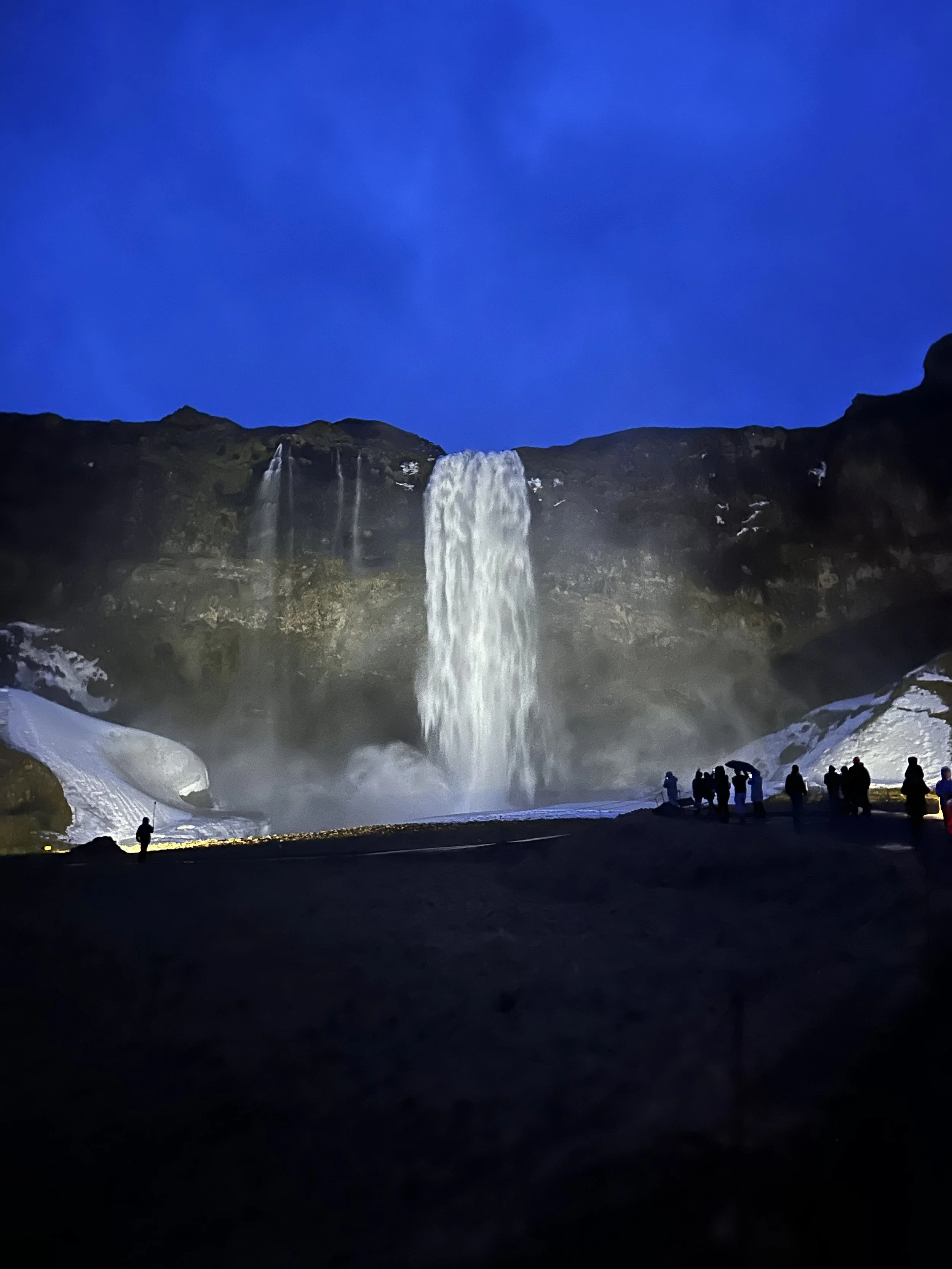
The South Coast is lined with waterfalls, and they come thick and fast once you leave the city. Many share a particular shape, tall and narrow, pouring off the high cliffs that once marked Iceland's coastline before the land extended outward.
Seljalandsfoss is the slender, famous one, a ribbon of water dropping about sixty meters, with a path that lets you walk behind the falls in summer. We reached it at dusk, bitterly cold, and the path behind it was closed for the winter, but they light the falls in the dark months and it was beautiful glowing against the black evening.
Skógafoss is the opposite kind of waterfall, and just as iconic. Where Seljalandsfoss is a thin ribbon, Skógafoss is a wide, thundering curtain about sixty meters tall and twenty-five meters across, and you can walk right up to the base and feel the spray and the force of it. On a clear day there is almost always a rainbow in the mist. A long staircase climbs to a viewing platform at the top if you have the legs and the time for it.
You will pass smaller falls too, like Stjórnarfoss further east near Kirkjubæjarklaustur. After a while you stop counting them.
Reynisfjara, the Black Sand Beach at Vík
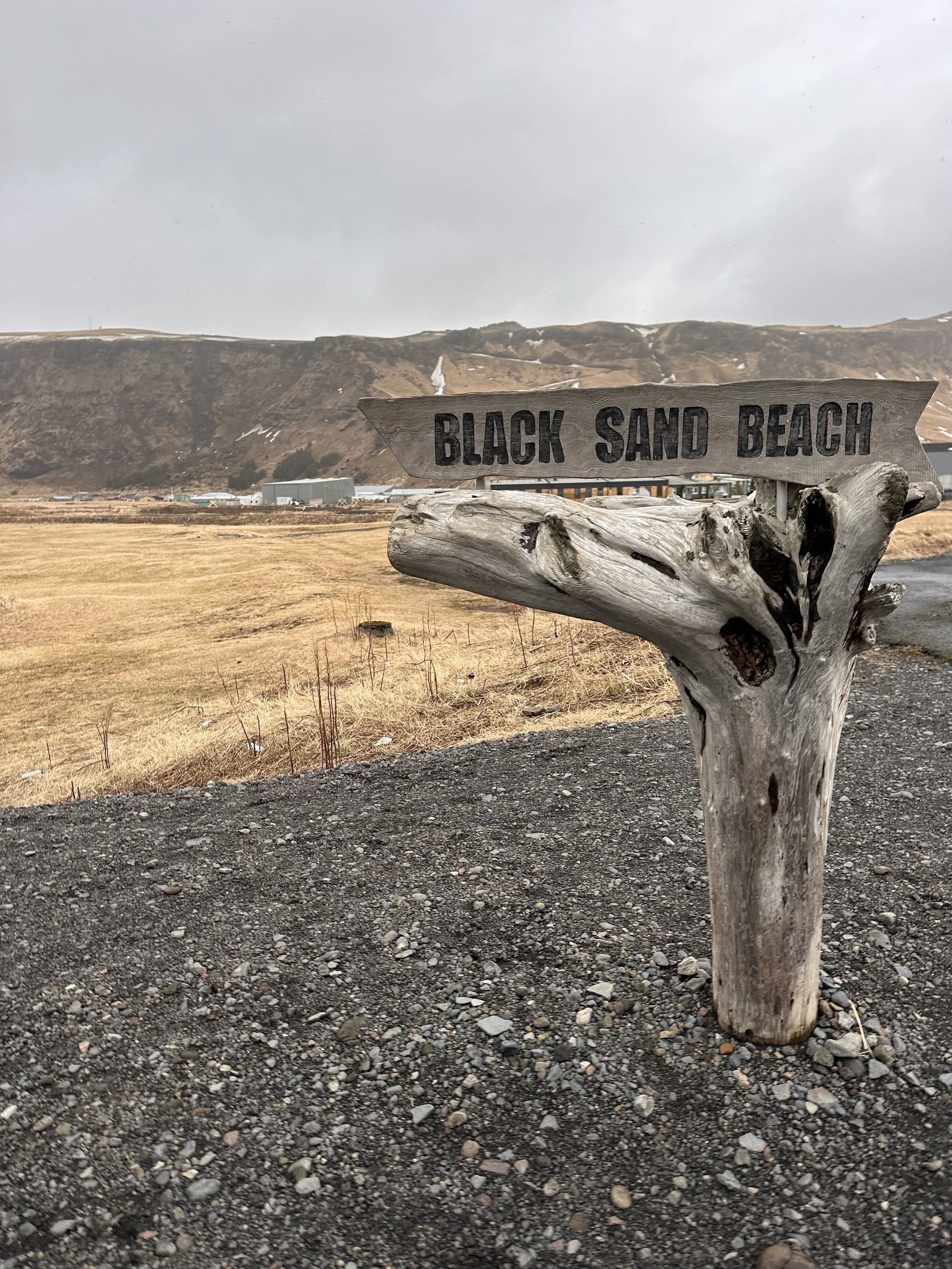
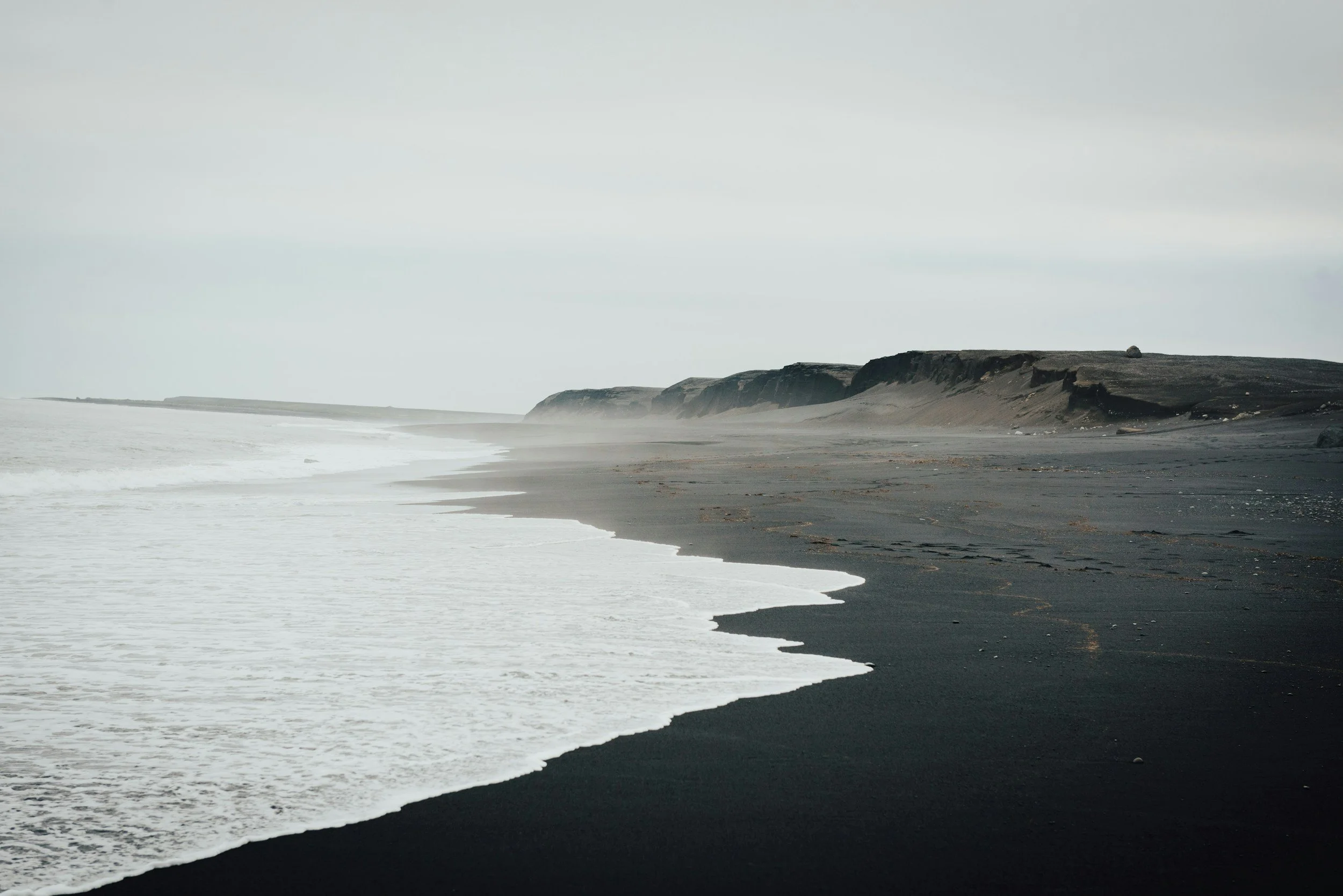
This was unreal, a ten out of ten, one of the most unique places I have ever stood. I have been to some of the best beaches in the world, and Reynisfjara looks like none of them. It looks like something off another planet entirely. The sand is jet black volcanic rock, the waves come in hard and grey off the North Atlantic, and a wall of perfect hexagonal basalt columns rises out of the beach like something built rather than formed. Offshore stand the Reynisdrangar sea stacks. It is so cinematic that it has been used as a filming location for shows like Game of Thrones, and standing on it you understand why immediately.
One serious safety note. Reynisfjara is known for sneaker waves, sudden surges that rush far up the beach without warning and have pulled people in. They are genuinely dangerous. Never turn your back on the ocean here, and stay well back from the waterline no matter how calm it looks.
The Lava Fields
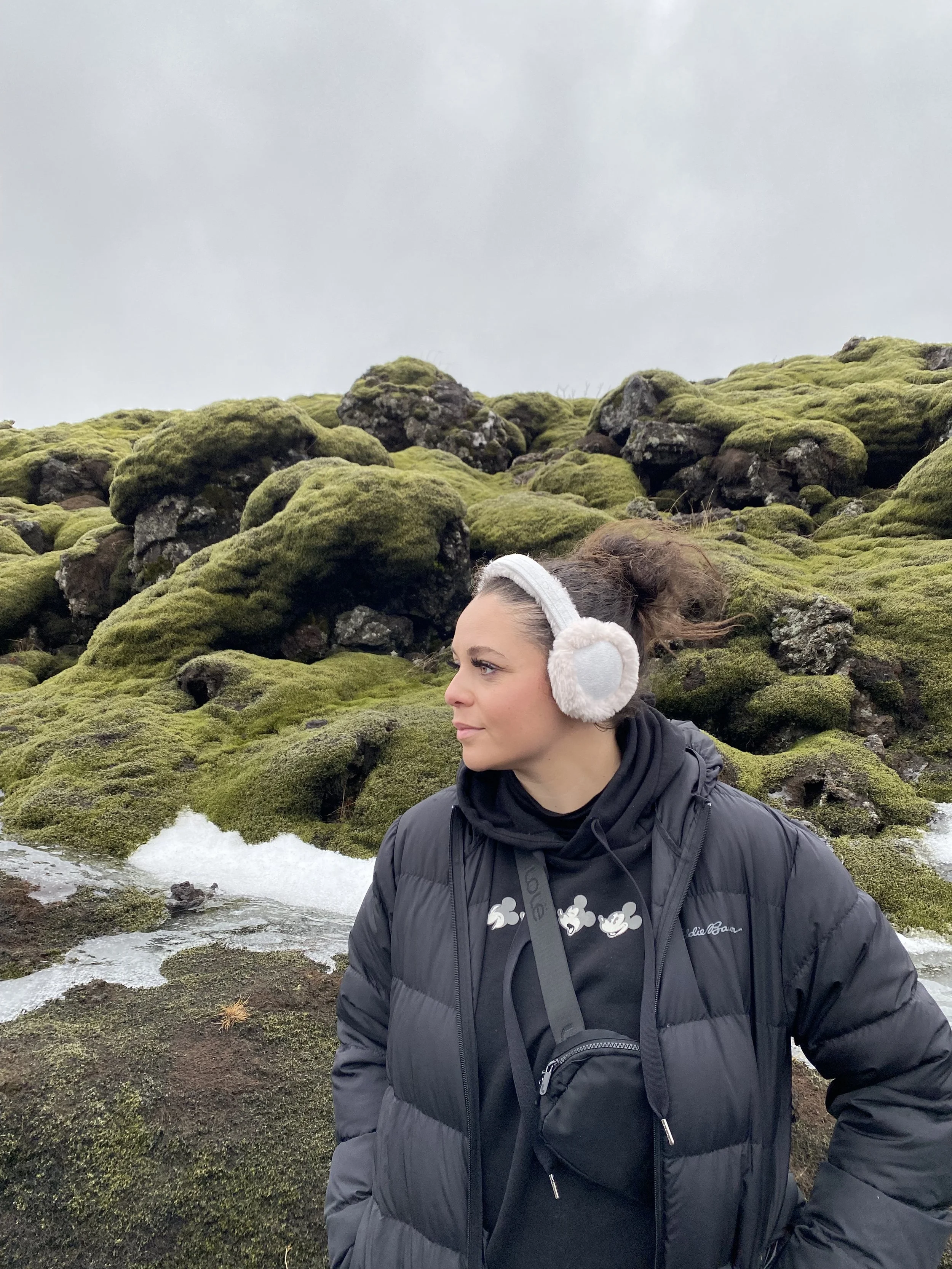
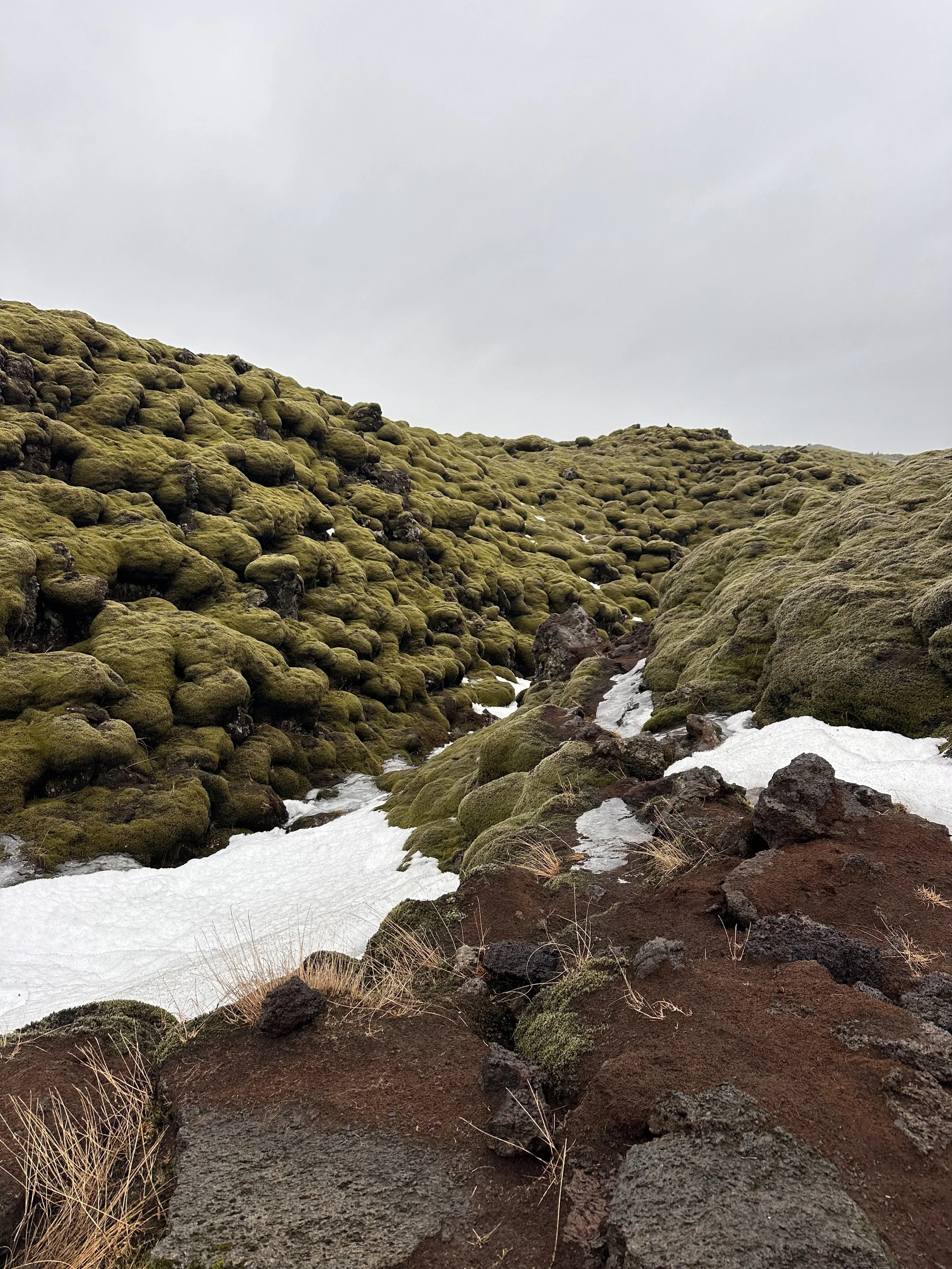
This was the surprise of the day, and part of why it became our favorite. Driving east, outside the village of Kirkjubæjarklaustur, the landscape turns into vast fields of lava blanketed in a thick, soft layer of grey-green moss. It goes on for miles, gently rolling, completely silent, unlike any terrain either of us had ever seen. Our guide explained how these fields form and how slowly that moss grows over the old lava, how fragile it is, how long it takes. It is one of those landscapes that does not photograph the way it feels. In person it is genuinely otherworldly, and it was the thing my husband and I kept talking about afterward.
Jökulsárlón Glacier Lagoon
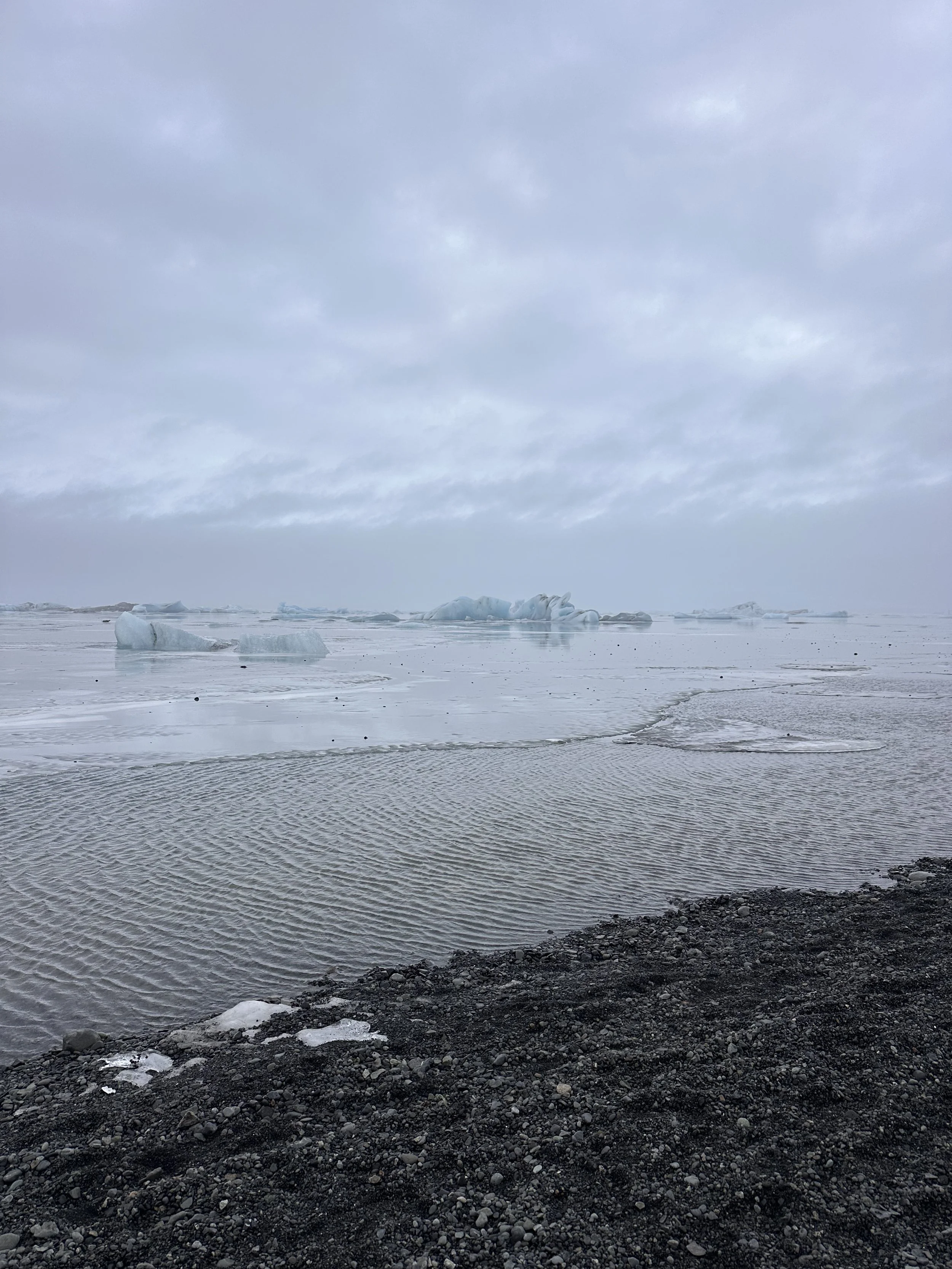
The glacier lagoon is the centerpiece of the day, a large lake at the foot of a glacier where enormous chunks of ice break off and float slowly across the water toward the sea. You stand at the edge and watch icebergs drift past, pale blue and white and sometimes streaked black with volcanic ash. It is genuinely awe-inducing in person. I will be honest that the photographs we had seen looked almost more dramatic than what we managed to capture ourselves, but standing there, watching a glacier calve into a lagoon in real time, is something else entirely. There is a cafe nearby, and we had a crepe here, a small warm thing in the middle of a very cold, very long day.
Diamond Beach
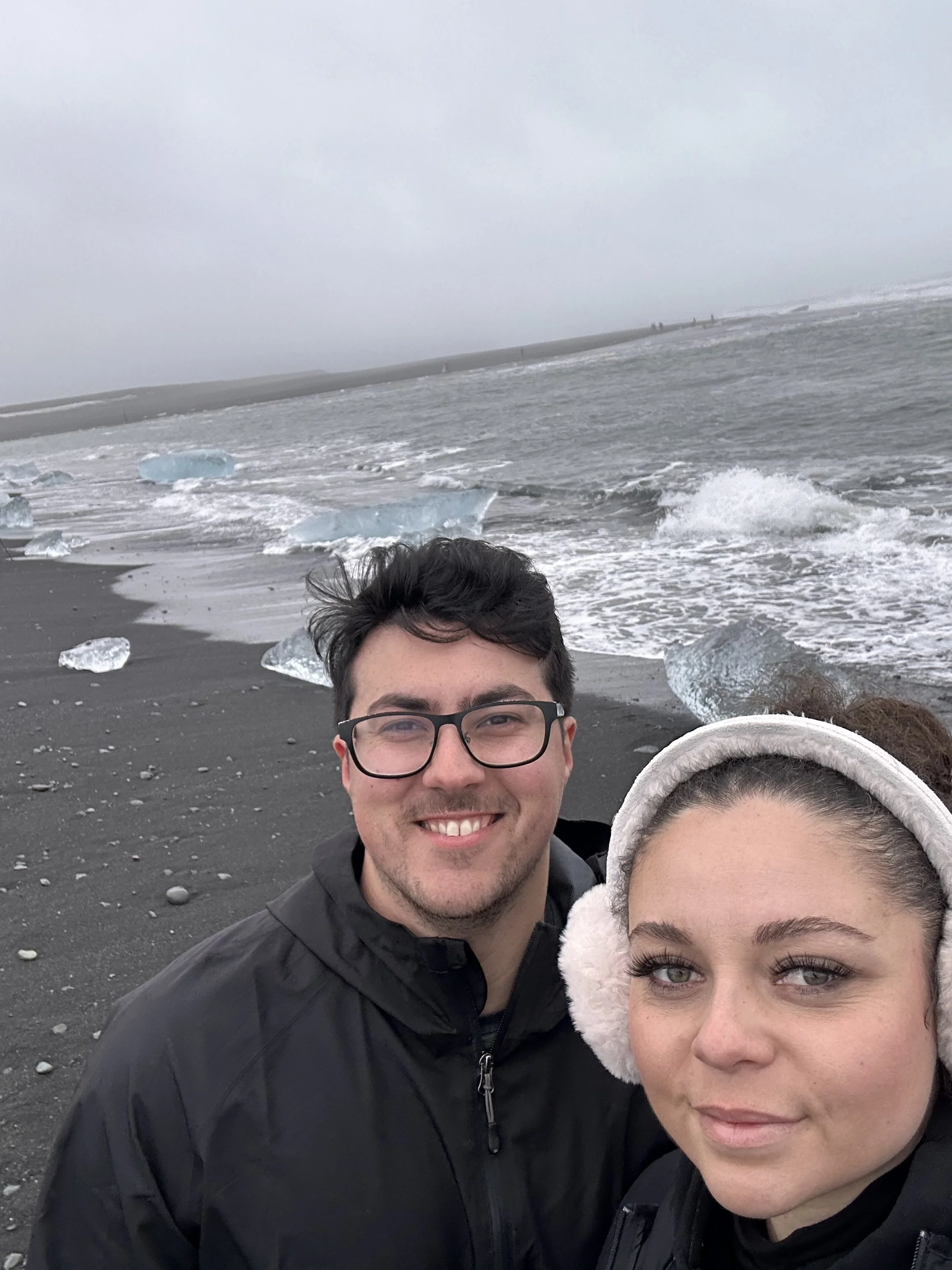
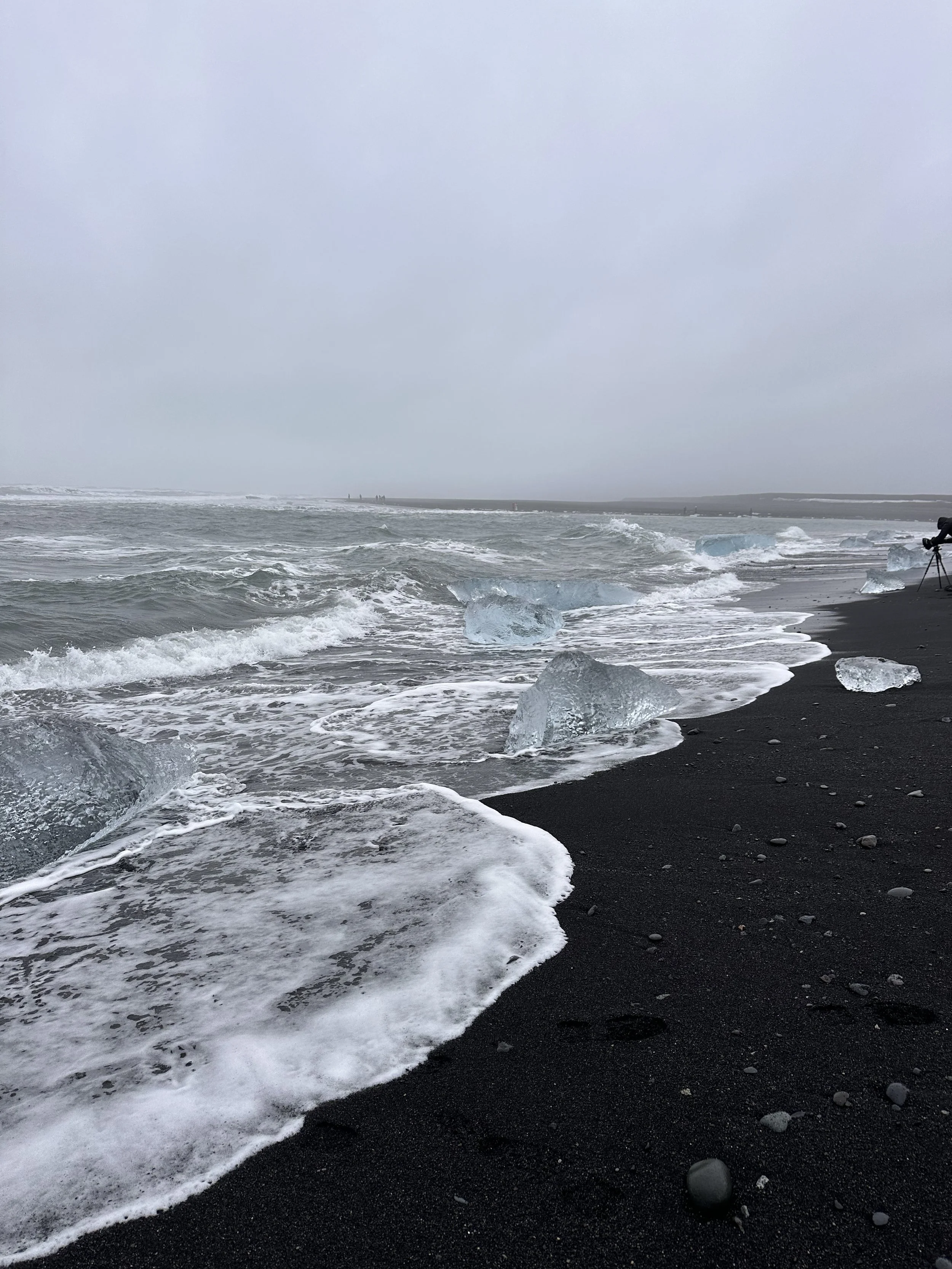
Right across the road from the lagoon is Diamond Beach, and it might be the single most surreal place we saw in Iceland. The icebergs that drift out of the lagoon and into the sea get washed back up onto the black sand, where they sit scattered across the beach like enormous diamonds, some the size of your fist, some the size of a person, glittering and clear against the black. The contrast of bright glassy ice on jet black sand is completely out of this world. The ice is different every single day, so no one ever sees quite the same beach. Of everything on the South Coast, this is the one that felt most like another planet.
If You Have More Time
A guided day trip hits the headline stops, but the South Coast holds more than one long day can reach, which is the best argument for staying out here rather than doing it from Reykjavik. Dyrhólaey, the dramatic sea arch and promontory near Reynisfjara, is an easy addition with great views over the black coastline. Sólheimajökull is a glacier tongue you can actually hike on with a guide, one of the most accessible glacier walks in the country. Fjaðrárgljúfur is a stunning, steep-walled canyon a little inland. And Skaftafell, part of Vatnajökull National Park, has some of the best hiking and ice cave access on the coast. None of these fit into a single day from the city, which is exactly the point.
How to Do the South Coast
The Day-Trip Reality
We did the South Coast as a guided day trip from Reykjavik, and it was fourteen hours long. The sights are spread far to the east, the glacier lagoon alone is around five hours from the city, so a huge portion of that day is spent on the bus, and in winter much of the driving happens in the dark on either end. The landscapes are worth every bit of the effort. But you arrive at some of the most extraordinary places in the country tired, rushed, and racing the daylight, and you never get to linger anywhere the way it deserves.
What I Would Do Instead
Stay out here. This is the region where basing yourself in Reykjavik makes the least sense. Vík is the natural hub, a small village right by Reynisfjara with hotels and restaurants, and staying a night or two on the South Coast turns a frantic fourteen-hour blur into two relaxed days where you can actually absorb the lava fields, watch the icebergs without a clock running, and catch the waterfalls in good light. You would also be perfectly positioned to see the Northern Lights from out here, far from the city's light pollution. If I did Iceland again, this is the single biggest change I would make.
Tour vs Self-Drive
If you do base in Reykjavik and want to see the South Coast, a guided tour is a reasonable way to do it, especially in winter when the long drive is in the dark and the roads can be icy and you would rather not handle that yourself. A guide also adds real context to what you are seeing, like how the moss-covered lava fields form. The tradeoff is the long day and no control over timing.
If you are comfortable driving and especially if you are visiting in summer, self-driving the South Coast and staying overnight along it is the better experience by far. The whole route runs along Route 1, the Ring Road, which is well paved and easy to navigate, and having your own car means you stop where you want, stay as long as you want, and are not racing a bus schedule back to the city. For this stretch of Iceland more than any other, the freedom is worth it.
What to Pack for Your First Trip on the South Coast
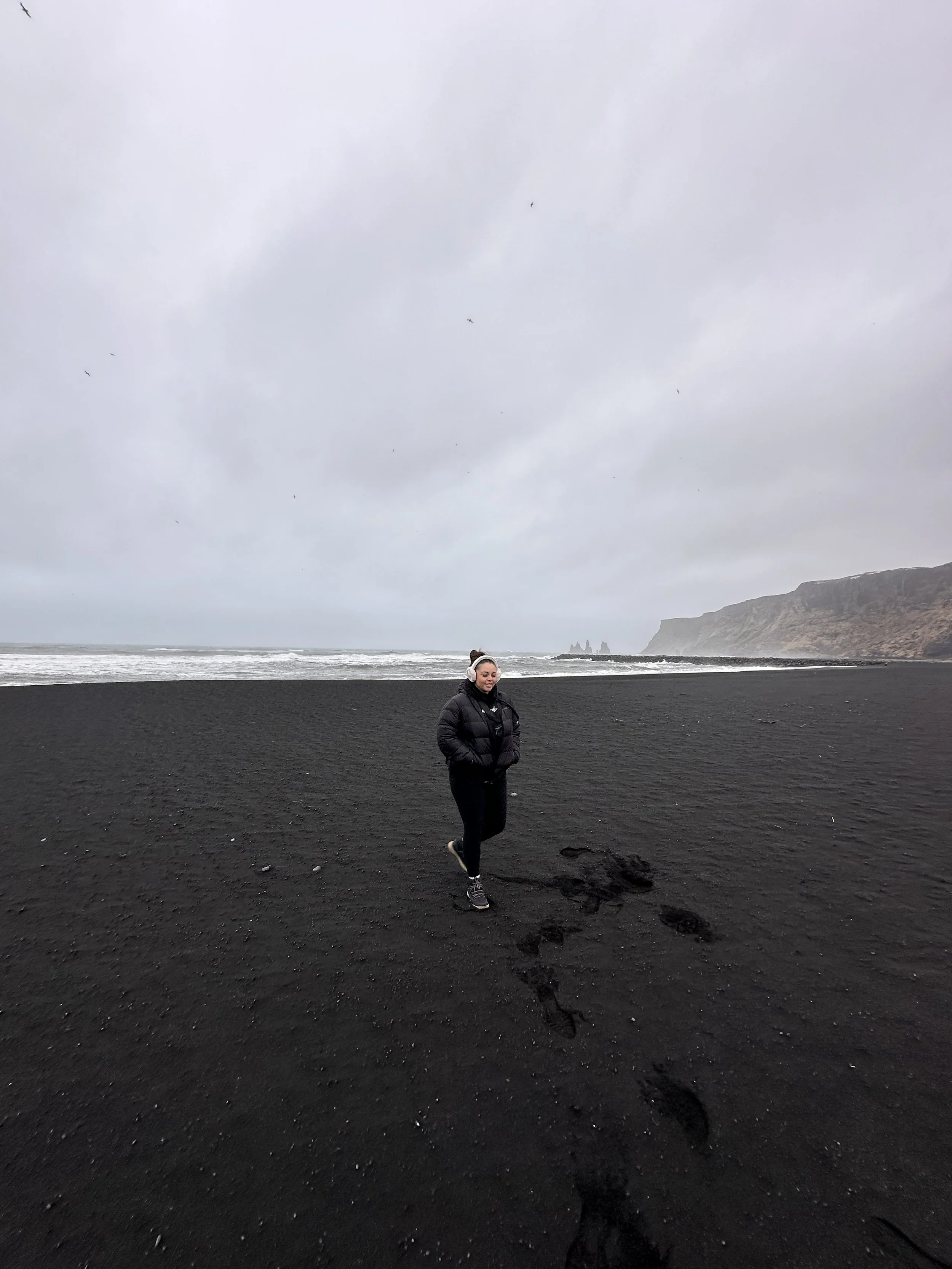
The thing that sets the South Coast apart is the distance. The best stops are hours east of Reykjavik, which means a very long day and a lot of exposure to whatever the coast throws at you, waterfall spray, glacier wind, black sand, and changeable weather the whole way. Pack for a long day in the elements.
The clothing essentials are the same as anywhere in Iceland and hold in every season, warm layers you can add and shed easily and a windproof, waterproof outer shell. A few things matter more here than usual. A genuinely waterproof outer layer especially, because between the waterfall spray at Skógafoss and the wind coming off the glacier lagoon and Diamond Beach, you will get wet and wind-battered more than on most days. And sturdy boots with real grip, because you will be walking on wet black sand and slick rock near the falls year-round. Sneakers will not cut it.
In winter, layer up much more heavily, a proper insulated jacket, thermal layers, a warm hat and gloves, and boots that handle ice around the lagoon, and know that the short days mean a winter tour runs in darkness on both ends. In summer, the trip is far milder and the near-endless daylight is a real gift on a day this long, letting you see every stop in good light without racing the clock. You will still want the rain shell and a warm layer, since the coast stays windy and cool even then, but you can leave the heavy winter gear behind.
A safety note worth packing in your head as much as your bag. At Reynisfjara, the black sand beach, stay well back from the water. The sneaker waves there are genuinely dangerous and have caught people off guard. No photo is worth turning your back on that ocean.
Because it is such a long day, bring more than just clothing. Snacks and water, since food stops are limited, spread out, and expensive. A battery pack for your phone, which you will be photographing with constantly. And something to do for the hours of driving each way, especially on a dark winter drive. For the full Iceland layering and clothing breakdown, see the Reykjavik page. This is the short version for a long day on the coast.
Eating on the South Coast takes a little planning, because the route is long and the food options are spread thin between the sights. There is no strip of restaurants out here, just a handful of spots clustered around the major stops and one real town. On a guided day tour, you mostly eat where the bus stops and when it stops, so the main thing is to keep snacks on you for the long stretches. If you are self-driving, a little forethought means you eat well instead of settling for whatever is nearest when hunger hits.
The food highlights along the route, roughly west to east:
Where to Eat on Your First Trip to the South Coast
Vík
Vík is the hub, and the best bet for a proper sit-down meal. It is a tiny village, but it punches above its size for food. Suður-Vík does a broad menu of mains and pizzas, Halldórskaffi is a cozy spot in a historic house serving soup, lamb, fish, and burgers, and Smiðjan Brugghús is a popular brewery doing burgers and craft beer. If you are stopping anywhere for a real lunch or dinner on the South Coast, make it Vík.
The food trucks at the sights.
A couple of minutes east of Skógafoss, a little red food truck does fish and chips and quick bites. And at Jökulsárlón, the glacier lagoon, there are food trucks right by the water, which is where we grabbed a crepe, a small warm thing in the middle of a very cold, very long day. Not gourmet, but exactly what you want when you are tired and freezing.
Reynisfjara
Reynisfjara has the Black Beach Restaurant right by the black sand beach, doing soups, burgers, and sandwiches, a convenient warm-up stop when you are already there.
The honest takeaway. Eat a real meal in Vík if your timing allows, treat the food trucks at the sights as the practical refuel they are, and always have snacks and water in your bag, because on this route hunger tends to hit a long way from the next option. As everywhere in Iceland, it is all expensive, so the snacks do double duty for your wallet.
The Last Version of Us
The ice on Diamond Beach does not last.
It breaks off a glacier that took centuries to form, drifts across the lagoon, floats out to sea, and then the tide carries it back and lays it on the black sand, where it sits glittering and clear and impossibly blue for a few hours before the next tide pulls it back out or it melts into the sand. The beach you see in the morning can be gone by afternoon. Something ancient, brilliant for a little while, and then never that way again.
I was almost five months pregnant when I stood on that beach.
We had come to Iceland for a babymoon, which is a strange and lovely word for what it actually is, one of the last trips you take as just the two of you, before the version of your life where it is just the two of you ends. We did not talk about it that way. We were too busy being cold and amazed. But I knew it, standing there with my husband on a beach made of melting diamonds, my hand resting where it had started to rest without my thinking about it. We were in the last chapter of something. A particular version of us, brilliant for its own short while, about to quietly wash back out to sea.
I do not mean that sadly. The ice is not sad. It is the most beautiful thing on that whole coast precisely because it does not last, because you are seeing something that exists only right now, that no one has seen before and no one will see again. That is what makes you stop and actually look instead of walking past.
I think that is why Diamond Beach stayed with me more than the glaciers or the waterfalls, the things built to outlast everyone. It was the one place that was honest about being temporary. And I was standing on it at the exact moment in my own life when I understood, more than I ever had, that the best things are often the ones you only get to hold for a little while.
The ice I stood next to washed back out to sea hours after I left it. So did the version of us that went to Iceland. I would not trade either one. But I am glad I knew, standing there, to stop and look while it was still in front of me.
Itinerary for Your First
Trip to the South Coast
The South Coast is a long day no matter how you do it. As a guided trip from Reykjavik it runs around fourteen hours; self-driving and staying overnight, you can stretch the same route across two relaxed days. Here is the flow heading east along the coast.
Early Morning: Leaving Reykjavik
Tours leave early, often around 7am or earlier, because of how far east the best stops are. In winter, you will set off in the dark. If you are self-driving, leave early too, both to maximize the short winter daylight and to reach the famous stops before the tour buses. The drive to the first waterfall is around two hours.
Morning: The Waterfalls
The first stops are the South Coast's iconic waterfalls. Seljalandsfoss, the tall, slender one you can walk behind in summer, and Skógafoss, the wide, thundering curtain you can walk right up to. Both are worth getting out for even in hard cold. This is the gentle, jaw-dropping introduction to the day.
Midday: Reynisfjara and Vík
Continue to Reynisfjara, the black sand beach near the village of Vík, with its basalt columns and sea stacks. Take it in, take your photos, and stay well back from the water because of the sneaker waves. Vík itself, just up the road, is the natural lunch and bathroom stop, a tiny village with a few places to eat. If you are staying overnight on the coast, this is the town to base in.
Afternoon: The Lava Fields and the Drive East
Past Vík the landscape opens into the vast moss-covered lava fields around Kirkjubæjarklaustur, miles of soft green-grey terrain unlike anywhere else. The drive east is long, but the scenery out the window is part of the experience. This is the stretch that quietly became our favorite.
Late Afternoon: Jökulsárlón and Diamond Beach
The far point of the day, and the payoff. Spend time at the Jökulsárlón glacier lagoon watching icebergs drift across the water, then cross the road to Diamond Beach to see the ice scattered like diamonds on the black sand. There is a cafe at the lagoon for a warm crepe or coffee. Give yourself as much time here as the day allows, because this is what you came all this way for.
Evening: The Long Drive Back
If you are on a day tour, the return to Reykjavik is the same long haul in reverse, mostly in the dark, arriving back in the city late. It is a lot. If you are staying on the coast, this is when you head to your hotel in Vík, far from any light pollution, where on a clear night you have a real chance of catching the Northern Lights before bed. That contrast, collapsing into a fourteen-hour bus ride versus settling into a quiet coastal town under the aurora, is the whole argument for staying out here.
If You Have More Time
Two days on the South Coast lets you add the stops a single day cannot reach, like Dyrhólaey's sea arch, a guided glacier walk on Sólheimajökull, the Fjaðrárgljúfur canyon, and the hiking and ice caves around Skaftafell in Vatnajökull National Park. The further east you are willing to base yourself, the more of this opens up.