
Your First Time in
Pompeii, Italy
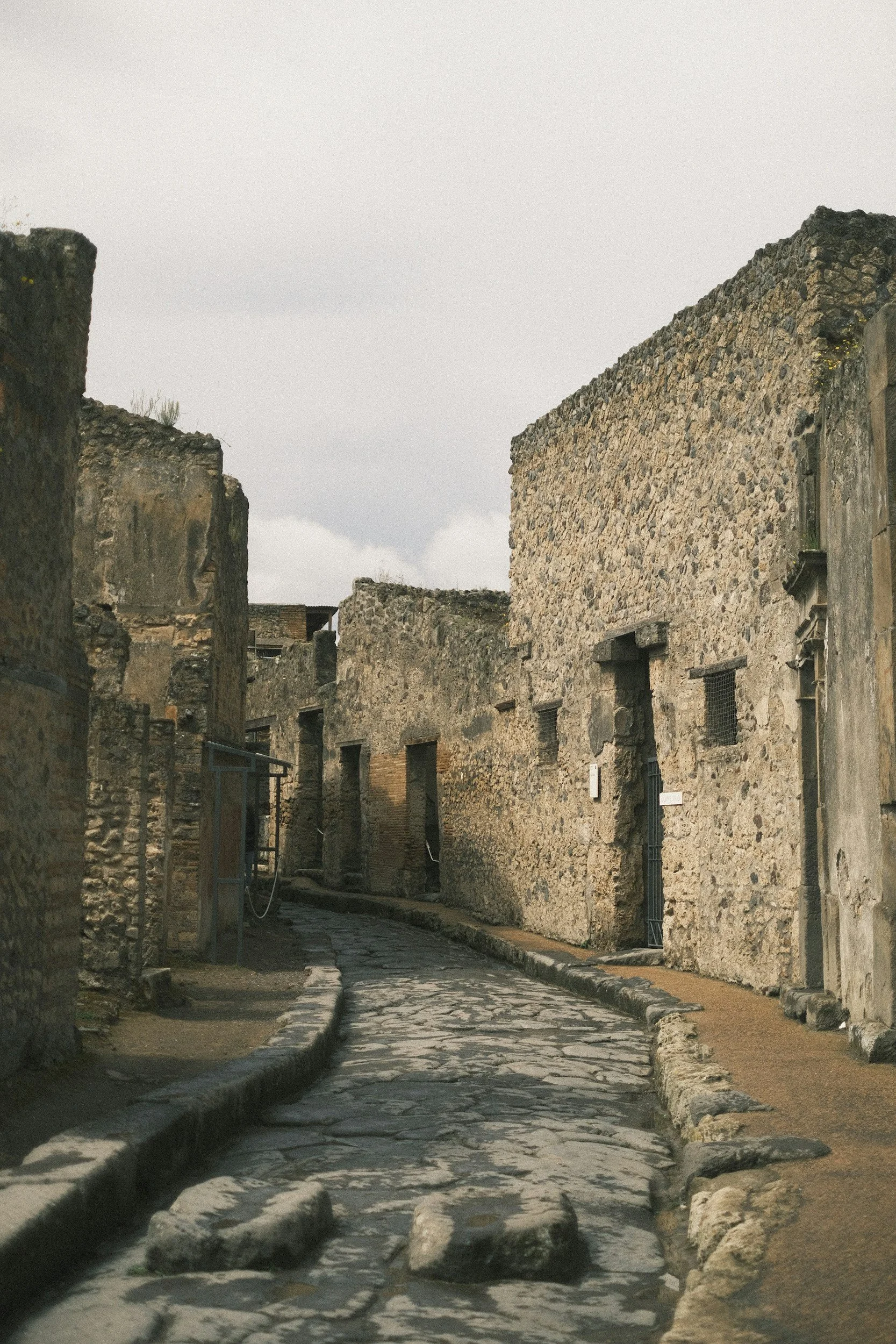
I think I expected Pompeii to feel like a ruin.
We had been to the Roman Forum earlier in the trip, and for somewhere this ancient, that is what I had in my head. Columns. Foundations. The outline of a thing you have to work to imagine back into existence. Pompeii is nearly two thousand years old, buried in 79 AD, the year before the Colosseum was even finished. I assumed it would ask the same thing of me, to stand in front of broken stone and picture the rest.
It does not. Pompeii is not a ruin. It is a city.
You walk down its original streets, the wagon ruts still worn into the stone. You step into houses with the color still on the walls. You pass shops, theaters, a bakery, a brothel with the menu still painted above the doors. There is a moment near the casts of the dead where the weight of what happened here lands on you, and it should. But it lifts almost immediately, replaced by something I did not expect to feel at a place this somber: pure fascination at how completely a whole city, and a whole way of life, survived.
We came in on a cruise, docking in Salerno on a gray, rainy morning with the clouds low enough to touch the mountains. From the port it is under an hour to Pompeii. A half day with a good guide covers the highlights well, and the guide is not optional. The difference between staring at old stones and walking through a living city comes down entirely to the person explaining what you are seeing. Then head back to the coast for a long, slow lunch and let the day settle.
What to See on Your Visit to Pompeii
The Streets Themselves
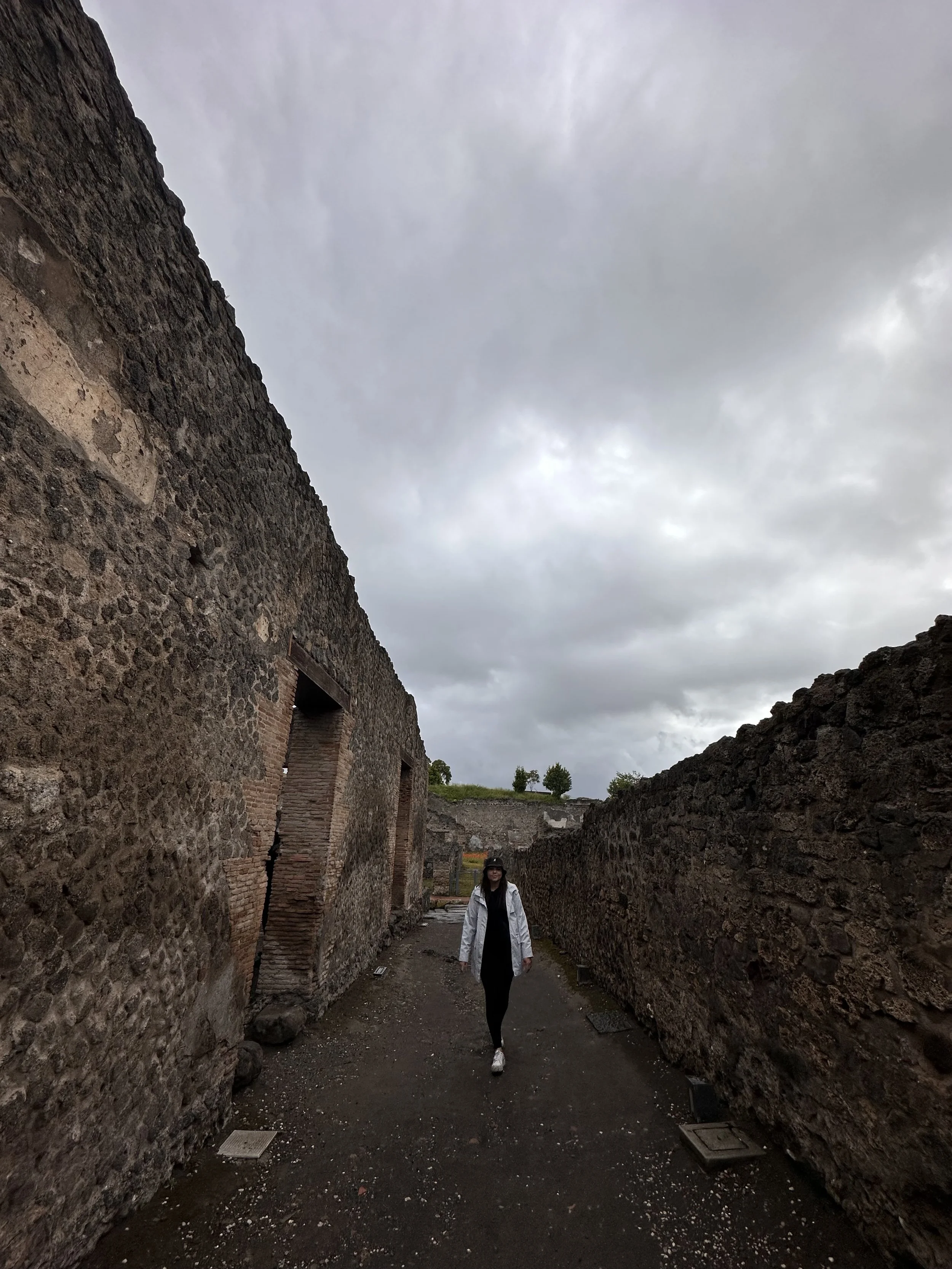
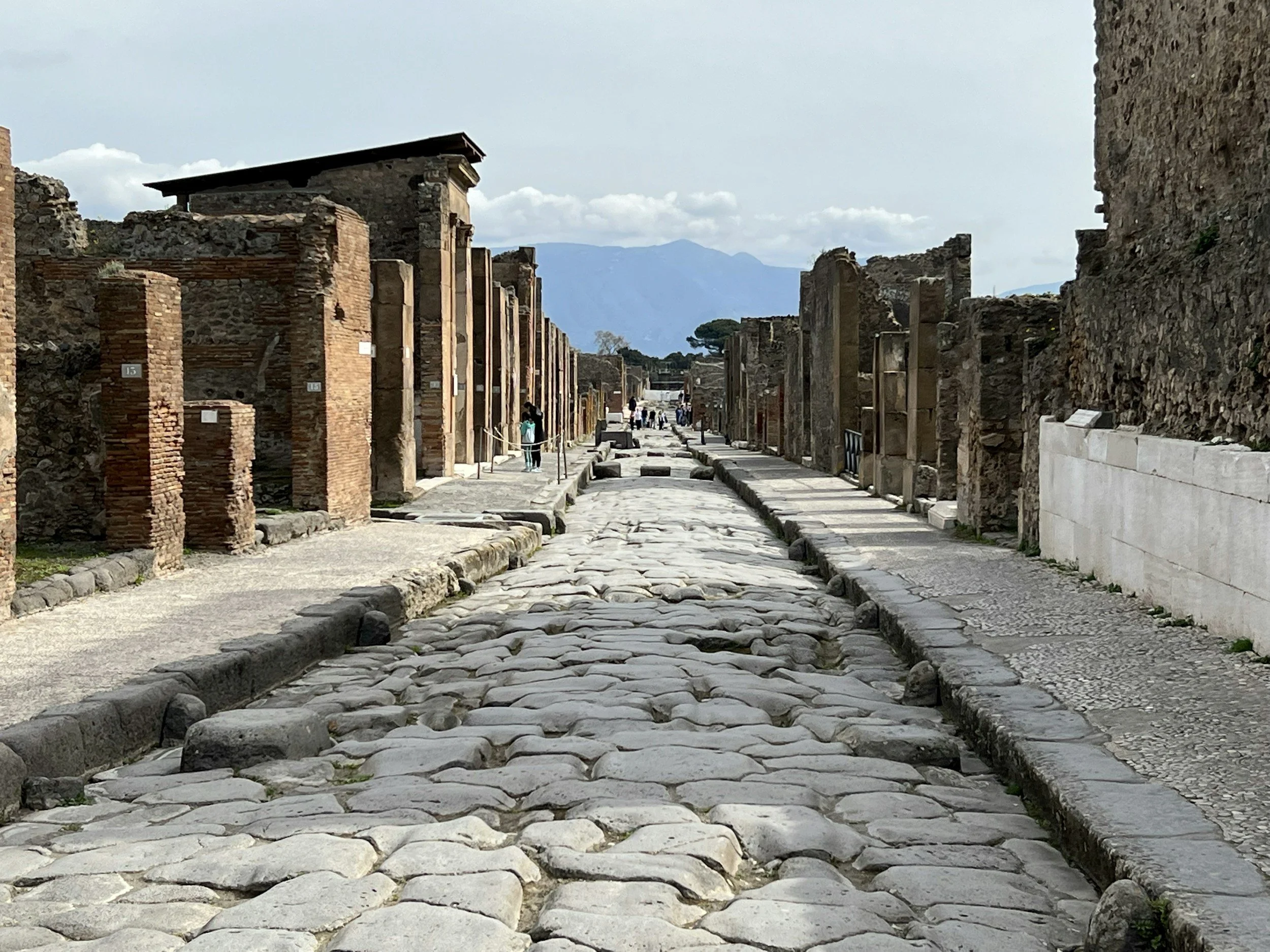
Before any single building, the thing that struck me most about Pompeii was the streets. The original Roman roads are still here, paved in large stone blocks, with wagon ruts worn into them from centuries of cart traffic. There are raised stepping stones at the crossings so pedestrians could cross without stepping in the water and waste that ran through the streets, spaced precisely so cart wheels could still pass between them. You are not looking at a reconstruction of how a Roman city worked. You are standing in it. Take a minute on the streets before you start ducking into buildings.
The Forum
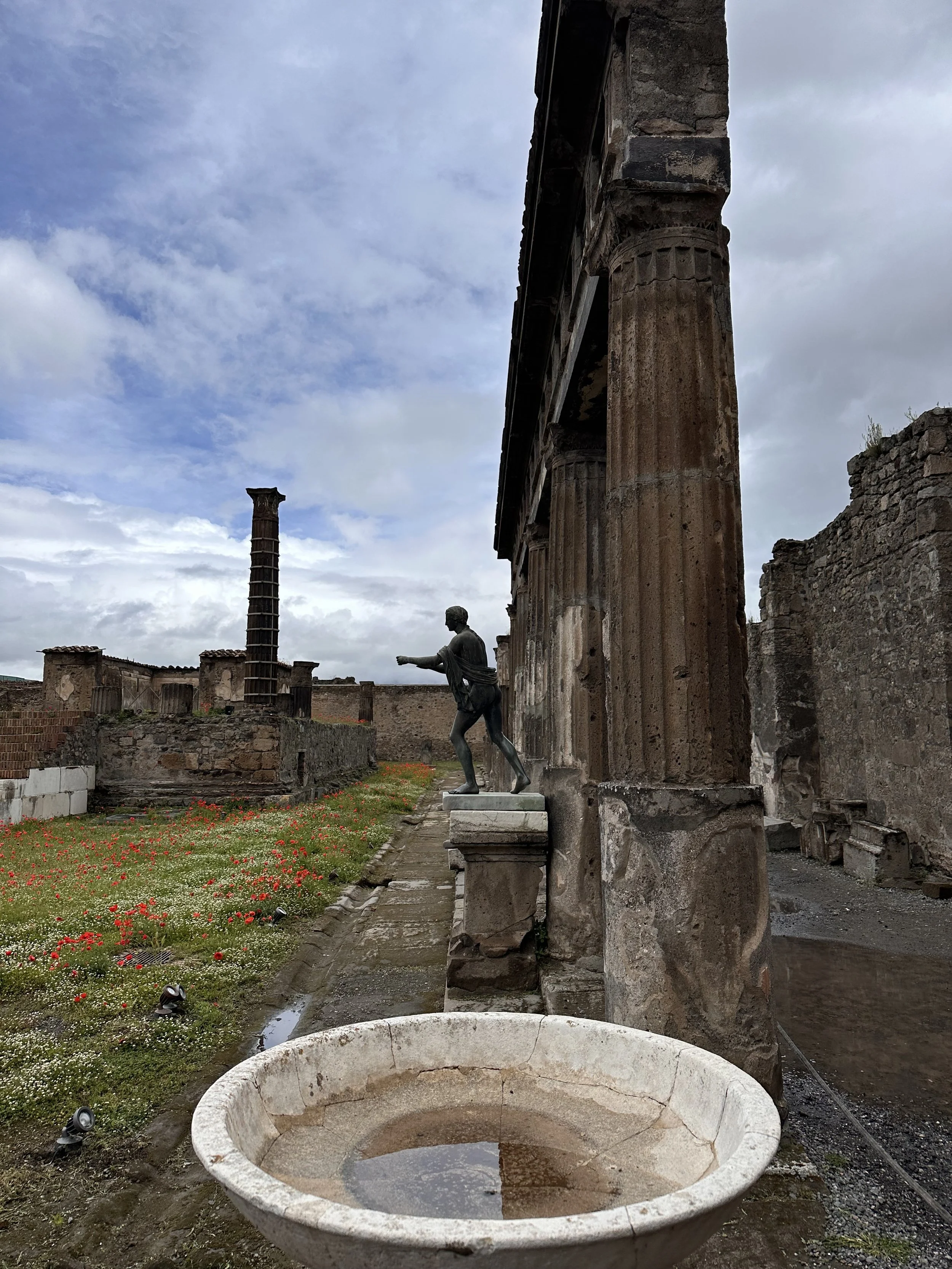
The civic and religious heart of the city, a large open rectangle that was once surrounded by temples, markets, and government buildings, with Mount Vesuvius framed at the end of it. Standing in the Forum with the volcano that destroyed the city visible in the distance is one of those moments that does not need a guide to land, though ours made it better. This was where Pompeii's public life happened, and the scale of it tells you immediately that this was a real, prosperous, functioning city and not a village.
The Theaters
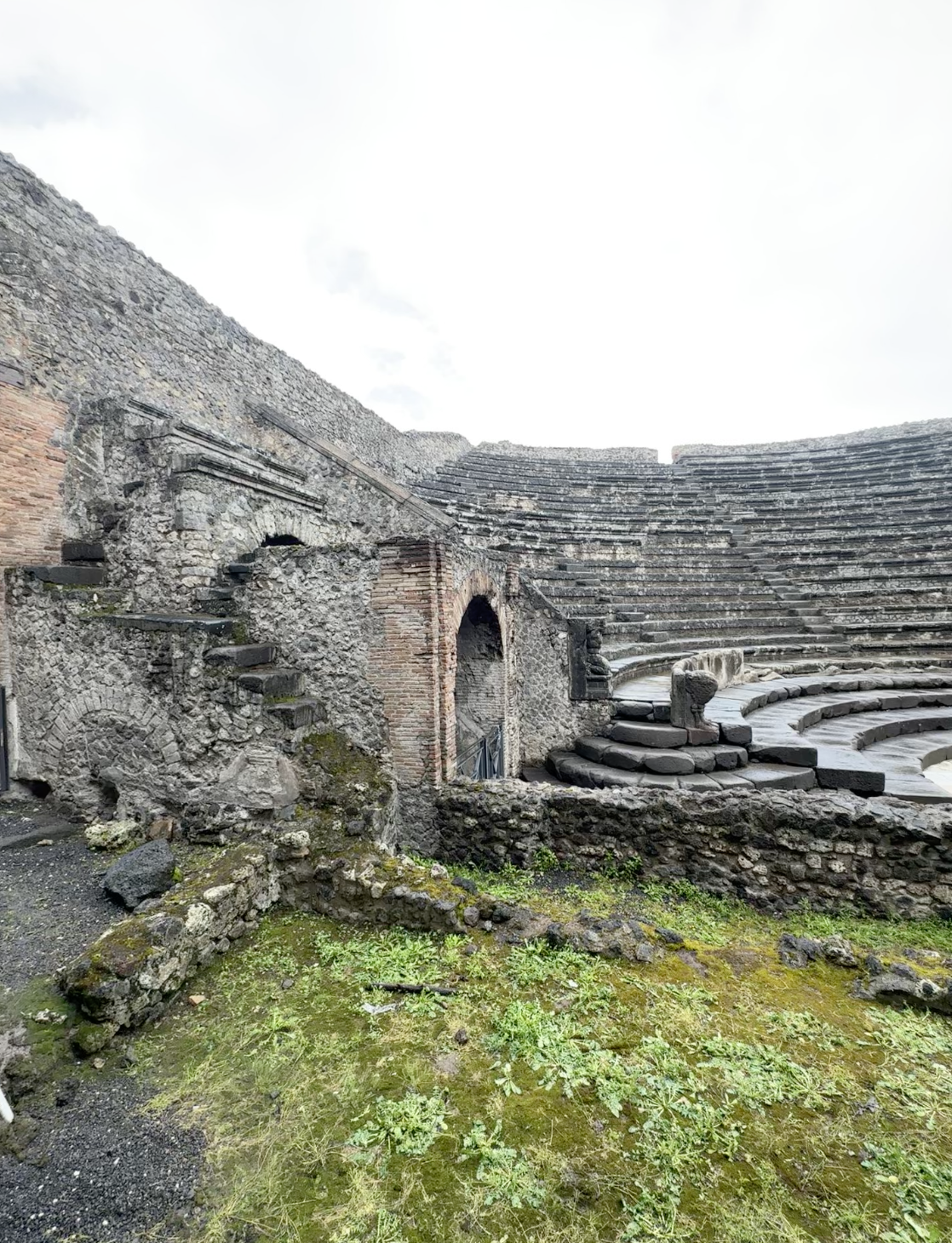
Pompeii had a large theater and a smaller covered one beside it, and the large theater in particular is remarkably preserved, the stone seating curving up the hillside almost exactly as it would have looked when the city was alive. Standing in it, it is genuinely easy to picture it full. It is one of the clearest illustrations on the site of just how much survived, an entire performance space intact two thousand years later.
The Houses and Their Color
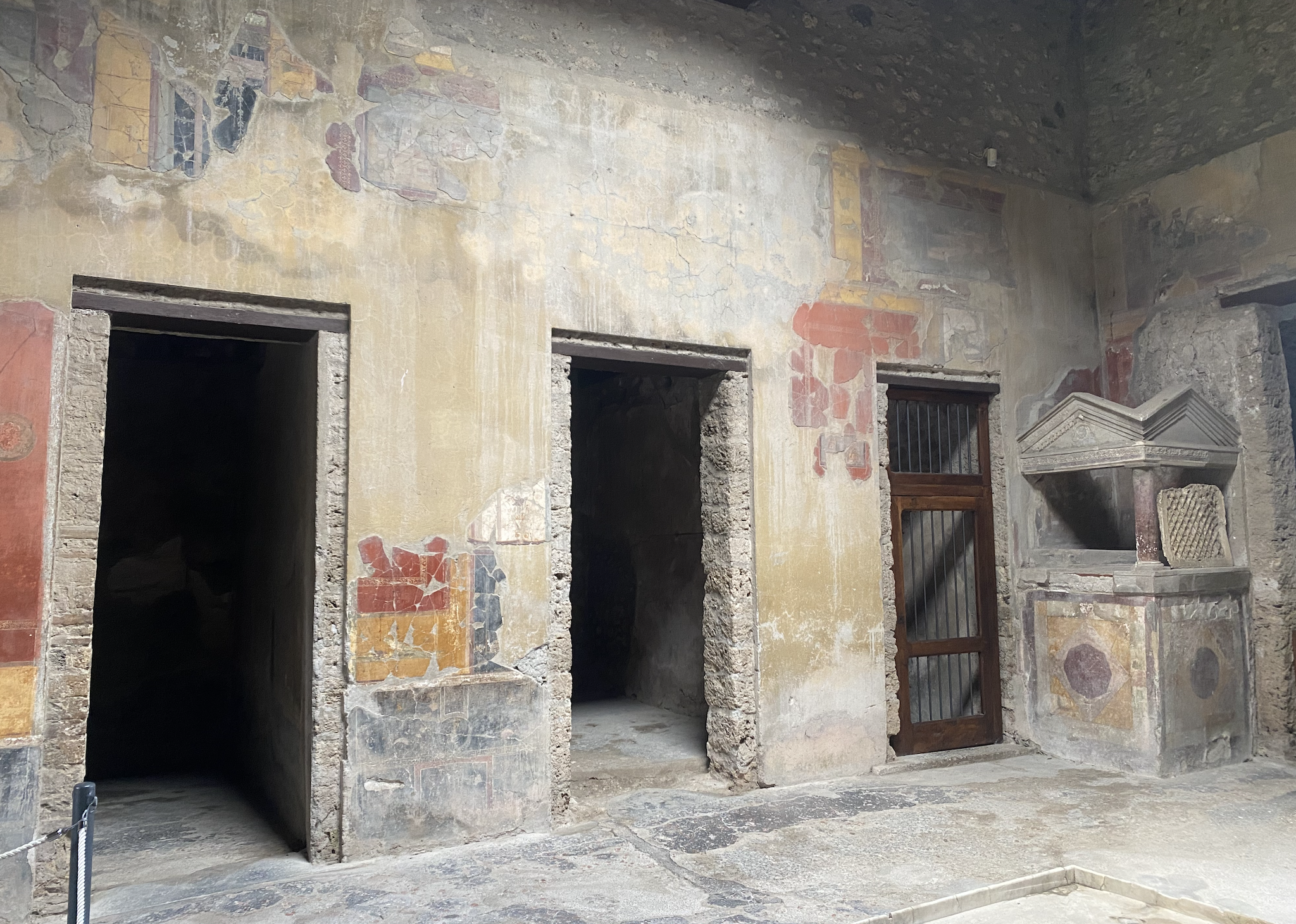
This was the detail I was not prepared for. Our guide mentioned that Pompeii was a colorful city, and inside some of the houses you can still see it, original paint and frescoes on the walls in deep reds and other colors that have held for two thousand years. We do not tend to picture the ancient world in color. We picture it in white marble and bare stone. Walking into a Pompeii house and seeing the actual painted walls quietly corrects that, and it is one of the most memorable things about the visit.
The Lupanar (The Brothel)
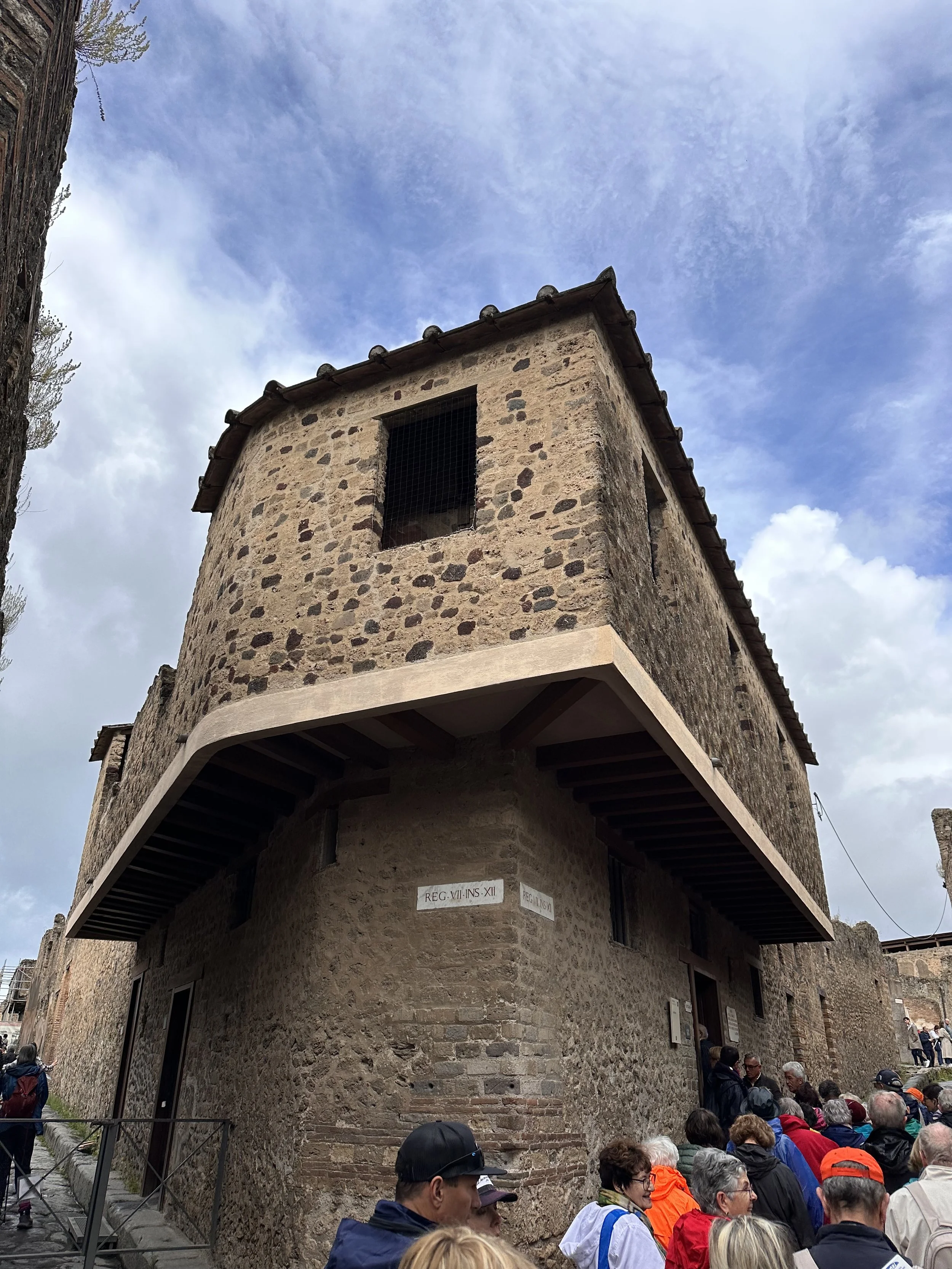
One of the most visited buildings on the site, and for a specific reason. The Lupanar, Latin for "wolf's den," was Pompeii's purpose-built brothel, a small two-story building with stone beds in tiny rooms. Above the doorways are erotic frescoes that are often described as a kind of menu, illustrating what was on offer, though some historians argue they were simply decoration in keeping with Roman attitudes toward sex. Either way, it is a genuinely fascinating and very human window into ordinary Pompeii life, and the graffiti scratched into the walls by clients and workers survives as well. Expect a crowd. It is the most congested stop on most tours.
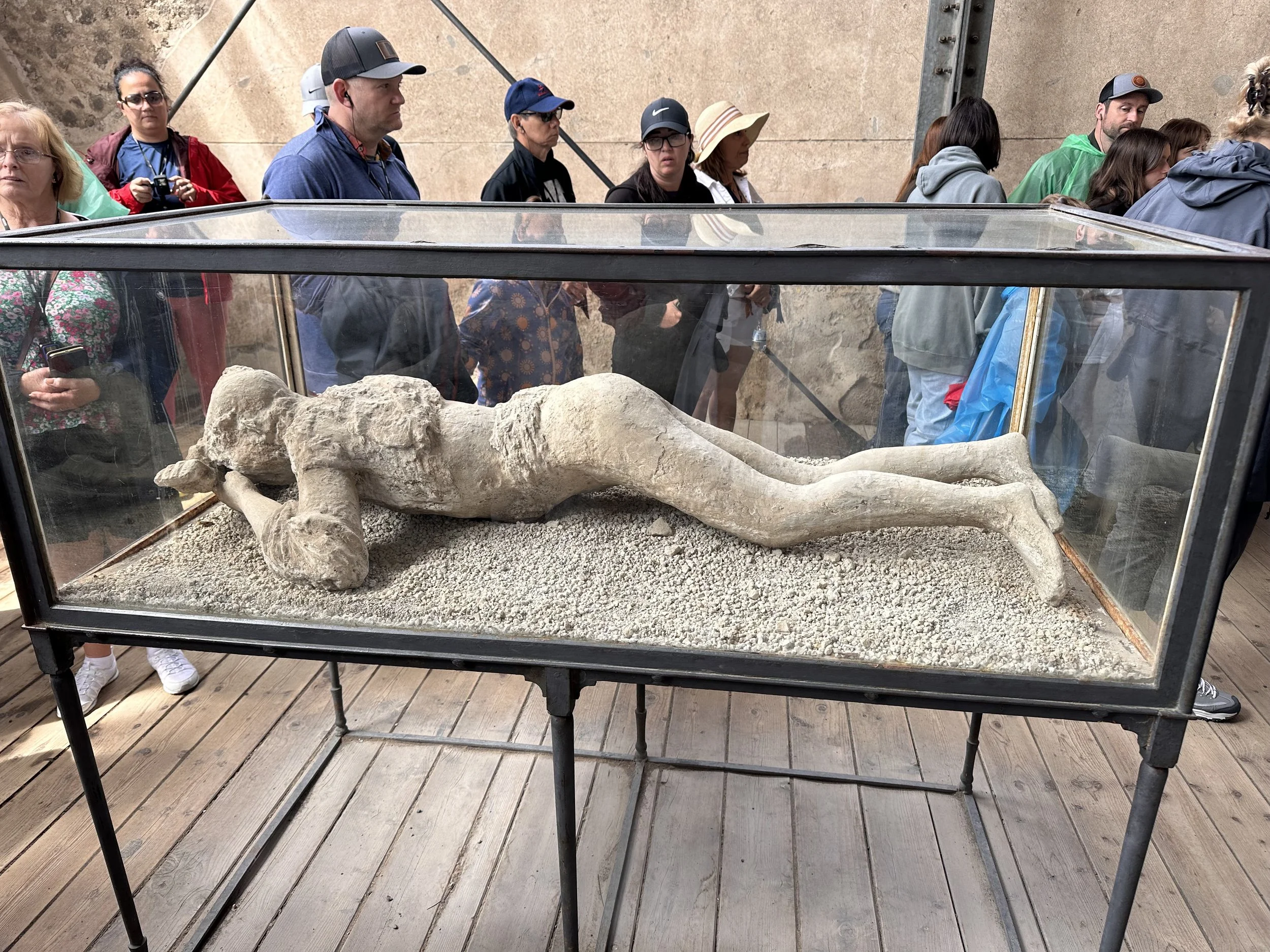
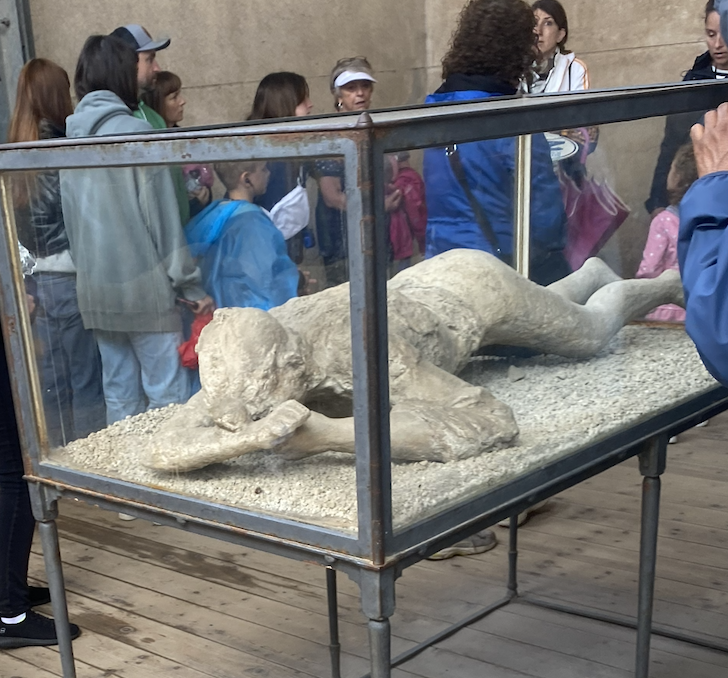
The most haunting part of the site and the part most surrounded by misconception, so it is worth understanding what you are actually looking at. The people of Pompeii were not killed by lava and they were not petrified. The city was buried in volcanic ash, and over the centuries the bodies trapped inside it decomposed, leaving hollow voids in the hardened ash. In the 1860s, the archaeologist Giuseppe Fiorelli developed a technique of pouring plaster into those voids, creating casts in the exact shape and final position of the people who died. So what you see are plaster casts, not bodies, though some do contain bone fragments.
What caught me off guard was how small they were. Full grown adults, but small by modern standards. The most affecting place to see them is the Garden of the Fugitives, where a group of thirteen people who died trying to flee are displayed in the open garden where they were actually found, rather than in a glass case. Seeing them in the spot where it happened is the part of the day where the fascination gives way to something heavier. It is what stays with most people.
One thing worth understanding before you go: recent DNA research in 2024 overturned long-held assumptions about some of the casts, including a famous group long described as a mother and child who turned out to be unrelated and male. The takeaway, as the researchers put it, is how easily we project our own stories onto the past.
The Everyday Details
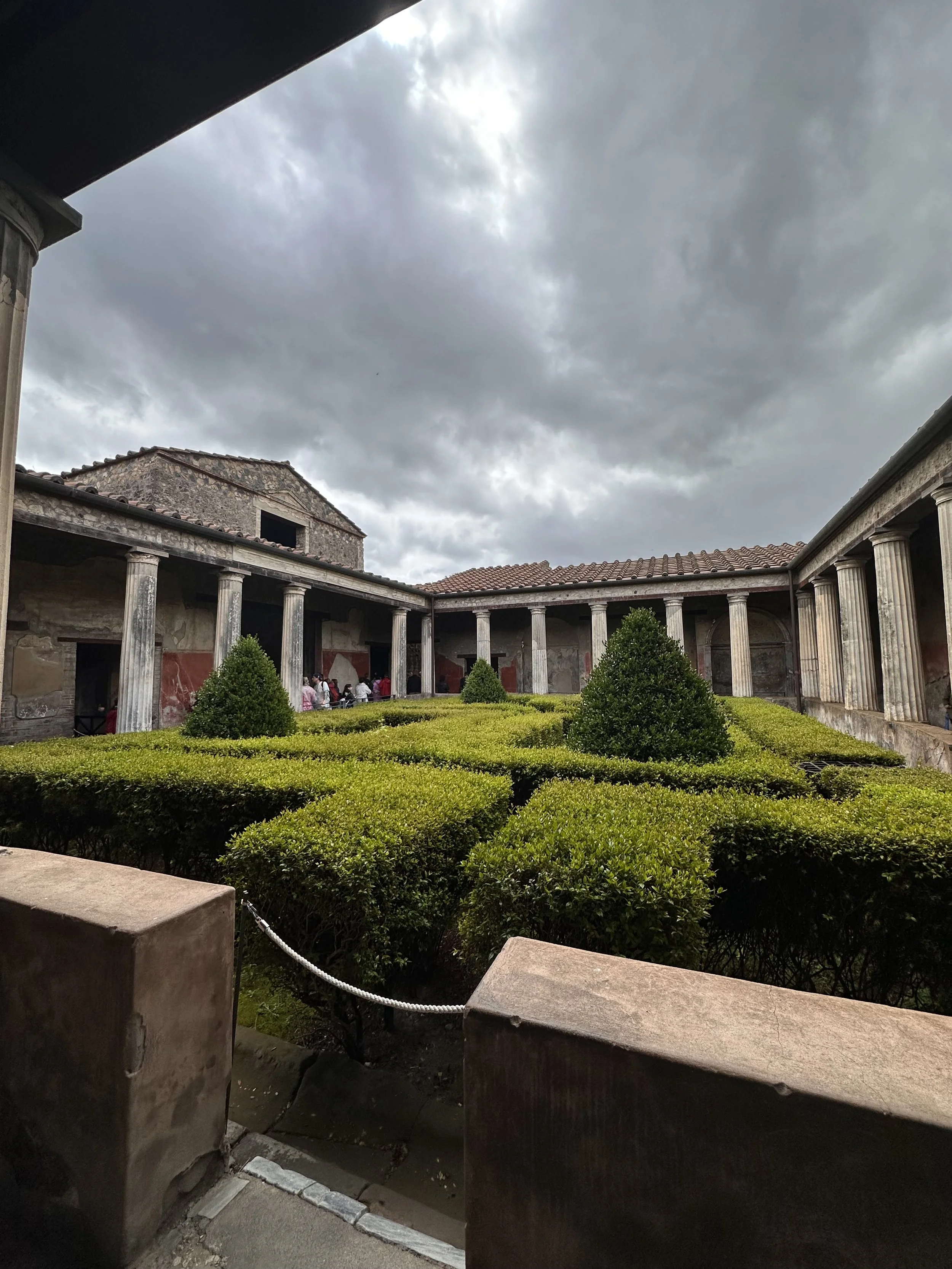
The thing I loved most about Pompeii was not the grand buildings but the ordinary ones. The bakeries with their stone millstones and ovens still intact. The thermopolia, the ancient equivalent of fast-food counters, with deep holes set into stone countertops where hot food was once served to people on the go. These are the details that collapse two thousand years instantly, because they are so recognizable. A city of people who grabbed lunch on the way somewhere, same as anyone. Keep an eye out for them as you move through the site, and ask your guide to point them out if they have not already.
Getting To Pompeii
Pompeii is one of the most accessible major ancient sites in the world, and how you approach it depends on how you are arriving in the region.
Coming from a Cruise Ship
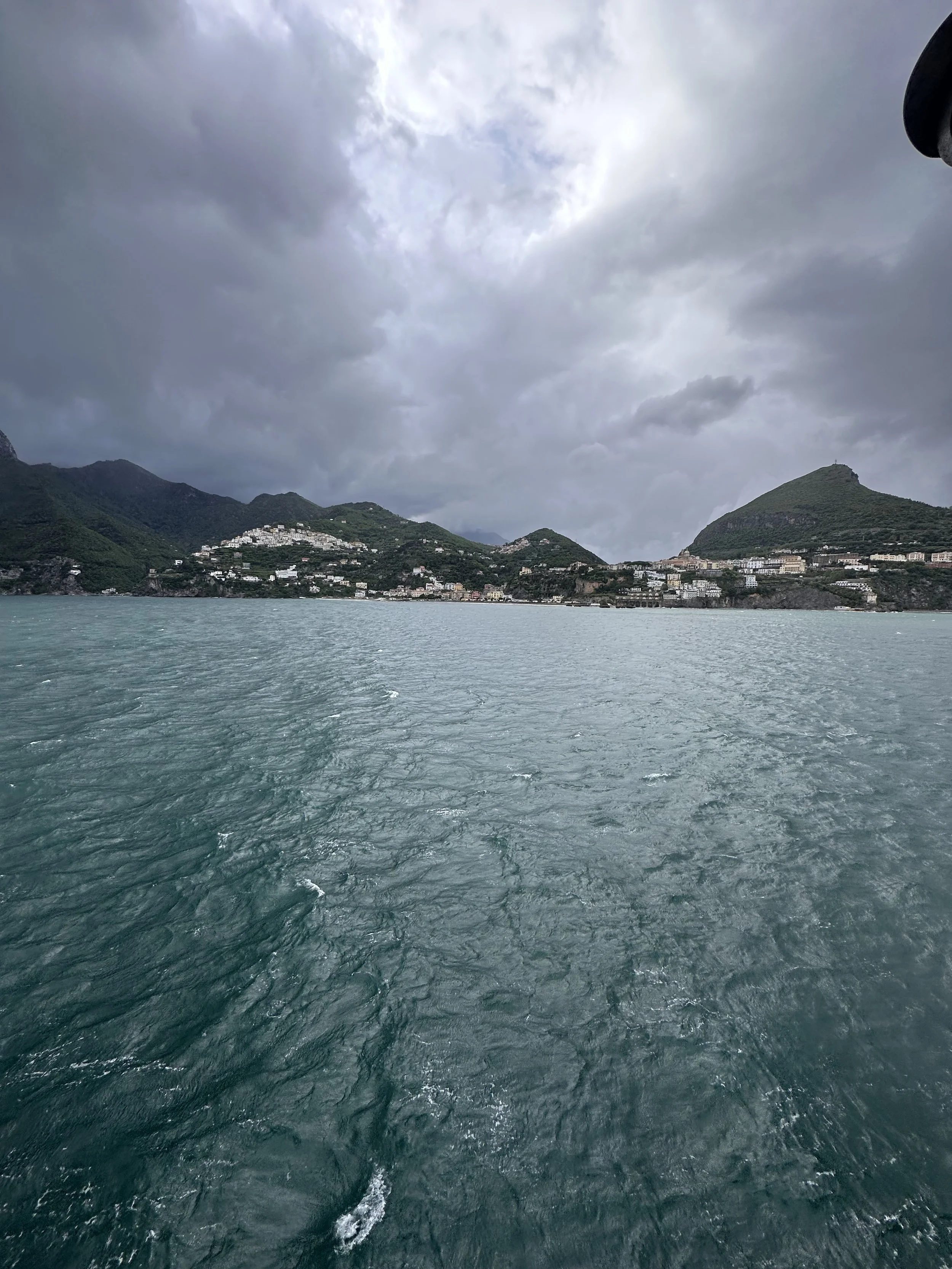
Cruise ships dock at a few different ports depending on the itinerary. Ours docked in Salerno, about 40 minutes from Pompeii by road. Naples is the other common cruise port, slightly closer to the site. From either, every major cruise line offers a Pompeii shore excursion, which is the easiest way to do it. Transport is handled, a guide is included, and you are back at the ship on time.
If you want to skip the cruise excursion and go independently, taxis and private tour operators are available at both ports. This is often cheaper than the official excursion and gives you a smaller group and more flexibility. Just confirm your guide guarantees you back to the ship before it leaves. That deadline is not negotiable, and Pompeii is far enough from the port that you do not want to cut it close.
Coming Independently
If you are not on a cruise, Pompeii is easy to reach by train. The Circumvesuviana line runs frequently between Naples and Sorrento and stops at Pompeii Scavi, the stop right at the archaeological site entrance, not to be confused with the modern town's main station. From Naples it is about 35 minutes. From Sorrento, around 30. Naples also connects to the wider Italian rail network, making Pompeii a straightforward day trip from Rome if you are based there, roughly an hour and ten minutes to Naples by high speed train, then the local connection.
One Thing Worth Knowing Regardless
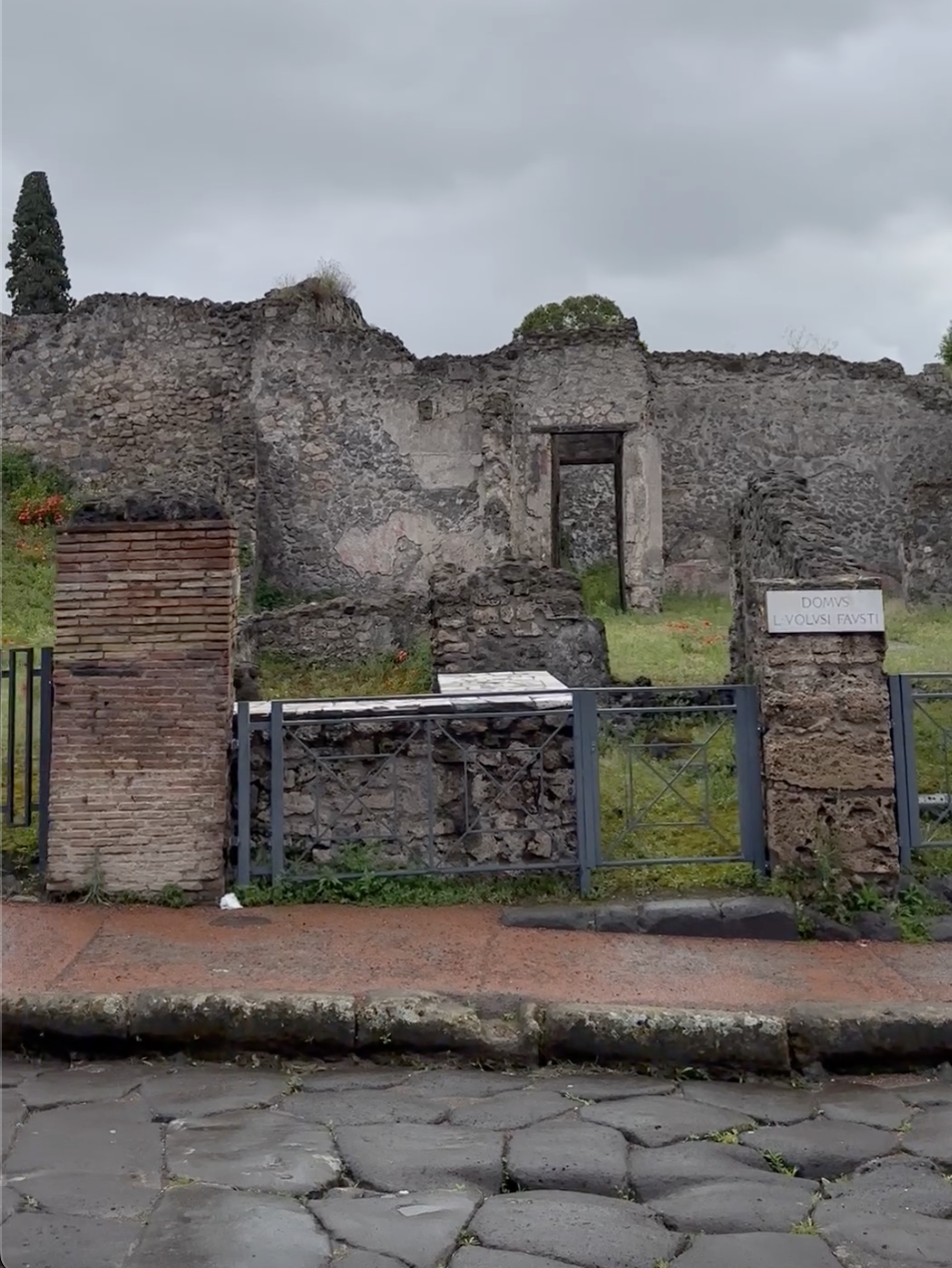
Pompeii is enormous and you will be on your feet on uneven ancient stone for hours. The site covers more than 150 acres and you will only see a fraction of it in a half day. Whatever way you arrive, a guide makes an enormous difference. Without one you are walking through impressive but silent ruins. With one you are walking through a living city. This is the single piece of advice that matters most for the day.
What to Pack for Your First Trip to Pompeii
Pompeii is a half day, sometimes a full day, of walking on uneven ancient stone with almost no shade, often in real heat. Pack for the site, not for the coast you are staying on.
Weather (Quick Reality Check)
We went in May on a rainy day, which sounds unlucky and was actually manageable, even atmospheric, with the clouds sitting low on the mountains. But the bigger thing to plan for in this region is heat. Pompeii bakes from June through August, the stone holds the heat, and there is very little shade anywhere on the site. If you are visiting in summer, go as early as your tour allows and treat sun protection as non-negotiable. Spring and fall are far more comfortable for the amount of walking the site demands.
Core Items for Pompeii
Comfortable closed-toe shoes with grip. This is the most important thing you bring. The streets are original Roman stone, uneven and worn smooth in places, with raised crossings and steps throughout. This is not the day for sandals or fashion sneakers.
Sunscreen and a hat. The site is almost entirely exposed and the midday sun in Campania is strong from late spring onward. Apply before you arrive rather than once you are already walking.
Water, and more than you think. There are fountains on the site where you can refill, but the heat and the walking add up fast. A refillable bottle is worth its weight.
A light rain layer if the forecast calls for it. Ours did, and a packable jacket meant the rain never became a problem. The site stays open and is genuinely beautiful in the wet.
A crossbody bag that zips. Standard for any crowded tourist site, and Pompeii draws crowds, especially at the famous stops like the Lupanar.
A portable charger. Between the photos and a possible audio guide on your phone, you will use more battery than you expect across a long day.
One Note on the Heat
If there is one thing people underestimate about Pompeii, it is how exposed and physically demanding it is. It looks like a gentle stroll through ruins. It is hours on your feet on hard stone in direct sun across a very large site. Treat it like the outdoor activity it is, not a casual afternoon, and you will enjoy it far more.
Where to Eat & Drink on Your First Trip to Pompeii
A quick honest note first. We did not eat at Pompeii, and you should not plan to either. The food immediately around the archaeological site is built for tour groups passing through, which means high prices and low effort. Eat a real meal before or after, back at your base or in town. On a cruise day, that meant Salerno for us, and Salerno turned out to be where the best meal of the day was waiting.
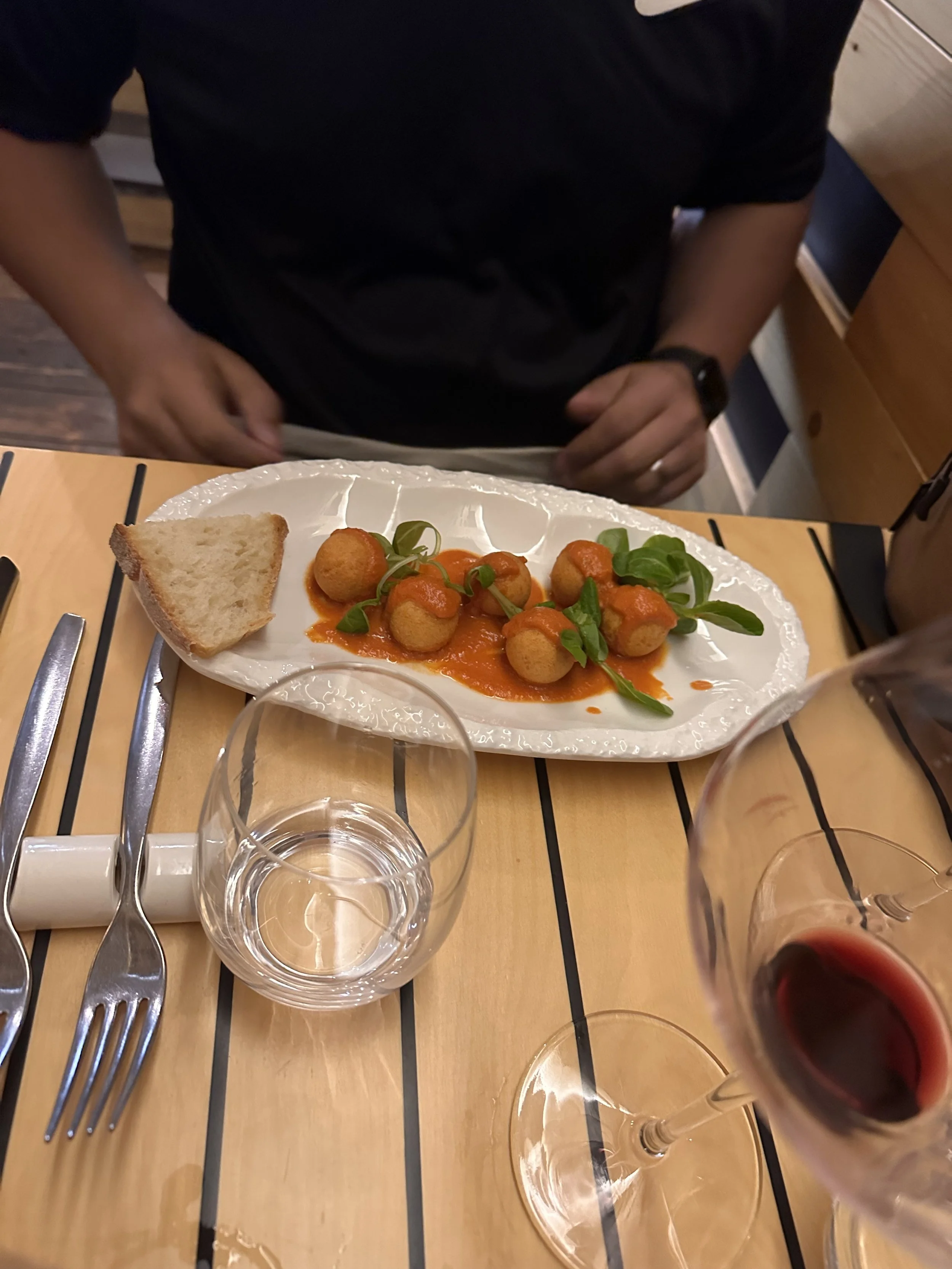
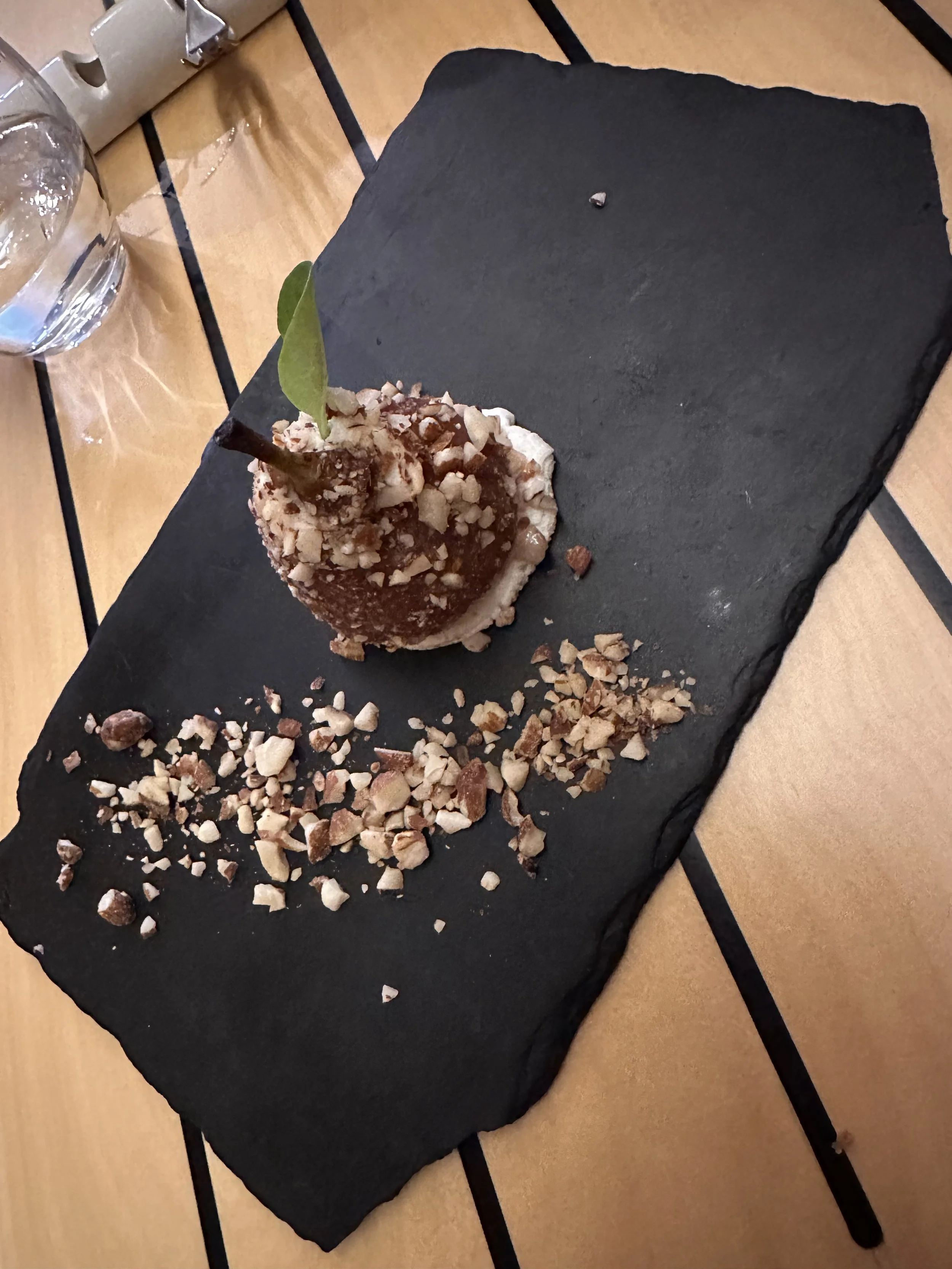
After Pompeii we walked back through the streets of Salerno in the rain and had one of the best meals of the entire trip at Il Gozzo. It was the kind of meal we still bring up years later, which is the highest compliment we give a restaurant.
It started with burrata, soft and fresh, with fish laid over the top on a bed of greens. Then fried dough balls under marinara, the kind of simple thing that has no business being as good as it was. Pasta with shrimp. Something with squid. And then the dessert, a pear dish that we genuinely still reference to this day as one of the best desserts we have ever had. The limoncello to finish was the best we had anywhere in Italy, which in the region that more or less invented it is saying something.
If you find yourself in Salerno on a Pompeii day, this is where to go. Long, slow, and worth every minute of the rain we sat through to get there.
A Confession: McDonald's in Salerno


I am not going to pretend we only ate at the beautiful local spot. We also went to McDonald's in Salerno, and it is worth telling you about, because European McDonald's is a genuinely different and better experience than the American version. The burger actually looked like the one in the commercial, assembled with what appeared to be real care. The McFlurry came with real peanuts and little chocolate malt balls. It is a small, silly thing, but it is one of those travel observations that sticks: even the fast food is held to a higher standard over here. Go for the real meal at Il Gozzo. But if you find yourself curious, the McDonald's is its own quiet lesson in the difference.
What to Try at Least Once in Pompeii
The area around Pompeii and Salerno, the Campania region, is one of the great food regions of Italy, and a few things are worth seeking out specifically.
Pizza, because this is where it was born. Naples, just up the coast, is the birthplace of pizza margherita, and the version you get anywhere in this region is the original against which everything else is measured.
Mozzarella di bufala, the fresh buffalo mozzarella that this region produces better than anywhere on earth. On the burrata at Il Gozzo, or on its own, it is a different food from what that name means at home.
Seafood, because this is a coastal region and it shows on every menu. The waters off Campania feed the local cooking, and the simplest preparations are the best, like the shrimp pasta and squid we had at Il Gozzo. Order what came out of the water that day and do not overthink it.
Limoncello, the lemon liqueur of the Amalfi and Sorrento coast, served cold at the end of a meal. The lemons here are enormous and the limoncello made from them is the real thing. Have it after dinner, the way it is meant to be had.
A City Holding Its Breath
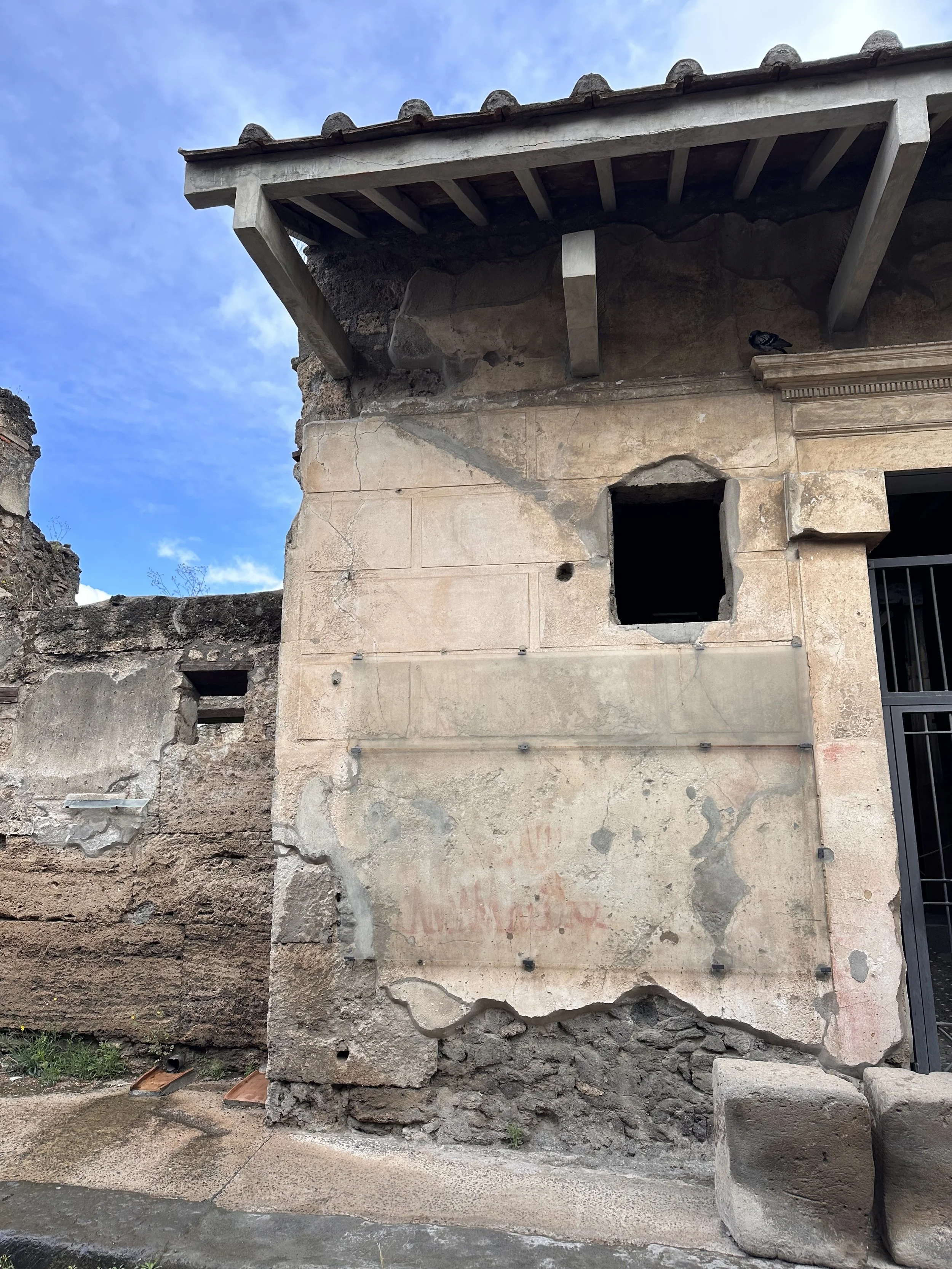
When I think about Pompeii now, the first thing that comes back is the color.
I cannot fully explain it. Ruins have a color in your head, a bleached, sun-faded gray, the look of something that has been dead a long time. Pompeii was brighter than that. Warmer. The stone seemed to hold more light than old stone should, and inside the houses there was actual color, deep reds still clinging to the walls two thousand years after the people who chose them were gone. I spent half the day with my eyes down, on the streets and the worn stone and the mosaic floors that somehow survived, taking in surface after surface that still had life in it.
That is the word I keep coming back to. Alive.
It makes no logical sense. This is a city where thousands of people died in a single afternoon, buried so completely we are still uncovering it. By every measure it should feel dead. And instead it was the opposite. The color, the streets, the houses, all of it felt less like a tomb and more like a city holding its breath, waiting for permission to move again.
I think that is the thing no one prepares you for. You go expecting to mourn Pompeii. You arrive and find it more alive than places that were never buried at all. The people are gone, but the city they built is so vivid, so warm, so full of the color they chose and the streets they wore down, that mourning never quite arrives. What you feel instead is closer to recognition. They lived here. You can still see exactly how. And two thousand years later, on a gray and rainy day, it was still the most alive ruin I have ever stood in.
Itinerary for Your First
Trip to Pompeii
Pompeii from a cruise port is a half day of ancient history paired with a long lunch back in town. Plan for around eight hours from the time you step off the ship to the time you return. It moves quickly and it is worth every minute.
Morning: The Port and the Drive
Whether you dock in Salerno like we did or in Naples, the drive to Pompeii is short, 30 to 40 minutes depending on the port. Use it to get your bearings and let the region introduce itself through the window. On a clear day you will see the coastline. On a gray one, like ours, you will see the clouds7 sitting low on the mountains, which is its own kind of beautiful.
If you booked a cruise excursion, transport and a guide are handled. If you went independently, this is when you meet your driver or guide at the port. Either way, confirm your return time before you leave. The ship will not wait.
Late Morning: Pompeii
Enter the site and give yourself over to it. With a guide, the highlights flow in a natural order: the streets and their wagon ruts, the Forum with Vesuvius framed at the end of it, the theaters, the houses with their surviving color, the Lupanar, the casts, and the Garden of the Fugitives. Keep an eye on the ground as you go, for the mosaic floors, the bakeries, the fast-food counters, the everyday details that make the city feel paused rather than gone.
A half day covers the core well. Pace yourself, drink water, and do not rush the parts that catch you. This is not a checklist. It is a city.
Afternoon: Back to Salerno
Head back to the port town and trade the ancient world for a long, slow lunch. For us that meant Il Gozzo in Salerno, the best meal of the day and one we still talk about. Burrata, seafood, that pear dessert, and the best limoncello of the trip. Take your time. After a morning on your feet in Pompeii, a long Italian lunch is exactly the right way to come back down.
If you have time left after, wander the streets of Salerno. It is not a major sightseeing town and that is part of its charm, a real working Italian city on the water rather than a tourist set piece. We walked it in the rain and it was lovely anyway.
Late Afternoon: Back to the Ship
Make your way back to the port with a real buffer. Whatever you do, do not cut the return close. Pompeii and the lunch that follows have a way of stretching, and the ship's departure time is the one fixed point in the whole day. Get back early, and spend the sail-away on deck watching the coast go by.