
Your First Time in
Rome, Italy
There is no version of Rome where you see all of it.
After Milan, the first thing I noticed was that Rome felt more congested, more layered, harder to take in all at once. Where Milan was polished and deliberate, Rome was a pile of three thousand years stacked on top of itself with people living their daily lives in the cracks between the ruins. You walk down a street and pass a fountain that would be the main attraction of any other city, and here it is just a thing on the way to the next thing.
We packed our days full and still left enormous parts of the city untouched, and that is the correct way to feel when you leave. Rome is not a city you complete. It is a city you take a piece of.
What stayed with me most was not any single landmark, though several stopped me completely. It was the accumulation. Church after church that each felt like the most beautiful building I had ever entered, until the next one. The Vatican, its own category of overwhelming. And then, after days of gold and marble and incense, the ancient ruins, which spoke an entirely different language and surprised me more than anything else in the city.
Three days is the minimum for a first visit. We had three and used every hour of them. You will leave tired, slightly overwhelmed, and already planning to come back.
A Brief Look At
Your Itinerary
The full itinerary is at the bottom of the page when you are ready.
-
The gentler introduction, though Rome does not really do gentle. The historic center on foot: Piazza Navona, the Pantheon, the Trevi Fountain, the best pizza of your life, and the first of the churches that will start to explain why this part of the world is so Catholic. A day of stumbling from one extraordinary thing to the next.
-
An early start and a full day inside the smallest country on earth. St. Peter's Basilica, the climb to the top of the dome, the Vatican Museums, and the Sistine Chapel. The most overwhelming single day of the trip and one you will need to recover from.
-
The day the city stops being sacred and starts being old. Palatine Hill, the Roman Forum, and the Colosseum, followed by an evening food tour that ends in an underground wine cellar. The past and the present of Rome in one day.
What to See on Your Visit to Rome
San Luigi dei Francesi
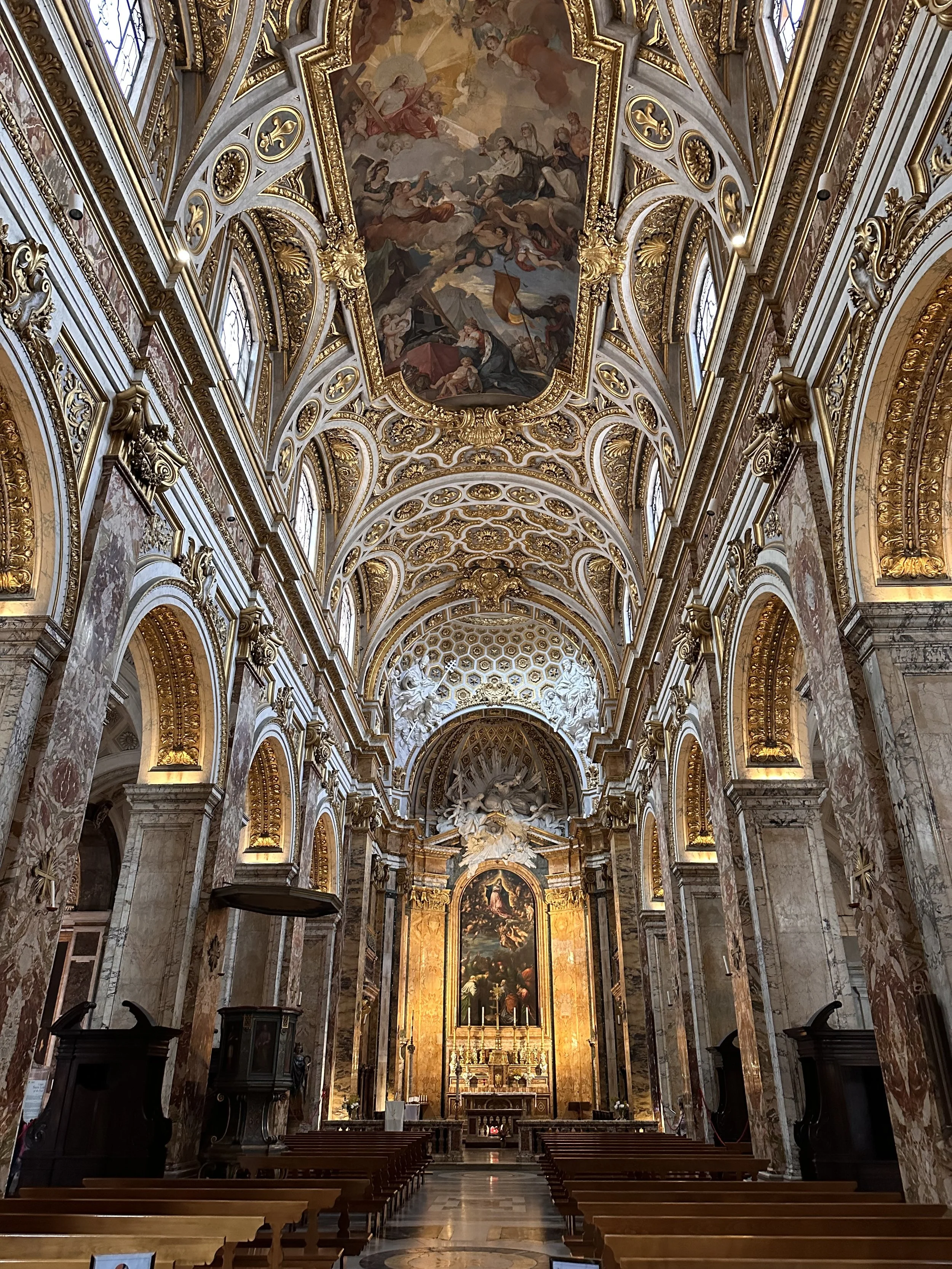
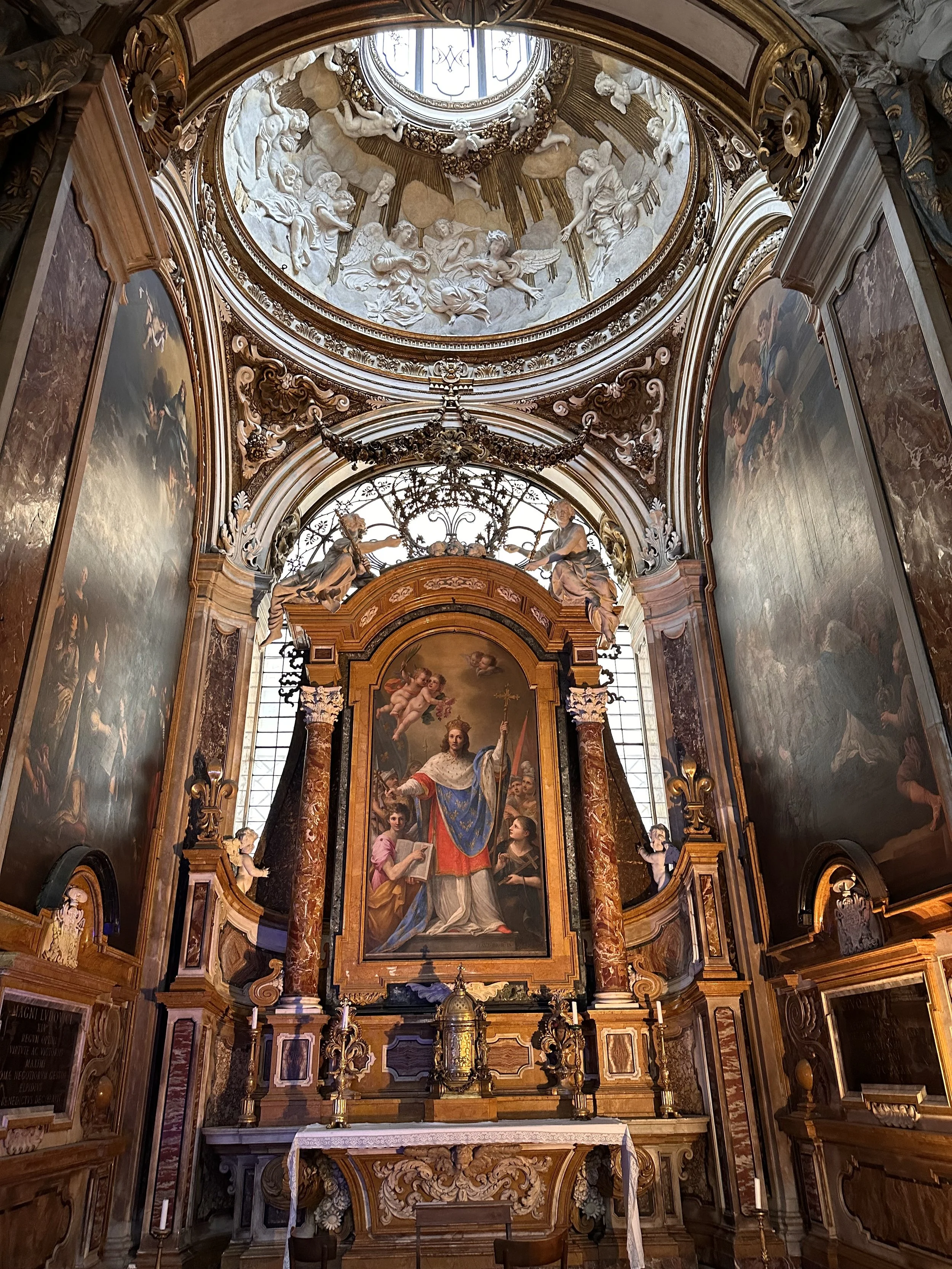
This was the church that made me start to understand the Catholicism of this part of the world. After the Duomo in Milan, and before the Vatican, San Luigi dei Francesi sat somewhere in the middle and floored me anyway. The gold, the painted ceilings and walls, the smell of it, the detail in every direction.
It also holds three Caravaggio paintings, the Saint Matthew cycle in the Contarelli Chapel: The Calling of Saint Matthew, The Inspiration of Saint Matthew, and The Martyrdom of Saint Matthew. These are not reproductions or minor works. They are among the most important paintings of the Baroque era and they are hanging in a working church near the Pantheon where you can see them for free. Bring a few coins. There are lights you feed to illuminate the paintings, and you will want them on.
Piazza Navona
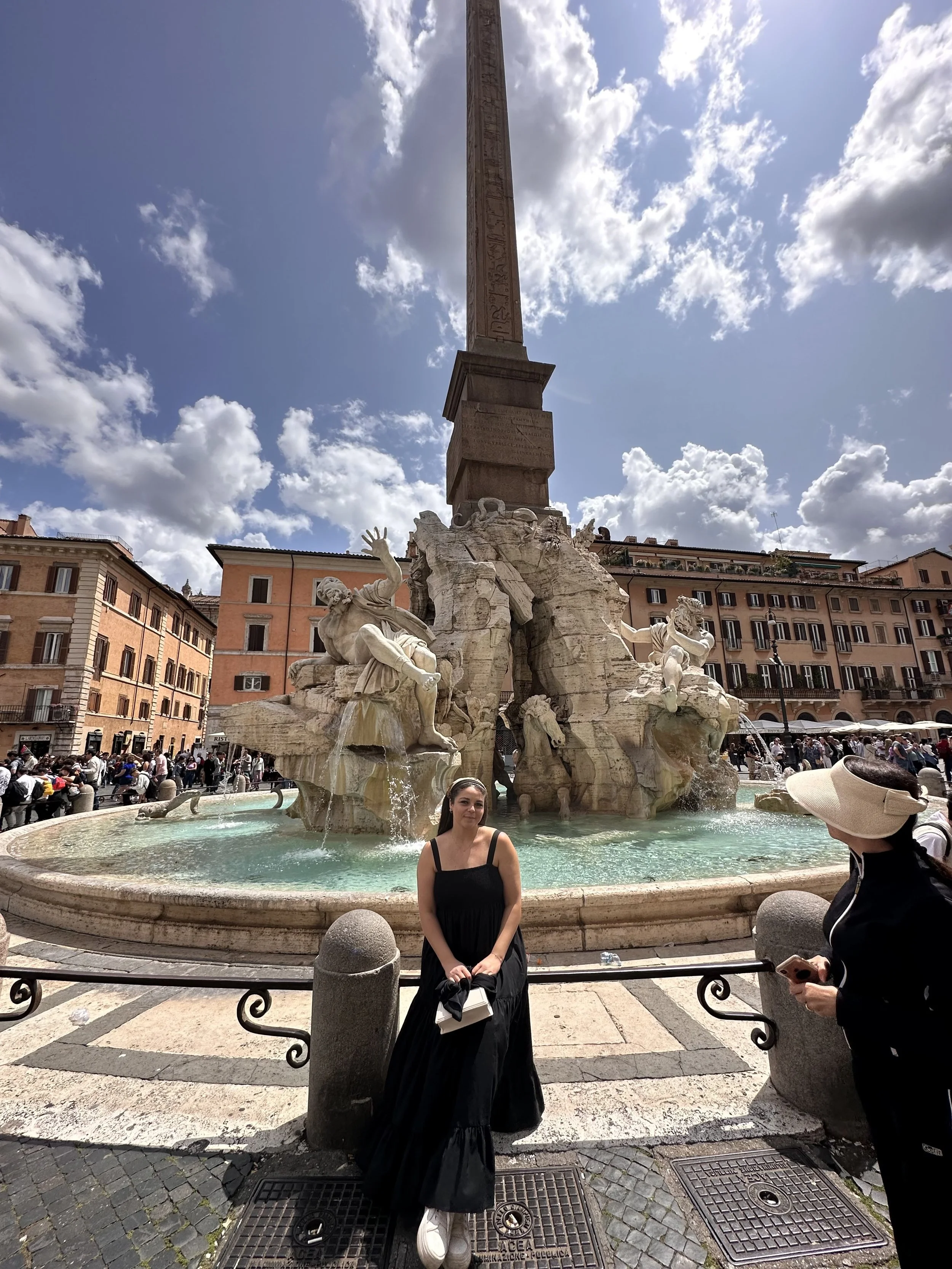
A good first taste of the Roman fountains you have seen in photographs your whole life. The piazza is built on the site of an ancient stadium and its centerpiece is Bernini's Fountain of the Four Rivers, dramatic and theatrical in the way Baroque Rome does better than anywhere. It is a warm up rather than a destination, a place to stand for a few minutes and register that you are actually here before the day pulls you onward.
The Pantheon
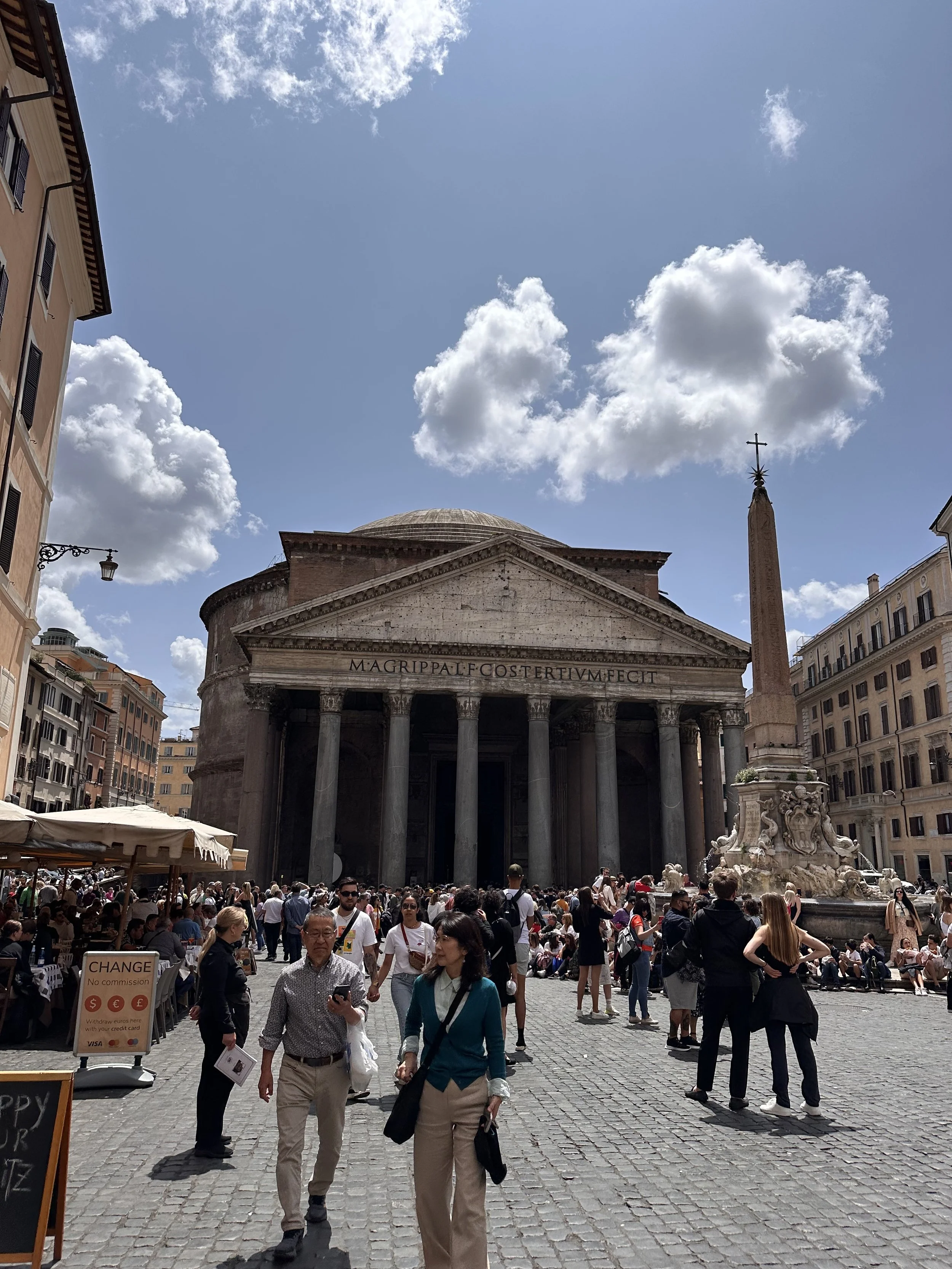
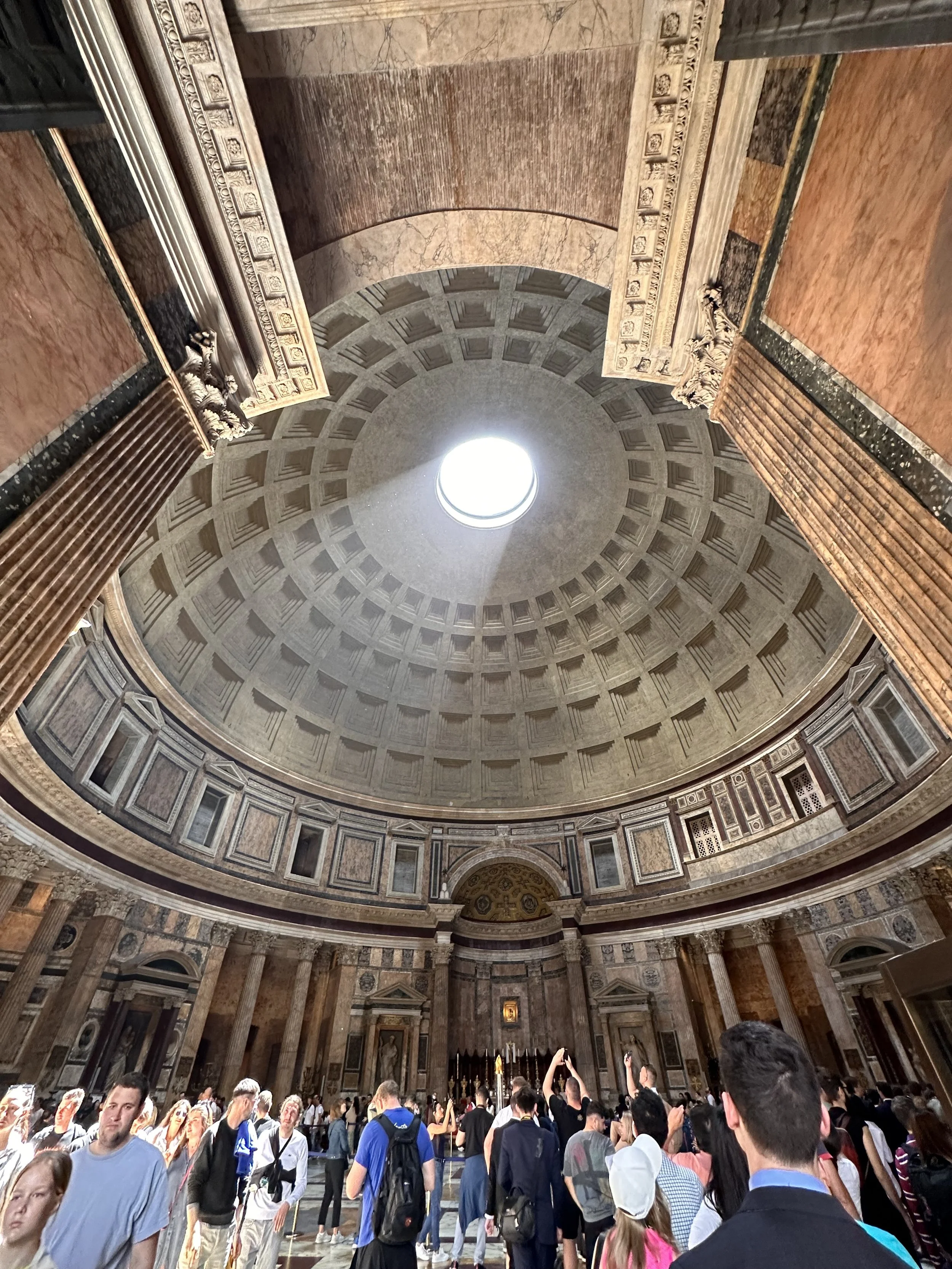
The outside looks exactly like the textbooks, which is its own strange feeling, standing in front of something you have seen flattened onto a page your whole life. The inside is where it happens. There is a hole in the center of the dome, the oculus, open to the sky, and on a sunny day a single beam of light pours through it onto the marble.
If you could ever hold light in your two bare hands, the Pantheon on a clear day is the one place in your life you might be able to. That is the closest I can get to describing it. Nearly two thousand years old, still standing, still an active church, and still doing something with sunlight that no modern building has matched. Go on a clear day if you can time it.
The Trevi Fountain
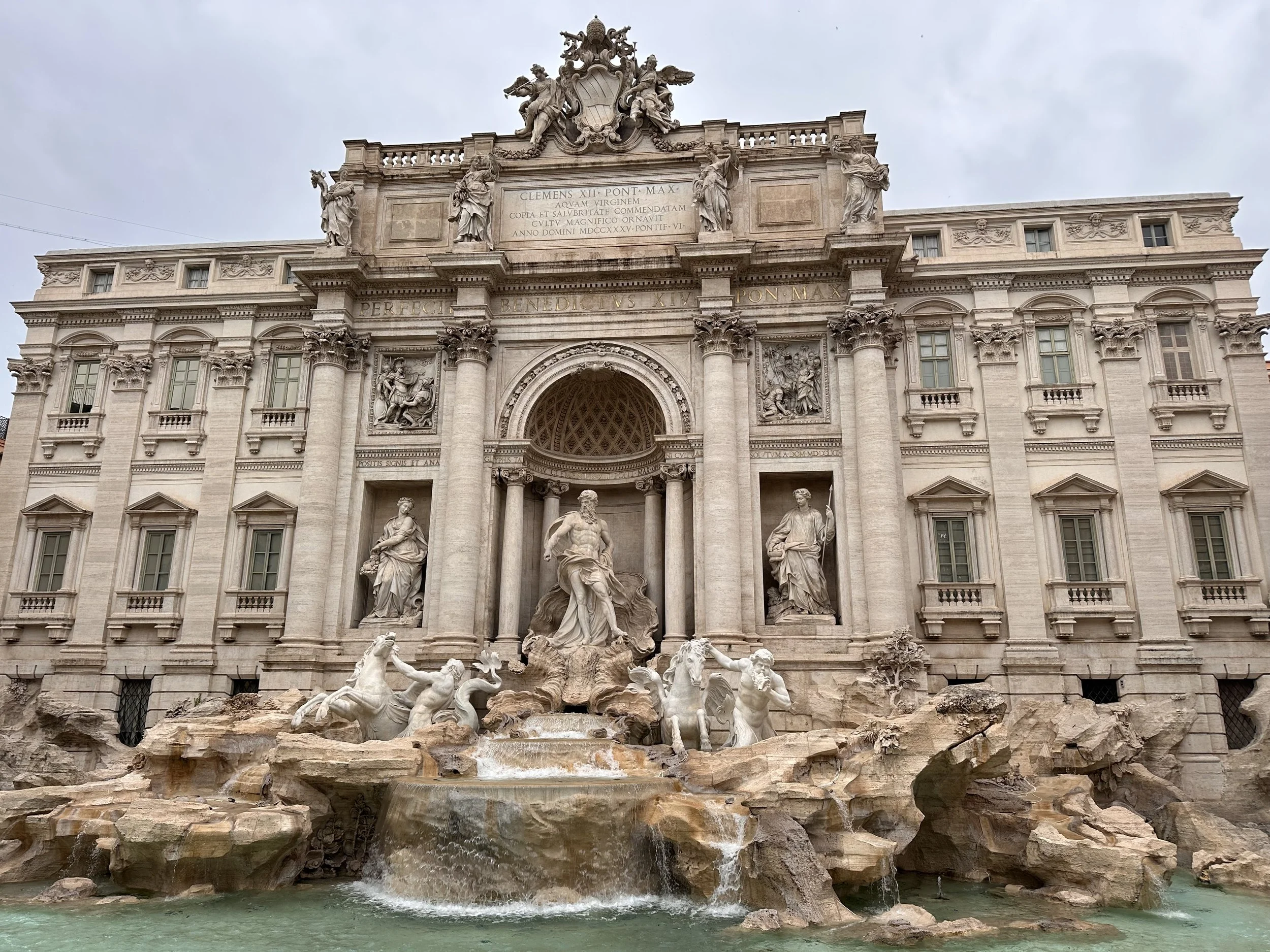
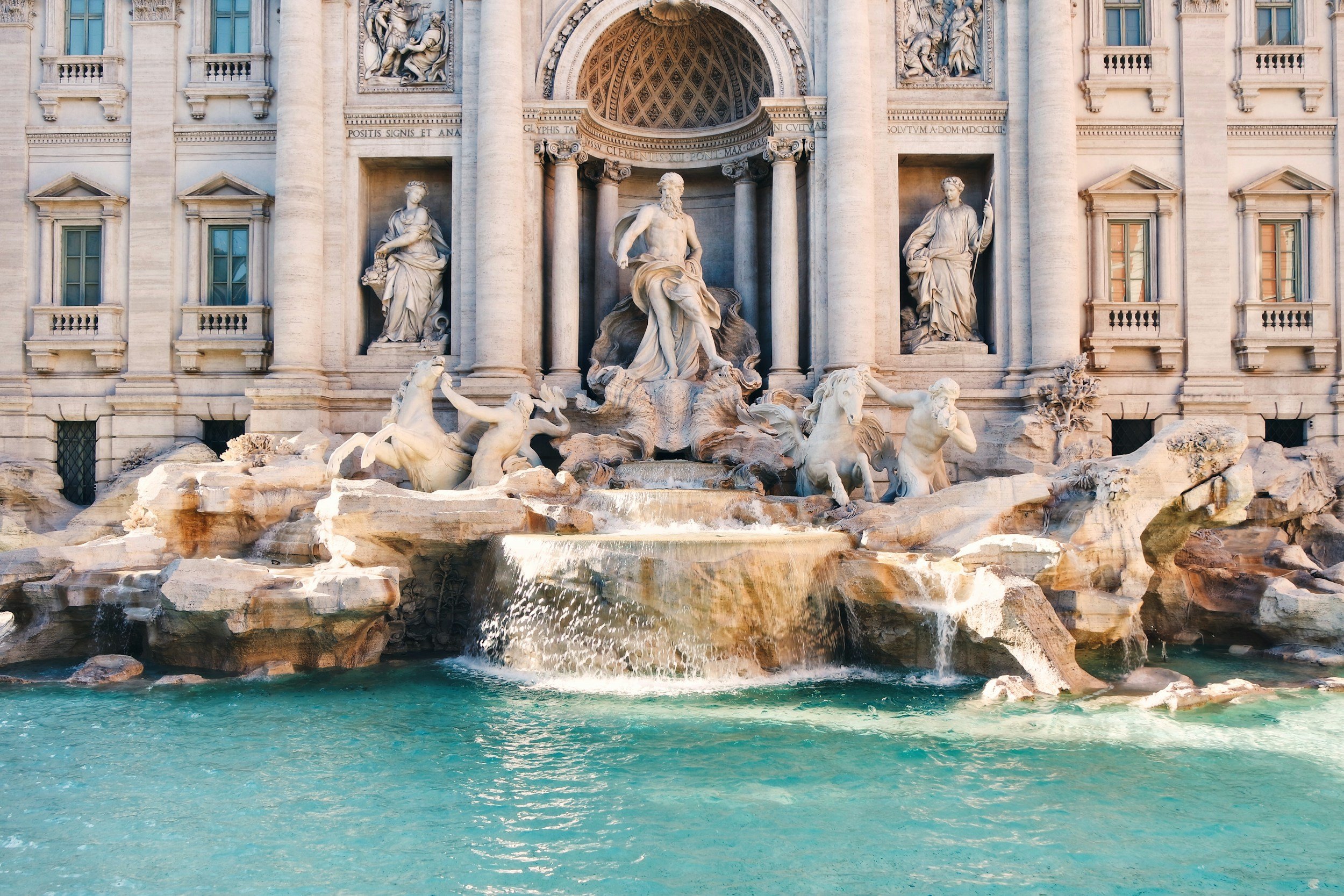
The Trevi Fountain is exactly as crowded as everyone says. There is a whole ritual to throwing the coin, right hand over the left shoulder, which guarantees a return to Rome. It is worth seeing once and it is genuinely beautiful, but in the middle of the day it functions more as a photo opportunity than a place you can actually absorb. The fix is simple and it is the best advice on this page: come back at 7 AM. We did, on our last morning, and had it nearly to ourselves. Completely different experience. The fountain you came to see versus the scrum you fight through at midday.
Capitoline Hill and the Vittoriano
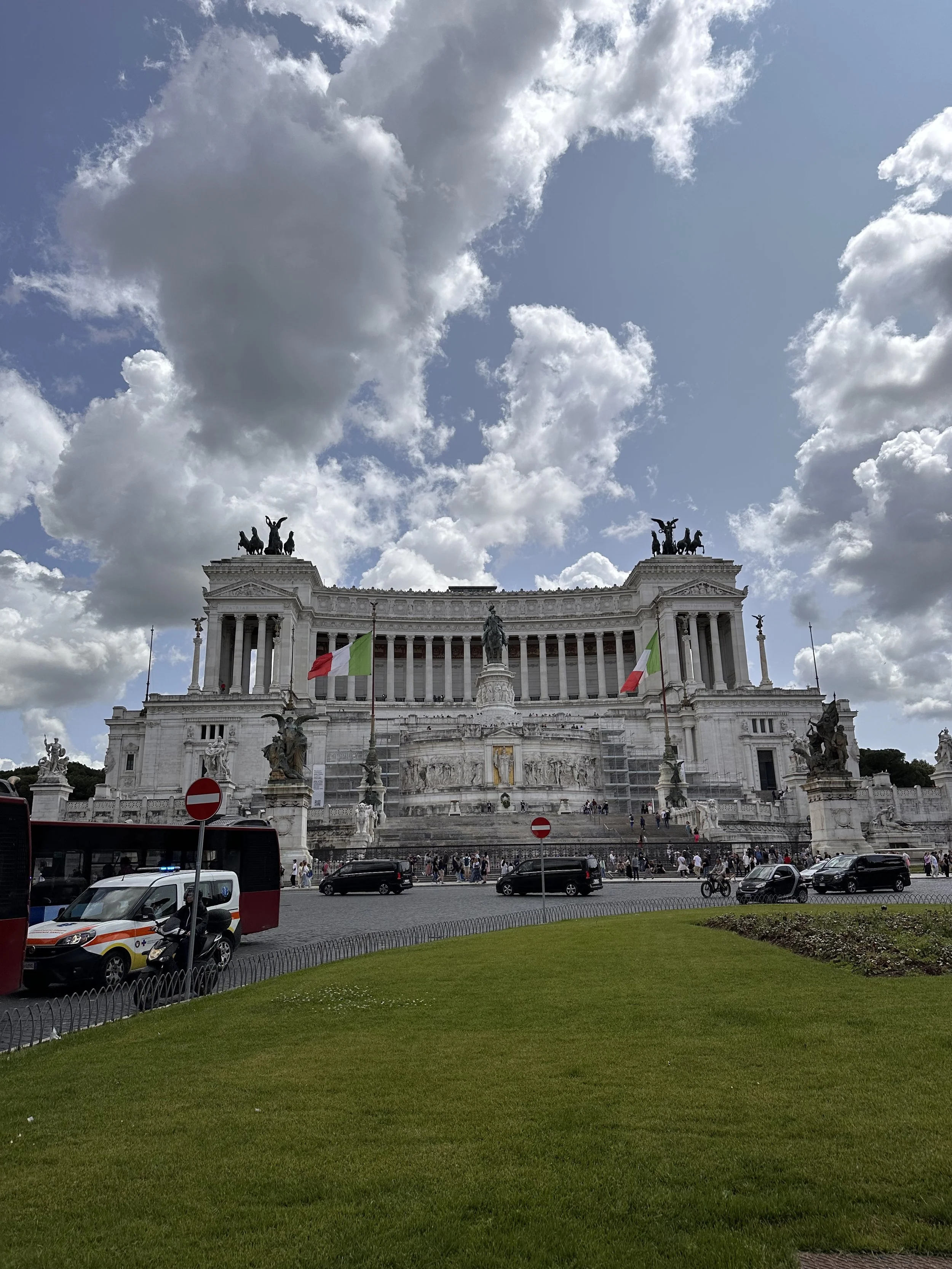
Capitoline Hill, redesigned by Michelangelo, is one of the most significant of Rome's seven hills and one of its most elegant piazzas. Nearby, the Vittoriano, the enormous white marble monument at Piazza Venezia, gives you panoramic views over the city if you go up. The monument itself is divisive, locals have nicknames for it that are not entirely flattering, but the views from the top across ancient Rome are genuinely worth the stop.
Papal Basilica of Santa Maria Maggiore
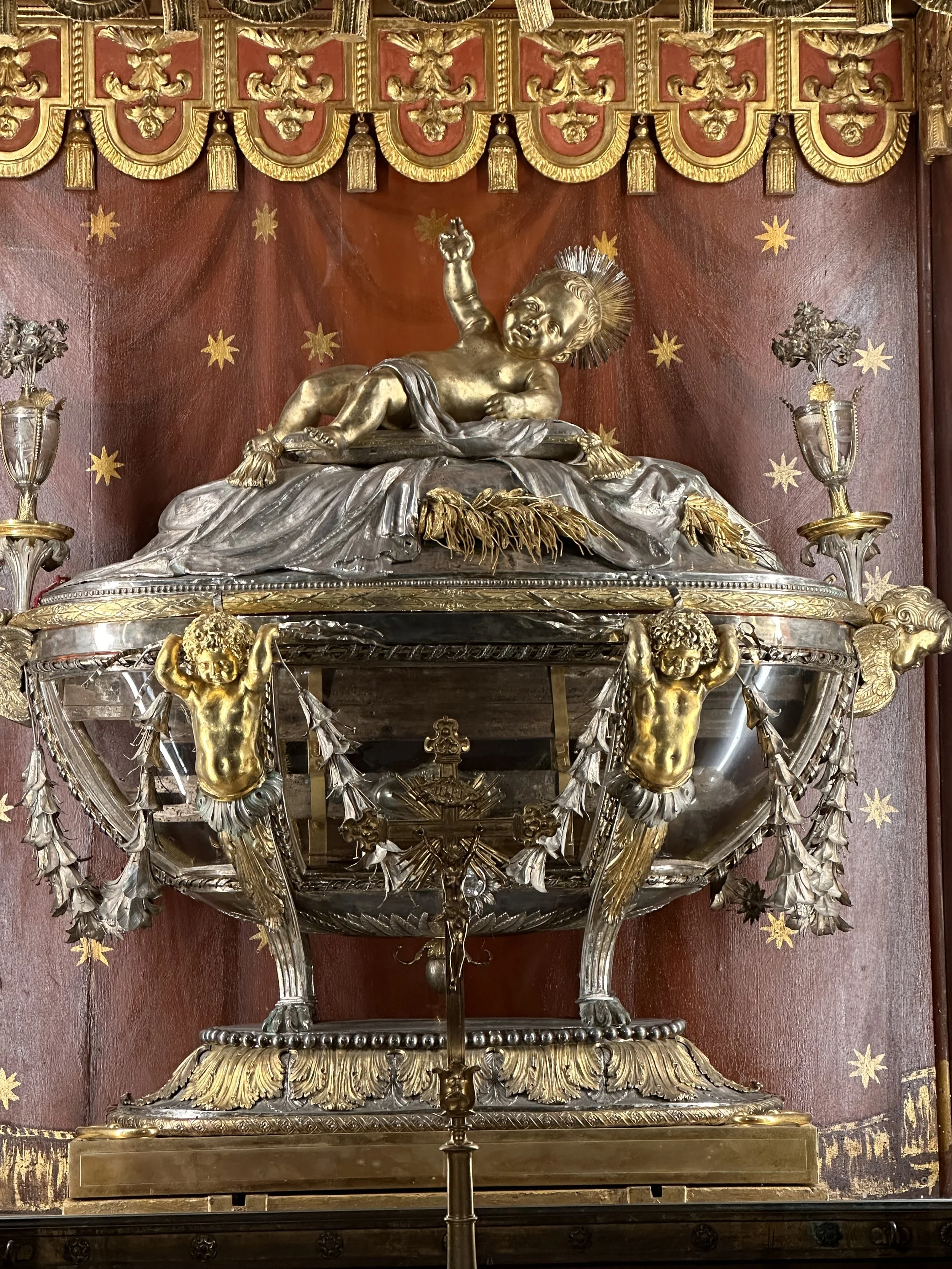
One of the four major papal basilicas in Rome, grand and detailed and beautiful. I will be honest in the way this site is supposed to be: I did not feel as moved here as I did in some of the other churches, though that says more about the impossible standard set by the Duomo in Milan and the Vatican than anything lacking in this basilica. They are all extraordinary and none of them should really be compared, because each one is its own thing even when they share the same features. Santa Maria Maggiore holds relics said to be from the Holy Crib, fragments of wood from the manger, which is the kind of thing that is genuinely hard to wrap your mind around standing in front of it.
The Capuchin Crypt and Catacombs
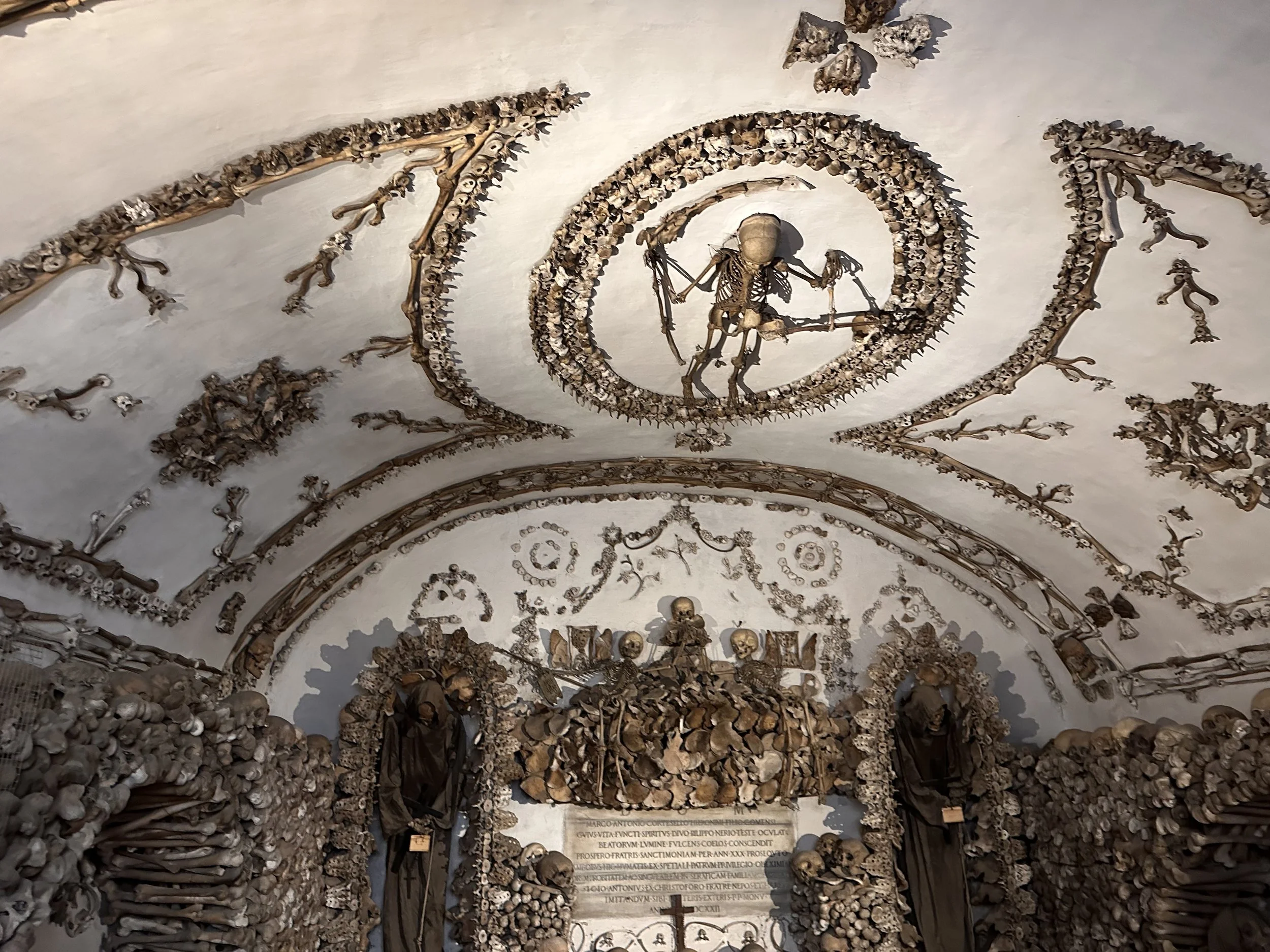
We did an after-hours tour of the Capuchin "Bone" Chapel and the Roman catacombs and it was one of the more unusual things we did in the city. The crypt is decorated with the bones of thousands of Capuchin monks, arranged into patterns across the walls and ceilings, built as a meditation on mortality rather than anything macabre, though it lands as both. They are strict about photography around the bones, and rightly so. Going after hours, with the catacombs nearly empty, made the whole thing feel like stepping somewhere you were not quite supposed to be.
The Spanish Steps
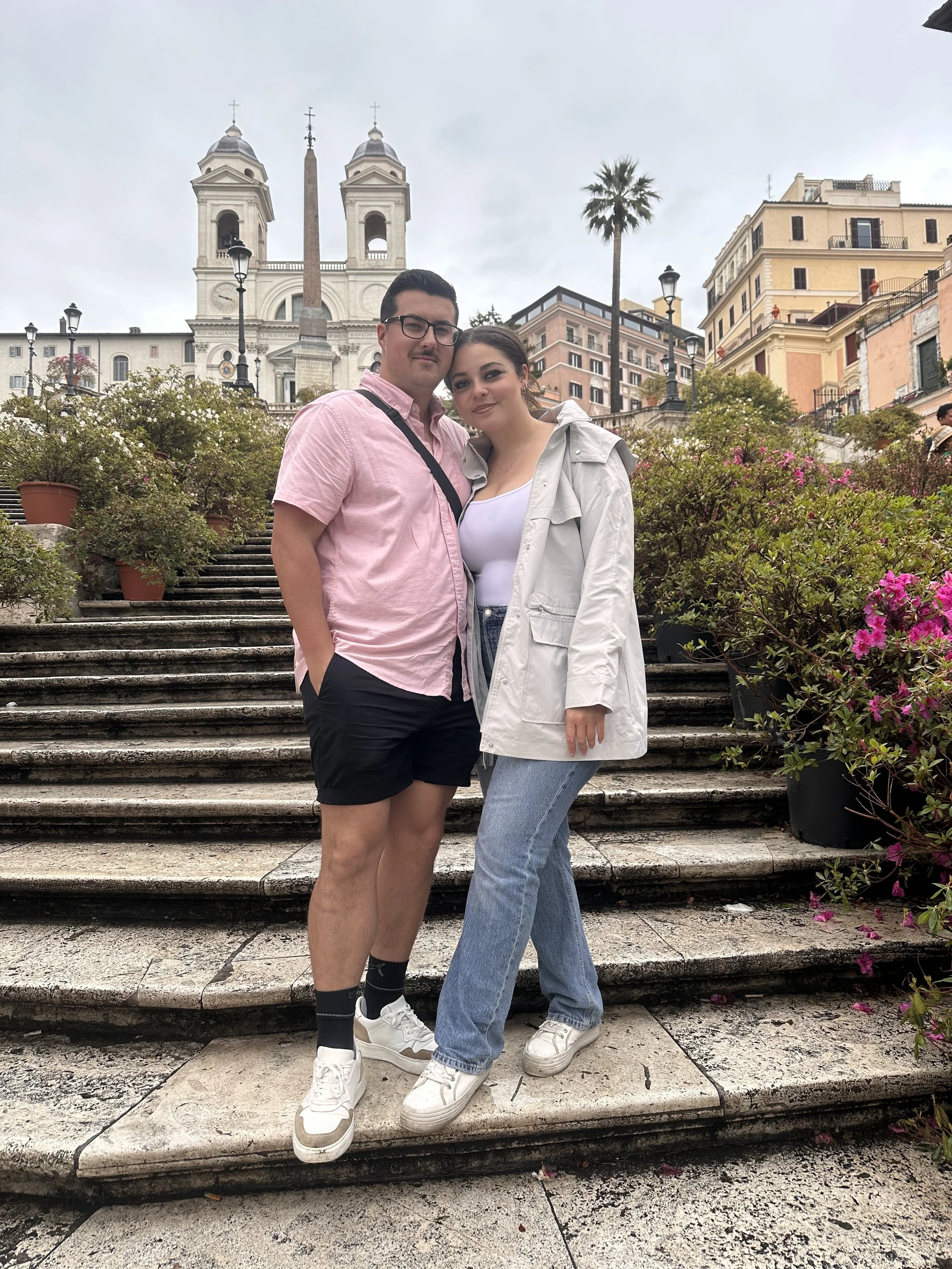
Here is the honest version. The Spanish Steps are steps. A wide, elegant staircase of 135 of them connecting a piazza to a church at the top, and if it were not for the hundreds of people photographing them, you could easily walk past without realizing you were supposed to stop. They are genuinely pretty, especially in spring when the flowers are out, and the piazza at the base with its Bernini fountain is worth a look. But manage your expectations. This is a place to pause for a few minutes on your way somewhere else, not a destination to build time around. We saw them early in the morning on our way to the Colosseum, which is exactly the right amount of attention to give them.
Vatican City
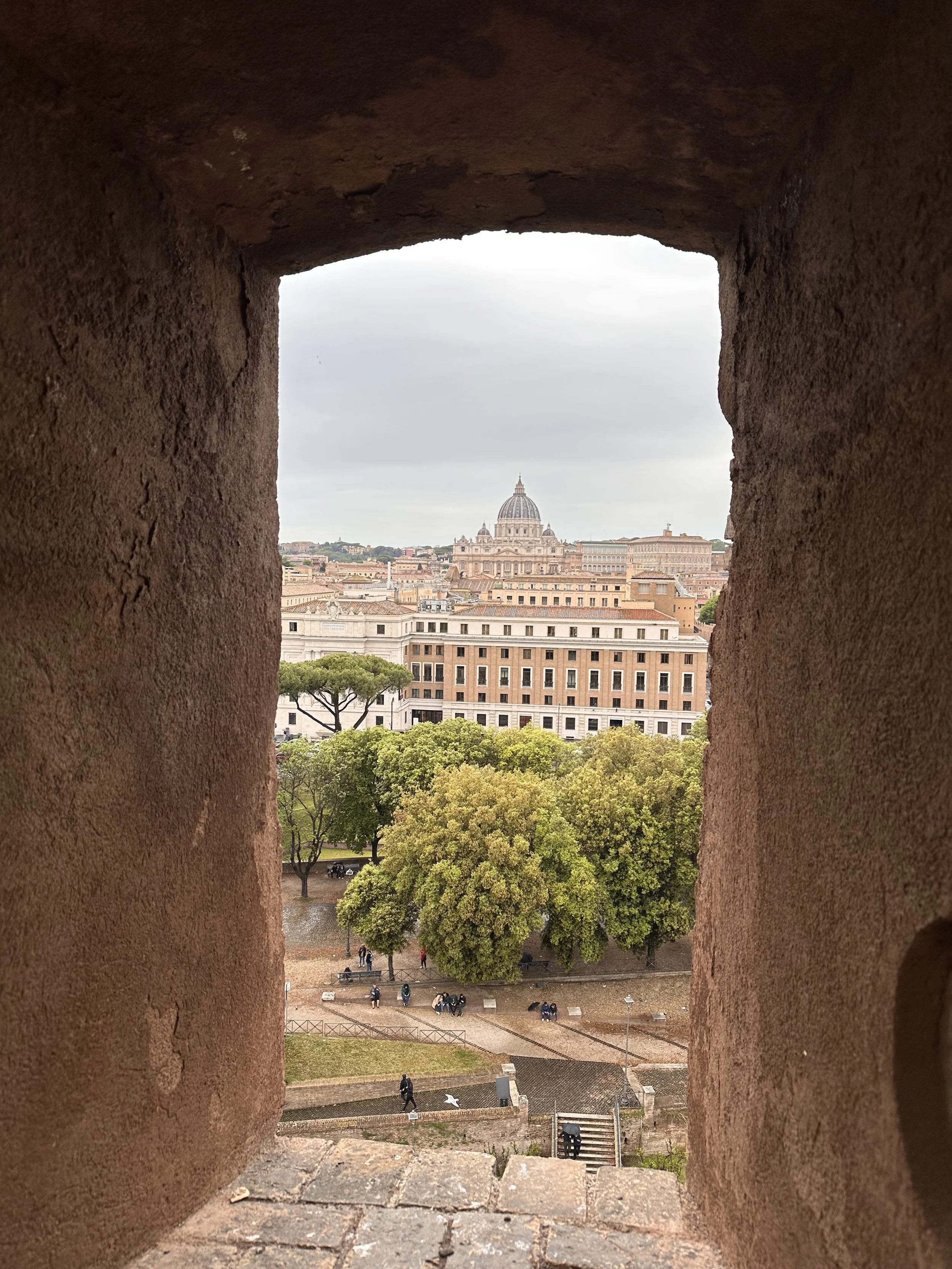
Its own section below. The highlight of Rome for most people and the thing that flattened my husband so completely he was still thinking about it days later when we reached the Colosseum.
The Colosseum, Roman Forum, and Palatine Hill
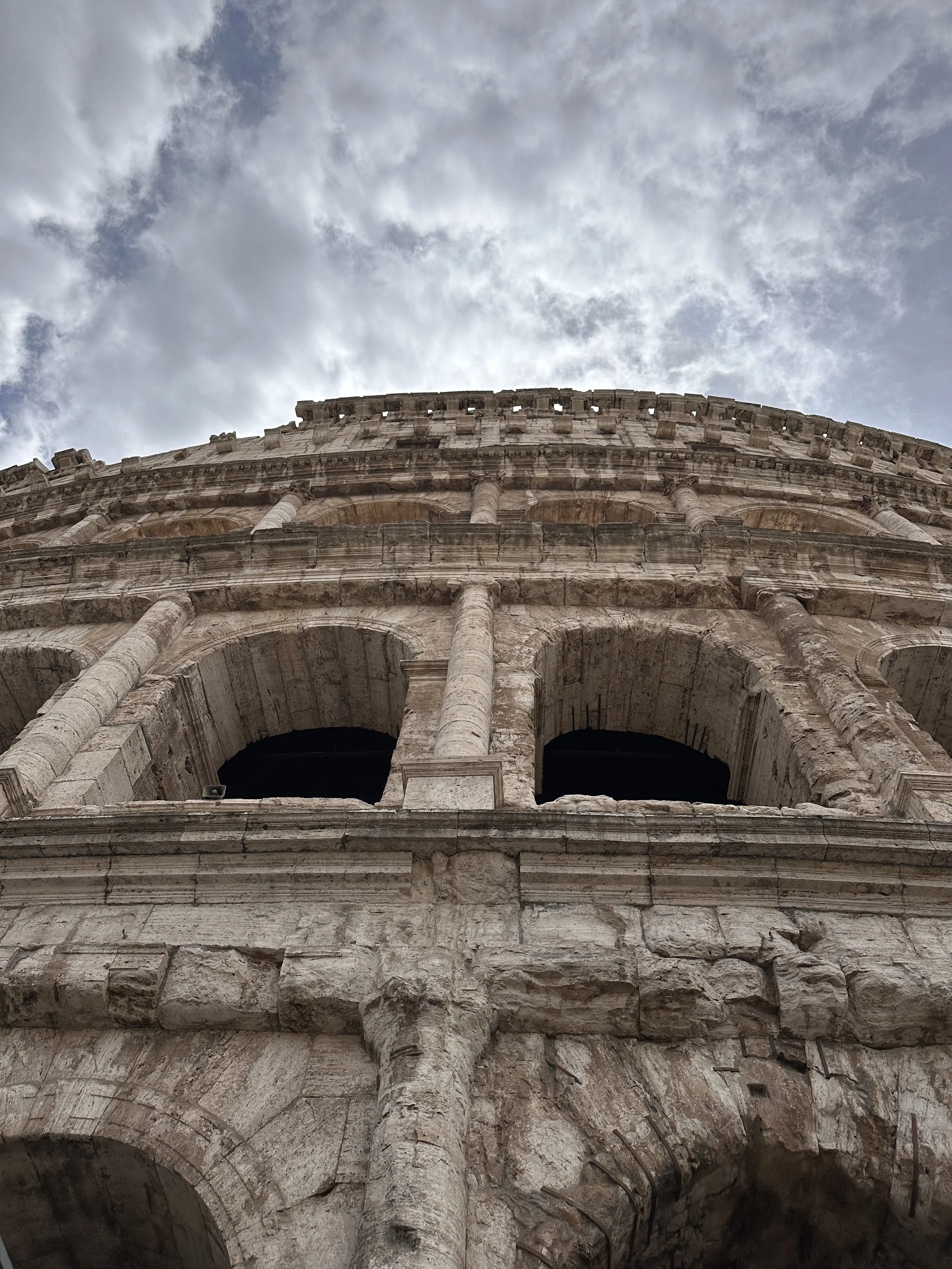
And then there is the other Rome, the ancient one, which after days of gold and incense speaks a completely different language. This was my favorite thing in the entire city, and I will note that my husband did not feel the same, his head still somewhere back in the Vatican. Travel does that. The same place hits two people completely differently.
We did a tour that included the Colosseum underground and arena floor, and started with Palatine Hill and the Roman Forum before the Colosseum itself. The Forum was my first time standing in actual ruins and I found it genuinely hard to visualize at first, piecing together a city from the fragments left of it. But by the time we reached the Colosseum, something clicked. Standing inside it, on the arena floor, with the underground chambers exposed below where the animals and gladiators were once held, I was fangirling a little. It is one of the most recognizable structures on earth and it more than lives up to itself in person.
If you can, book a tour that gets you underground and onto the arena floor. The standard ticket is impressive. The access tour is a different level entirely.
Vatican City
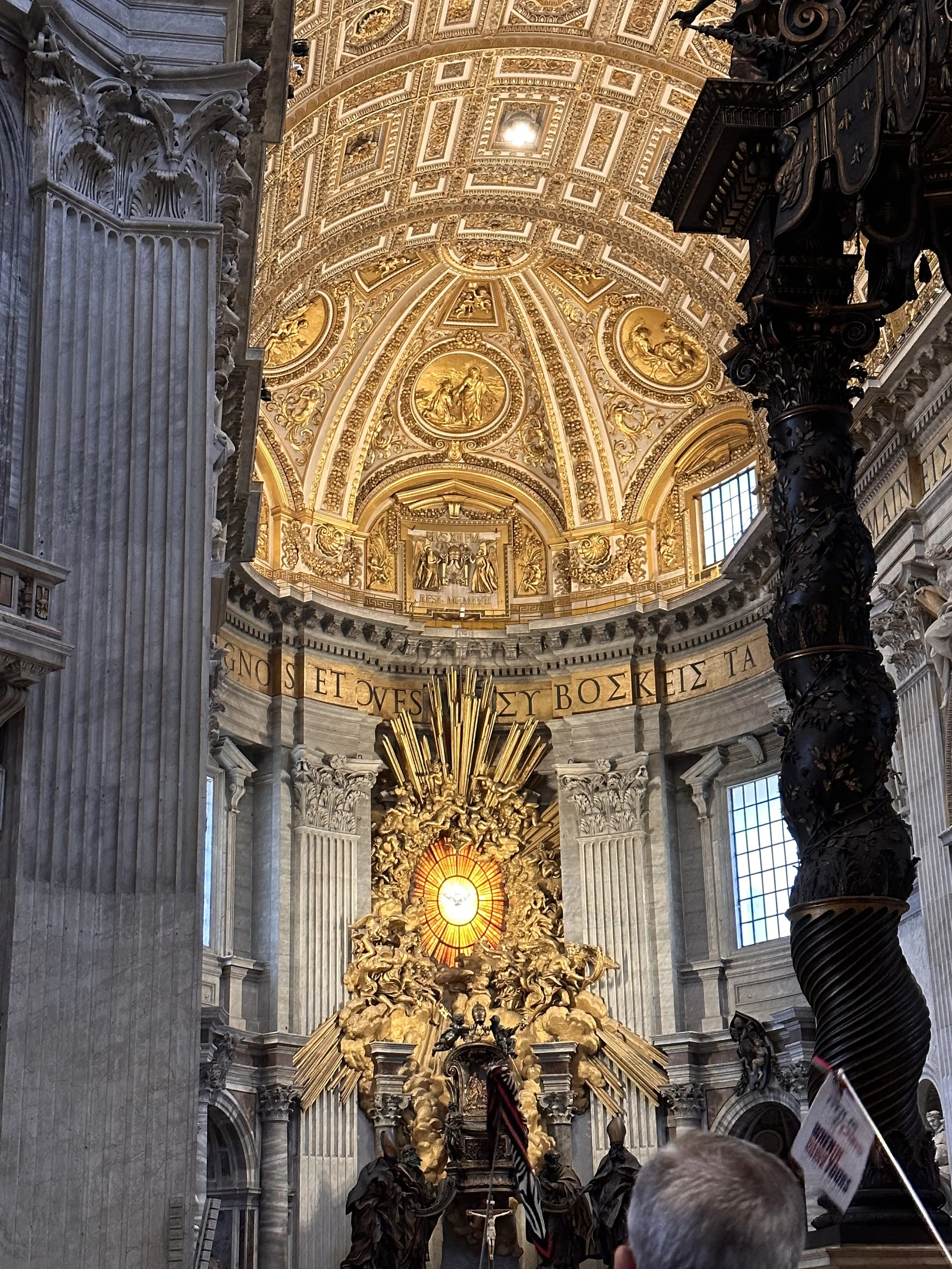
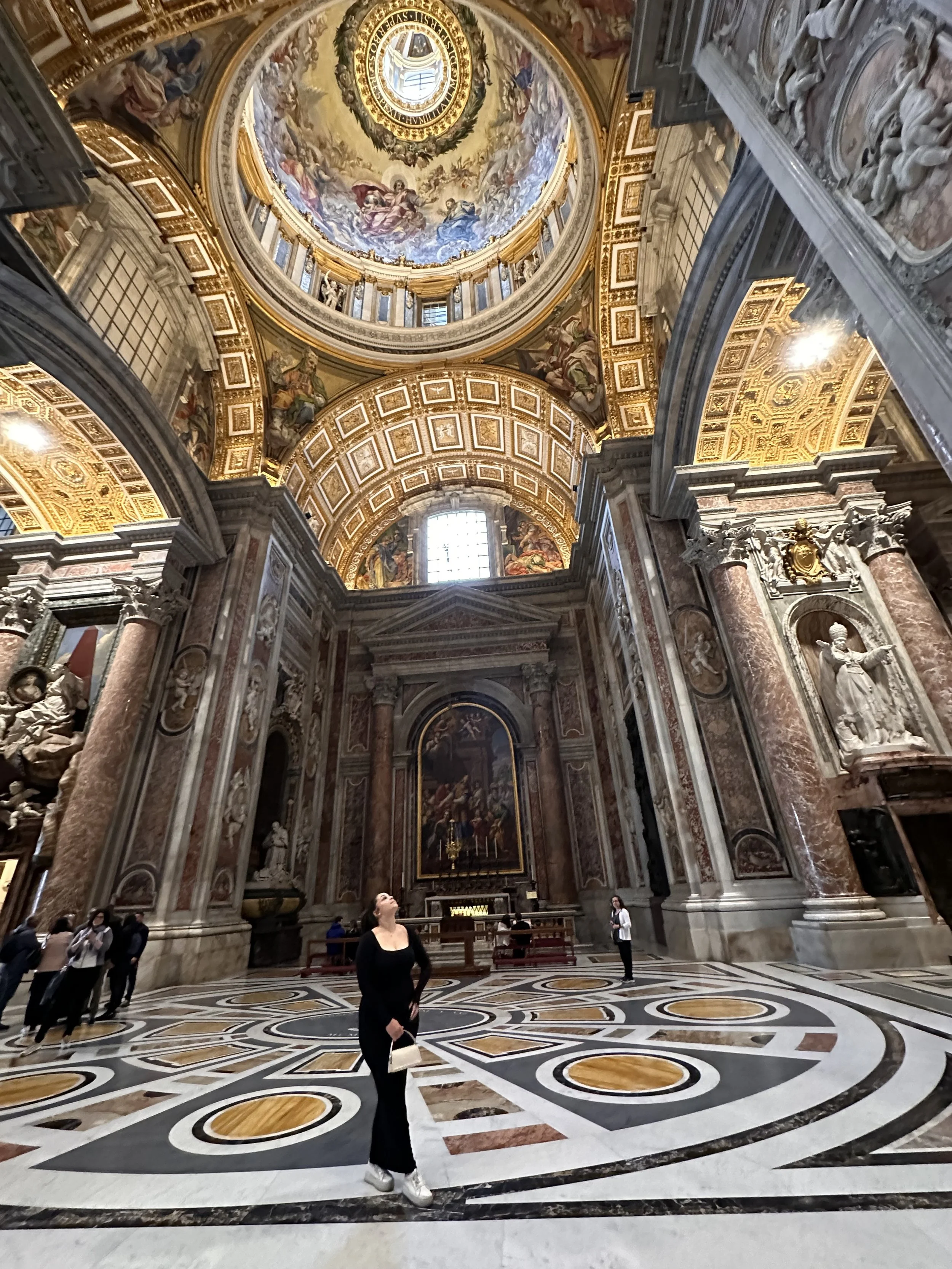
The Vatican deserves its own section because it is its own country, and because nothing else in Rome operates on its scale.
We went early with a guided tour through Get Your Guide. The walk up to St. Peter's Square in the morning was almost completely empty, quiet in a way that felt eerie and cinematic. We saw the Swiss Guard, and our guide explained the symbolism of their role and their centuries of history protecting the pope. Then we went inside.
St. Peter's Basilica is the highlight and it is difficult to put into words. If you are not a praying person, the Vatican might briefly make you reconsider. The scale of it is almost impossible to process, especially when you start thinking about when it was built and how. We learned where the gold came from. We saw the remarkably preserved body of one of the popes, displayed within the basilica. The mosaics, which from a distance look like paintings until you get close and realize every one is made of tiny pieces of stone and glass, were unreal.
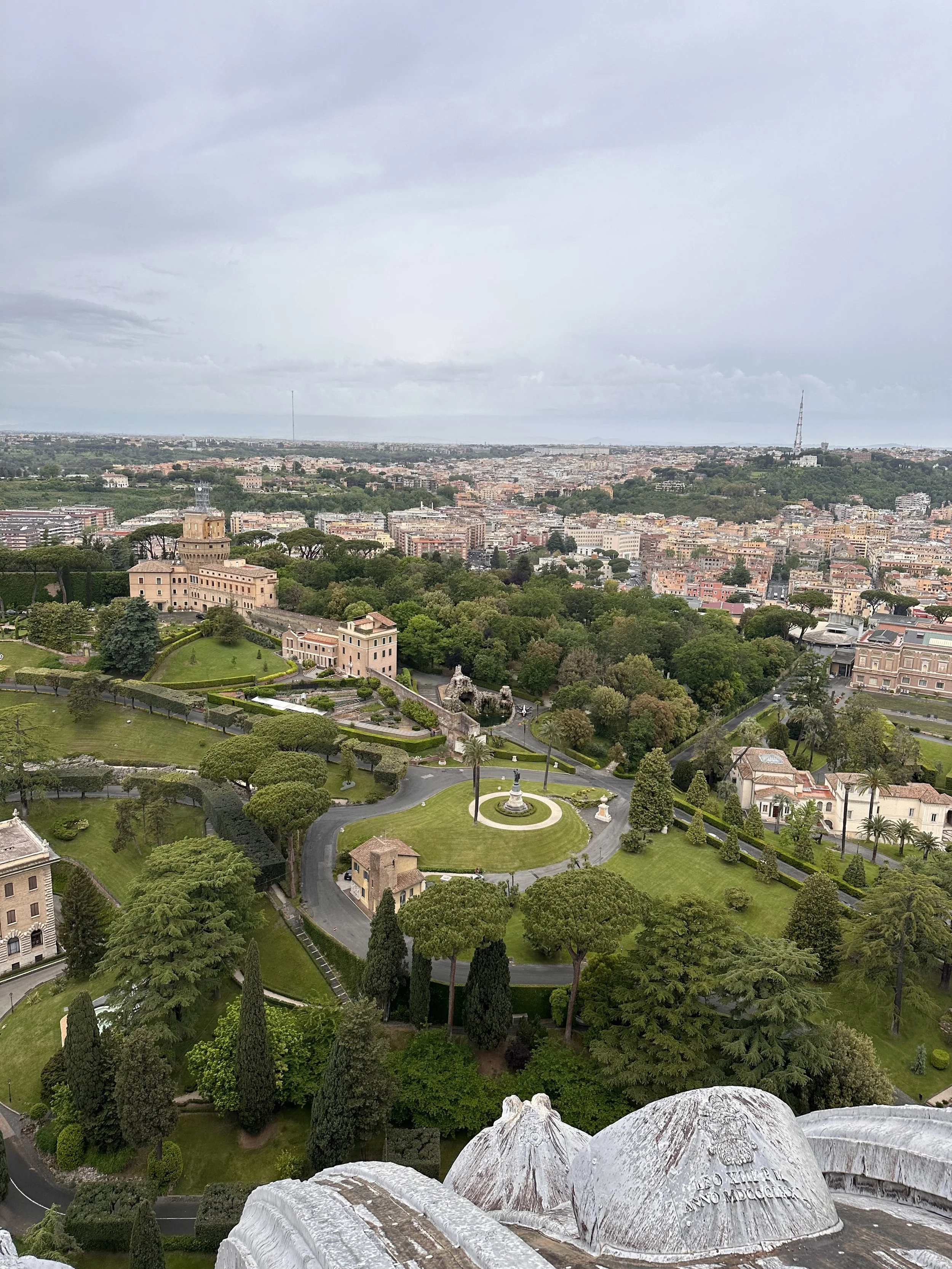
We climbed to the top of the dome, inside and out. The view over Vatican City and Rome beyond it was one of those moments where the weight of the history actually lands, all of it having happened right here, and you are simply standing in the middle of it.
The dress code is strict and it should be. Covered shoulders and knees, no exceptions. We watched multiple people get turned away at the entrance for not meeting it. Dress correctly and you will not have to think about it.
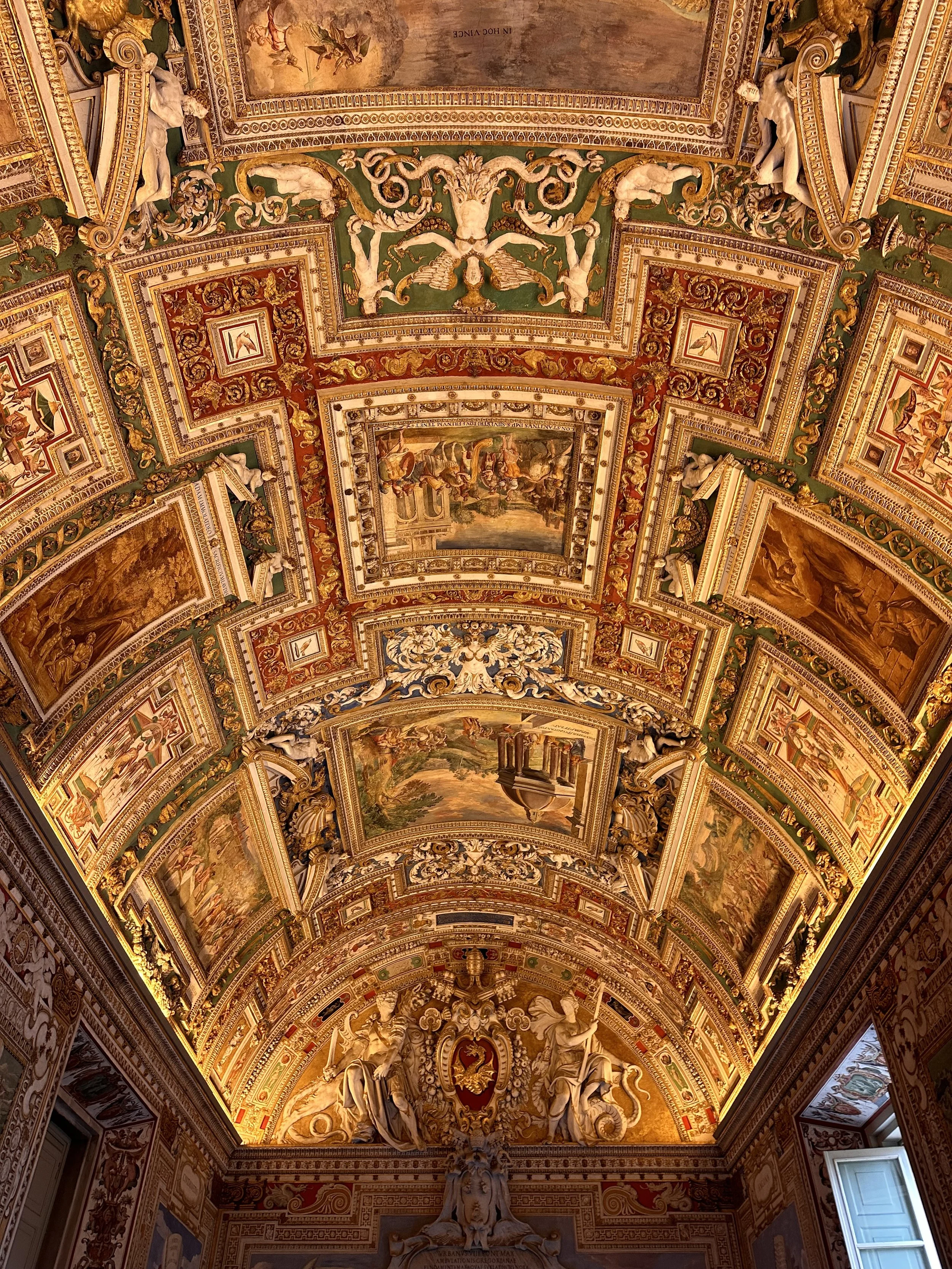
Then the Vatican Museums, which are their own overwhelming experience entirely. The painted ceilings and architecture of the long galleries had my jaw on the floor for hours. And then the Sistine Chapel, where photography and video are forbidden and quiet is requested, though no one fully honored it, the guards coming over the microphone repeatedly to ask the room to lower its voices. Having a brochure to reference while standing underneath Michelangelo's ceiling made an enormous difference, because it meant we actually understood what we were looking at rather than just craning our necks at something famous.
By the time we left, anything we did afterward was a bit of a wash. We went to Castel Sant'Angelo next and I can barely tell you what it was like, because the Vatican had used up everything I had. Plan your day knowing that. Whatever you do after the Vatican, keep it light. Your brain will be full.
Where to Stay Your First Time in Rome
Rome is big and spread out, and where you stay shapes how much of your time you spend in transit versus actually in the city. The good news is that the historic center is walkable and the metro is cheap and simple. For a first visit, staying central matters more than in most cities because the distances between the major sights are real.
Know the Neighborhoods
Centro Storico is the historic heart of the city and the most atmospheric place to base yourself. Piazza Navona, the Pantheon, the Trevi Fountain, and countless churches are all within walking distance. You pay for the location and it is worth it for a first trip, because so much of what you came to see is right outside the door.
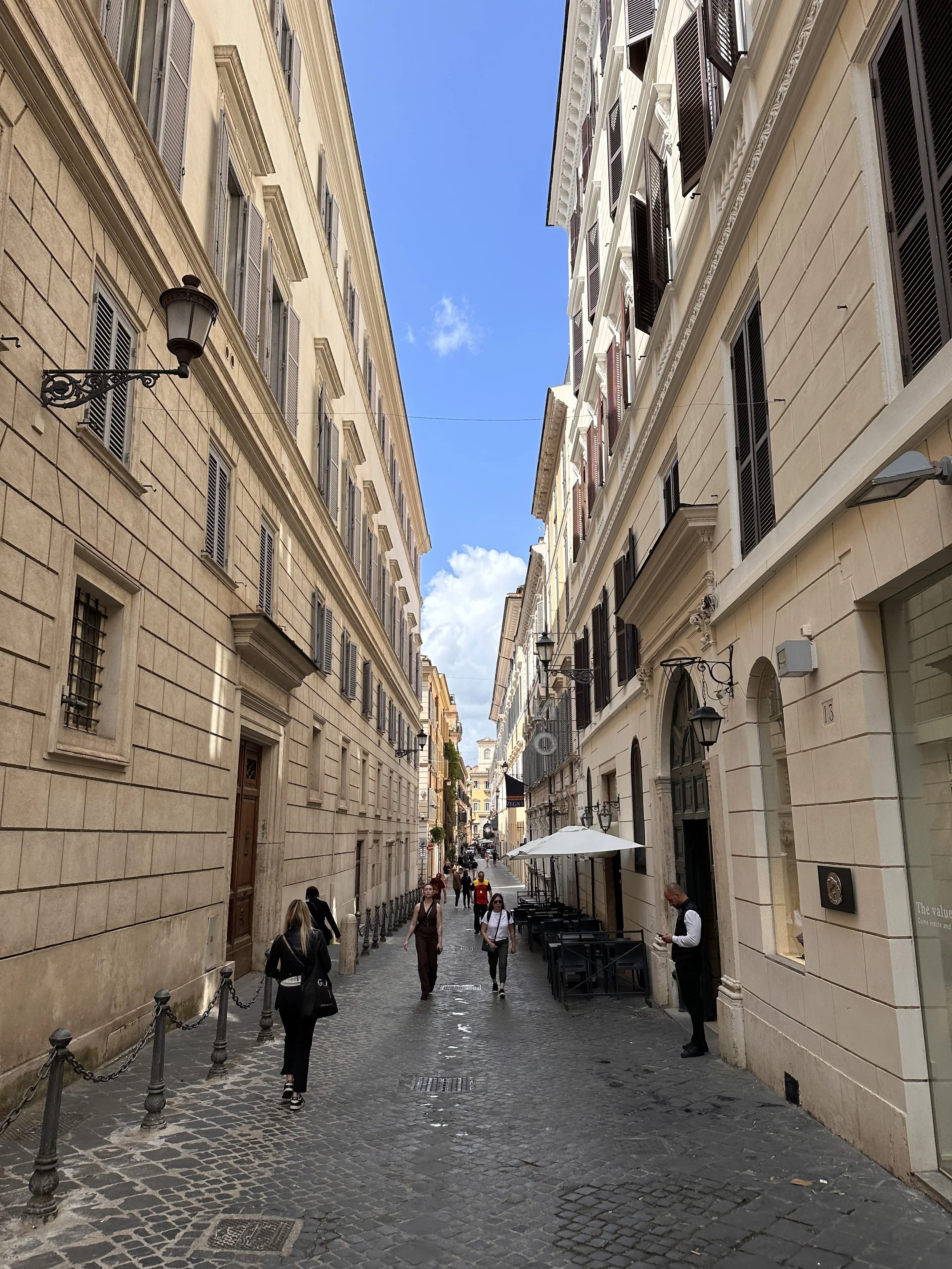
Monti sits between the Colosseum and the main train station and is one of the most charming neighborhoods in the city. Cobblestone streets, good restaurants, a more local feel, and walking distance to ancient Rome. A strong choice if you want character without being directly in the tourist crush.
Trastevere is the cobblestoned, ivy-covered neighborhood across the river, known for its nightlife, its restaurants, and its evening energy. More residential and bohemian, slightly removed from the main sights but connected by a short walk or tram. The best base if eating and drinking well in the evening is a priority.
Prati is the upscale, quieter neighborhood near the Vatican. Elegant, residential, and convenient if the Vatican is a major focus, though further from ancient Rome and the historic center.
Hotel Suggestions
The Tribune Hotel, part of the JdV by Hyatt brand, is where we stayed. It sits near Via Veneto and Villa Borghese, on the northeastern edge of the center, which meant it was slightly removed from the thick of the historic core. Everything was still reachable, the Spanish Steps about a 12 minute walk, the Trevi Fountain closer to 20, but it was enough out of the way that I noticed it. The standout was the rooftop, Terrazza Borghese, where we had dinner one night with views over Rome and the Villa Borghese gardens. A comfortable, quirky base, just know going in that you are a walk or a short metro ride from most of what you came to see.
Hotel Artemide is a consistently well-reviewed mid-range option on Via Nazionale, central and comfortable with a rooftop terrace of its own. A solid choice that does not require a luxury budget.
Hotel de la Ville is the splurge, a Rocco Forte property at the top of the Spanish Steps with some of the best views in the city and interiors to match. If you want to be central and indulge, this is the one.
Where to Eat & Drink on Your First Trip to Rome
Rome is where the food stopped being a thing we did between sights and became one of the reasons to be there at all. Here is my one regret about the city. We packed our days so full of activities that we barely scratched the surface of the food. There are entire neighborhoods of famous, extraordinary restaurants we never went to and never even tried for, because there was always another church or ruin or museum on the schedule. If I went back, I would build in a full day with nothing on it but eating. No sights, no tours, just working through a list of places I did not get to. Take that as both a confession and a recommendation. Two meals in particular still reset what we thought we knew, and the food tour on our last night pulled the whole city together in a way the landmarks did not quite manage on their own.
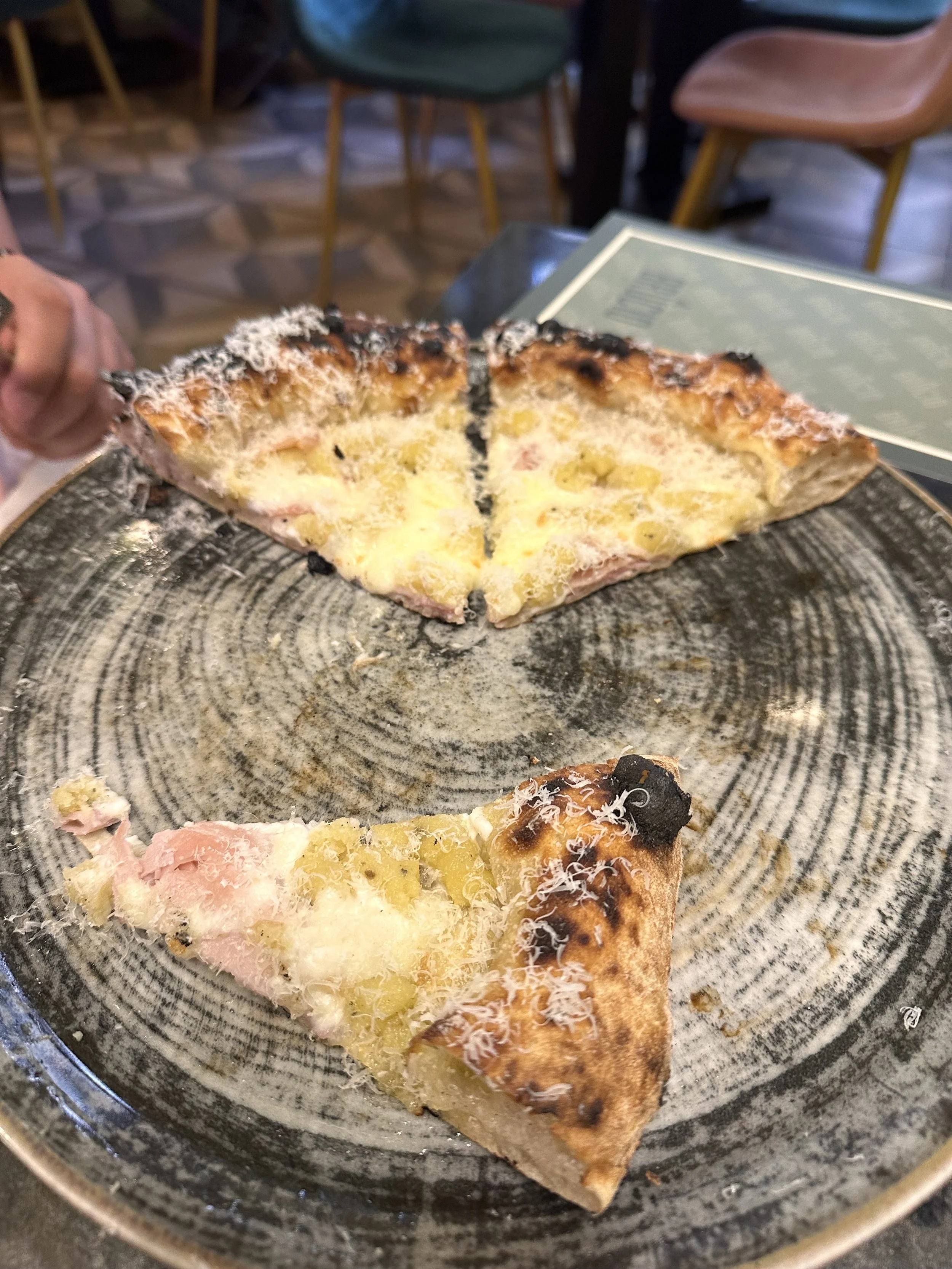
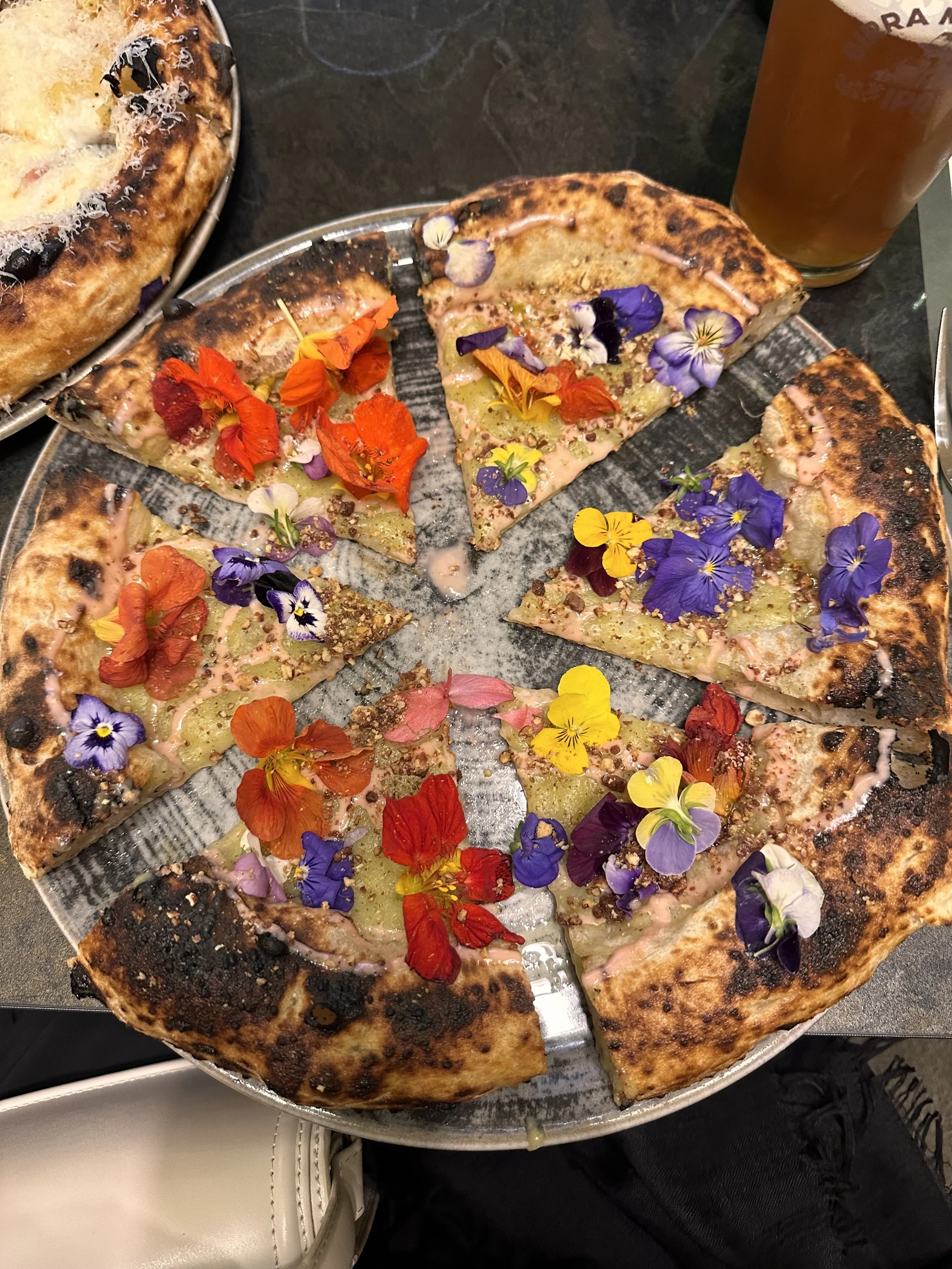
This is the one. The best pizza my husband and I have ever eaten in our lives, and I do not say that lightly.
The server was suave in the specific way Italian servers are suave, completely at ease, like he had done this his whole life and enjoyed every day and night of it. The atmosphere reminded me of Little Italy back home in San Diego, except this was the real thing and the difference was immediate.
And then the pizza. The crust, the sauce, the cheese, the char on the bottom, the way it held together, every single component was operating at a level I did not know was possible. Not one element carrying the rest. All of it, at once. It tasted like the original version of a thing I had been eating copies of my entire life. We have chased that pizza in our memory ever since and nothing at home has come close.
The rooftop restaurant at our hotel, The Tribune. We had dinner up here one night with views over the city and the Villa Borghese gardens. The food was good and the setting was better, the kind of meal where the view does some of the work. Worth knowing about whether or not you stay at the hotel.
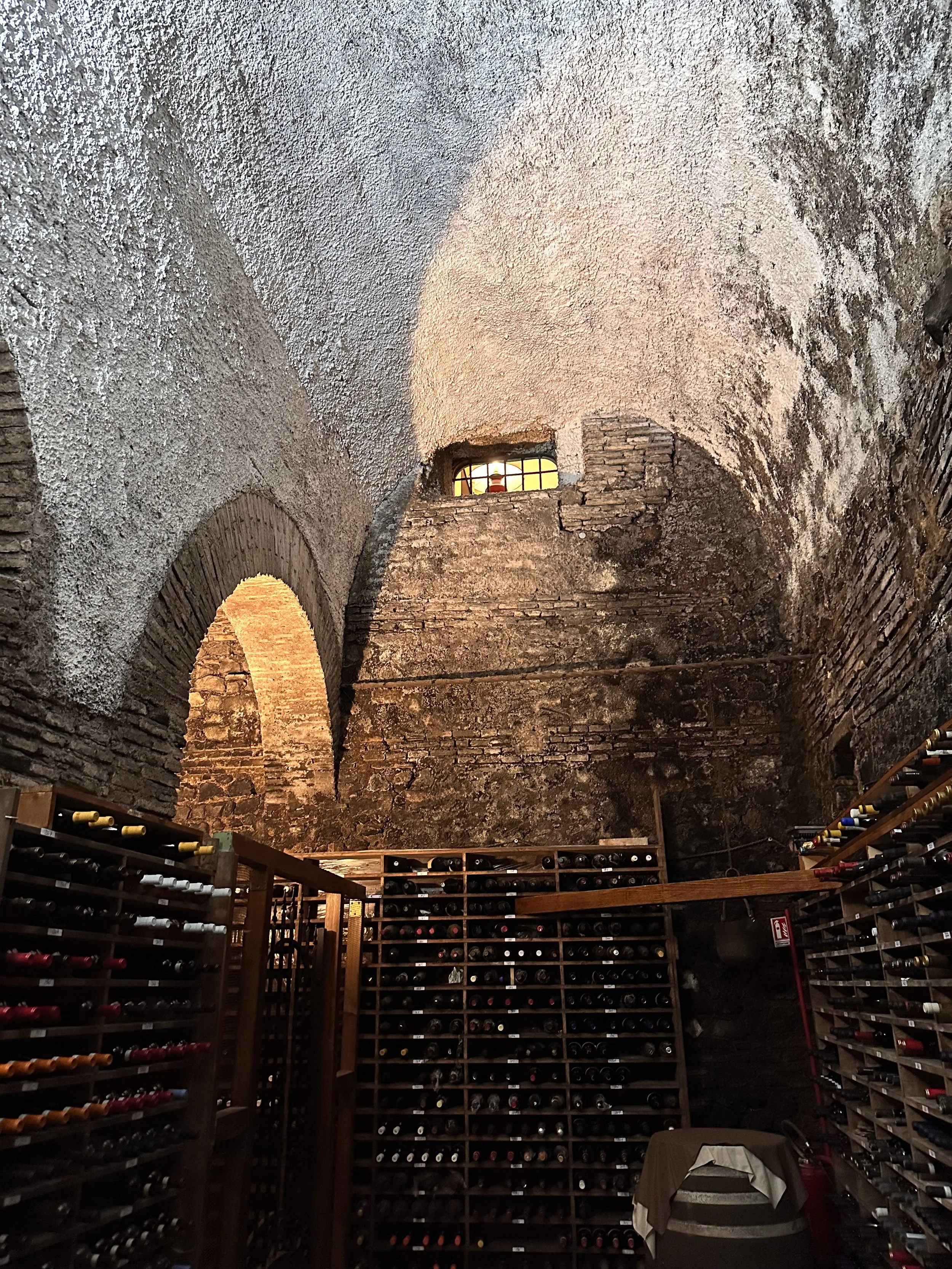
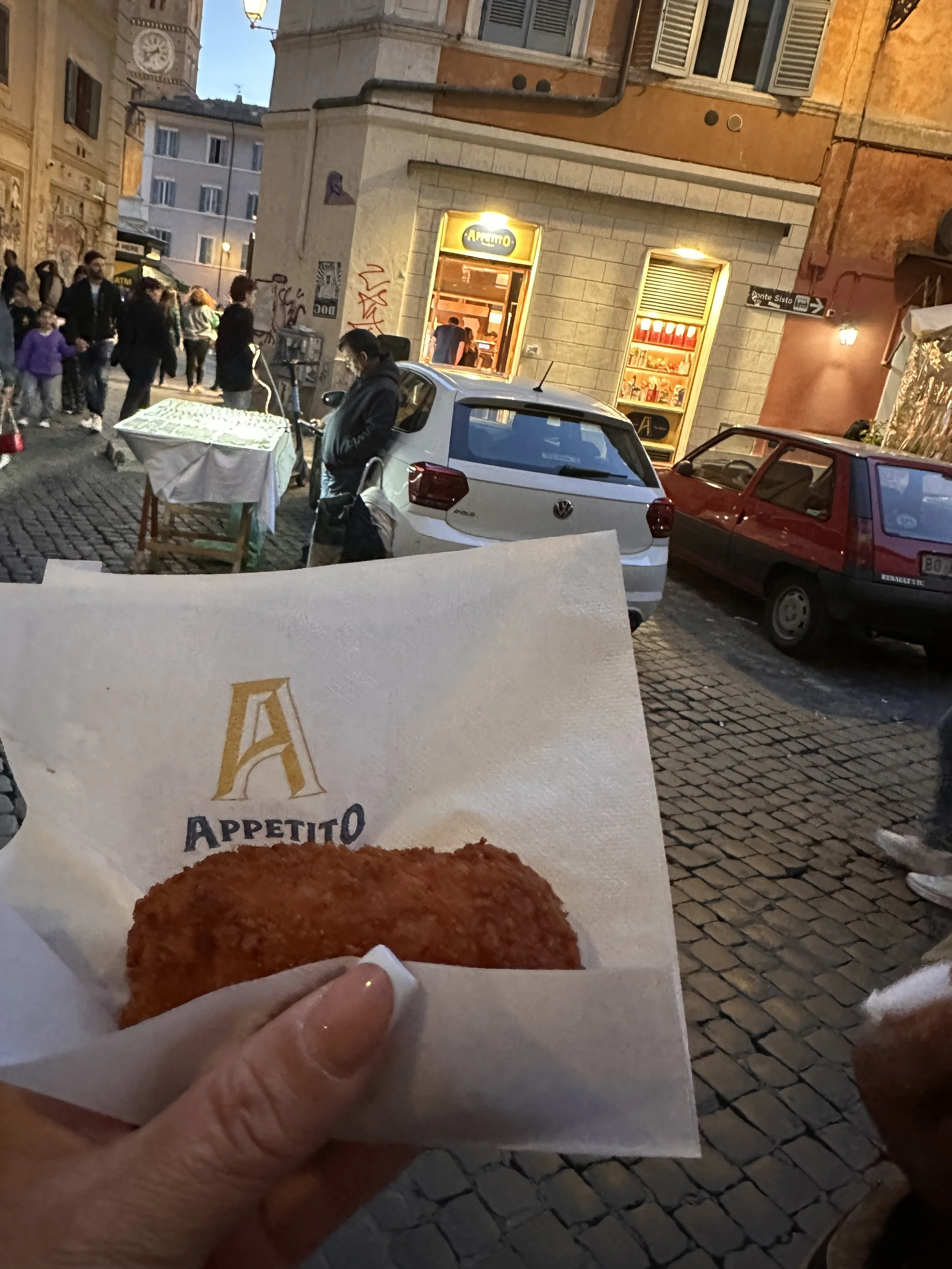
We did the Twilight Trastevere food tour on our last night and it was one of the best decisions of the whole Rome leg. It moved through the neighborhood stop by stop, and the standout was Spirito DiVino, a family-run restaurant whose underground wine cellar dates to around 80 BC. That makes it roughly 150 years older than the Colosseum, and you climb down into it to taste wine surrounded by stone that predates almost everything else you will see all week. The building above it was once the first synagogue in Rome. It is exactly the kind of place you would walk past on the street and never know was there.
There was pizza, pasta, a deep fried cheese thing I still think about, and gelato to finish. The best part was the guide. At one point we asked him what Italians actually eat at home, assuming the answer would be something we had not heard of. He looked at us and said, in the thickest possible accent, "pizza, and pasta." That was it. That was the answer. It made us laugh and it also made a kind of perfect sense.
A food tour is the single best thing you can do to understand Roman food, because it takes you places you would not find and explains what you are eating while you eat it. Book one for an evening and go hungry.
A Note on Breakfast
One thing nobody told us: breakfast in Italy is sweet. Almost aggressively so. Savory options are limited to nonexistent, and the standard morning move is a pastry and a coffee, taken quickly, often standing at a bar. If you are used to a savory breakfast at home, adjust your expectations. Lean into the cornetto and espresso and do not go looking for eggs. You will not find them, and you will not miss them as much as you think.
What to Try at Least Once in Rome
Cacio e pepe, the Roman pasta of pecorino and black pepper, simple and perfect when it is done right.
Carbonara, the real version, egg and guanciale and pecorino and no cream, ever. Rome is where it is from and Rome is where to eat it.
Supplì, the fried rice balls that are Rome's favorite street food snack, crisp outside and molten cheese inside.
Roman style pizza, thinner and crispier than the Neapolitan version, and at a place like Brucio, life changing.
Gelato from an actual gelateria rather than the tourist spots with the mountains of bright colored product in the window. We had excellent gelato at Fatamorgana and Gelateria Cremilla, both worth seeking out.
And a cornetto and espresso standing at a bar in the morning, because resisting the sweet Italian breakfast is a losing battle and you should not fight it anyway.
What to Pack for Your First Trip to Rome
Rome is a city you experience almost entirely on foot, across cobblestones and hills, in and out of churches with strict dress codes, often in serious heat. Pack for all of it.
We visited in May and the timing was close to ideal, warm during the day, cool in the evenings, comfortable for the amount of walking Rome demands. Roman summers from June through August are genuinely hot, the kind of heat that turns a full day of sightseeing into an endurance event, with very little shade at the ancient sites. If you go in summer, start early, build in rest in the middle of the day, and drink constantly. Spring and fall are the strongest windows. The city's many public fountains run clean, drinkable water, so a refillable bottle is worth its weight.
Weather (Quick Reality Check)
Comfortable shoes with grip. Rome is cobblestone and hills and uneven ancient stone, and you will walk far more than you expect. This is not the city for fashion over function, though Italy will tempt you toward both.
Modest clothing for the churches and the Vatican. Covered shoulders and knees, and this is strictly enforced, especially at St. Peter's, where we watched multiple people get turned away at the entrance. A light scarf or layer you can throw on at the door solves it without adding bulk to your bag.
A refillable water bottle. The nasoni, Rome's public drinking fountains, run cold clean water all over the city. In summer this matters more than almost anything else you pack.
A crossbody bag that zips, kept closed and in front of you. Rome's crowded areas and public transport are pickpocket territory the same as any major European city.
A hat and sunscreen. The ancient sites, the Forum, the Colosseum, Palatine Hill, are almost entirely exposed, and the midday sun is relentless from late spring onward.
A portable charger. Between the churches, the Vatican, and the ruins, your phone will be working overtime and your camera roll will be enormous.
Core Items for Rome
A Note on Footwear, Again
The same thing I noticed in Milan holds in Rome. Italians dress with intention and footwear is part of it. You can absolutely prioritize comfort, and for the amount of walking Rome requires you should, but a clean pair of shoes goes further than the athletic sneakers that mark you instantly as a tourist. Comfortable and presentable are not mutually exclusive. Pack the pair that does both.
Holding Light in Your Bare Hands
Rome gives you more famous images than almost any city on earth. The Colosseum, the Trevi Fountain, St. Peter's, the Forum. You arrive with a mental list of things you have seen a thousand times and you spend three days confirming that yes, they are real, and yes, they are even better in person.
The moment I actually carried home was none of those.
It was the Pantheon, in the middle of the day, with the sun out. The building is nearly two thousand years old, the dome still the largest unreinforced concrete dome ever built, and at its center is the oculus, a single open hole to the sky. There is no glass over it. Rain falls through it. And on a clear day, the sun comes through it as a solid, defined beam, landing on the marble like something with weight.
I stood under it and had the strange thought that if there were ever a single moment in my life where I could hold light in my two bare hands, this was it. The beam was that physical, that present. You could see its edges. People around me were reaching into it, turning their palms over in it, doing the same thing I wanted to do. None of us could help it.
I have no good photograph of it. I tried. It does not translate, the same way the most affecting things rarely do. A photo of a beam of light in a dim room is just a photo of a dim room. You had to be standing in it, watching it move imperceptibly across the floor as the earth turned, to understand why a building designed two thousand years ago to do exactly this still stops every single person who walks in.
Rome overwhelms you with the things you came to see. Then, when you are not bracing for it, it hands you a quiet one. The light through the Pantheon was mine.
Itinerary for Your First
Trip to Rome
Rome rewards an early start. Three days covers the essentials if you book the big things ahead, the Vatican and the Colosseum both need tickets well in advance, and build your days around those fixed points. Everything in between, the churches, the piazzas, the fountains, the streets, you can stumble through, and stumbling through Rome is half the pleasure.
Day 1 - Centro Storico
Morning: The Historic Center on Foot
Start in the historic center and move through it slowly. Piazza Navona first, built on the site of an ancient stadium, to get your first taste of the Baroque fountains. A few minutes away is San Luigi dei Francesi, where the three Caravaggio paintings of the Saint Matthew cycle hang in a working church. Bring coins for the lights that illuminate them.
From there, the Pantheon. Go on a clear day if you can time it, and stand under the oculus. This is the high point of the historic center and it costs almost nothing.
Midday: Pizza and More Piazzas
Lunch at Brucio if you can work it into your route, because it is worth rearranging your day for. From the Pantheon, the Trevi Fountain is a short walk, though midday it will be packed. See it, throw the coin, take the photo, and plan to come back early another morning for the version without the crowds.
Afternoon: Capitoline Hill and the Churches
Walk to Capitoline Hill and the piazza Michelangelo designed, then to the Vittoriano at Piazza Venezia for panoramic views over the city if you want to go up. From there, the Papal Basilica of Santa Maria Maggiore, one of the four major papal basilicas, grand and detailed and home to relics said to be from the Holy Crib.
Evening: The Catacombs
If you want something genuinely different, book an after-hours tour of the Capuchin Crypt and the Roman catacombs. Going after closing, with the passages nearly empty, is a strange and memorable way to end the first day. Dinner after, somewhere in the historic center.
Day 2 - Vatican City
Early Morning: St. Peter's Basilica and the Dome
Start as early as your tour allows. The walk up to an empty St. Peter's Square in the morning is its own experience. Tour the basilica, climb to the top of the dome, inside and out, and take in the view over the Vatican and Rome beyond it. Dress correctly. Covered shoulders and knees, no exceptions, and they will turn you away at the door if you get it wrong.
Midday: The Vatican Museums and the Sistine Chapel
The museums are overwhelming in the best way, the painted galleries seeming to go on forever before you reach the Sistine Chapel. Have a reference for the ceiling so you understand what you are looking at. Photography is forbidden and quiet is requested, however loosely the room honors it.
Afternoon: Keep It Light
Whatever you do after the Vatican, keep it gentle, because your brain will be full. Castel Sant'Angelo is nearby if you have the energy. The sunset walk along the Lungotevere and across the bridges toward the Vatican is a softer way to end an intense day. Dinner somewhere unhurried.
Morning: Early Trevi, Then the Spanish Steps
If you want the Trevi Fountain without the crowds, go at 7 AM. We did and nearly had it to ourselves, a completely different experience from the midday scrum. The Spanish Steps are a short walk away. They are, in the end, steps, easy to walk past if not for the crowds on them, but worth seeing once.
Late Morning: The Colosseum, Forum, and Palatine Hill
Book a tour that includes the Colosseum underground and arena floor. Start with Palatine Hill and the Roman Forum, then finish at the Colosseum itself. The standard ticket is impressive. The access tour, standing on the arena floor with the underground exposed below, is a different level entirely. Give the whole complex a few hours.
Afternoon: Rest
Go back to the hotel and rest. You will want it before the evening, and the day has earned you a break.
Evening: Trastevere Food Tour
End the trip with an evening food tour through Trastevere. Pizza, pasta, an underground wine cellar, and gelato to finish. It is the best way to understand Roman food and a fitting last night in the city. Go hungry.
Day 3 - Ancient Rome and a Food Tour
A fourth, fifth, even sixth day in Rome is easy to fill. The Galleria Borghese, with its Bernini sculptures, needs a timed reservation and is worth one. Trastevere rewards a full afternoon of wandering rather than just a food tour. Day trips to Ostia Antica or the Villa d'Este in Tivoli are within easy reach. And, as I would do if I went back, an entire day built around nothing but eating, working through the restaurants the packed itinerary forced us to skip.