
Your First Time in Interlaken, Switzerland
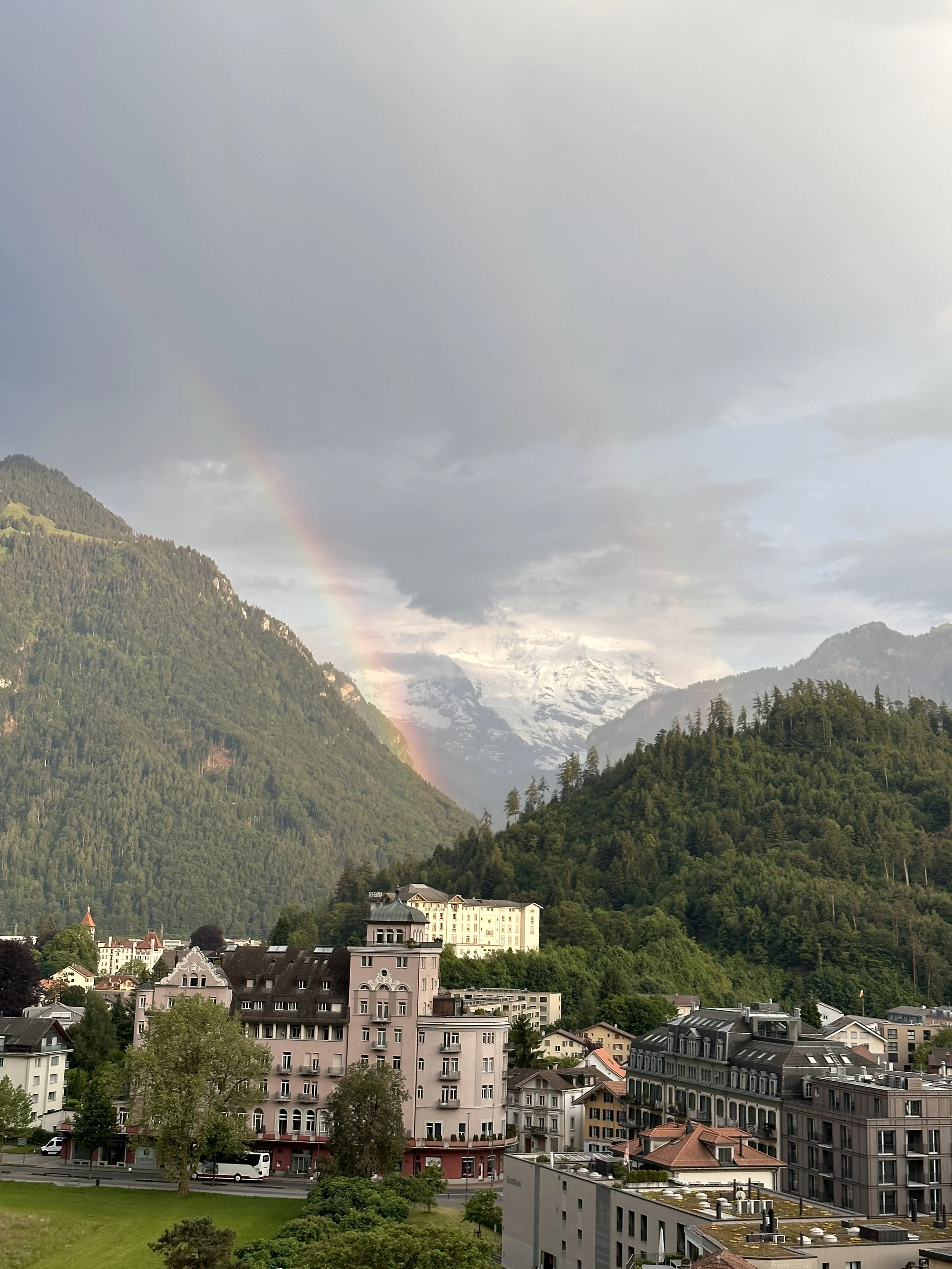
There is a moment when you arrive in Interlaken and look up and understand immediately why people come here. Mountains on every side, two lakes at your feet, and a valley that looks like it was designed specifically to make you feel small in the best possible way.
Interlaken is not subtle. It does not reveal itself slowly the way Zurich does or charm you gradually the way Lucerne does. It hits you immediately and keeps hitting you. Every view is bigger than the last. Every village is quieter and more beautiful than the one before it. By the end of the second day most people are either trying to extend their stay or quietly reconsidering their entire life at home.
Two days covers the essentials and covers them well. Lake Thun, Harder Kulm, the full Lauterbrunnen valley day, Mürren, Schilthorn, Gimmelwald. That is a real trip and a complete one. But the Interlaken area rewards more time than most places in Switzerland. Three to four days gives you room to add the Jungfraujoch, Europe's highest railway station and a full day experience on its own, explore Grindelwald, spend unhurried time on Lake Brienz, and actually slow down in the valley rather than moving through it. If you can stay longer, stay longer. You will not run out of reasons to.
A Brief Look At
Your Itinerary
One note on order: both days work in either sequence but Day 1 is the gentler arrival and Day 2 is the one that requires the most energy. If you are arriving tired, keep it in this order.
The full itinerary is at the bottom of the page when you are ready.
-
The gentler introduction. Kayaking on a lake whose color you will not believe until you are in it, a hike up to one of the best viewpoints in the area, and enough time in the town itself to understand why people keep coming back. This day is about arriving properly and letting Interlaken show you what it is working with.
-
The day that will define the trip. A waterfall valley, a car-free mountain village, the highest peak in the area, a glass floor on the side of a mountain, the quietest and most peaceful place you have ever stood, and a hike back through one of the most beautiful valleys in Switzerland. This is the day most people refer to when they say Switzerland changed something in them.
What to See on Your First Visit to Interlaken
The Lauterbrunnen Valley and its 72 Waterfalls
If Zurich is your first stop in Switzerland, start here. The museum is right next to the main train station and gives you a quick but solid overview of Swiss history, culture, and design.
It is less about what you learn and more about arriving gently into the country. It works well when you are still adjusting to travel mode and do not want anything too intense yet.
It is also one of the easiest “first stop” places in the city. No decision fatigue, no navigation stress, just walk in and start.
Mürren
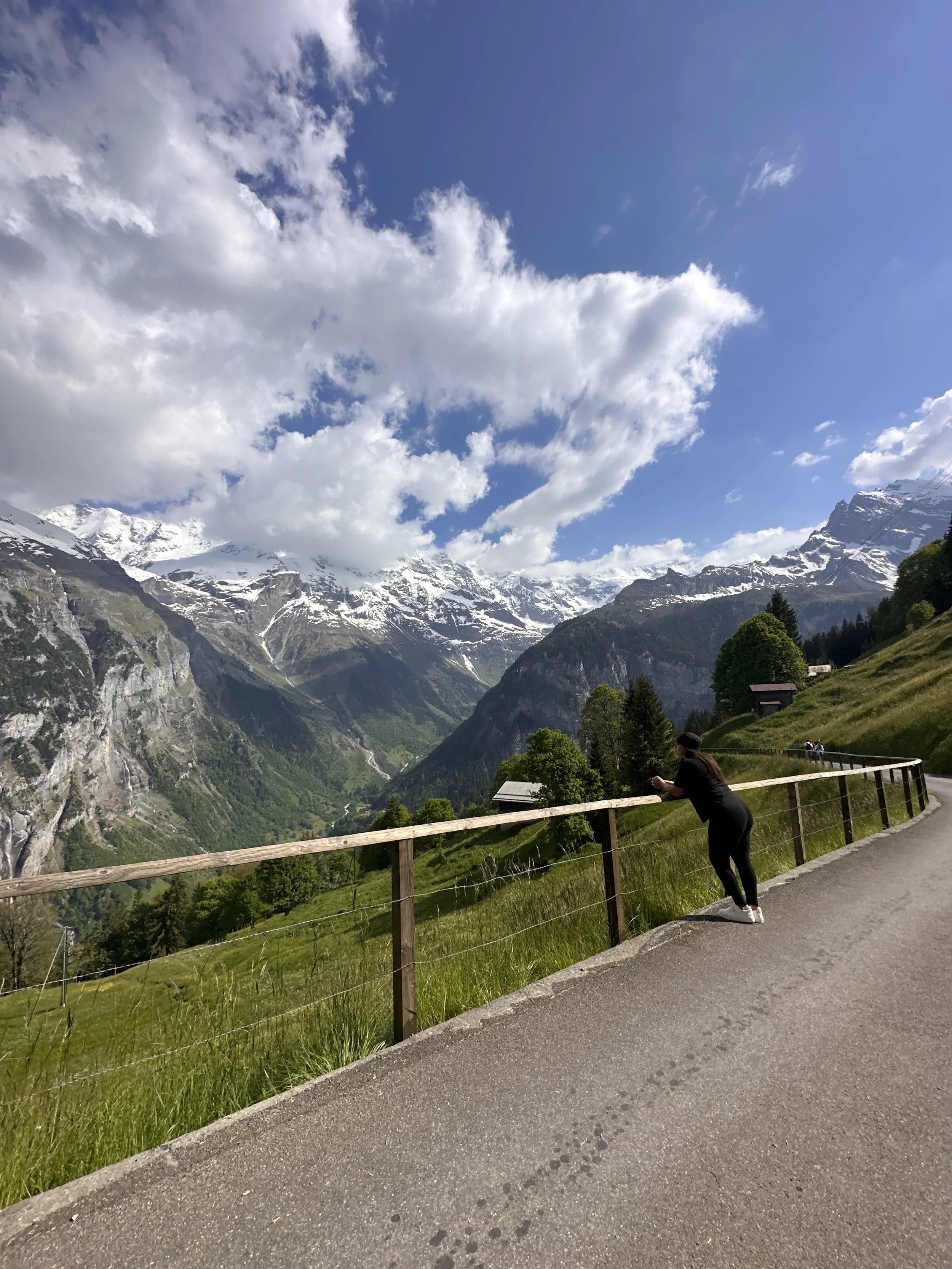
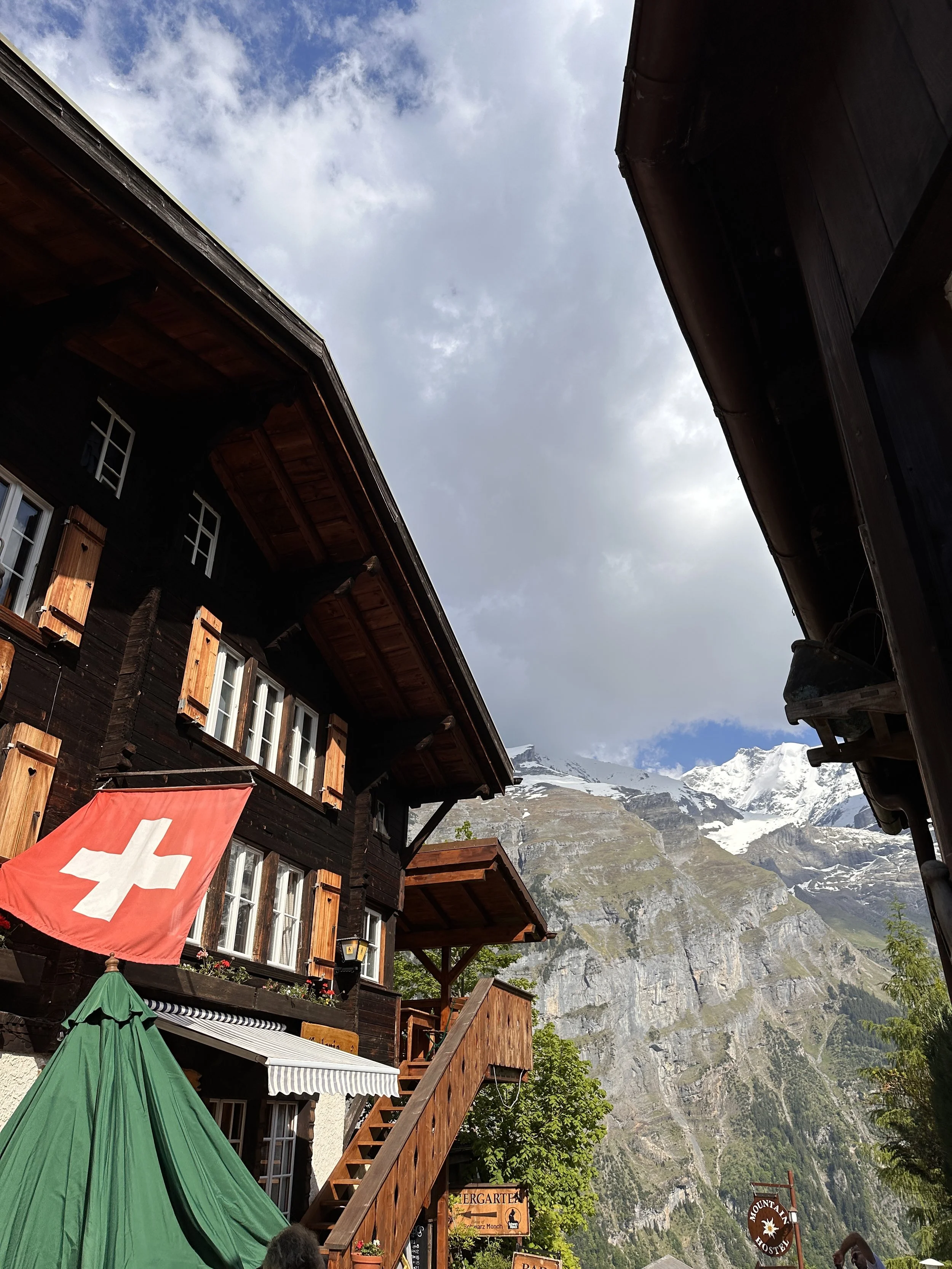
A car-free village perched on a cliff ledge above the Lauterbrunnen Valley with views of the Eiger, Mönch, and Jungfrau directly in front of it. No roads, no cars, just chalets, cowbells, and one of the most quietly beautiful settings in Switzerland.
Getting there is part of the experience. A gondola from Grütschalp followed by a 2.7 mile hike along the cliff edge, or a cable car from Stechelberg directly up. Either way the arrival feels slightly unreal.
Eat at Restaurant Stägerstübli while you are here. A genuinely authentic local restaurant in the middle of a village that sees a lot of tourists and somehow still feels like it belongs to the people who live there. More on that in the Where to Eat section.
Schilthorn and the Birg Thrill Walk
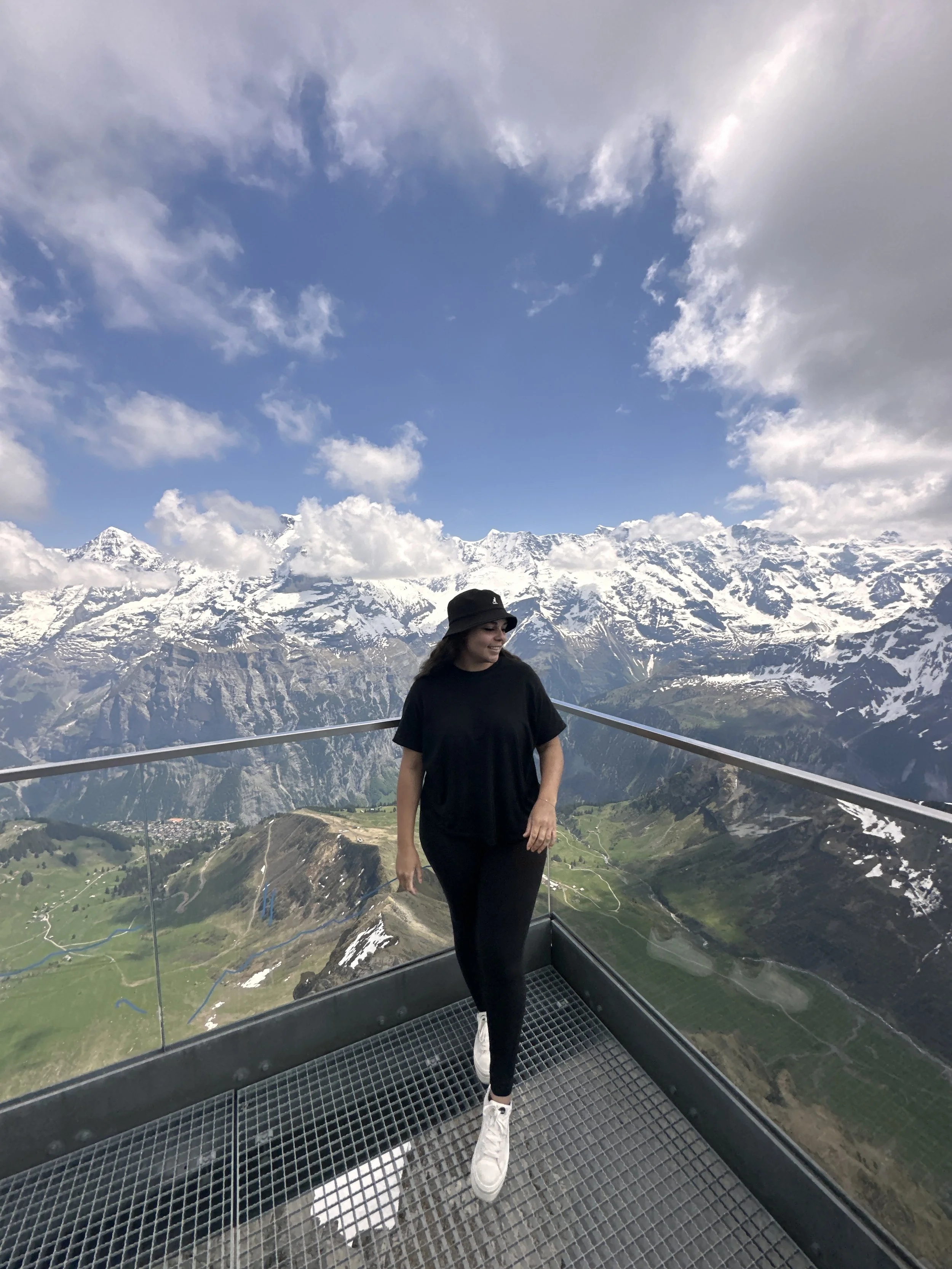
Schilthorn is one of the highest peaks in the area at just over 2,900 meters, with 360 degree views across the Alps including the Eiger, Mönch, and Jungfrau. On a clear day the panorama stretches further than you can make sense of.
On the way up, stop at Birg for the Thrill Walk. A platform built into the side of the mountain with sections of glass floor, mesh tunnels, and a wire net walkway suspended high above the valley. It sounds terrifying and it is a little, but the honest truth is that the scenery surrounding you is so overwhelming that the glass floor becomes almost a secondary concern. There is simply too much to look at.
Trümmelbach Falls
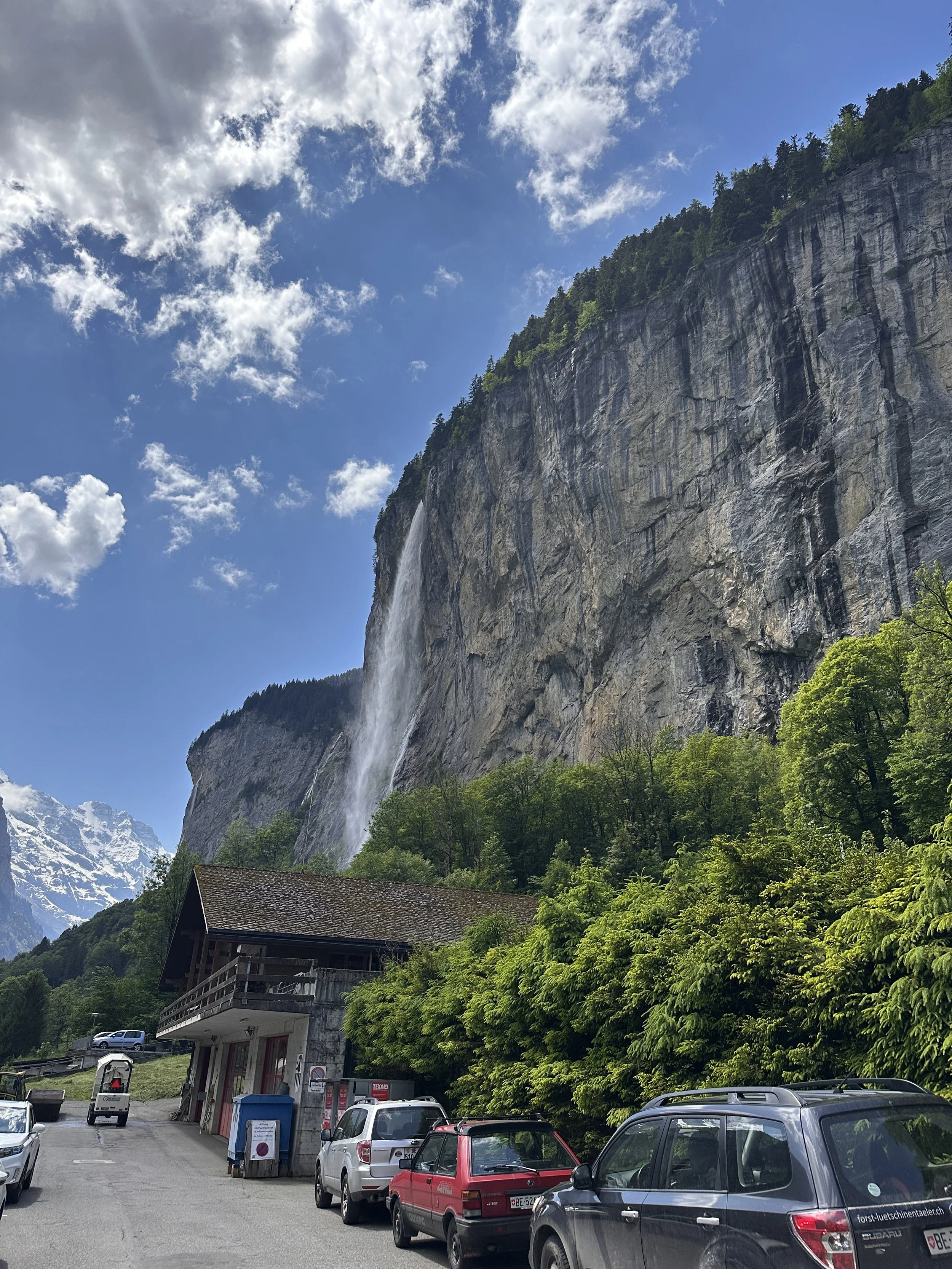
Ten glacier waterfalls carved inside a cave in the side of the mountain, accessible by a tunnel lift. The sound reaches you before you see them. Then you round a corner and the scale of water moving through solid rock at that speed becomes difficult to fully absorb.
Most people walk past the entrance on their way back through the valley. Do not. It is one of the more genuinely surprising things in the whole Interlaken area and takes about 45 minutes.
Jungfraujoch
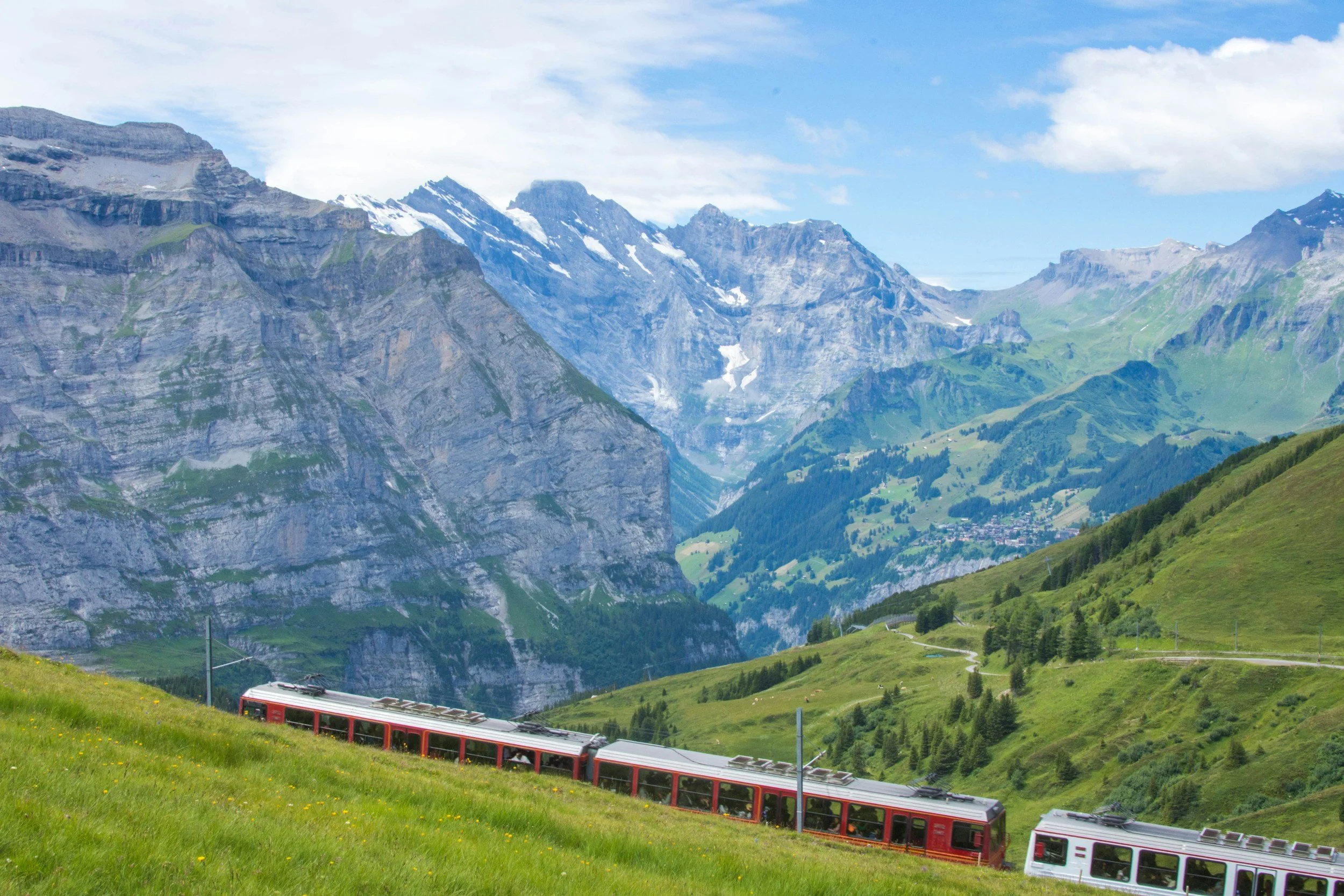
This one is not in the two day itinerary and that is intentional. It deserves its own day and its own level of preparation, which is exactly why I mention it in the intro as the reason to stay longer if you can.
The Jungfraujoch sits at 3,454 meters, making it the highest railway station in Europe, and getting there is an experience before you even arrive. A series of trains from Interlaken through Grindelwald or Lauterbrunnen, climbing through the mountain itself via a tunnel carved through the Eiger, until you emerge into a world of glaciers, snow, and views that stretch into three countries on a clear day.
At the top you get the Aletsch Glacier, the longest in the Alps, the Sphinx Observatory with its 360 degree panorama, an ice palace carved inside the glacier itself, and the kind of altitude that makes you move slightly slower than usual and appreciate it more for it.
It is not a cheap day. The train ticket is one of the more significant expenses in Switzerland and the weather can close the views entirely, so check the forecast before you book. But on a clear day it is one of the most extraordinary things you can do in the country. If you have a third day in Interlaken, this is how to spend it.
Gimmelwald
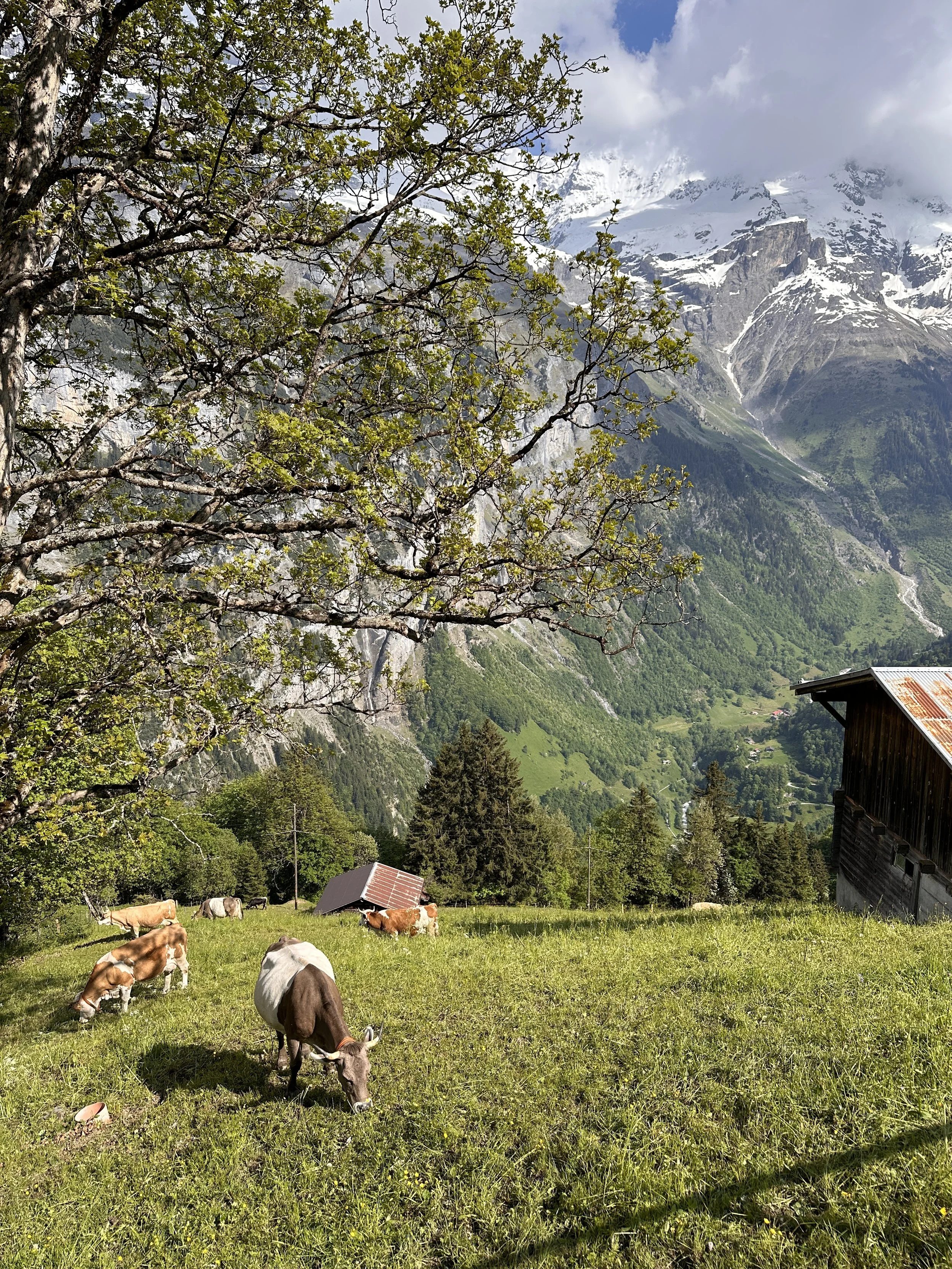
The smallest and quietest of the mountain villages, sitting between Mürren and Stechelberg in a spot that feels completely removed from everything. No tourist infrastructure, no crowds, just a handful of buildings, the sound of cowbells, and wind moving through the grass.
If there is one place in Switzerland that feels like what people imagine when they close their eyes and picture the Alps, this is it. Spend time here without rushing. The silence is the point.
Kayaking on Lake Thun
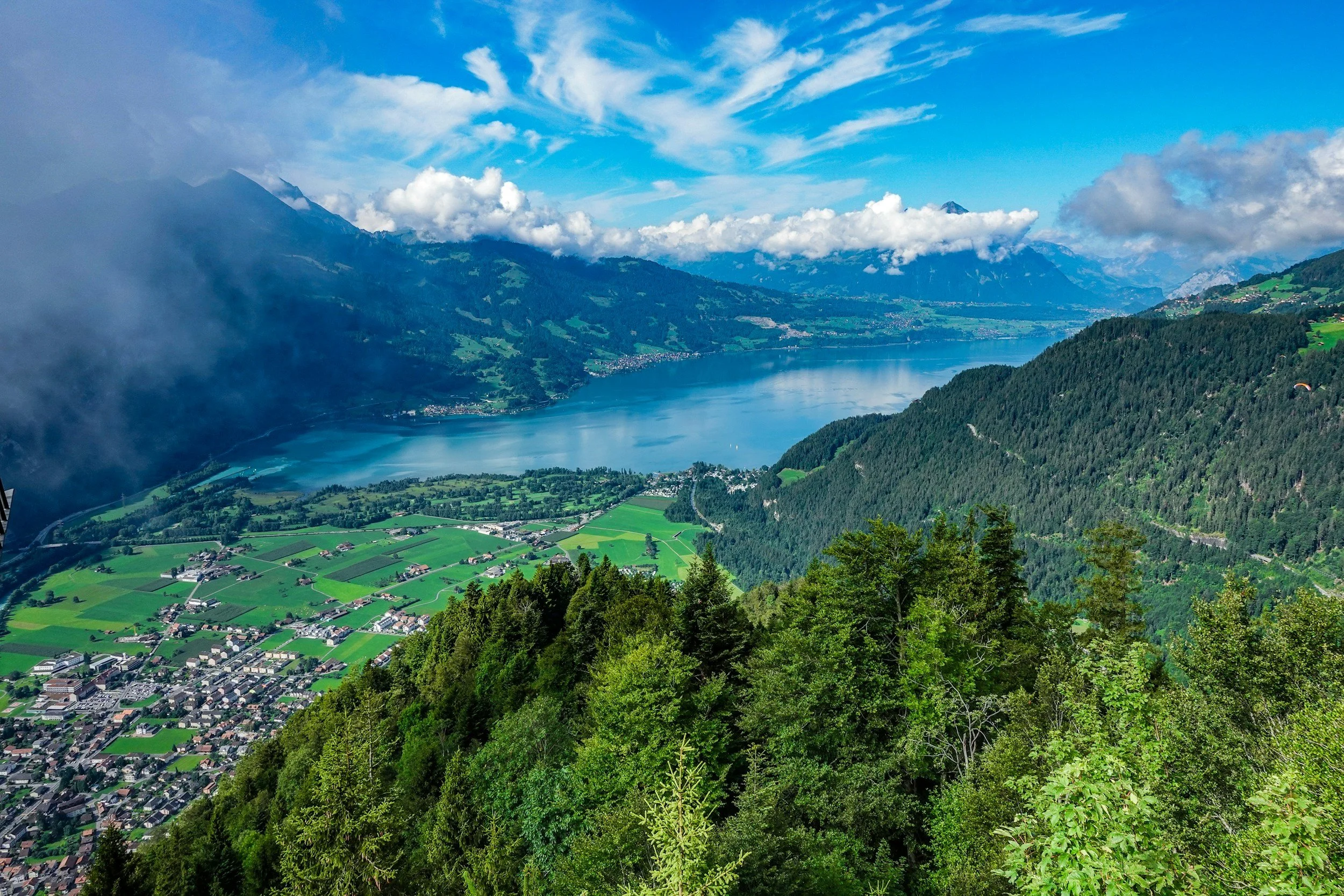
A short funicular ride from Interlaken up to one of the best viewpoints in the area. From the top you can see both Lake Thun and Lake Brienz simultaneously with the town of Interlaken sitting between them and the Alps stretching out behind. It is the view that makes the geography of the whole area suddenly make sense.
The funicular runs regularly and the whole trip takes about two hours including time at the top. Worth doing on day one while you still have energy and daylight.
Harder Kulm
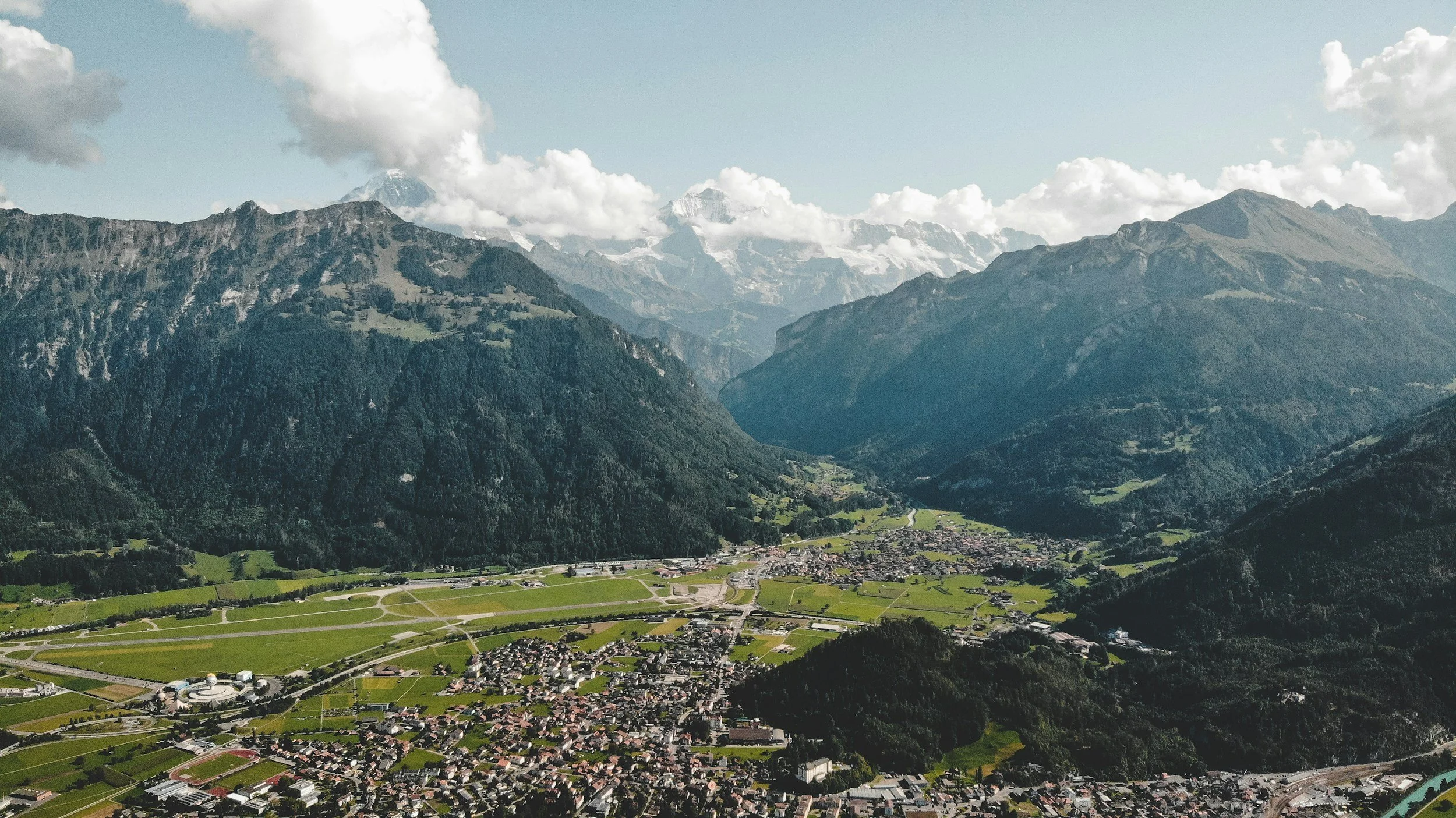
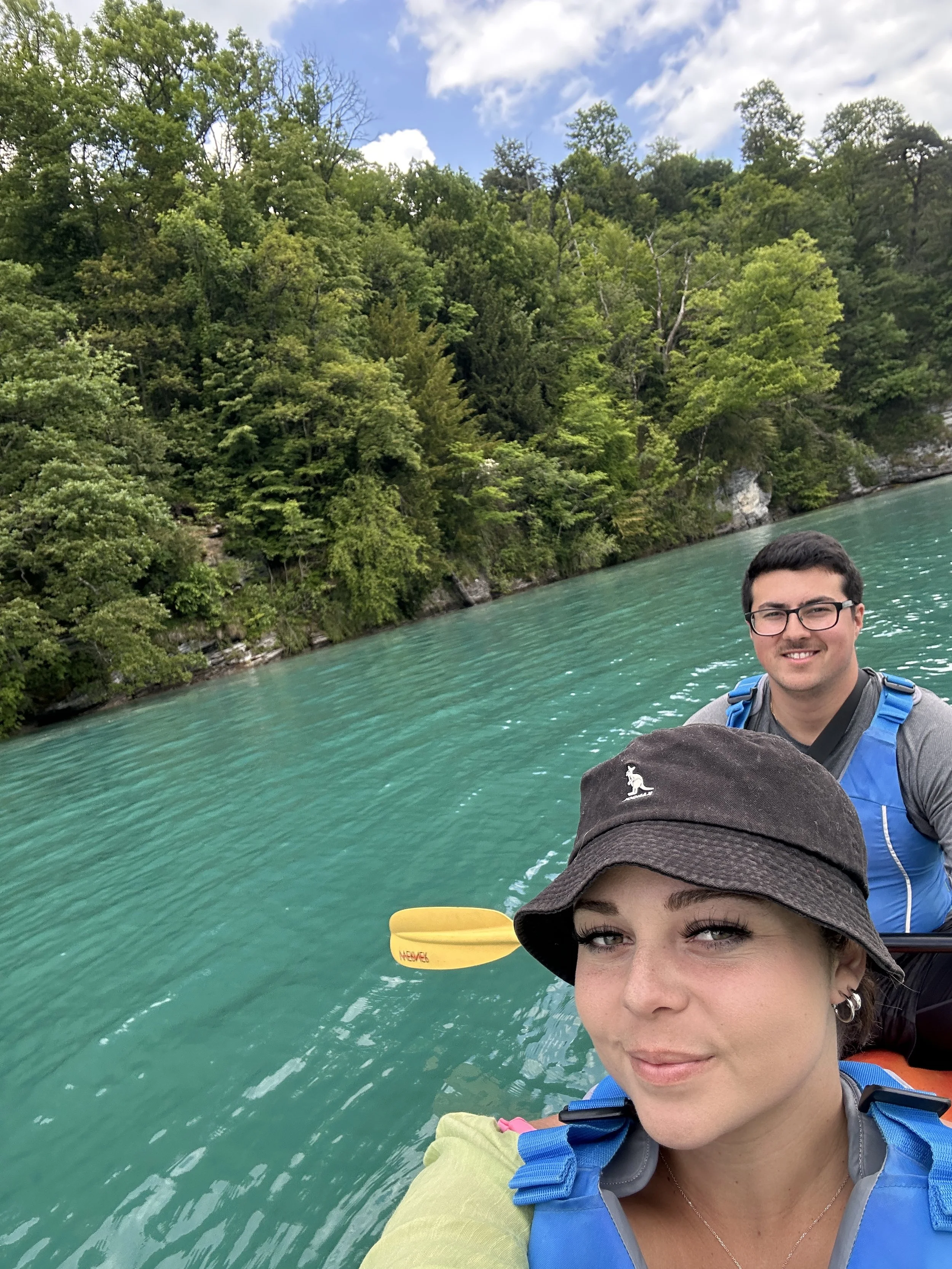
The color of Lake Thun is something that photographs do not fully prepare you for. A turquoise that does not look like it belongs in nature, surrounded by mountains on every side, completely still on a calm morning. Kayaking on it rather than just looking at it from the shore changes the experience entirely. You are inside the landscape rather than looking at it from the edge.
Go in the morning before the day heats up and the lake gets busier. It is one of those activities that sounds like a nice addition to the trip and ends up being one of the things you talk about most.
Lake Brienz
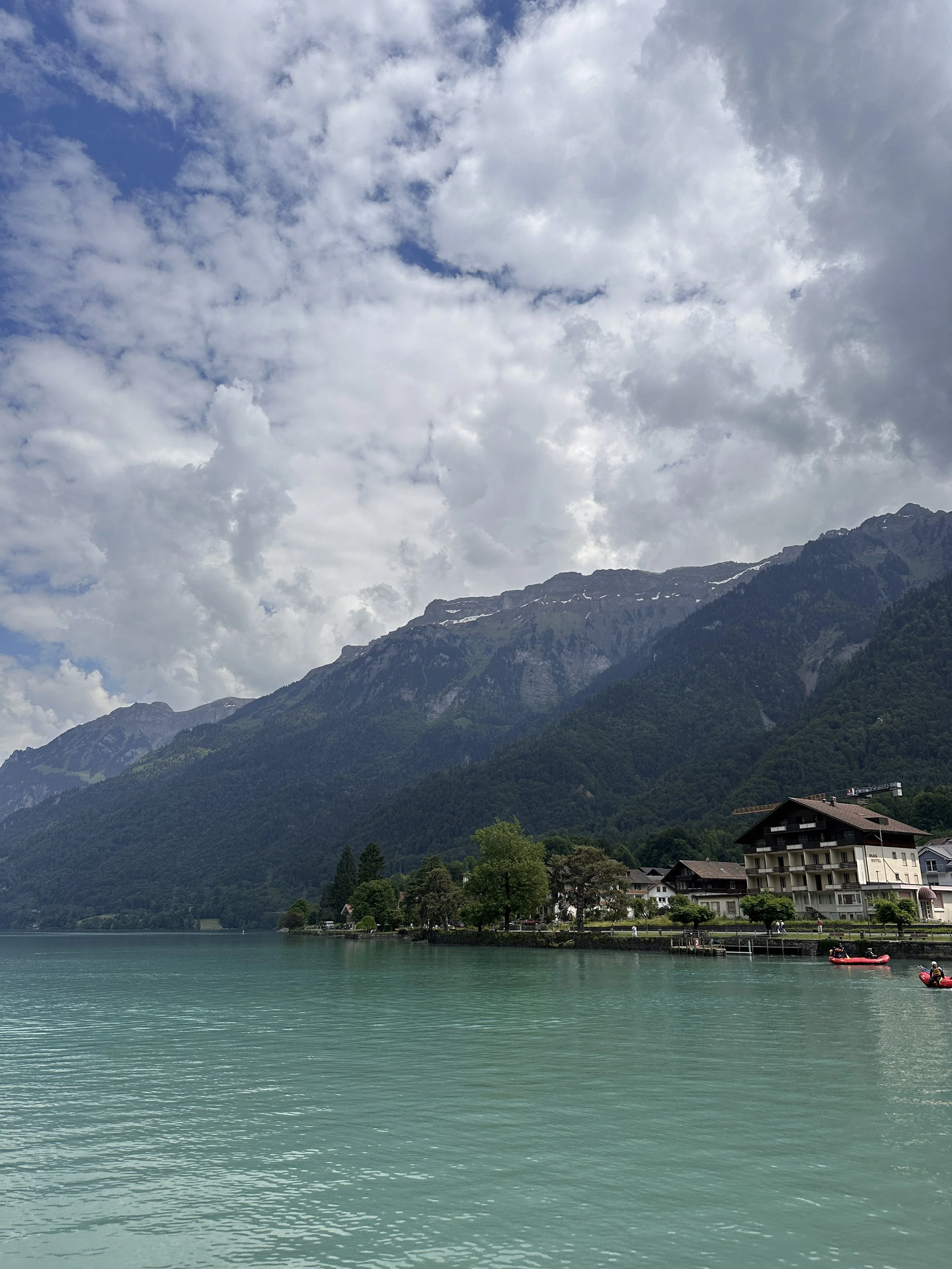
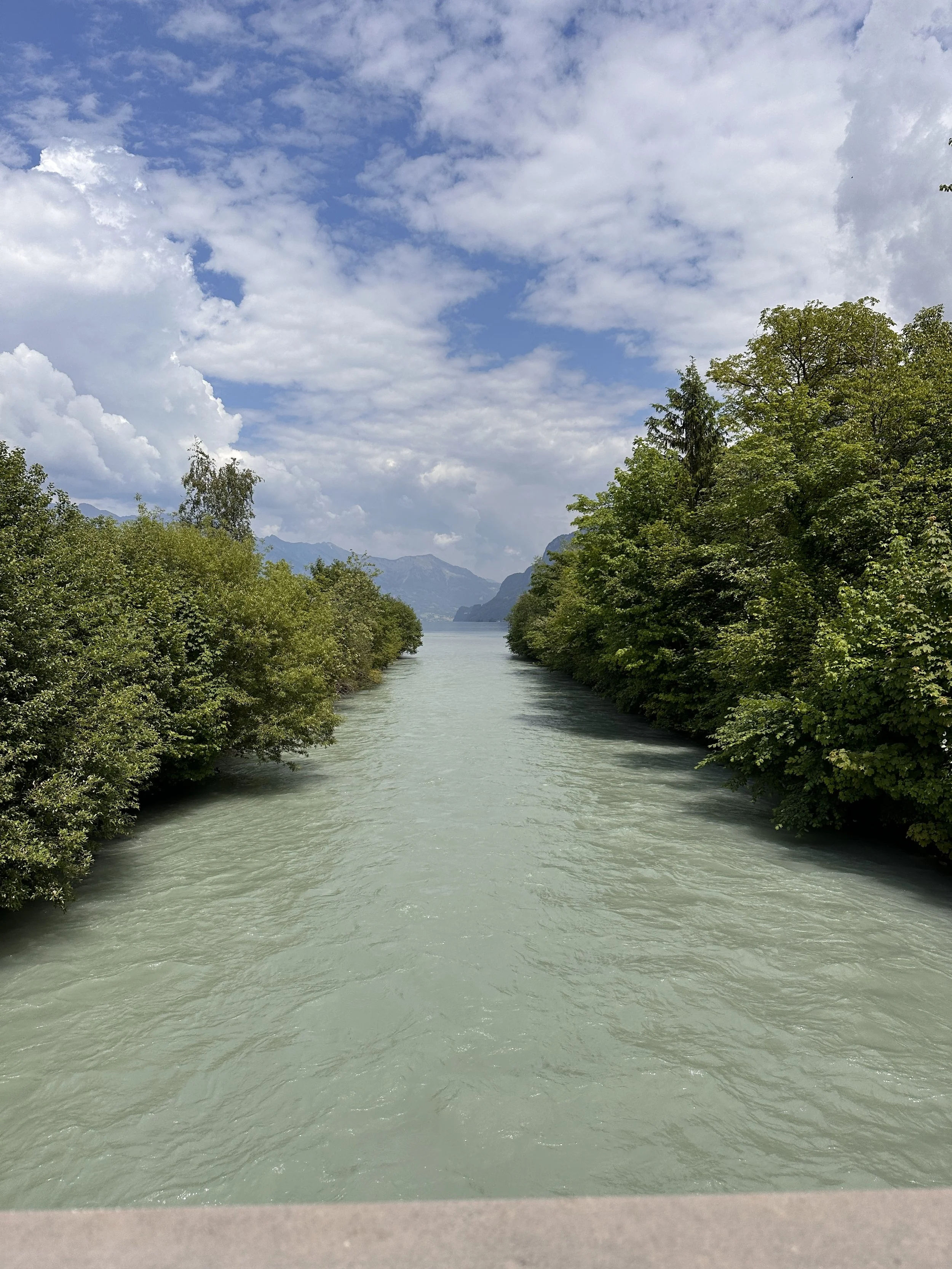
The less talked about of the two Interlaken lakes and in some ways the more dramatic one. Where Lake Thun is wide and open with a turquoise that feels almost tropical, Lake Brienz is narrower, deeper, and an almost unreal shade of blue green surrounded by steep forested mountains that drop directly into the water.
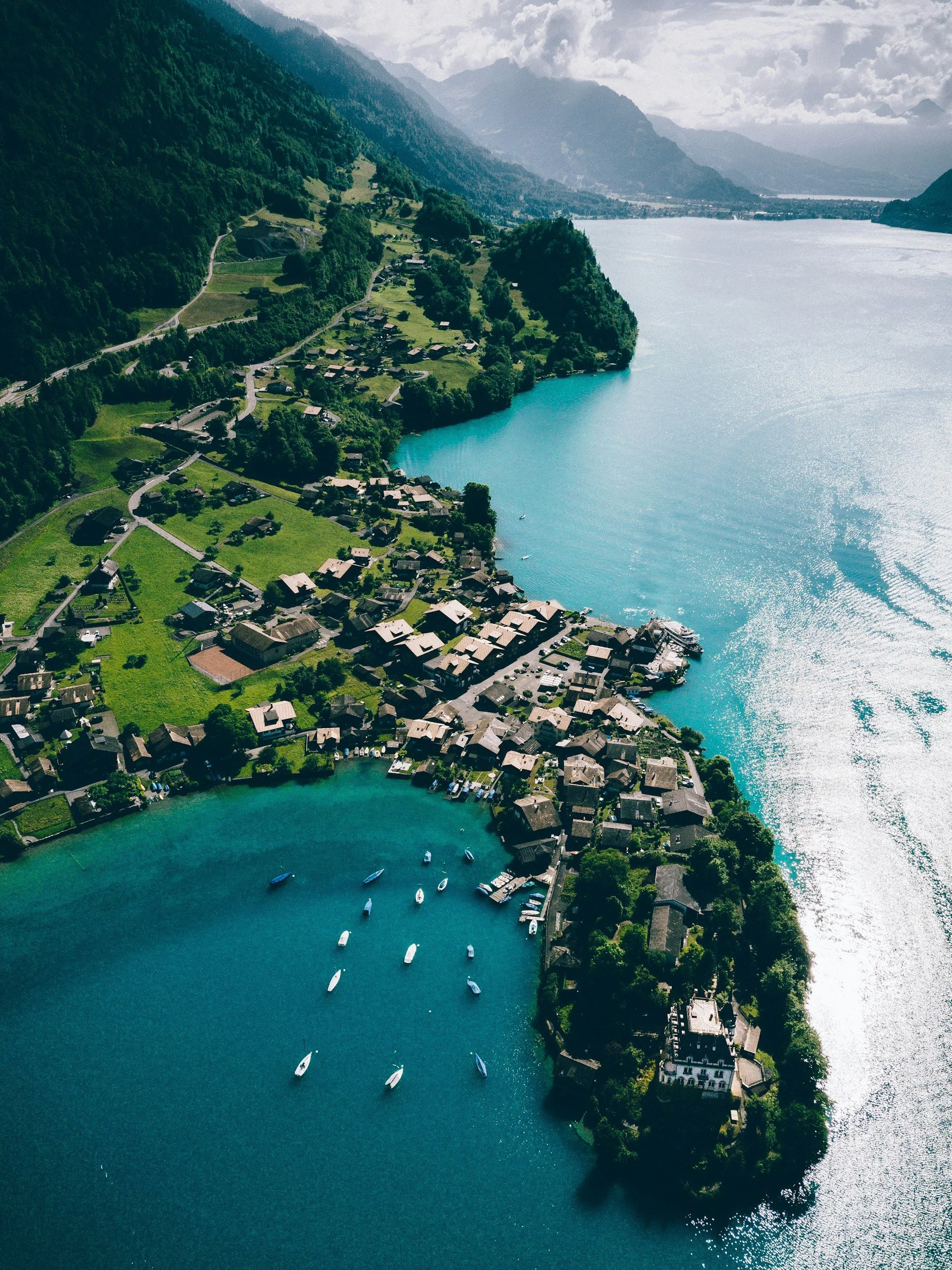
The village of Iseltwald on the southern shore is worth making the trip for on its own. A tiny lakeside village that became unexpectedly famous after appearing in a Korean drama, it sits right at the water's edge with a floating jetty and the mountains rising directly behind it. Quiet, genuinely beautiful, and a completely different pace from Interlaken town.
The Brienz Rothorn, a cogwheel railway that climbs from the town of Brienz on the eastern end of the lake, is worth knowing about if you want a mountain experience that is significantly less crowded than anything in the Lauterbrunnen valley. A slower, quieter alternative that rewards the people who seek it out.
Where to Stay Your First Time in Interlaken
For a first visit, staying in Interlaken town itself makes the most sense. It puts you within easy reach of the train station for day trips into the valley, close to the lakes for morning activities, and right in the middle of everything the town has to offer.
Interlaken has an interesting vibe that catches a lot of first timers off guard. It feels less like a sleepy alpine town and more like a college town that happens to be surrounded by the most dramatic mountain scenery in Europe. Energetic, young, full of outdoor activity operators and a good concentration of restaurants and shops all within easy walking distance. It is a good base precisely because it does not take itself too seriously.
Central Interlaken sits between the two lakes and is where most of the restaurants, shops, and activity operators are based. Everything is walkable and the train station for valley day trips is a short walk away.
Near Interlaken Ost is the slightly more practical option, closer to the train connections toward Lauterbrunnen and the mountain villages. A good choice if your trip is heavily focused on the mountain day.
Know the Neighborhoods
Hotel Metropole Swiss Quality
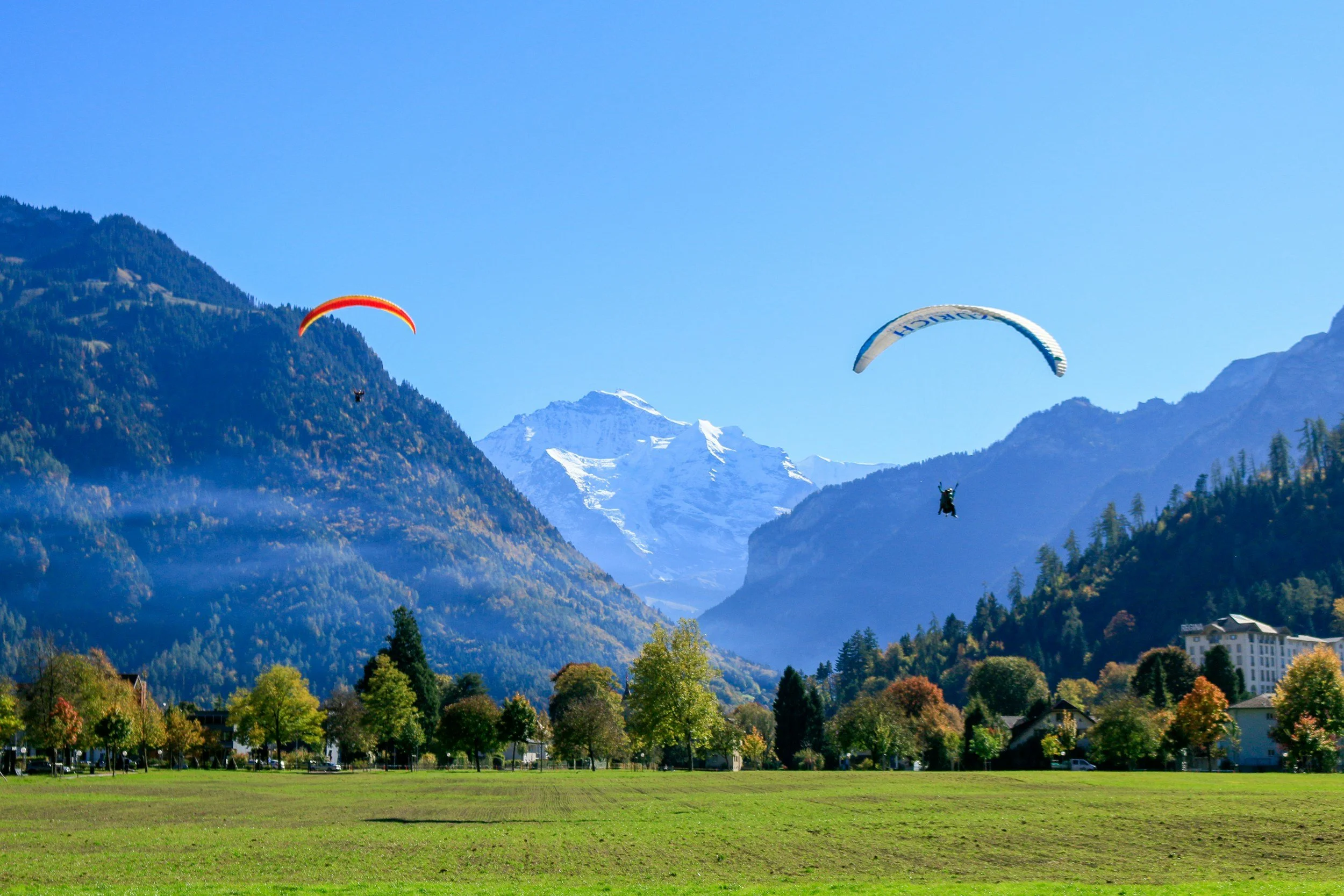
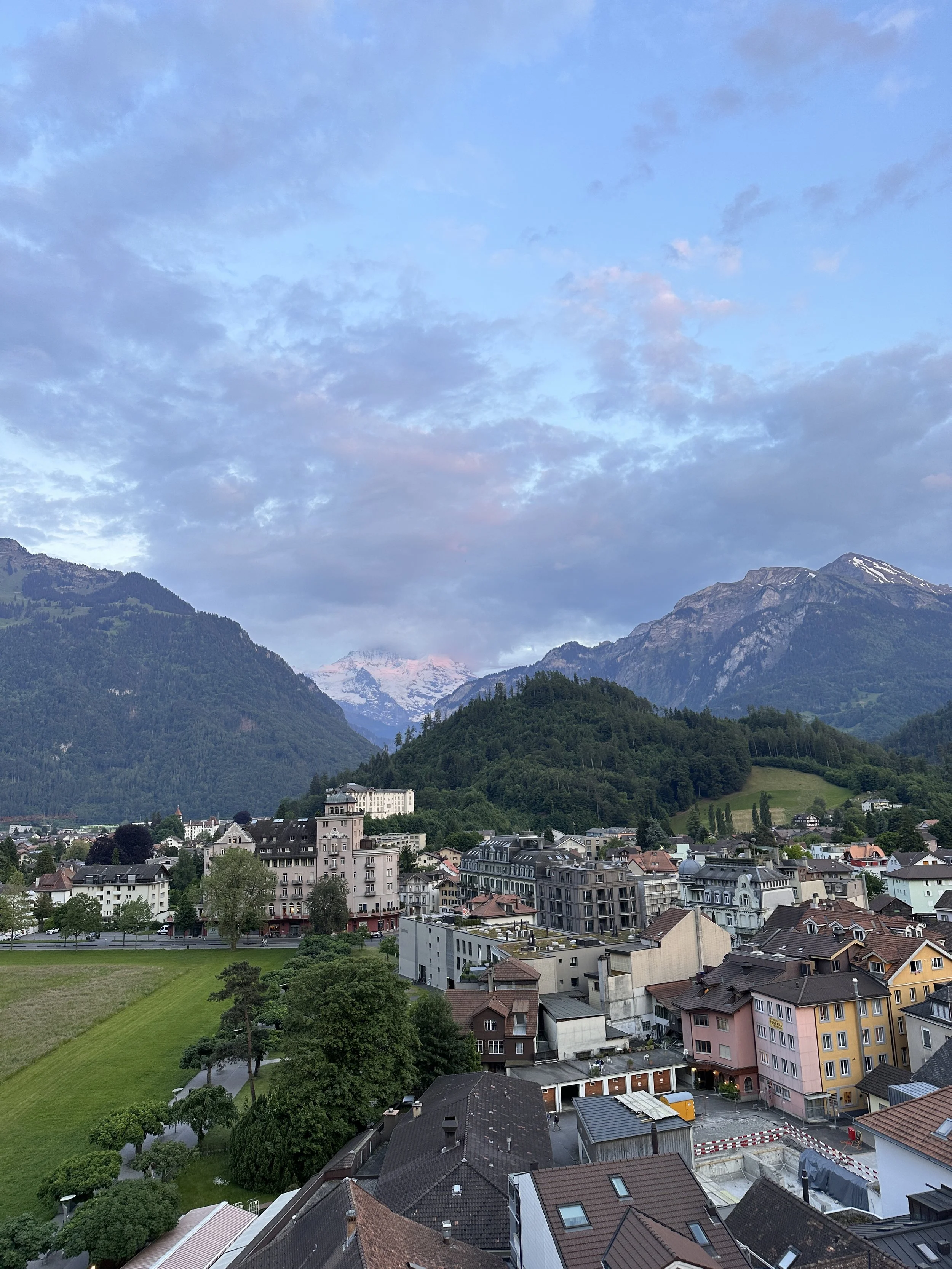
Hotel Metropole Swiss Quality is where we stayed and it was one of the highlights of the entire Switzerland trip. The hotel is the tallest building in central Interlaken and 84 of its 96 rooms face the Jungfrau directly. The view is genuinely unreal, one of those hotel room moments where you stand at the window longer than you planned to and keep coming back to it throughout the day. The location is equally good, right on the Höhematte, the large open field in the center of town where paragliders land after coming off the mountains. The hotel is also steps from shops, restaurants, and coffee. Highly recommend.
Victoria Jungfrau Grand Hotel
Victoria Jungfrau Grand Hotel is the classic Interlaken splurge. A grand 19th century property with direct views of the Jungfrau and one of the most iconic hotel facades in Switzerland. Worth it if the budget allows.
Hotel du Lac
Hotel du Lac is a quieter, more residential option on the edge of Lake Brienz with good views and a calmer atmosphere than the center of town.
Hotel Suggestions
Where to Eat & Drink on Your First Trip to Interlaken
In Interlaken Town
Restaurant Laterne is the most consistently recommended spot in town for traditional Swiss cooking. Cozy, rustic, fondue and rösti done properly, and a room that feels like it belongs to the neighborhood rather than the tourist strip. A solid choice for dinner on either night.
Grand Café Restaurant Schuh has been open since 1818 and sits on the main Höheweg with mountain views from the terrace. The setting is slightly more polished than Laterne and the menu covers Swiss classics well. Good for a longer, more relaxed dinner with outdoor seating in summer.
Hüsi Bierhaus is the livelier option, a buzzy beer hall style restaurant with generous portions, good schnitzels, and the kind of atmosphere that fits the college town energy of Interlaken perfectly. Less refined than the others but genuinely fun, especially after a long day on the mountain.
One practical note worth knowing: Interlaken skews toward the tourist end of Swiss pricing. The Tagesmenü, the daily lunch special offered by most restaurants between noon and 2pm, is usually the best value you will find at a sit-down restaurant. A starter, main course, and sometimes a drink for a set price. Worth asking about wherever you end up.
For a Drink
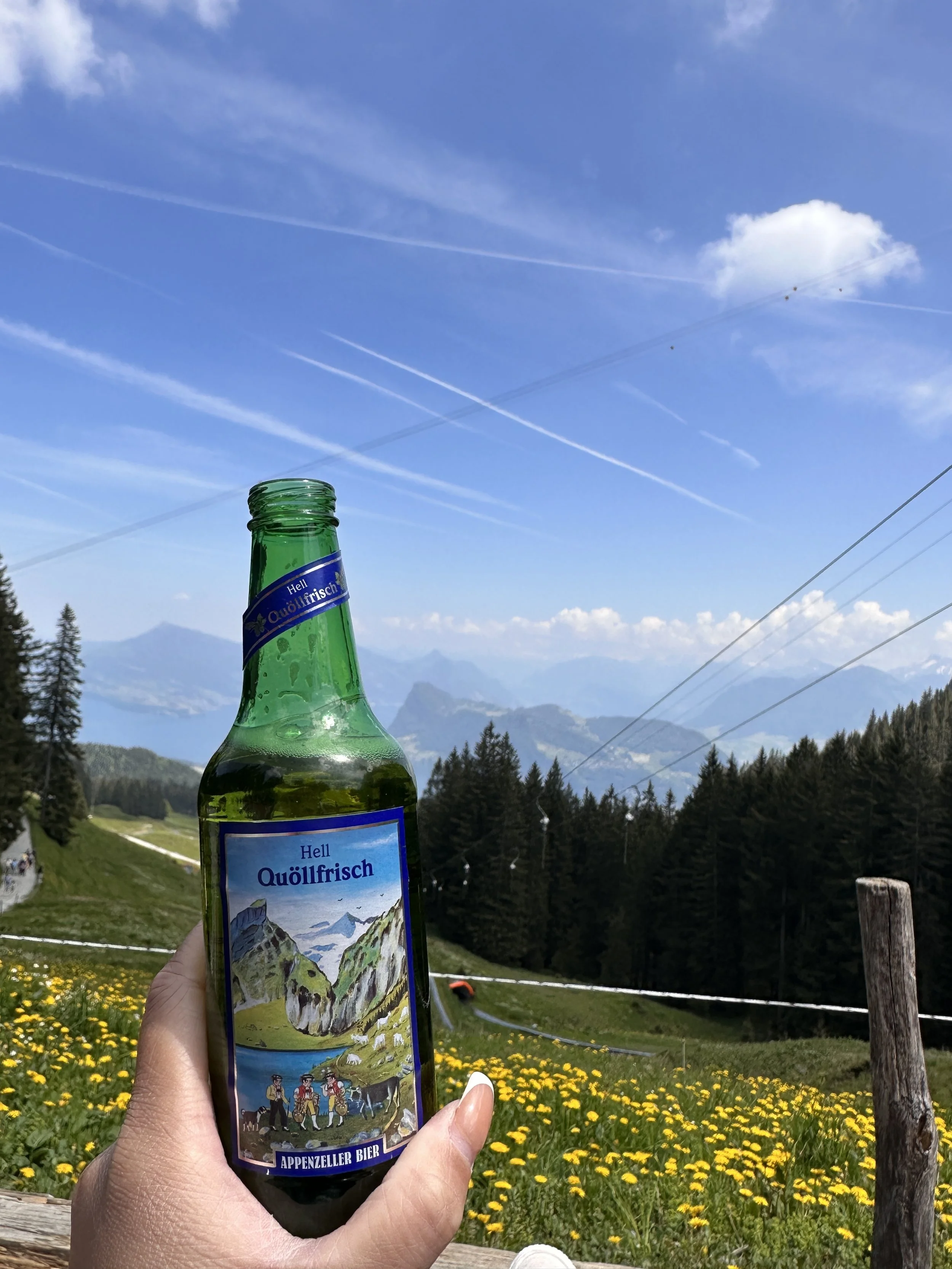
Rugenbräu is the local brewery based just south of town and its draft lager is on tap at most establishments in Interlaken. It is a solid, uncomplicated beer that costs less than imported alternatives and tastes better cold on a terrace in summer. Order it at least once.
Coffee and Pastries
Start your mornings at one of the small bakeries or cafés near the town center. Interlaken does a good breakfast and the morning light on the mountains while you sit outside with a coffee is worth building time into the day for.
Restaurant Stägerstübli, Mürren
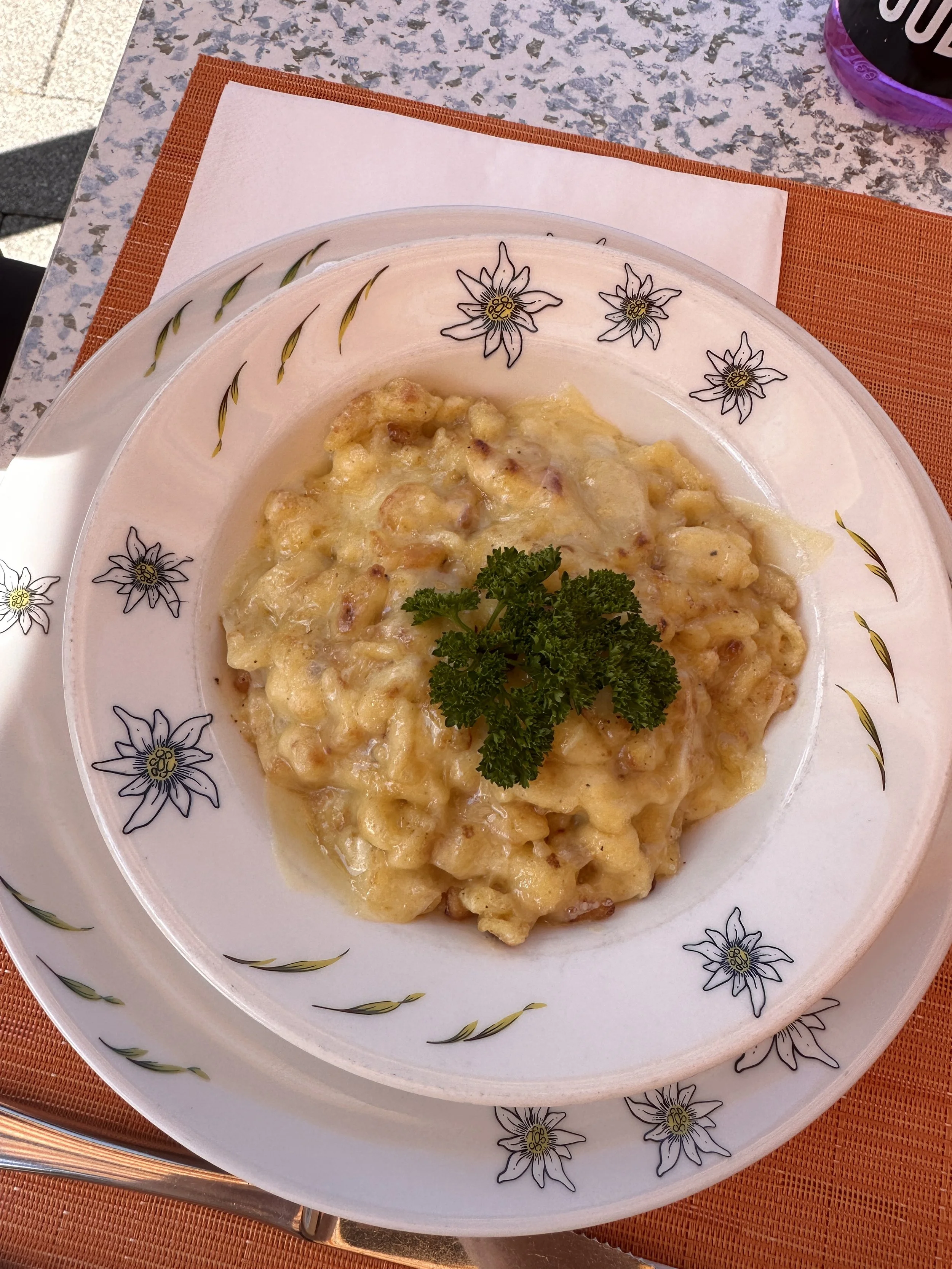
This is the one to plan around. A genuinely authentic restaurant sitting in the middle of a car-free mountain village, run by the same family for generations and visited by locals as much as tourists. The menu is hearty Swiss mountain cooking. Rösti, fondue, Älplermagronen, meat dishes that earn their place on the menu. We had the Spätzle, a rich red soup, and a savory pie style dish that turned out to be one of the better meals of the whole trip. The room is warm, the portions are generous, and eating here after a morning of hiking with the Eiger sitting outside the window is one of those meals you remember not just for what you ate but for everything surrounding it.
Make a reservation. The restaurant is small, it fills up, and you do not want to arrive after a long day on the mountain and find yourself without a table.
What to Try at Least Once in Interlaken
Älplermagronen if you want to eat something that belongs to this landscape. Pasta, potatoes, cream, cheese, caramelized onions, and applesauce on the side. It was originally made by Alpine herdsmen who carried dry pasta up the mountains because it was light and preserved well, then combined it with the cheese and cream they made themselves. That origin story makes it taste better. Found on menus across the valley villages including at Stägerstübli in Mürren, and one of those dishes that makes complete sense after a long day of hiking at altitude.
A meal at Restaurant Stägerstübli in Mürren. Already covered above but worth saying twice.
And at least one coffee or drink outside somewhere with the Jungfrau in front of you. Not a specific place. Just a specific instruction.
What to Pack for Your First Trip to Interlaken
Interlaken is a hiking destination with a town attached, which means packing right matters more here than anywhere else in Switzerland. You will go from lake level to over 2,900 meters on the same day and the gap in temperature and conditions between those two points is significant.
Weather & Seasons (Quick Reality Check)
Late spring to summer (May to September): The best window for everything on this page. Gondolas running, trails open, lakes warm enough for kayaking, and long days that give you time to do everything without rushing.
Fall (October to November): Cooler and quieter. Some higher altitude trails and facilities start closing from late October. Still beautiful but with fewer options.
Winter (December to February): Ski season in the surrounding resorts but most of what is described on this page is not accessible. A completely different trip.
Early spring (March to April): Unpredictable. Some trails are still snowbound at altitude and gondola schedules are reduced.
Comfortable hiking shoes or trail runners.
Warm layer and wind resistant jacket.
Layers that work from lake level to alpine summit in the same day.
Small daypack.
Sunglasses and sunscreen, the altitude makes the sun stronger than it feels.
Reusable water bottle.
Compact camera or fully charged phone, you will take more photos here than anywhere else in Switzerland.
Core Items for Interlaken
Day 2 takes you from the valley floor to over 2,900 meters and back down through multiple microclimates in a single day. Pack all of the following regardless of what the weather looks like in Interlaken when you wake up.
A proper warm layer, fleece or light puffer at minimum. Wind and water resistant jacket. Layers you can add and remove throughout the day. Comfortable hiking shoes with grip, not sneakers. Wool or moisture wicking socks. Small daypack for water, snacks, and layers.
The Mountain Day Packing Note
Then There Was Gimmelwald
I have tried to find the right way to describe Gimmelwald and I keep coming back to the same thing.
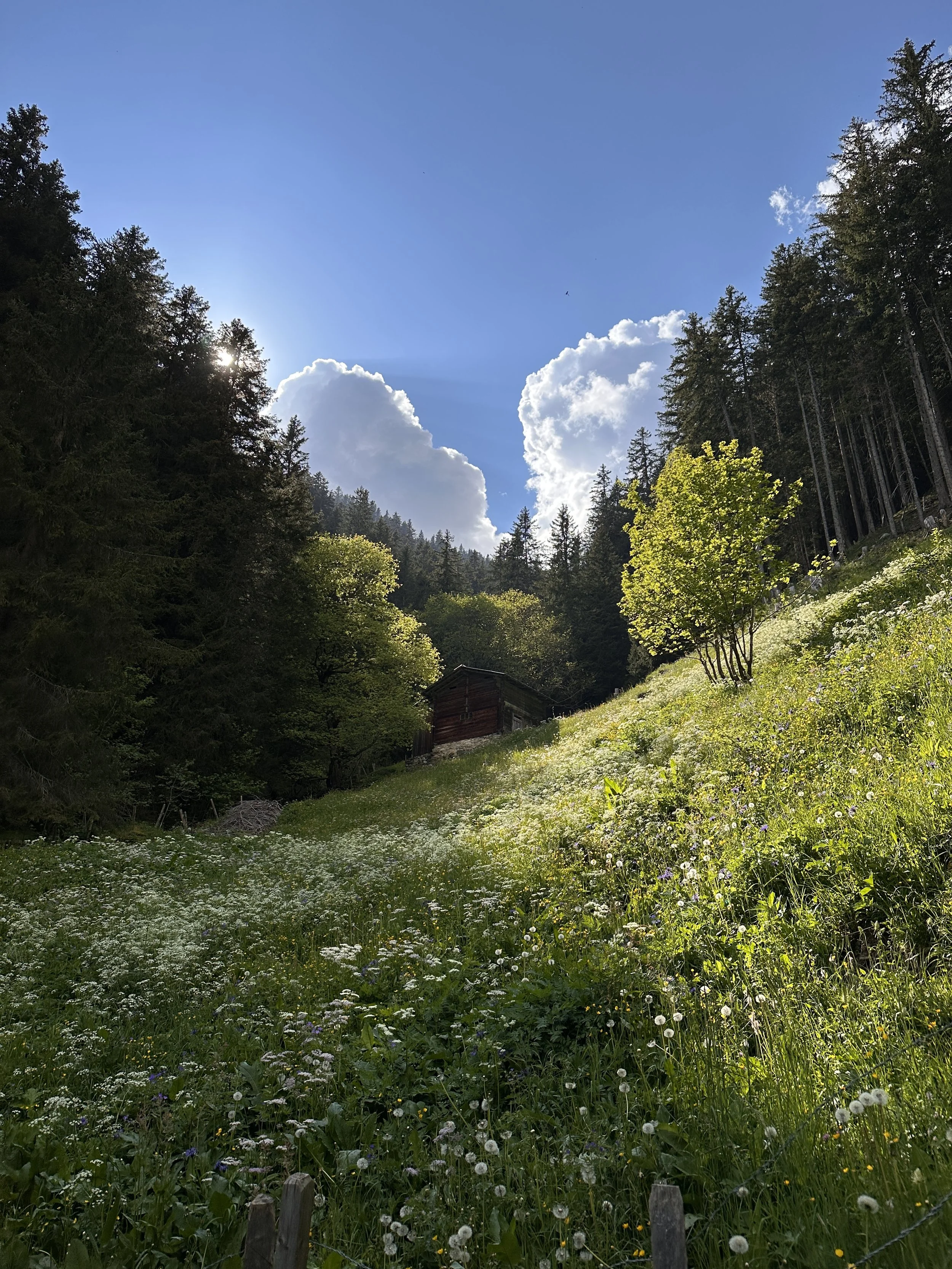
Stillness? Quietness? I still don’t know what to call it. I do know that it doesn’t exist at home or in cities or even in most places you travel to. No traffic, no crowds, no noise that comes from people. Just cowbells somewhere below you, wind moving through the grass, and the Alps sitting there in front of you like they have been there forever and will be there long after you leave.
We had just come from the Birg Thrill Walk and Schilthorn, which were spectacular in a loud, visual, almost overwhelming way. The views were too big to fully process. The glass floor, the wire net walkway, the 360 degree panorama of peaks. All of it was extraordinary.
And then we hiked to Gimmelwald and everything went quiet.
It is a tiny village. A handful of buildings, a few locals going about their day, no cars, no noise, no crowds. Nobody trying to sell you anything or photograph anything or optimize their experience of being there. Just a place existing quietly in one of the most beautiful settings on earth.
If heaven was on earth it was here. That is not hyperbole. That is just what it felt like standing there.
I was not expecting Gimmelwald to be the thing that surprised me most. I thought the views would be the thing. The views were everywhere. Whatever this was, it was only there.
Itinerary for Your First Trip to Interlaken
Interlaken does not ease you in. It shows you everything immediately and then keeps finding ways to show you more.
Two lakes, two days, and somewhere in the middle of it a valley that will change your understanding of what the word beautiful actually means.
Here is how to do it right on your first visit.
If you are coming from Lucerne, the train to Interlaken takes about two hours and there was not a single moment where looking away from the window felt like an option. The landscape keeps changing the entire way. Lakes giving way to valleys, valleys opening into mountains, mountains getting bigger and closer until Interlaken appears between two of them like it was placed there deliberately. Get a window seat on the right side of the train heading toward Interlaken for the best views. It is one of the better train rides in Switzerland, which is saying something.
The Journey There: Train from Lucerne to Interlaken
Day 1 - Interlaken, the Lakes, and Harder Kulm
Arrive at Interlaken Ost, check in, and do not waste time getting outside. The town rewards immediate exploration.
Morning: Kayaking on Lake Thun
Get on the water as early as you can. The color of Lake Thun is something that needs to be seen in person to be believed, a turquoise that does not look like it belongs in nature, sitting between mountains on every side in complete stillness on a calm morning.
Kayaking rather than just walking along the shore changes the experience entirely. You are inside the landscape rather than looking at it from the edge. Rentals are available near the lake and the whole activity takes a few hours depending on how far you go. Go in the morning before the day heats up and the lake gets busier.
Early Afternoon: Harder Kulm
From Interlaken, take the funicular up to Harder Kulm. The ride takes about ten minutes and the viewpoint at the top is one of the best in the area. Both Lake Thun and Lake Brienz are visible simultaneously with Interlaken sitting between them and the Alps stretching out in every direction. It is the view that makes the geography of the whole area suddenly click into place.
Plan about two hours including the ride up, time at the top, and the ride back down. There is a restaurant at the summit if you want lunch with the view.
Afternoon: Interlaken Town
Come back into town and explore on foot. The Höhematte, the large open field in the center of town, is worth spending time at. Paragliders drift down from the mountains and land quietly on the grass throughout the afternoon. Watching that happen while you wander is one of those Interlaken details that does not make it into most travel guides but ends up being one of the things you remember most.
Browse the shops near the town center. Cuckoo clock shops appear throughout Switzerland, from the German speaking regions all the way to Geneva, but buying one here, surrounded by the Alps, feels exactly right even if the tradition technically originates across the border in Germany's Black Forest. Interlaken has several good shops within easy walking distance. Check the size before you commit. Some of them are significantly larger than they look on the shelf.
Evening
Dinner in town. The area around the Höhematte and the main strip has a good concentration of restaurants within easy walking distance. Pick somewhere with outdoor seating if the weather cooperates and end the evening with a walk back through town as the mountains fade into the dark.
Day 2 - Lauterbrunnen, Mürren, Birg, Schilthorn, Gimmelwald, and the Valley
This is the day. Start early, pack your layers, and do not try to rush any of it.
Before You Go: A Note on Transport Passes Check which passes cover which sections of today's route before you leave the hotel. Some legs are covered by the Swiss Travel Pass and some require separate tickets. The Schilthorn gondola in particular requires a paid ticket regardless of what pass you have. Knowing this in advance saves time and avoids surprises at the ticket window.
Getting to Lauterbrunnen
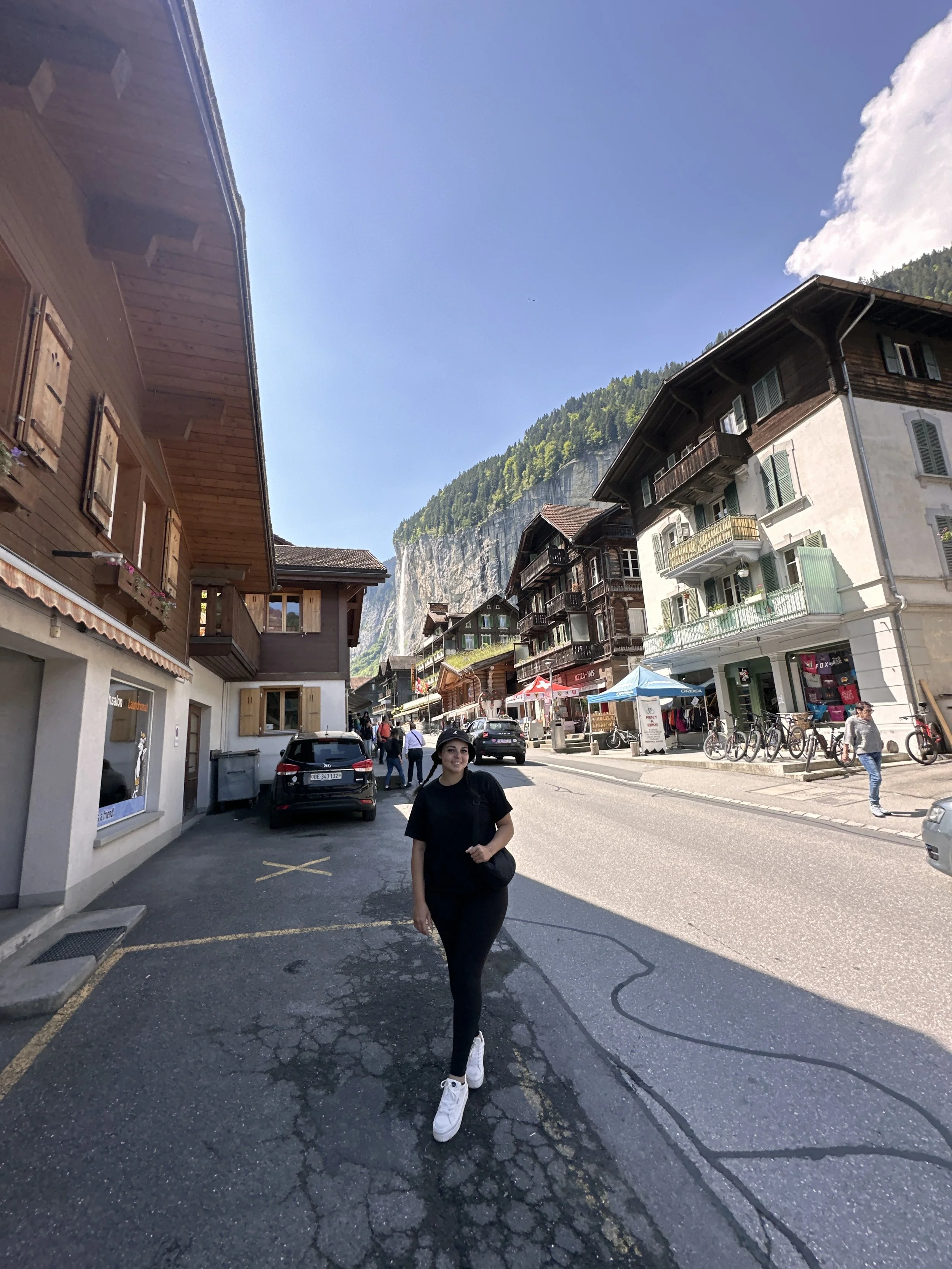
Take the train from Interlaken Ost to Lauterbrunnen. It takes about 20 minutes and the journey through the valley as you approach is already worth the ticket. Arrive and take a few minutes to stand in the valley before you do anything else. The cliffs rise directly on both sides, waterfalls drop from the edges in every direction, and Staubbachfall falls nearly 300 meters from the cliff face directly above the village. It is a lot to take in all at once.
The Gondola to Grütschalp and the Hike to Mürren
From Lauterbrunnen, take the gondola across to Grütschalp. From there, hike 2.7 miles along the cliff edge to Mürren. The path runs along the top of the valley wall with views down into Lauterbrunnen and across to the peaks the entire way. It is not a difficult hike but it is one of the most scenic walks in Switzerland. Take your time.
Mürren arrives like a reward. A car-free village on a cliff ledge with the Eiger, Mönch, and Jungfrau sitting directly in front of it. No roads, no traffic, just chalets and the sound of the mountains.
Lunch at Restaurant Stägerstübli. Make a reservation in advance if you can. The restaurant is small, it fills up, and arriving after a long morning hike to find no table is not the way this day should go. Hearty Swiss mountain cooking, generous portions, and one of the best lunches of the trip.
Birg and the Thrill Walk
From Mürren, take the gondola up toward Schilthorn and stop at Birg on the way. The Birg Thrill Walk is a platform built into the side of the mountain with sections of glass floor, mesh walkways, and wire net paths suspended high above the valley. It is genuinely thrilling and slightly surreal, but the honest truth is that the scenery surrounding you is so overwhelming that the glass floor becomes almost secondary. There is simply too much to look at.
Schilthorn Peak
Continue up to Schilthorn at just over 2,900 meters. The 360 degree panorama from the top includes the Eiger, Mönch, and Jungfrau directly in front of you and peaks stretching in every direction as far as you can see. On a clear day it does not feel real.
Spend time here before heading back down. The views change as the light changes and there is no reason to rush off the top of a Swiss mountain.
The Hike to Gimmelwald
From Schilthorn, take the gondola back down to Mürren and hike 1.7 miles to Gimmelwald. This is the part of the day that catches most people off guard.
Gimmelwald is tiny. A handful of buildings, no cars, no tourist infrastructure, no noise. Just a village existing quietly in one of the most beautiful places on earth. The silence here is the kind that does not exist at home. Cowbells somewhere below you, wind through the grass, and nothing else.
Stay longer than you think you need to. The quiet is the point.
Trümmelbach Falls and the Valley Hike Back
From Gimmelwald, take the gondola down to Stechelberg and hike 2 miles back through the Lauterbrunnen Valley to Lauterbrunnen. The path runs along the valley floor with the cliffs and waterfalls above you on both sides.
Stop at Trümmelbach Falls on the way back. Ten glacier waterfalls carved inside the mountain, accessible through a tunnel lift. The sound reaches you before you see them. Even without getting to the very bottom the iconic view from the entrance area is one of those things that looks exactly like the photos and somehow still manages to be better in person. Most people walk past the entrance. Do not.
Evening: Back in Interlaken
Take the train back to Interlaken. Get to the hotel, take a proper break, and then go find dinner somewhere in town.
You will spend most of the evening trying to process what you just saw. That is normal. Interlaken does that.