
Your First Time in Lucerne, Switzerland
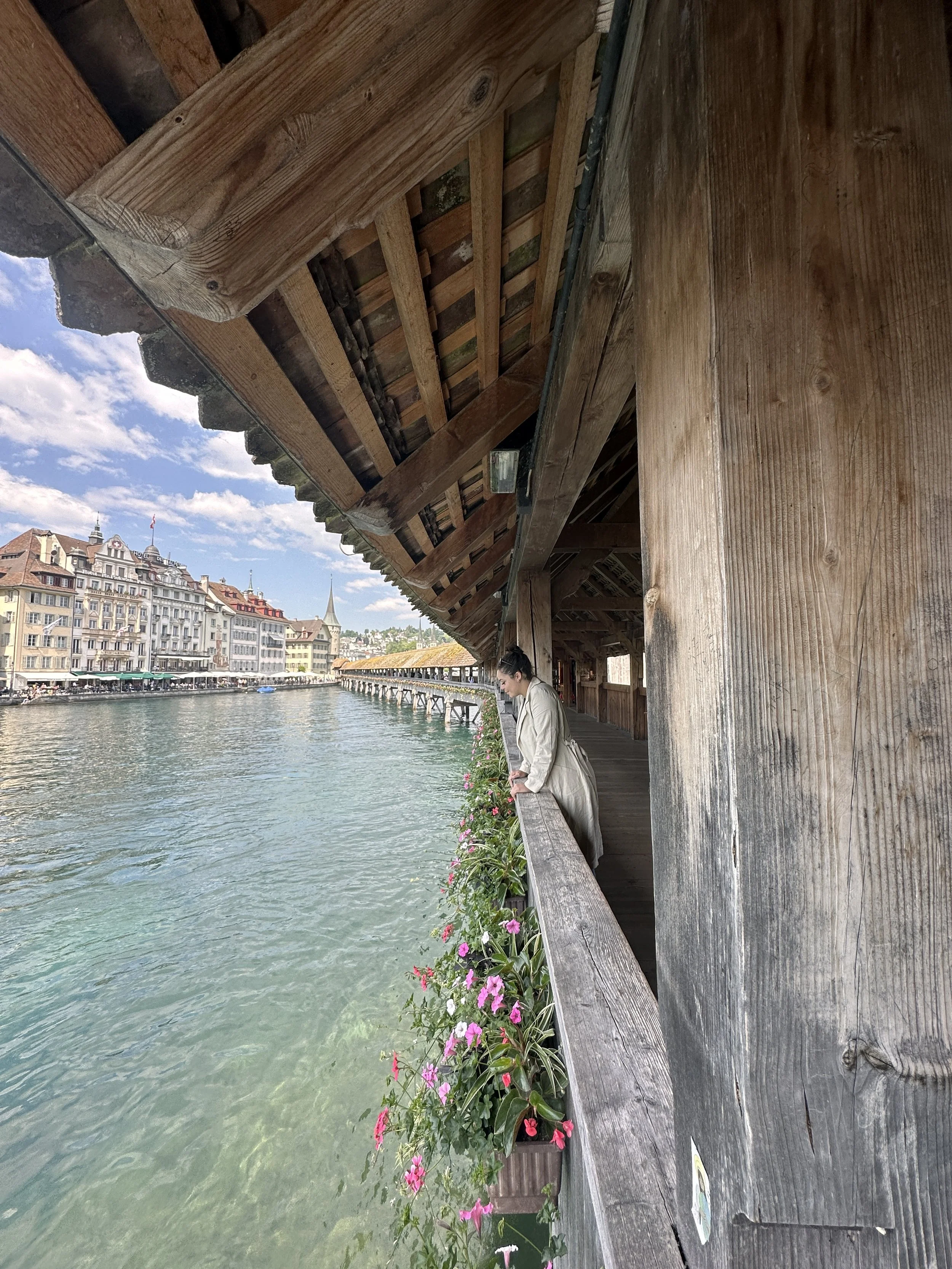
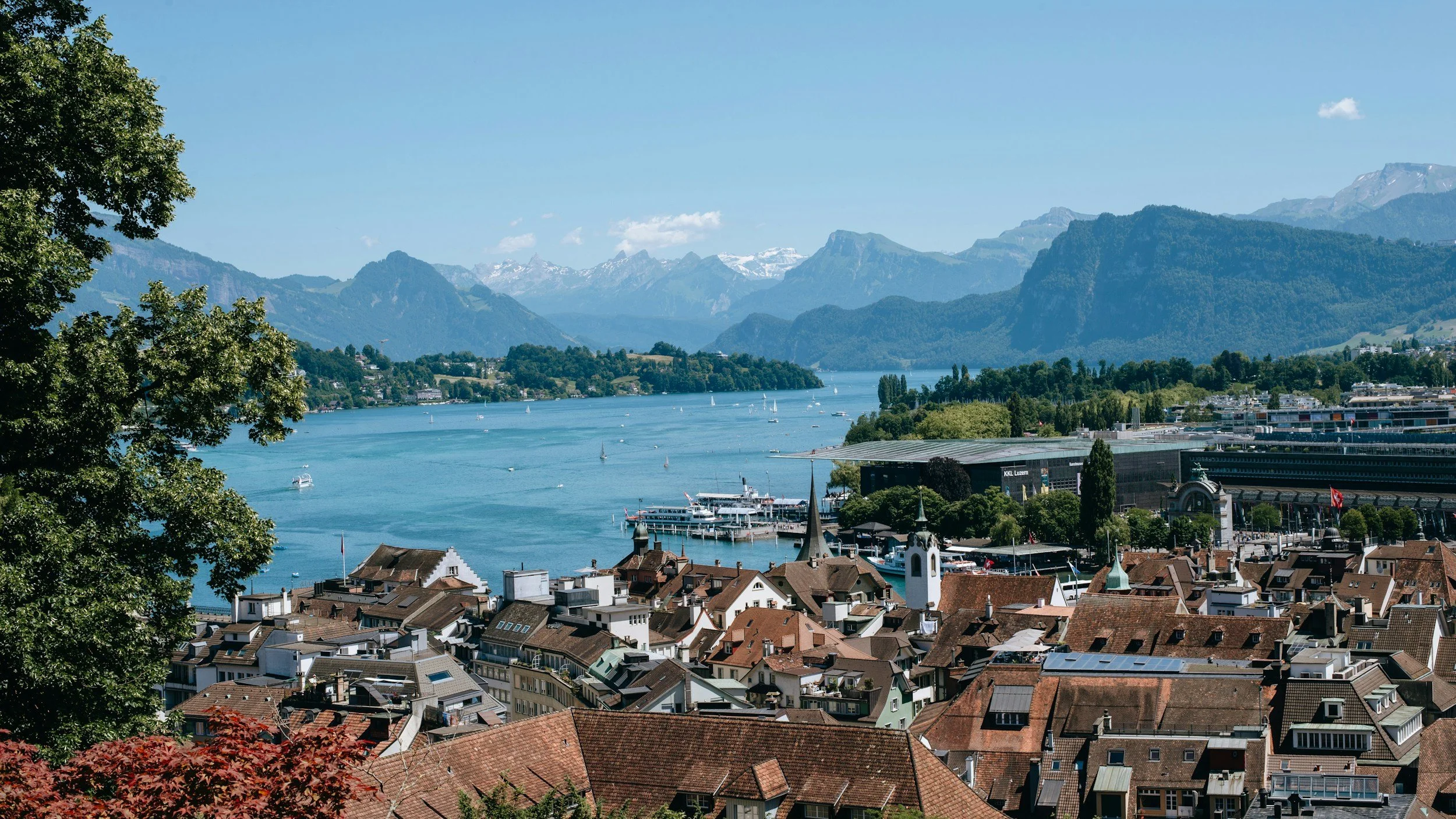
Lucerne sits in a sweet spot that is hard to find anywhere else in Switzerland. It has a real downtown, a walkable old town, and a lake that connects you to some of the most dramatic mountain scenery in the country. But it never feels like a big city. It is more like a vacation town that happens to have everything you need within a short walk or a boat ride.
If Zurich is Switzerland's city and Interlaken is its wilderness, Lucerne is somewhere in between. It is the version of Switzerland that feels immediately liveable, immediately beautiful, and immediately like exactly what you imagined before you booked the trip.
Two days is the right amount of time for a first visit. A third day would not go to waste.
A Brief Look At
Your Itinerary
One note on order: if the weather forecast is better on day one, flip the days and do Mt. Pilatus first. The mountain is entirely weather dependent and a clear day up there is worth rearranging everything for.
The full itinerary is at the bottom of the page when you are ready.
-
The gentler way to arrive. A guided walking tour that changes how you see the city, Chapel Bridge and the history most people walk across without knowing, lunch on the water, and an evening cruise on Lake Lucerne that quietly becomes one of the most beautiful hours of the trip.
-
The whole day belongs to the mountain. A boat across Lake Lucerne, the steepest cogwheel train in the world, views that do not feel real, and a toboggan run that will be one of the best things you do in Switzerland. Start early and take your time.
Where to Spend Your Time in Lucerne
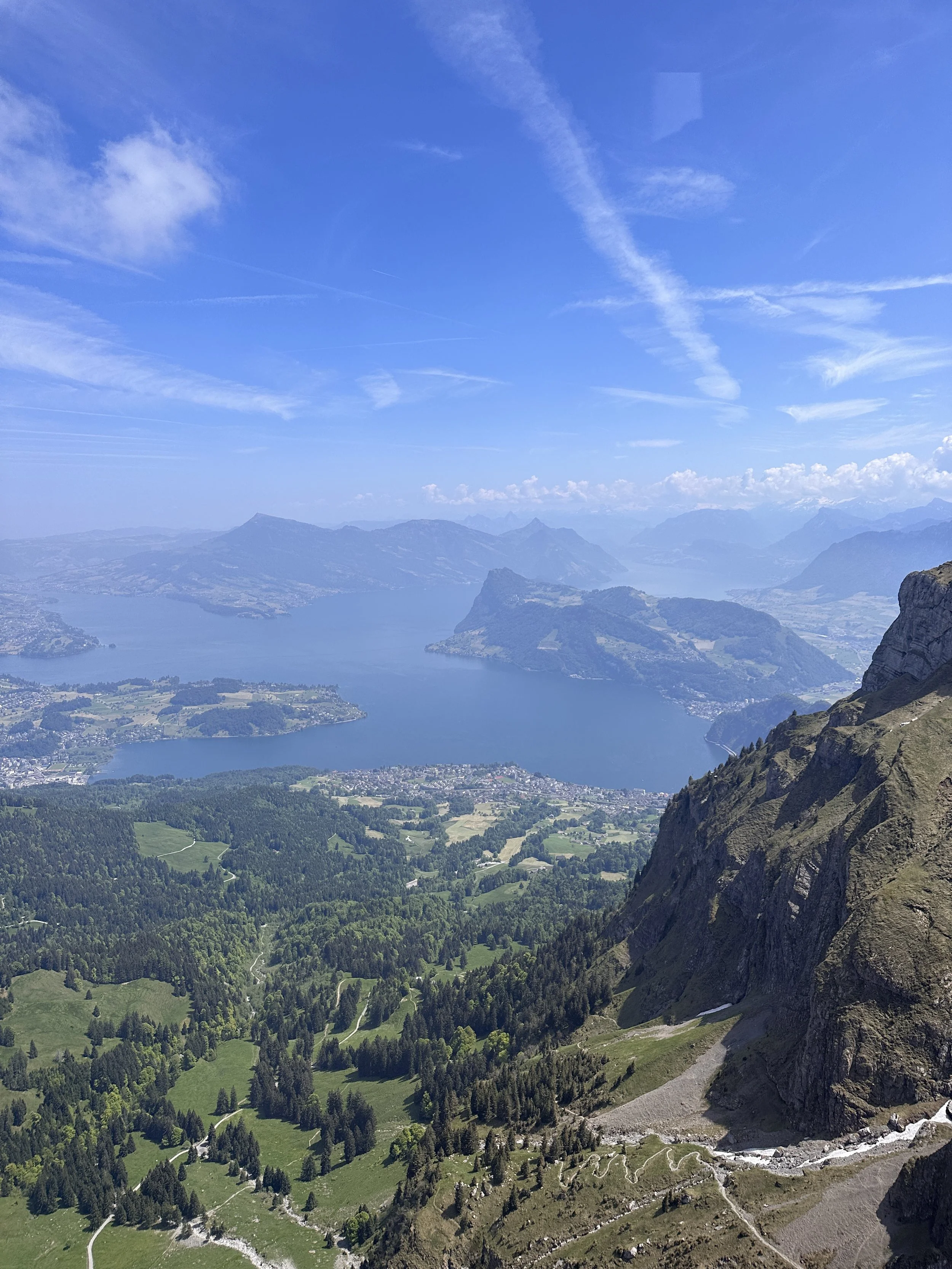
Mt. Pilatus and the Golden Round Trip
This is the reason most people come to Lucerne and it earns every bit of that reputation. The Golden Round Trip takes you by boat across Lake Lucerne to Alpnachstad, up to the summit on the steepest cogwheel railway in the world, down by gondola to Fräkmüntegg, by cable car to Kriens, and back to Lucerne by bus. Five modes of transport in one day and every single one of them is an experience in itself.
At the summit you get 360 degree views across the Alps, two short hikes worth doing if you have the energy, and the kind of scenery that makes you stop mid-sentence because you forgot what you were saying. Before you come down, stop at Fräkigaudi for the toboggan run. More on that in Section 6.
Book tickets in advance and start early. The first boat leaves at 7:38 AM and the earlier you go the fewer people you share the mountain with.
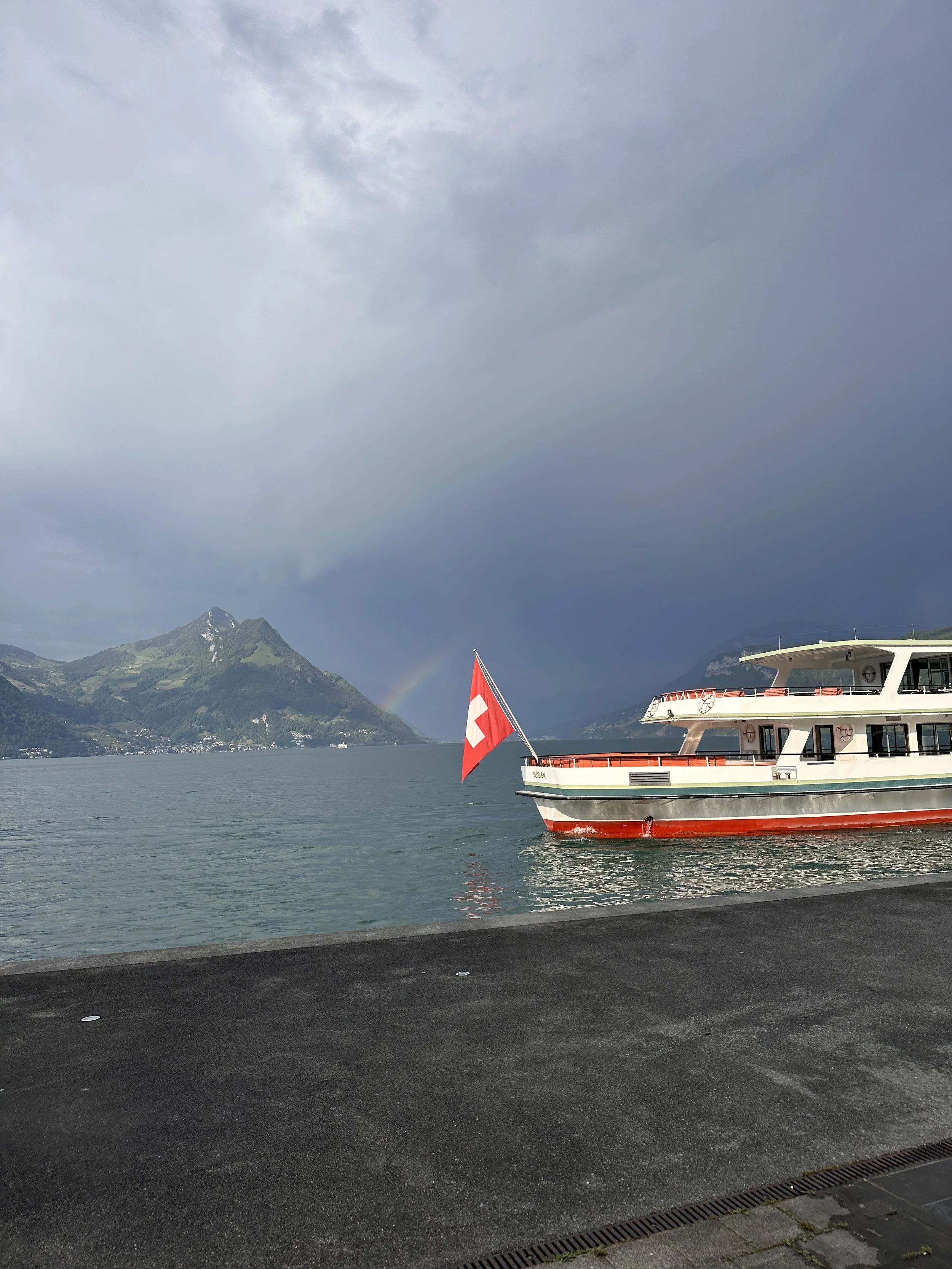
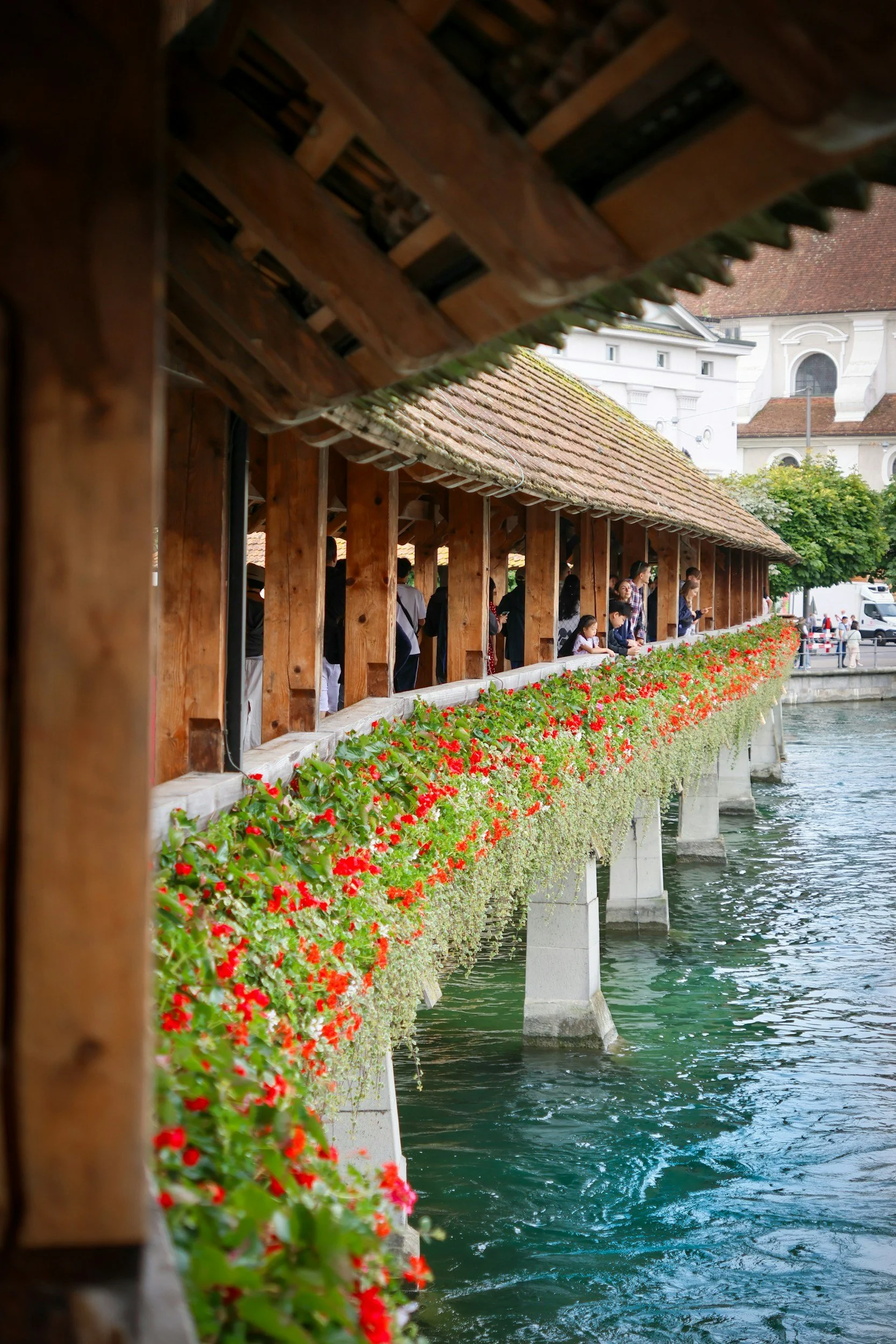
Chapel Bridge (Kapellbrücke)
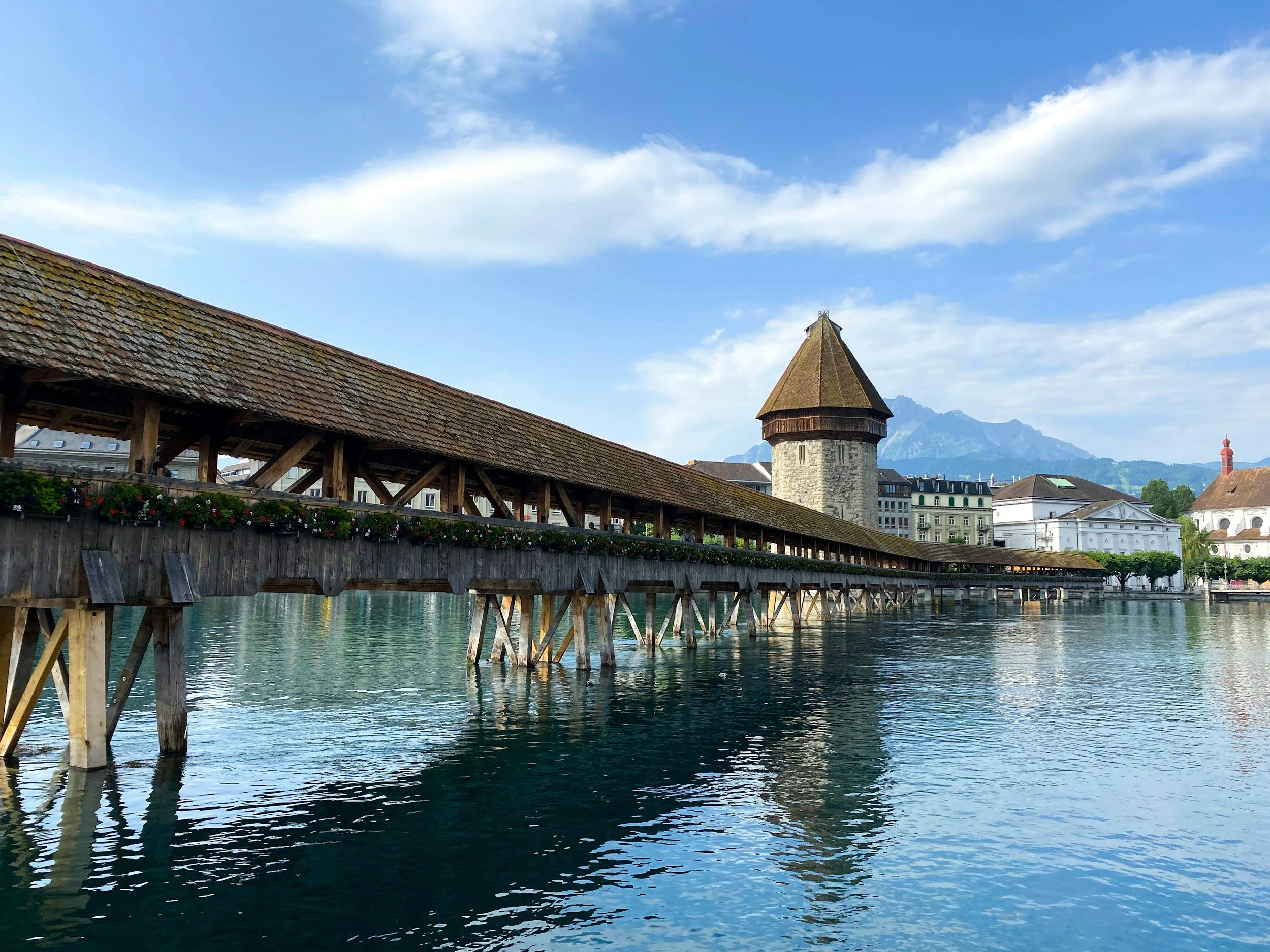
The most photographed bridge in Switzerland and one of the most recognizable images in the country. A covered wooden bridge that has been crossing the Reuss River since around 1333, originally built as part of Lucerne's medieval fortifications, with a stone water tower at its center and triangular paintings running the length of the interior depicting scenes from Swiss history and the city's patron saints.
What most people do not know when they walk across it is that most of what they are looking at was rebuilt. In August 1993 a fire, likely from a discarded cigarette on a boat moored underneath, destroyed two thirds of the bridge and 86 of the 111 interior paintings in a single night. Lucerne rebuilt it in eight months. Some of the original paintings survived and were restored. Others were lost entirely. If you look closely at certain beams, you can still see scorch marks from that night.
Walk it slowly. It is short enough that most people rush across and miss everything. The full story of the bridge is covered on the guided walking tour, which we cover in the full itinerary below.
Lake Lucerne Cruise
The lake is what ties everything together. Surrounded by mountains on every side, it shifts in color and light throughout the day in a way that is hard to stop looking at. A one hour panoramic cruise gives you views of the city, the mountains, and the shoreline villages that you simply cannot get from land.
Passing places like Vitznau and Beckenried from the water, with the Alps rising directly behind them, is the kind of thing that makes Switzerland feel surreal in the best possible way. This is not a tourist box to tick. It is genuinely one of the most beautiful hours you will spend in the country.
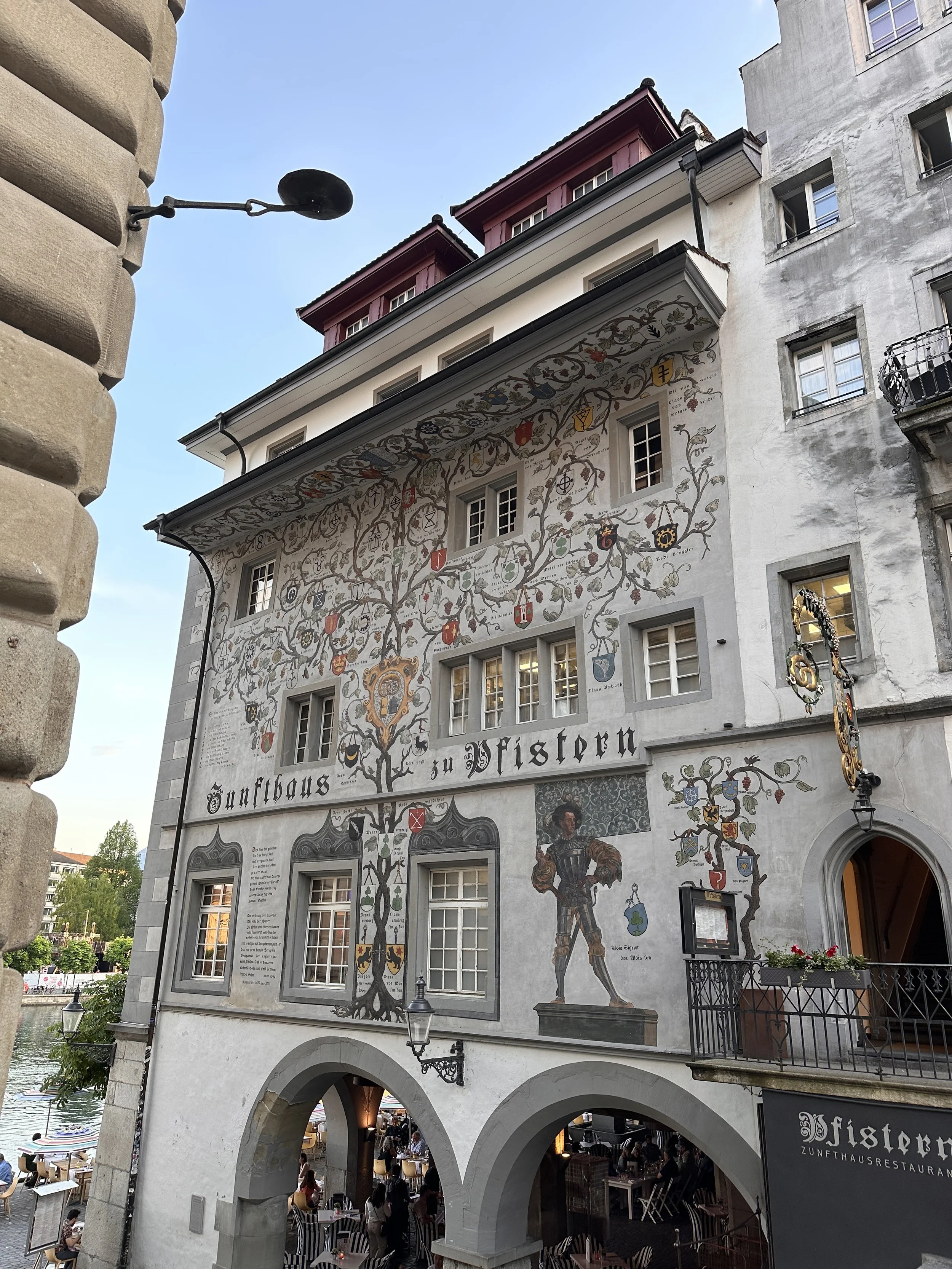
Lucerne Old Town
Compact, walkable, and genuinely charming without feeling like a theme park version of a Swiss old town. Over 200 painted building facades line the streets, the medieval Kornmarkt square anchors the neighborhood with the 17th century Town Hall and a weekly market, and the Jesuit Church just across the river is the first large Baroque church built in Switzerland and worth stepping inside even if churches are not usually your thing.
The area along Rathausquai is particularly good in the evening, right on the water with restaurants and bars facing the river and the illuminated bridge.
Hirschmatt and the Quieter Side of the City
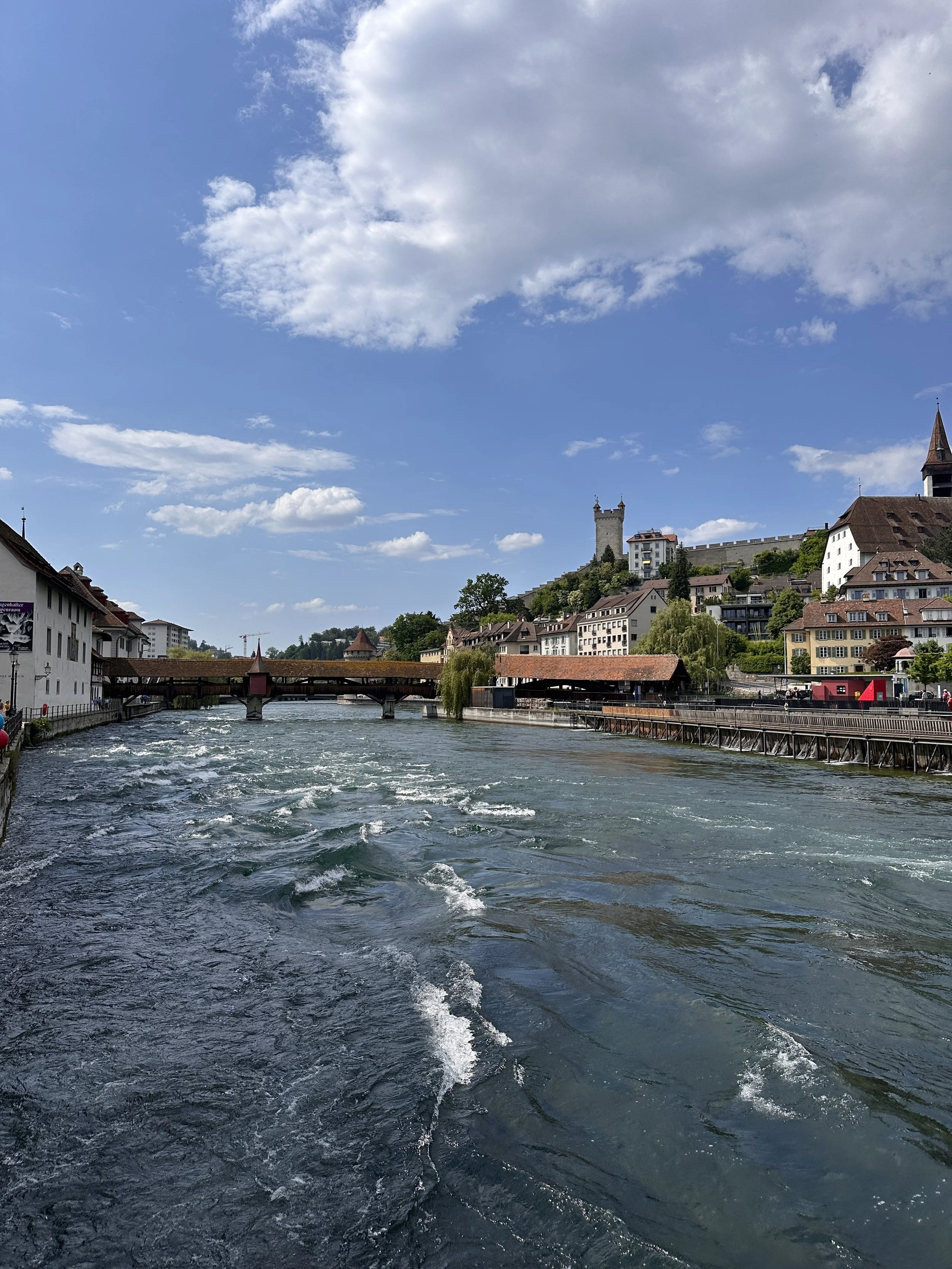
Most first time visitors spend all their time in the Old Town and miss this. The Hirschmatt-Neustadt neighborhood sits just across the river and has a completely different feel. Less polished, more residential, good cafés and bakeries, and the kind of streets where you feel like you are actually in the city rather than the tourist version of it. Worth an hour of wandering on day two.
Where to Stay Your First Time in Lucerne
For a first visit, staying close to the Old Town or the main station keeps everything simple. Lucerne is compact enough that location matters less than it does in a bigger city, but being near the lake and the river puts you within walking distance of almost everything.
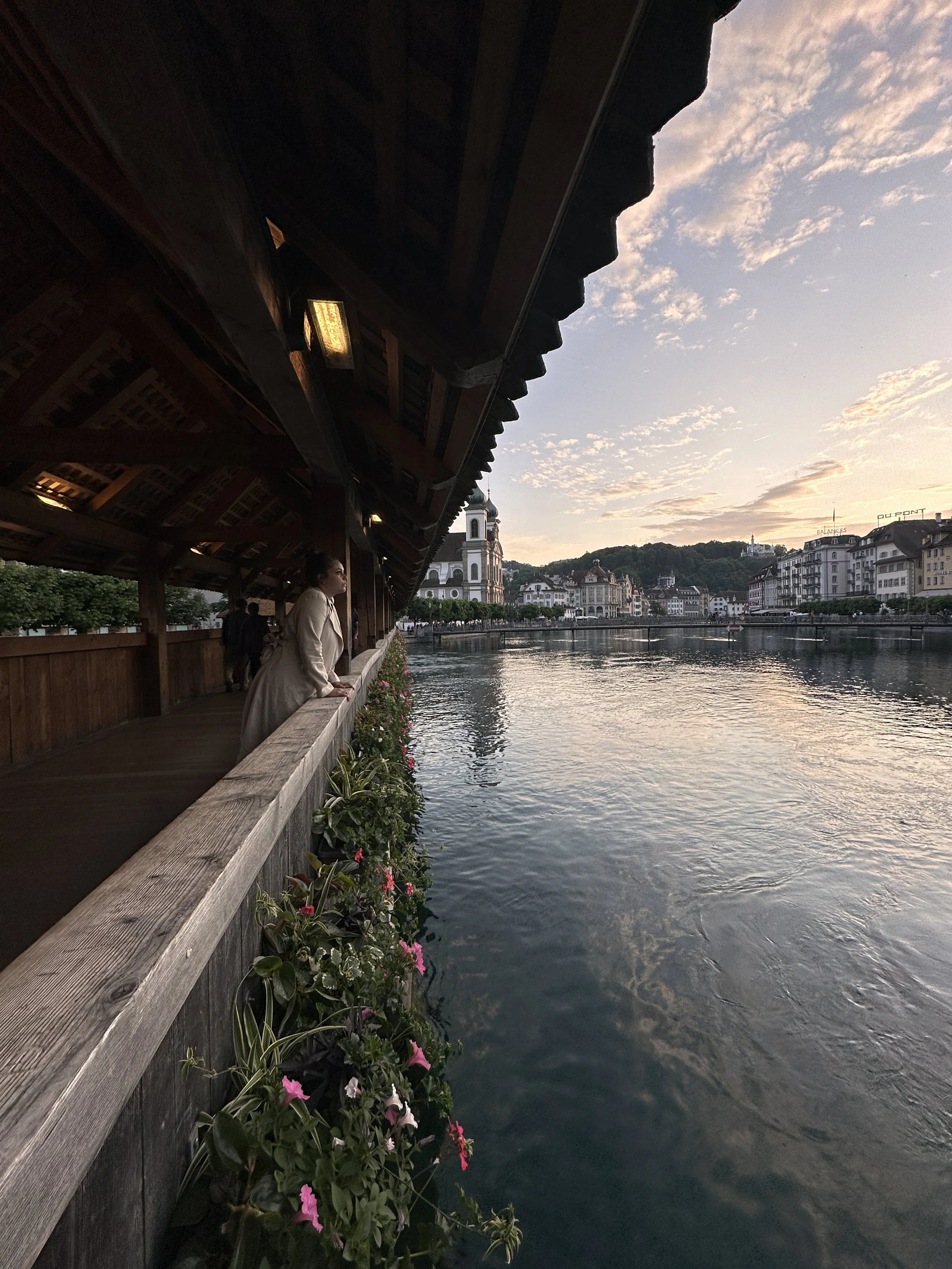
The Old Town sits on the north bank of the Reuss River and is the most atmospheric place to base yourself. You walk out the door and you are already in it. Medieval streets, river views, and the bridge a few minutes away.
The area near Lucerne Bahnhof is the practical choice. Easy train connections to the rest of Switzerland and a short walk to everything. More functional than charming but completely convenient.
Hirschmatt and Neustadt sit just south of the river and have a quieter, more residential feel. Good if you want a slightly local perspective without being far from the center.
Know the Neighborhoods
The Hotel Lucerne is a reliable, comfortable option close to the station. A solid base with easy access to the Old Town and the lake. Not the most memorable hotel we have ever stayed in but it did everything we needed it to do.
Hotel des Balances comes highly recommended by people who know this city well. It sits right on the Reuss River with views of the bridge and the Old Town directly from the rooms. The location does a lot of the work.
Palace Hotel Luzern is the splurge option, also highly recommended by those who have stayed there. A grand lakefront property with the kind of views that make you want to sit on your balcony and not go anywhere. Worth it if the budget allows.
Hotel Suggestions
Where to Eat & Drink on Your First Trip to Lucerne
On the Water: Rathausquai
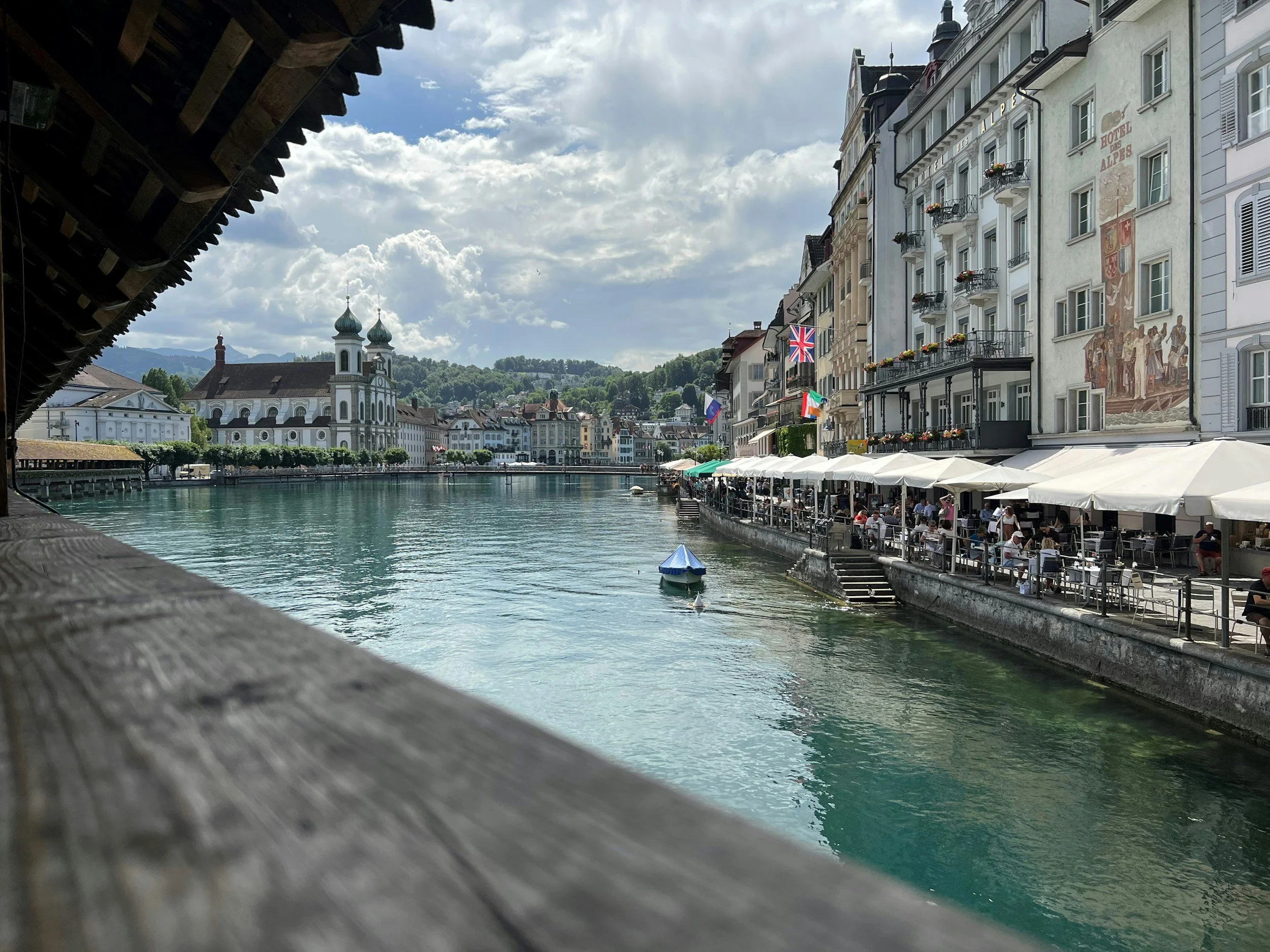
The stretch of restaurants and bars along Rathausquai is where Lucerne does its best evening. Right on the river, facing the illuminated Chapel Bridge, with an atmosphere that settles into something genuinely lovely as the light fades. This is not about finding one specific restaurant. It is about being on that stretch of water when the city is at its most beautiful. Pick something that looks good and sit outside if the weather cooperates.
Stadtküche
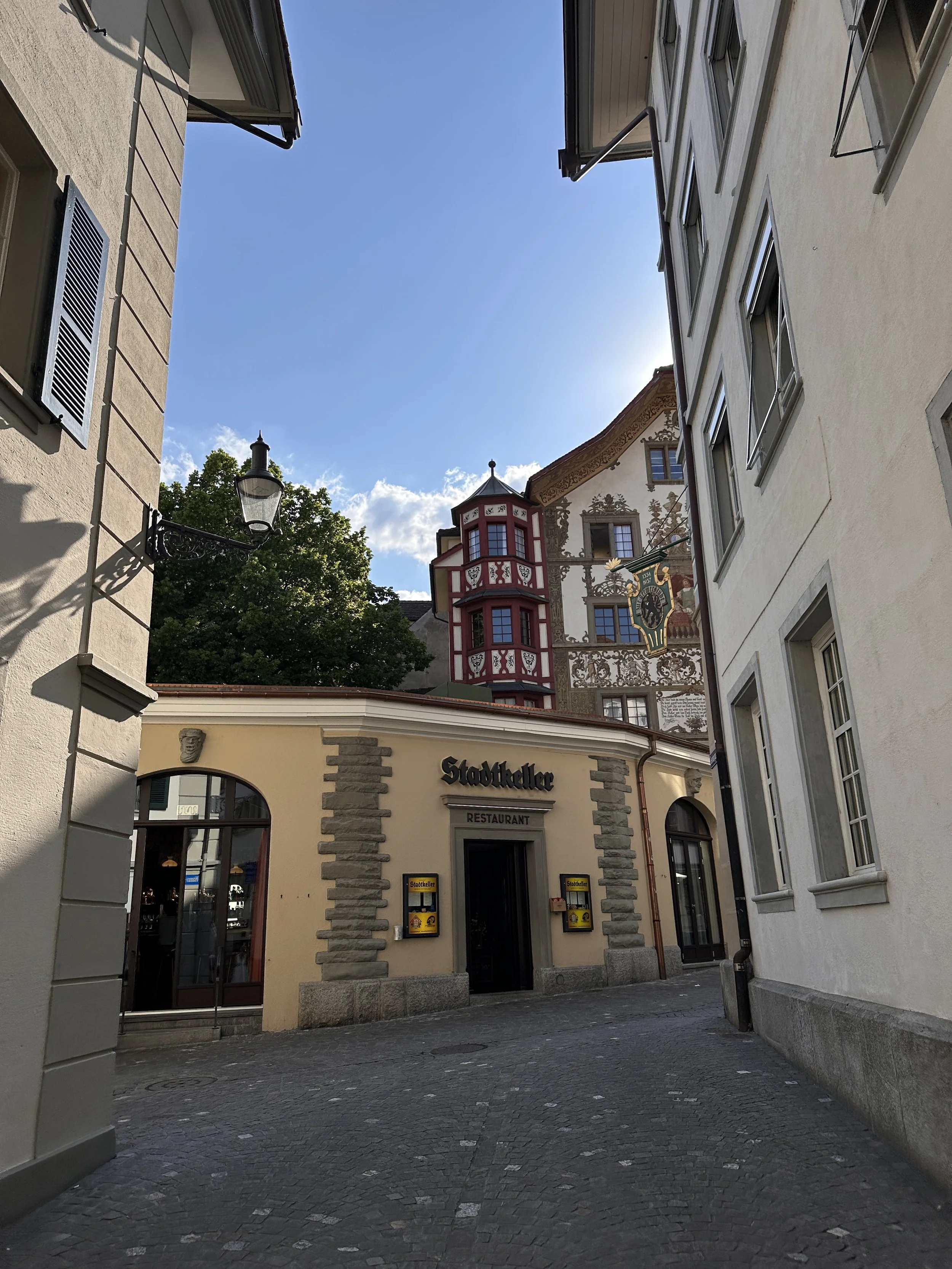
A relaxed, locally loved spot in the city with an honest menu and a comfortable room. The kind of place that feels like it belongs to the neighborhood rather than the tourist circuit. Good for a dinner where you want to slow down, eat well, and not feel like you are sharing the room with everyone who just got off a tour bus.
For a Drink
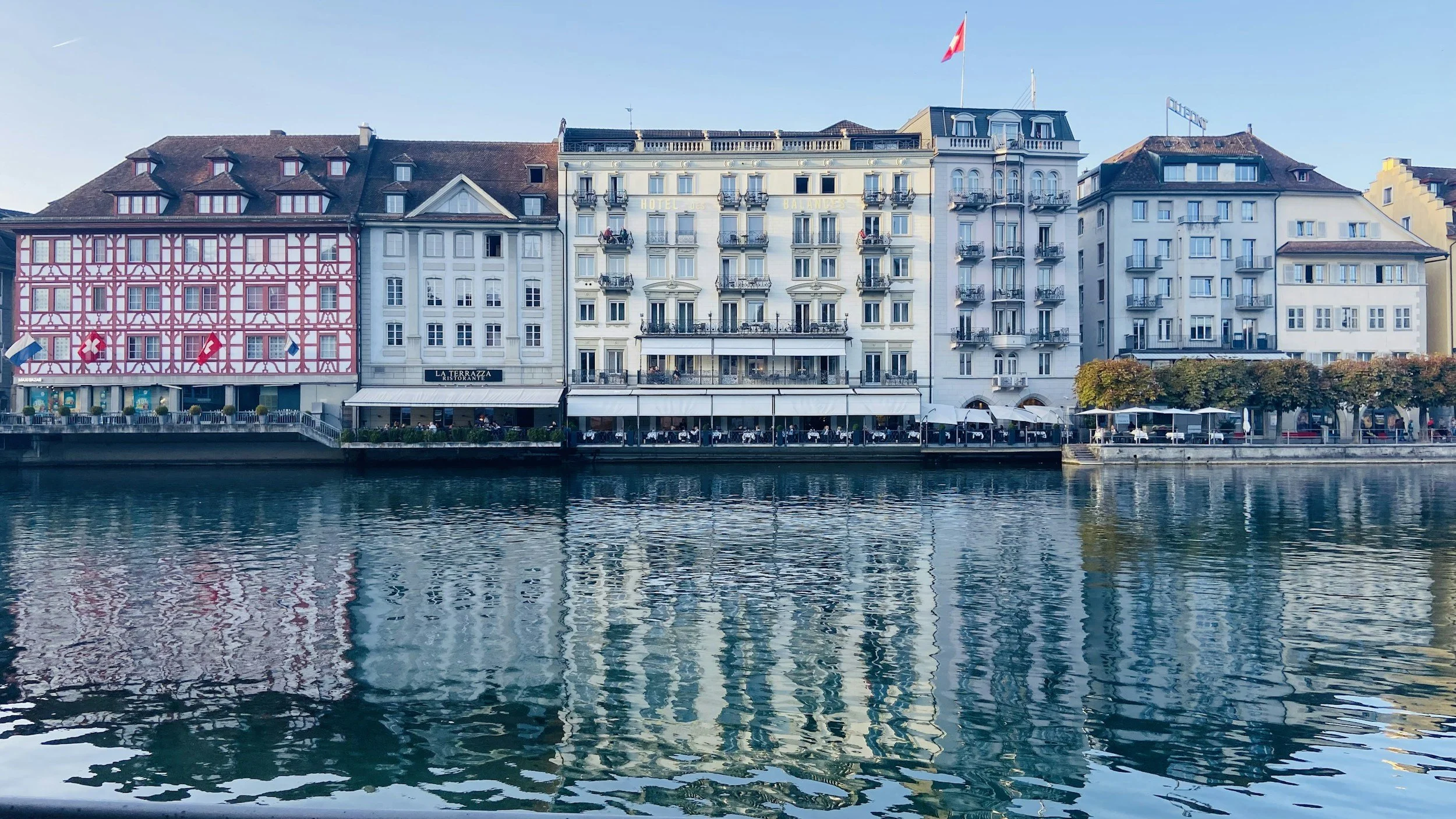
The bars along Unter der Egg and Rathausquai buzz in the evening and work well for a drink before or after dinner. Nothing overly complicated. Just good spots to sit near the water and watch the city wind down.
Restaurant Bellevue Pilatus
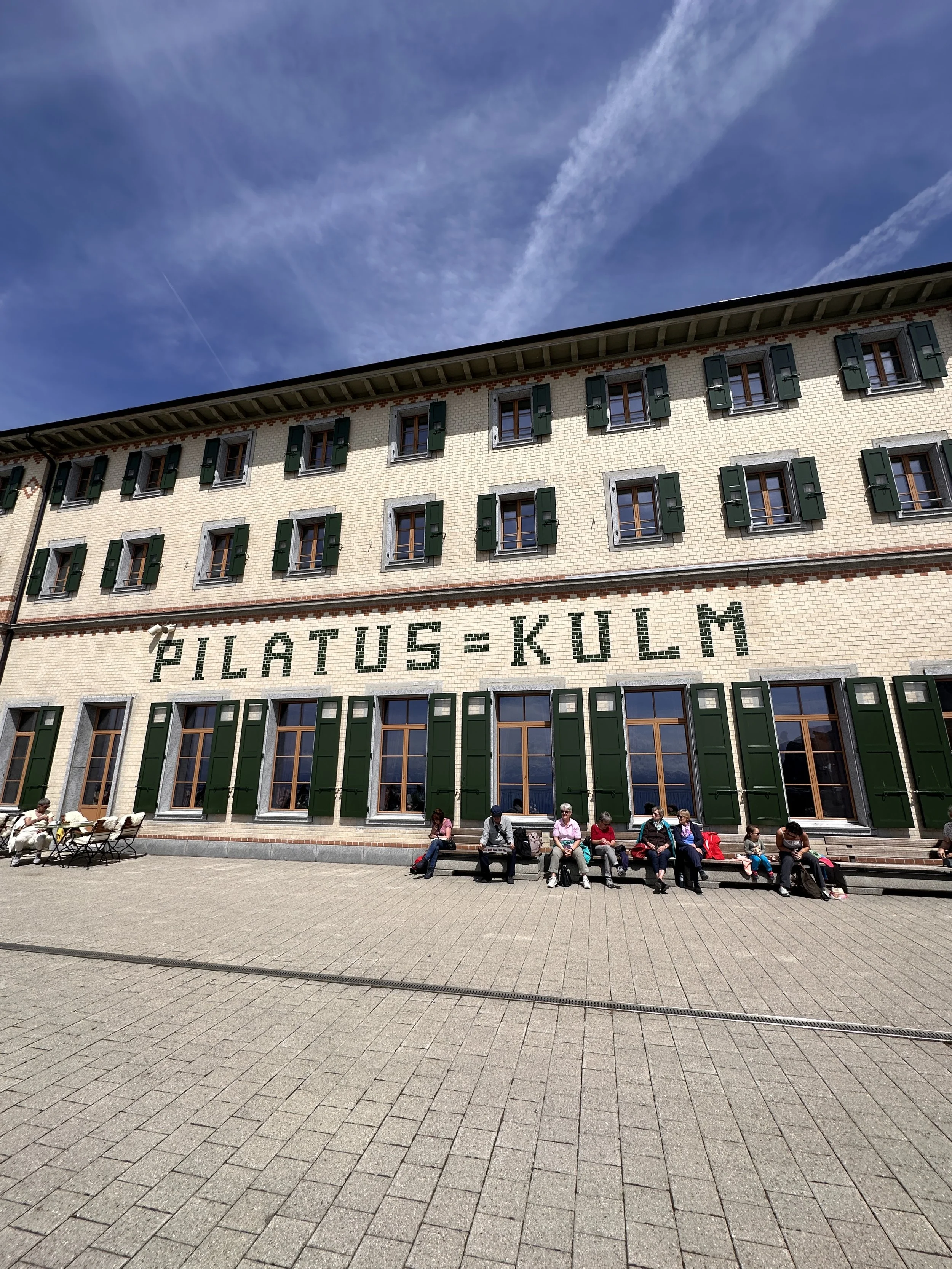
Up on the mountain itself, at Pilatus Kulm. Eating lunch at the summit with the Alps stretching out in every direction is one of those experiences that sounds slightly absurd and turns out to be completely worth it. Simple food, spectacular setting. The kind of meal you remember not because of what you ate but because of where you were when you ate it.
What to Try at Least Once in Lucerne
Chügelipastete if you want to eat something that is actually from here. A dome-shaped puff pastry filled with veal, mushrooms, and a creamy sauce, it originated in Lucerne and has been on local menus for centuries. It sounds fussy but it is the kind of dish that makes you understand why Swiss food has a better reputation than most people give it credit for.
Freshwater fish from Lake Lucerne, usually perch or whitefish, simply prepared and served in most of the restaurants along the water. Easy to overlook in favor of the heavier Swiss classics but worth ordering at least once given that the lake it came from is right outside the window.
And at least one meal along Rathausquai, not because the food will be the best of the trip but because the setting will be.
What to Pack for Your First Trip to Lucerne
Lucerne is a walking city with a mountain day built in, which means you need to pack for both in the same bag. The city is easy. The mountain is where people get caught out.
Weather & Seasons (Quick Reality Check)
Late spring to summer (May to September): Warm in the city, significantly colder at altitude. This gap is bigger than most people expect. A sunny 22 degree day in Lucerne can feel like 5 degrees with wind at the top of Mt. Pilatus.
Fall (October to November): Cooler in the city, cold on the mountain. The Golden Round Trip runs until late October after which the cogwheel train stops and some activities close.
Winter (December to February): Cold and beautiful in the city. The mountain is accessible by cable car from Kriens only, and the toboggan and some viewpoints are closed. Early spring (March to April): Unpredictable. Pack for both warm and cold in the same day.
Comfortable walking shoes for the city and the Old Town Proper warm layer for Mt. Pilatus, a fleece or light puffer at minimum Wind resistant jacket Layers that work from city to mountain in the same day Small daypack for the mountain Sunglasses and a compact umbrella Reusable water bottle, tap water is excellent throughout Switzerland
Core Items
The Most Important Packing Note for Lucerne
Bring a jacket for the mountain even if you think you will not need it. The temperature difference between Lucerne and the summit of Mt. Pilatus is significant and it will catch you off guard if you are not prepared. I went up without one and learned this the hard way. Do not repeat my mistake.
Plugs and power: Switzerland uses Type J outlets and standard European adapters do not always fit. Bring the right one.
The Lucerne Visitor Card: This one is worth knowing before you arrive, not after. Your hotel will issue it automatically when you check in, usually as a printed card with a QR code. It gives you free use of local buses and trains within Zone 10 for the duration of your stay, including the bus between Lucerne and Kriens for Mt. Pilatus. We did not find out about it until we got there and had already bought separate bus passes. Do not make the same mistake. Ask your hotel about it the moment you check in.
Sunday closures: Most shops in Lucerne are closed on Sundays. Restaurants and cafés are generally open, museums are open, and transport runs normally. Plan your shopping around it.
Local Details First-Time Visitors Forget
My Favorite Unexpected Moment in Lucerne Was Not Actually in Lucerne
I expected Mt. Pilatus to be spectacular. The views, the cogwheel train, the altitude. All of that I had mentally prepared for.
What I did not prepare for was the toboggan.
At Fräkmüntegg, halfway down the mountain, there is a summer toboggan run called Fräkigaudi. You sit in a small cart on a narrow track, pull the hand brake to control your speed, and zip down the mountain through tunnels and around curves with Lake Lucerne visible through the trees below you.
It sounds like a minor attraction. Something you might do if you have time left over.
It was one of the best five minutes of the entire Switzerland trip and one of the most memorable moments in my entire life.
There is something about the combination of speed, altitude, cowbells in the distance, and the complete absurdity of tobogganing down a Swiss mountain that makes you feel like a kid in the best possible way. I was not expecting to feel that. I was not expecting to be laughing that hard. I was not expecting it to be the thing I talked about most when I got back.
If you do nothing else on Mt. Pilatus, do the toboggan. Just make sure you leave the summit by 3:30 PM so you have enough time before the last run at 5:00 PM.
Itinerary for Your First Trip to Lucerne
Lucerne gets dismissed as a day trip destination from Zurich, a quick stop before the mountains. Spend a couple of days here properly and that framing falls apart completely.
It is a vacation town with a real downtown. Less city than Zurich, less wild than Interlaken. Its own thing entirely, and one of the most immediately beautiful places in Switzerland.
Here is how to do it right on your first visit.
A note on order: The itinerary below puts the city day first and Mt. Pilatus second, which is the gentler way to arrive. You get your bearings, learn the history, and let Lucerne introduce itself before the mountain takes over. That said, if the weather forecast is better on day one, flip the days and do Mt. Pilatus first. The mountain is entirely weather dependent and a clear day up there is worth rearranging everything for.
Day 1 - Old Town, Chapel Bridge, and the Lake
Day one is the city version of Lucerne. A slower start, a walking tour that changes how you see everything, lunch on the water, and an evening cruise that quietly becomes one of the most beautiful hours of the trip.
Morning: The Walking Tour, Chapel Bridge, and the Old Town
Start with the guided walking tour. We booked through GetYourGuide, 1.5 hours with an official guide starting at 10:15 AM, and it was one of the better decisions of the whole Lucerne trip. The guide covered the history of the city from its origins as a Benedictine monastery in the 8th century through its rise as a trading town, a Catholic stronghold during the Reformation, and eventually one of the most visited cities in Switzerland. The building facades alone tell you more than you would expect. Over 200 of them are painted with scenes from Lucerne's history and local mythology, and most people walk right past them without knowing what they are looking at.
The tour covers Chapel Bridge in depth, which is where the history gets most interesting. The bridge has been crossing the Reuss River since around 1333, built as part of the city's medieval fortifications. The triangular paintings inside date from the 17th century and depict Swiss history and the city's patron saints. What most people do not know when they walk across it is that most of what they are looking at was rebuilt. In August 1993 a fire, likely from a discarded cigarette on a boat moored underneath, destroyed two thirds of the bridge and 86 of the 111 interior paintings in a single night. Lucerne rebuilt it in eight months. Some of the original paintings survived and were restored. Others were lost forever. If you look closely at certain beams, you can still see the scorch marks.
The tour also takes you through Kornmarkt, the medieval main square, past the 17th century Town Hall built in Italian Renaissance style, and into the side streets where Lucerne's real character starts to show itself. The Jesuit Church, just across the river, is the first large Baroque church built in Switzerland. Step inside even if you only have a few minutes. The interior is one of those things that stops you mid-stride.
After the tour, keep wandering. Work your way through Hirschmatt and the quieter streets south of the river for a different angle on the city. Less polished, more lived in, and a good reminder that Lucerne is a real place where people actually go about their days.
Midday: Lunch on the Water
Lunch along Rathausquai. Sit outside if the weather allows and watch the river and the bridge. This stretch of the city is at its best in the middle of the day when the light hits the water and the Old Town buildings behind it.
Afternoon: Lake Lucerne Cruise
We booked a cruise through GetYourGuide, departing at 4 PM. It officially runs about an hour but felt longer in the best possible way, and the late afternoon light on the water makes it one of the better times to be out on the lake.
The city looks completely different from the water. The mountains surrounding the lake on every side shift the scale of everything in a way that is hard to describe until you are on the boat. Passing Vitznau and Beckenried with the Alps rising directly behind them is one of those quietly surreal moments that Switzerland does better than anywhere else. You will not want to be anywhere else for that hour.
Book through GetYourGuide in advance, especially in summer. This cruise fills up and the late afternoon slot is one of the best times to be on the water.
Evening: First Night in Lucerne
Drinks along Unter der Egg or Rathausquai as the city settles into the evening. Dinner somewhere on the water. Then a slow walk back through the illuminated Old Town before bed.
Day 2 - Mt. Pilatus: The Golden Round Trip
The whole day belongs to the mountain. Do not try to squeeze anything else in. You will not want to.
Mt. Pilatus, Mt. Titlis, or Mt. Rigi: How We Decided
When you are based in Lucerne, this is the question that will consume more planning time than it should. All three are worth doing. Here is the honest version of how they differ.
Mt. Titlis is the highest and the only one with year round glacier access. Revolving cable car, ice cave, cliff walk. The most dramatic option and also the most expensive, sitting furthest from Lucerne.
Mt. Rigi is the most accessible and the most relaxed. Great sweeping views, easy hiking, and both the boat and cogwheel train are covered in full by the Swiss Travel Pass, making it the most budget friendly of the three.
Mt. Pilatus is the one we chose and the one we would choose again. What sold us was the journey itself. Five completely different modes of transport in a single day, each one more spectacular than the last. The views at the top are extraordinary but so is everything that gets you there and back. And the toboggan at Fräkigaudi is something no other mountain offers.
The short version: choose Mt. Titlis for a glacier experience. Choose Mt. Rigi for easy access and the best value with the Swiss Travel Pass. Choose Mt. Pilatus for the full experience, the journey as much as the destination.
We chose Mt. Pilatus. No regrets.
Morning: The Boat to Alpnachstad
Start early. The first boat leaves Lucerne at 7:38 AM from Bahnhofquai, directly across from the train station. It departs once an hour at 38 minutes past the hour and it leaves exactly when it says it will.
The ride to Alpnachstad takes about 90 minutes. Get a deck seat, order a coffee, and watch the mountains get closer. It does not feel like 90 minutes.
The Cogwheel Train to the Summit
From Alpnachstad, walk up the short hill to the cogwheel station. Trains depart every 30 to 45 minutes from 8:10 AM. This is the steepest cogwheel railway in the world, reaching a maximum gradient of 48 degrees. The ride takes about 40 minutes and the views get better with every metre you climb. Get a window seat.
At the Summit
On a clear day the panorama stretches across snow covered Alpine peaks in every direction. Take your time before moving on.
Two hikes worth doing if you have the energy. Tomlishorn is the highest peak on Mt. Pilatus, a two mile return hike that takes you along a ridge, through a natural tunnel, and up to the highest point. Oberhaupt is a shorter 20 minute walk to another jaw dropping viewpoint where the cliffs drop into the valley below.
Lunch at Restaurant Bellevue Pilatus at the summit. Simple food at altitude with one of the best views you will eat in front of all trip.
One thing nobody told me before I went: bring a jacket. The temperature at the summit is significantly colder than in the city below, regardless of what the weather is doing when you leave your hotel. I went up without one. Learn from that.
Afternoon: The Gondola, the Toboggan, and the Way Down
Take the gondola from the summit down to Fräkmüntegg, about 10 minutes. On a cloudy day this ride feels slightly surreal as you descend into the mist with no sense of how high you still are.
Before you take the cable car down, stop at Fräkigaudi for the toboggan run. A small cart on a narrow track with a hand brake, winding down the mountain through tunnels and around corners with Lake Lucerne visible through the trees. It is one of the most unexpectedly joyful things we did in all of Switzerland. The last ride is at 5:00 PM so leave the summit no later than 3:30 PM to make sure you have time.
From Fräkmüntegg, take the cable car down to Kriens, about 20 minutes. Then bus line 1 from Kriens back to Lucerne, running every 20 minutes and taking about 15 minutes. Ask your hotel about the Lucerne Visitor Card before you head out. If you have it, this bus ride is free.
Evening: Last Night in Lucerne
Head back into the city and take a proper break before dinner. You have earned it.
One more dinner along Rathausquai or somewhere in the Old Town. Then a last walk through the lit streets before you go.
Lucerne has a way of feeling like a fairytale, not in a manufactured way, but in the way that places do when they are genuinely, almost unreasonably beautiful. That feeling does not go away. It is still there on the last night.