
Your First Time in
Snæfellsnes and West Iceland
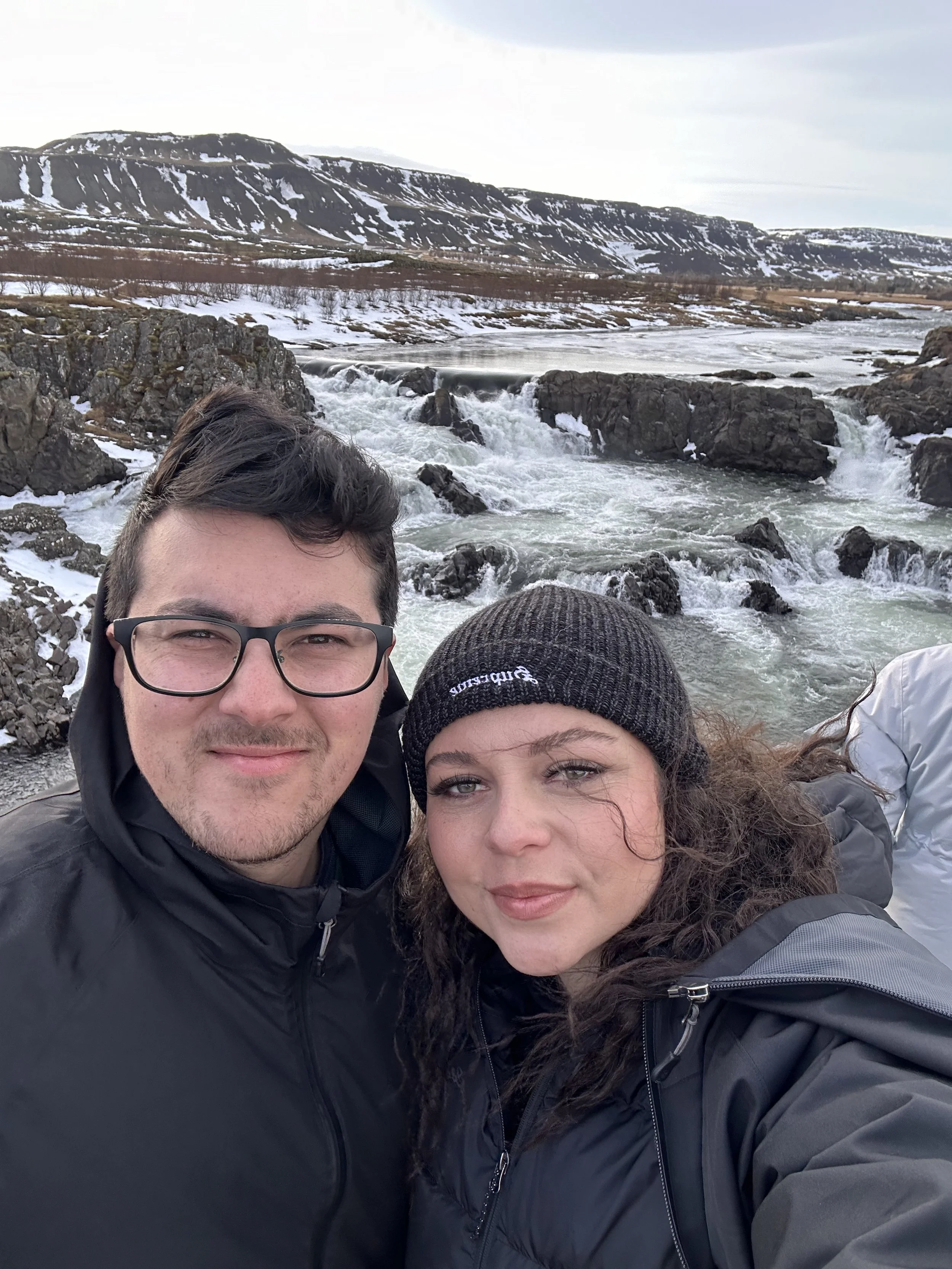
This was the part of Iceland where we finally figured out how to do Iceland.
By our second week, we were exhausted by tour buses. The early pickups, the names called out in the wrong order, the scramble to sit together, the rigid timing, all of it had worn us down. So for our last big day, the Snæfellsnes Peninsula, we did something we should have done days earlier. We rented a car. And driving out of Reykjavik with my husband, blasting Kaleo, an Icelandic band he loves, with the whole peninsula ahead of us and no schedule but our own, was the moment Iceland finally felt like it belonged to us.
West Iceland and the Snæfellsnes Peninsula get a fraction of the attention the Golden Circle and the South Coast get, and that is exactly their appeal. Snæfellsnes is often called "Iceland in miniature," because it packs almost everything the country is famous for into one peninsula, a glacier-capped volcano, lava fields, black sand beaches, dramatic sea cliffs, tiny fishing villages, and waterfalls, with far fewer people around to share them with. Inland, West Iceland holds some of the strangest and most memorable stops of our whole trip, including a lava cave that gave me one of the most unforgettable experiences of my life.
We covered this region across two days, one as a guided tour of the West Iceland interior and the lava cave, and one self-driving the Snæfellsnes Peninsula. The honest takeaway is the same one that runs through this whole site. Snæfellsnes is a long way from Reykjavik, two and a half hours each way, so rather than burning a full day driving out and back, base yourself out here, get a room in the region, and rent a car so you are exploring on your own schedule instead of a tour bus.
What to See on Your Visit to the Snæfellsnes and West Iceland
This region splits into two distinct areas, each worth a day. The inland West Iceland interior, full of waterfalls, hot springs, and a remarkable lava cave, and the Snæfellsnes Peninsula itself, the coastline that packs in a bit of everything Iceland is known for. Here are the stops that stood out across both.
West Iceland Interior
Víðgelmir Lava Cave
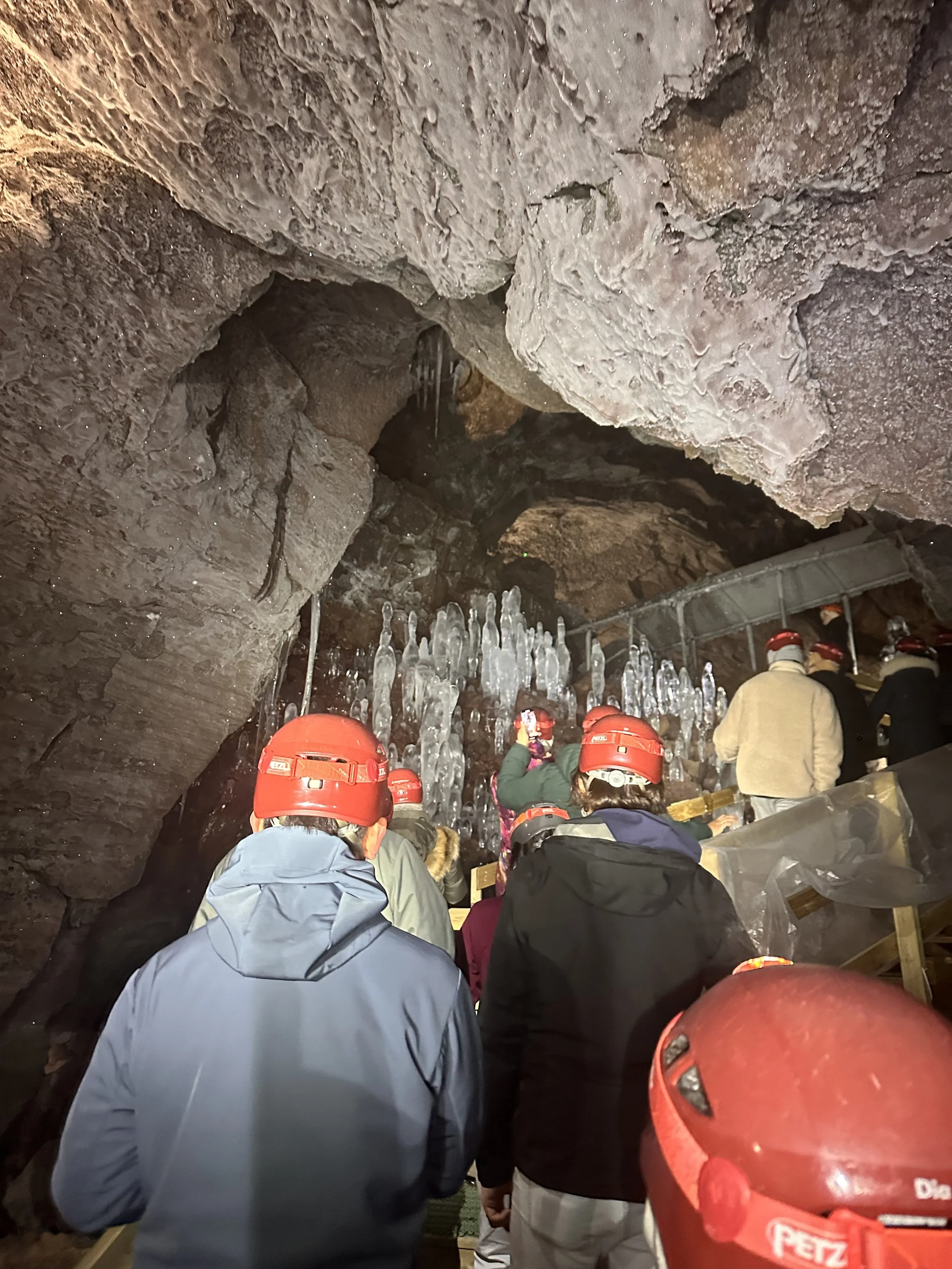
This was one of the most unforgettable experiences of my entire life, not just the trip. Víðgelmir is one of the longest lava caves in Iceland, a tube left behind by flowing lava, and you walk deep underground through it with a guide and a headlamp. It already feels like something out of an adventure show. But the moment that stayed with me came at the far end, when the guide had everyone turn their headlamps off at once.
Total darkness. I had never experienced it before, and it is almost impossible to describe. Not dim, not shadowy, but the complete absence of light, the kind your eyes never adjust to because there is simply nothing for them to find. It is disorienting in a way that goes deeper than sight. Your brain, starved of input, starts to invent things. It is unsettling and astonishing at the same time, and it is something I think everyone should feel once. Do this cave, and do not skip the lights-out moment.
Hraunfossar
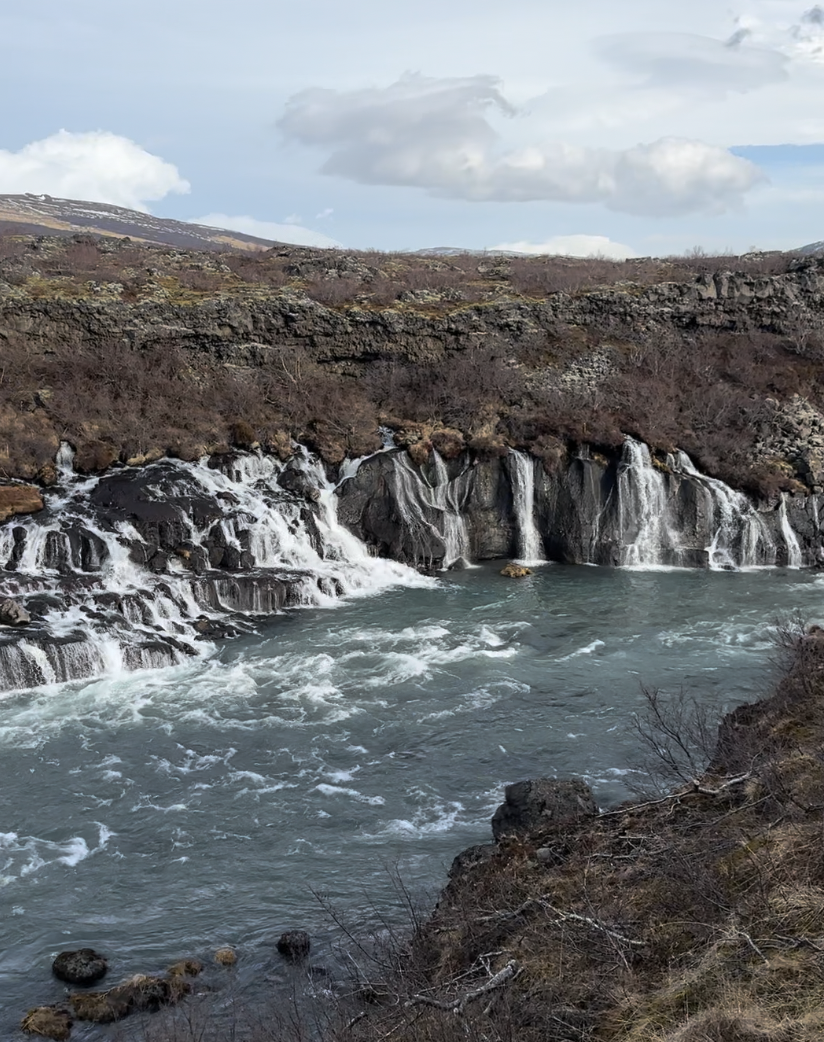
One of the prettiest waterfalls we saw in Iceland, and unlike any other. The name means "lava falls," and that is exactly what it is. Instead of one big drop, countless little streams of crystal-clear water seep straight out of the edge of a lava field and trickle down into the river below, spread across a wide stretch like a curtain of small falls. It is gentle and intricate rather than thundering, and genuinely lovely.
Deildartunguhver
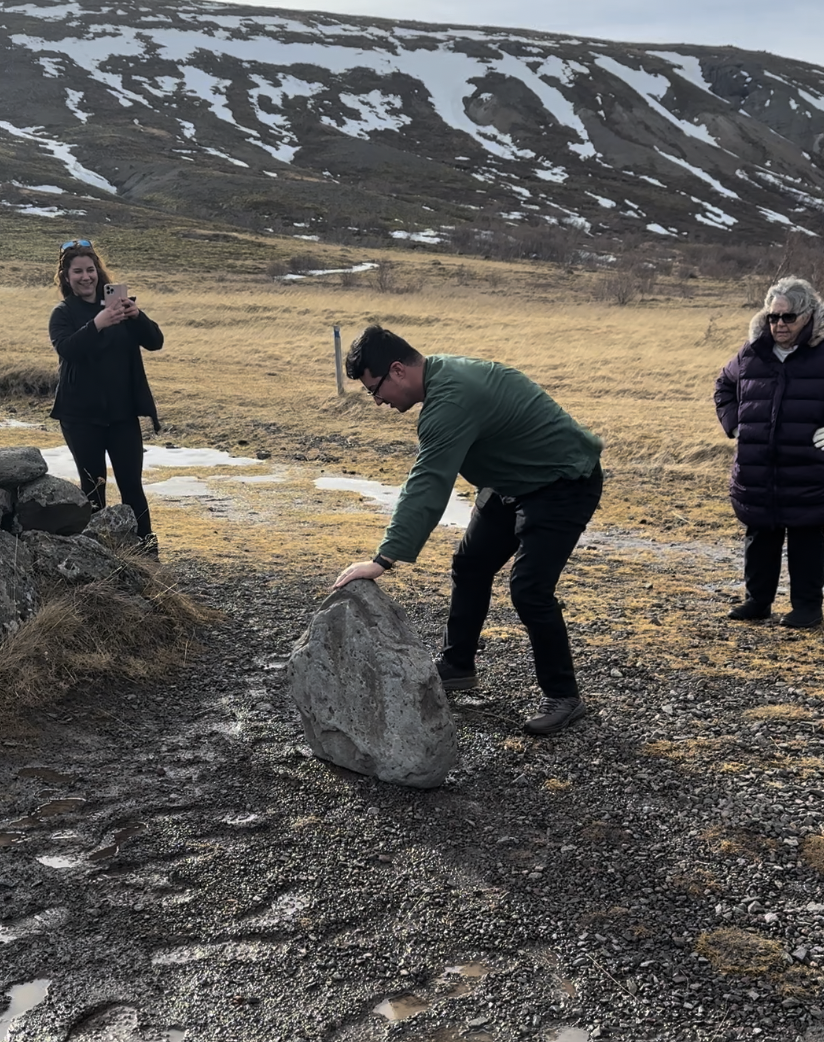
Near Husafell we stopped at something I loved, the Husafell lifting stone, a legendary 186-kilo stone kept by an old sheep pen and used for centuries as a test of strength. It has three traditional levels, and lifting and carrying it is such an iconic feat that replicas are used in World's Strongest Man competitions. We also stepped into a tiny church nearby, one of many small chapels you find scattered across the Icelandic countryside, often standing alone in the middle of nowhere. I did not expect that, and there is something quietly moving about these little churches out in the emptiness.
The Husafell Stone and a Tiny Church
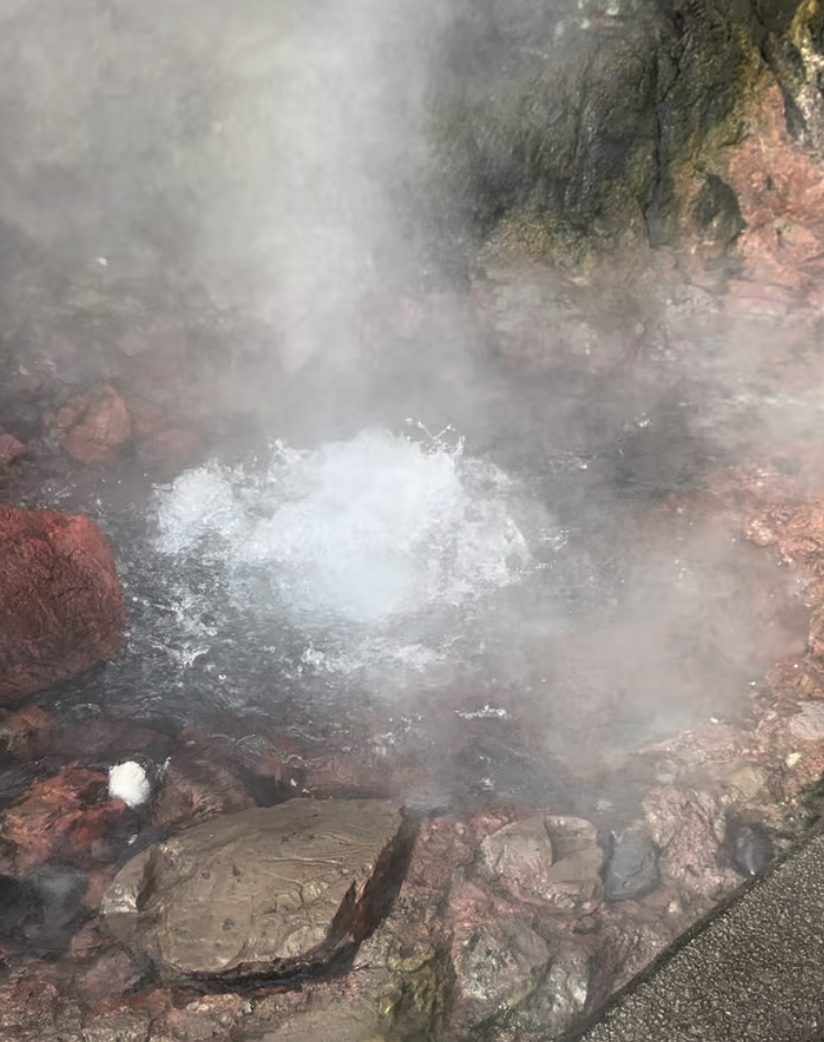
Europe's most powerful hot spring, pumping out around 180 liters of near-boiling water every second. You walk along a boardwalk through billowing clouds of steam while the ground hisses and surges beside you. The water here is so abundant it is piped out to heat entire towns. It is not the most beautiful stop, but it is a striking reminder of how much raw geothermal power sits just under the surface of this country. Stay on the paths, the water is around 97 degrees Celsius.
The Snæfellsnes Peninsula
Kirkjufell
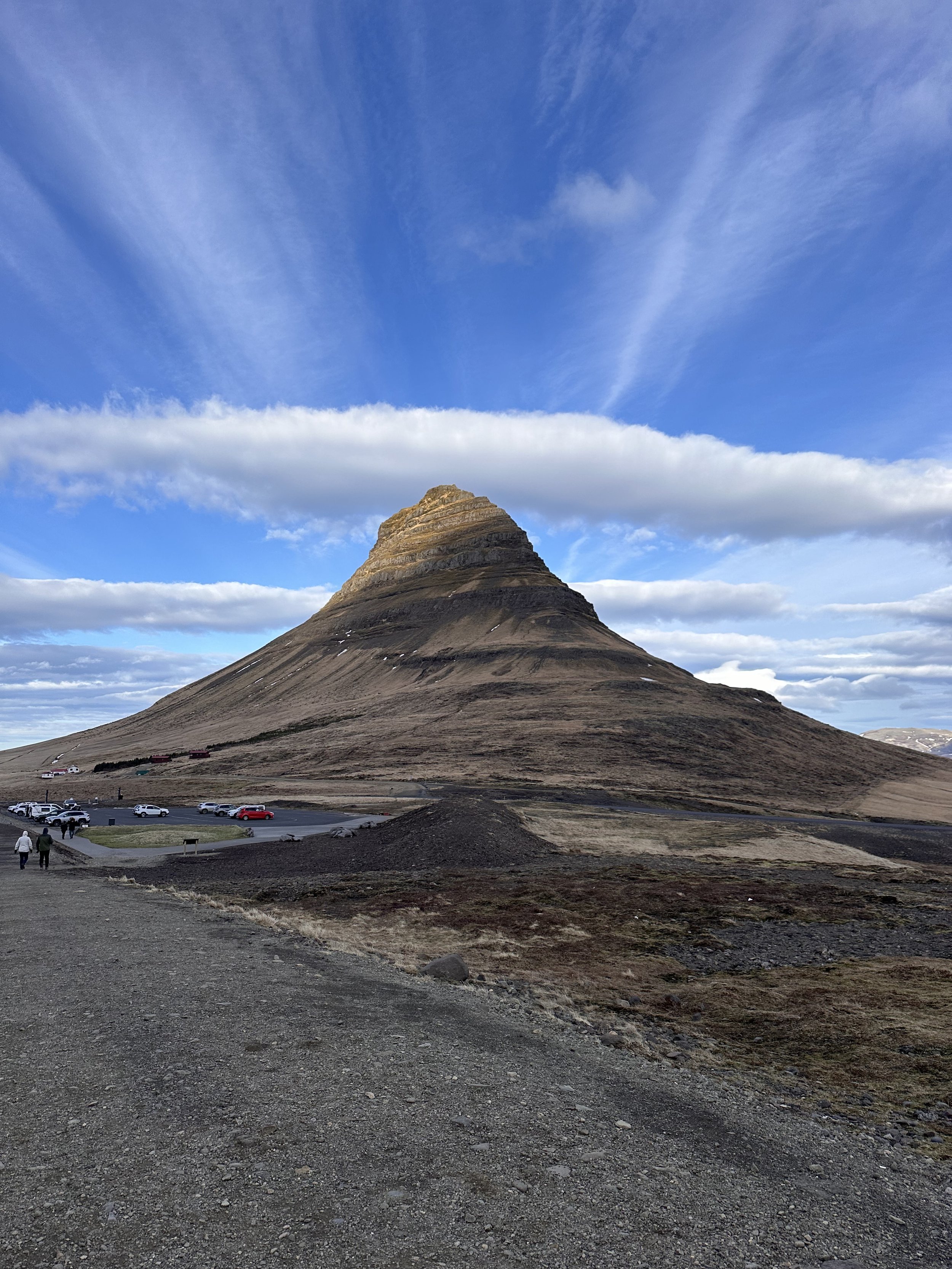
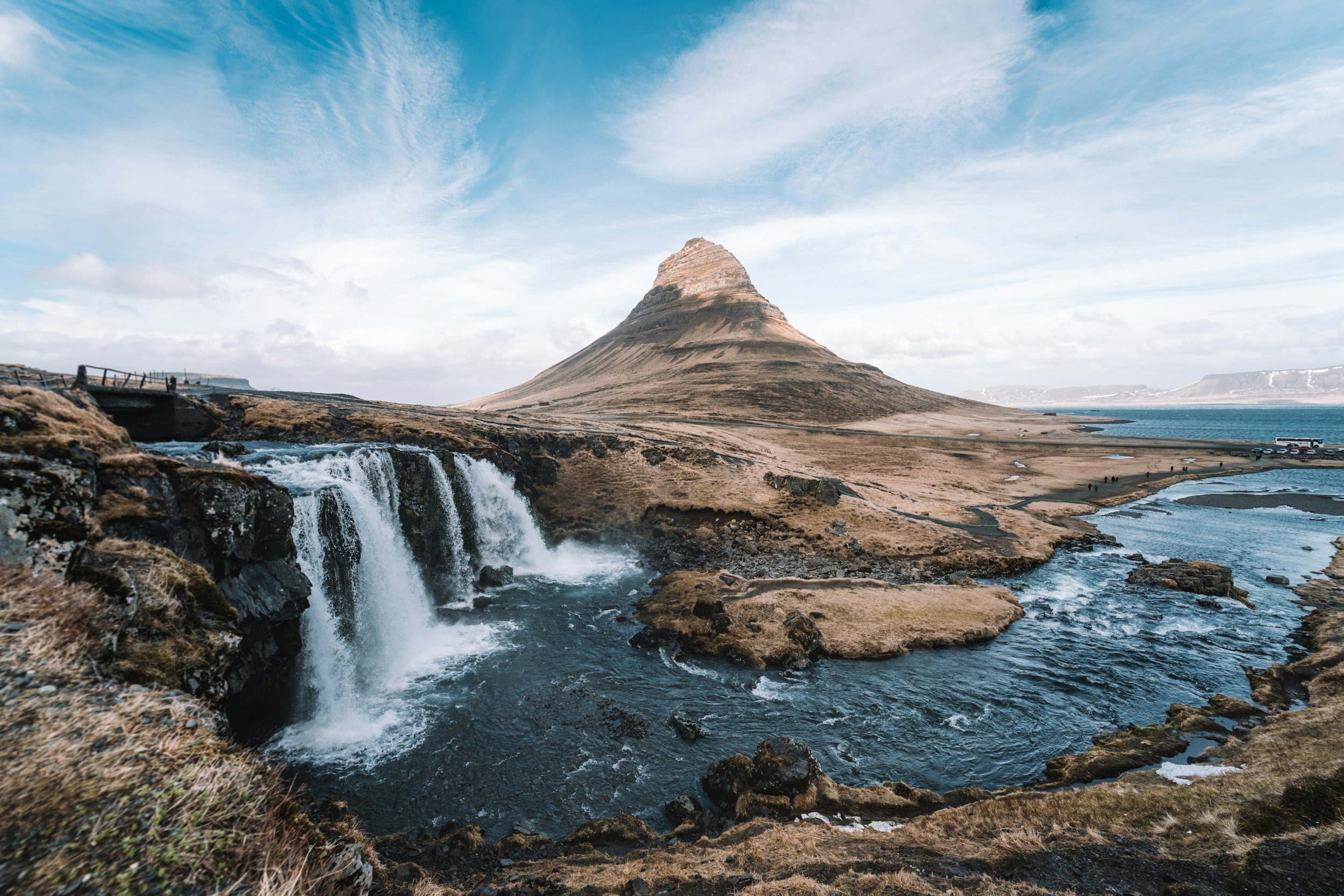
The most photographed mountain in Iceland, and you will recognize it the moment you see it, a steep, symmetrical green-and-grey peak rising on its own by the coast, with a small waterfall nearby for the classic shot. It is genuinely majestic in person. Even on a quick stop it is worth getting out for, and the area around it has small waterfalls and viewpoints to wander.
Djúpalónssandur
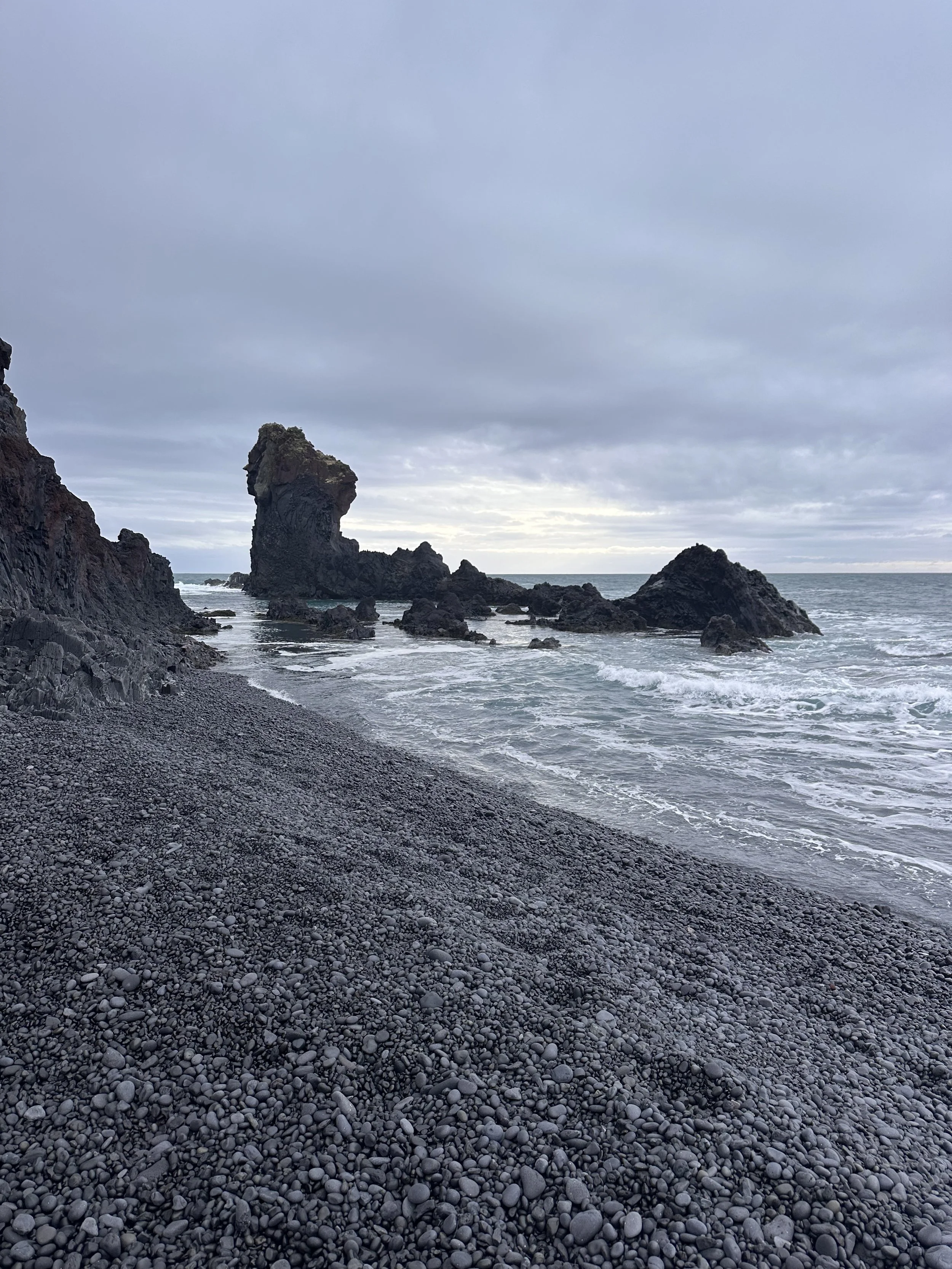
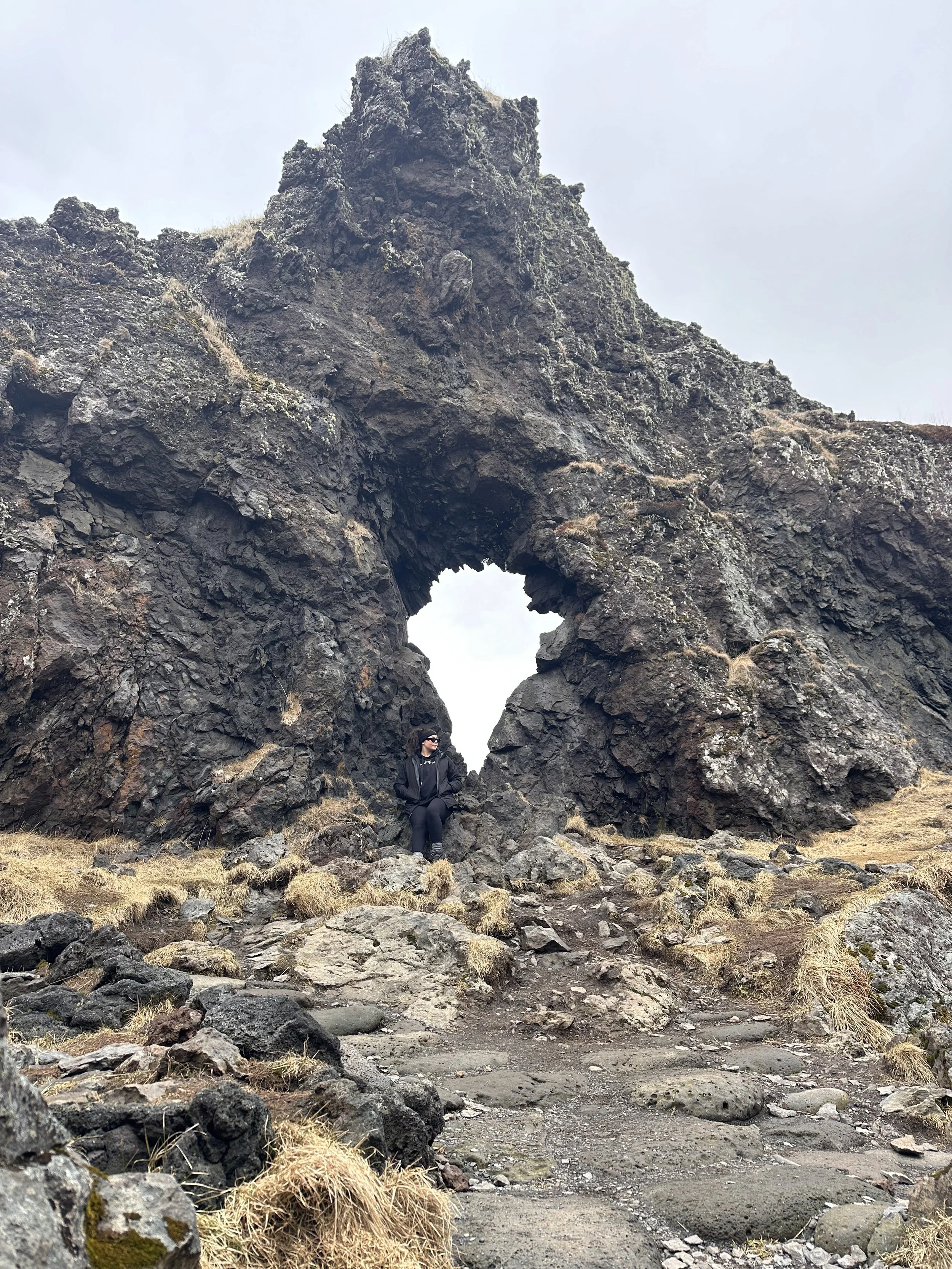
This was a highlight of the whole peninsula for us. Djúpalónssandur is a black pebble beach inside Snæfellsjökull National Park, reached by hiking down a path that winds between dramatic, jagged volcanic rock formations. The descent itself is half the experience, weaving through these strange towering rocks before the beach opens up below. On the sand you will find historic lifting stones once used to test the strength of fishermen, and rusted iron wreckage from a British trawler that ran aground here in 1948, left in place and slowly becoming part of the beach. We both loved this stop, the combination of the otherworldly rock, the black sand, and the history.
Arnarstapi and Gatklettur
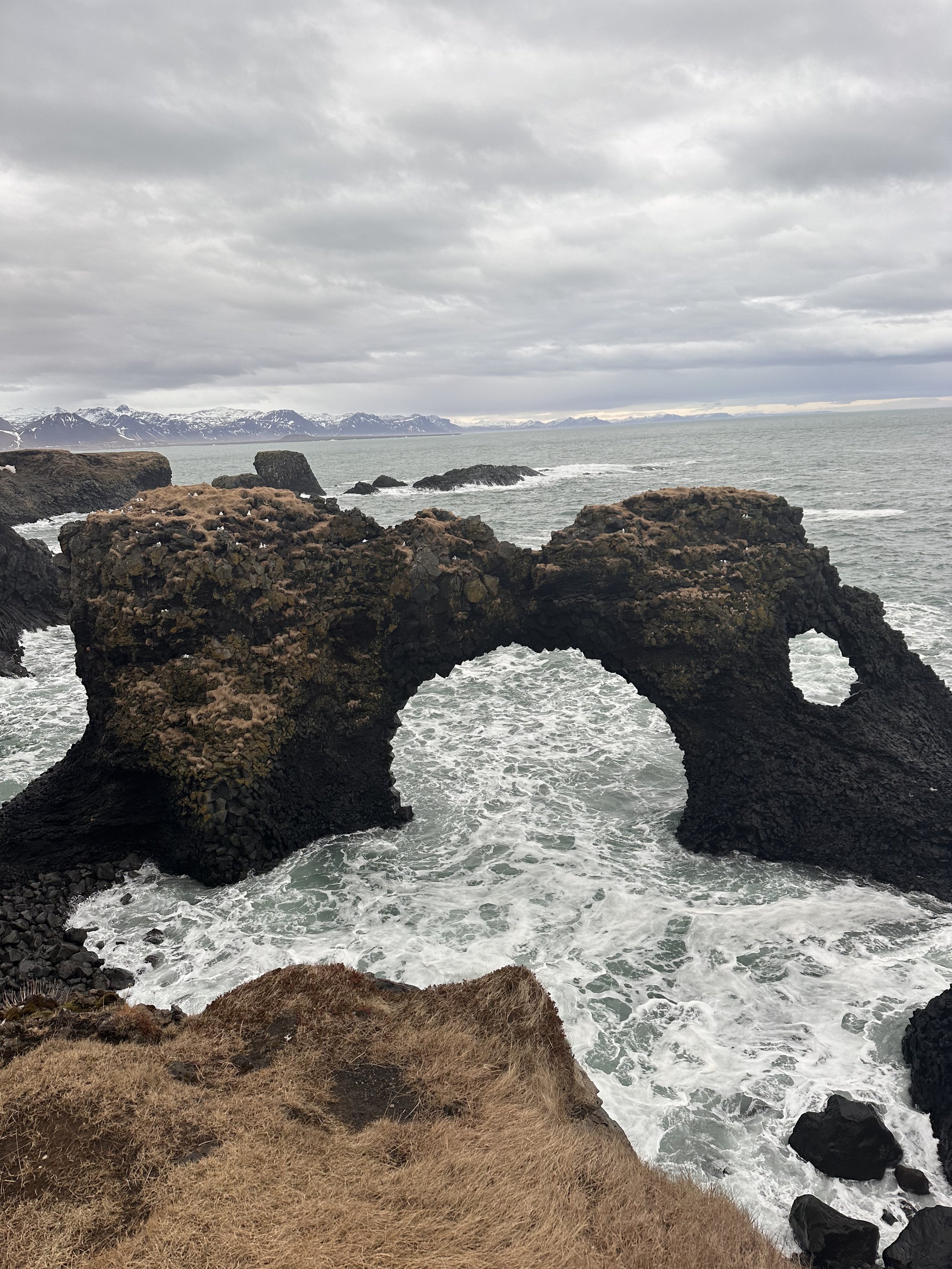
The little coastal village of Arnarstapi sits along a stretch of cliffs carved by the sea, with a coastal walking path and the natural stone arch Gatklettur, eroded out of the basalt over centuries. It is genuinely cool to see, though I will be honest, the photographs make it look a touch more dramatic than it feels in person. Still very much worth the stop, and the cliffs and the views along this part of the coast are beautiful.
On the Drive
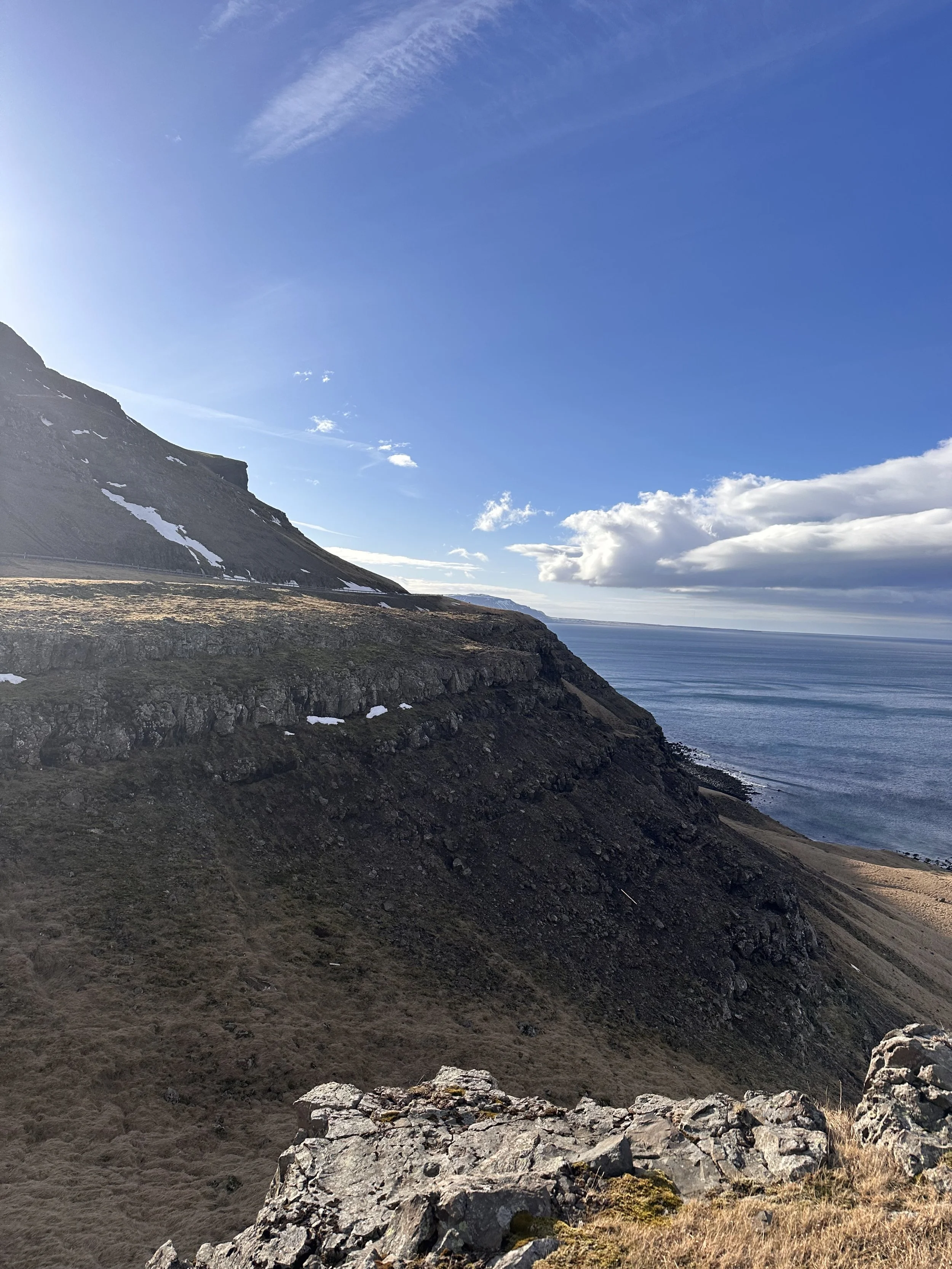
Some of the best moments on Snæfellsnes were not official stops at all. Driving the peninsula on our own, we pulled over again and again for cliff views and stretches of coast that simply looked too good to pass. That freedom, stopping wherever the landscape demanded it, was the whole reason renting a car here was worth it.
How to Do the Snæfellsnes and West Iceland
We did this region both ways on back-to-back days, one by guided tour and one by rental car, which means I can tell you directly which was better. The car won, and it was not close.
Our Two Days, Two Ways
We did the South Coast as a guided day trip from Reykjavik, and it was fourteen hours long. The sights are spread far to the east, the glacier lagoon alone is around five hours from the city, so a huge portion of that day is spent on the bus, and in winter much of the driving happens in the dark on either end. The landscapes are worth every bit of the effort. But you arrive at some of the most extraordinary places in the country tired, rushed, and racing the daylight, and you never get to linger anywhere the way it deserves.
Rent the Car
If you are at all comfortable driving, rent a car for this region. The main roads around Snæfellsnes, Routes 54 and 574, are almost entirely paved, and a standard car handles them fine outside of serious winter conditions. The peninsula is made for a self-drive day, the stops are spread along a loop and half the joy is the coastline in between. A guided tour will get you to the headline sights, but it cannot give you the freedom that makes this particular region special.
Better Yet, Stay Out Here
Snæfellsnes is about two and a half hours from Reykjavik, so doing it as a day trip from the city means a lot of driving bookending your day. As with the South Coast, the smarter move is to base yourself in the region. There are places to stay around the peninsula, in villages like Arnarstapi, Hellnar, Grundarfjörður, and Stykkishólmur, and in the Borgarnes and Reykholt area for the West Iceland interior. Stay a night or two, and you can split the inland sights and the peninsula across relaxed days, catch Kirkjufell in good light, and have a real shot at the Northern Lights far from the city glow. This is the region where I most wish we had done exactly that.
A Winter Note
We visited in early March, and the roads were manageable, but winter driving in Iceland is genuinely different if you are not used to snow and ice. If you are visiting in deep winter and are nervous about the conditions, that is the one real argument for taking a tour out here instead. Check road conditions before you set out, and in summer none of this is a concern.
What to Pack for Your First Trip to Snæfellsnes and West Iceland
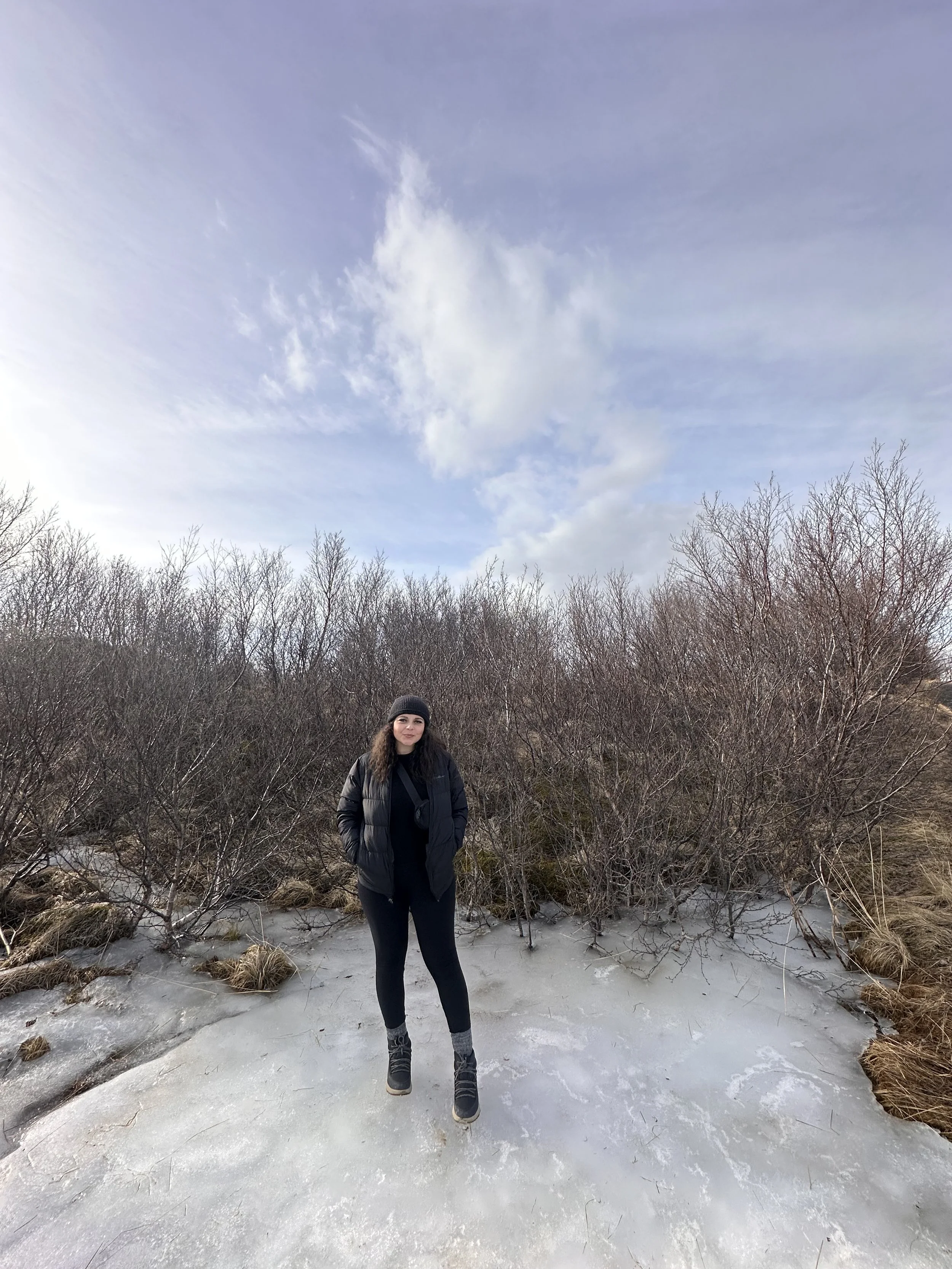
What makes packing for this region different is how much you are actually on your feet and on uneven ground. This is not a day of stepping out of a bus for a photo and getting back on. You hike down through lava rock to reach Djúpalónssandur, walk the cliff paths at Arnarstapi, and go deep underground in a lava cave. Pack to move.
Footwear matters most here. Sturdy, waterproof boots with real grip, because you will be walking on loose volcanic rock, uneven cave floors, and slick coastal paths. The lava cave is the specific thing to plan for. Caves stay cold and damp year-round regardless of the season outside, the ground is rough and uneven, and you will want a warm layer and closed-toe sturdy shoes even on a milder day. Tour operators usually provide a helmet and headlamp, but the warmth and the footwear are on you.
Otherwise, the usual Iceland approach applies. Warm, waterproof, windproof layers you can add and shed, a proper insulated jacket under a shell, and a hat, gloves, and scarf or neck buff, because the wind coming off the coast on the peninsula is relentless. If you are self-driving, pack for self-sufficiency too, with snacks and water, since stops are spread out and remote, a full tank where you can manage it, and a battery pack for your phone, which you will be using for navigation as well as photos. For the full Iceland clothing and layering breakdown, see the Reykjavik page. This is the version tuned for a region you actually walk through.
Where to Eat on Your First Trip to Snæfellsnes and West Iceland
Food out here takes more planning than anywhere else covered on this site, because this is the most remote region we visited. Options are scattered across small villages and farms, many places are seasonal and open only in summer, and on the more remote stretches you can drive a long way between meals. The rule for this region is simple. Do not assume you will stumble onto somewhere to eat. Know roughly where your next stop is, keep snacks and water in the car, and where a place looks good, plan around its hours rather than your hunger. As everywhere in Iceland, it is all expensive.
In the West Iceland Interior
Borgarnes is the main town on the way out from Reykjavik and the natural pit stop for the interior. The Settlement Center has a cozy café and restaurant known for a daily buffet of soups, salads, and homemade bread, a reliable, family-friendly stop. It is also a good place to stock up on groceries before heading deeper into the region.
The standout near the inland sights is Krauma, the restaurant and geothermal baths right at Deildartunguhver, Europe's most powerful hot spring. You can eat well-made Icelandic food made with local ingredients while looking out over the steam of the hot spring you came to see, and it is open year-round, which is not a given out here.
On the Snæfellsnes Peninsula
The peninsula's food clusters in its fishing villages. In Grundarfjörður, near Kirkjufell, Bjargarsteinn House of Food is the most well-regarded restaurant on the peninsula, with harbor views and excellent local seafood, dinner only and booking essential, while Kaffi 59 is the easy, casual, year-round option for burgers, lamb, and the like. In Arnarstapi, where you will already be stopping for the cliffs and the sea arch, Snjófell and the family-run Stapinn both do local food and comfort fare. Nearby in Hellnar, the tiny seaside café Fjöruhúsið is beloved for its fish soup, though it is summer-only. And in Stykkishólmur, at the northeast end, Narfeyrarstofa is a long-standing favorite for local fish, lamb, and mussels.
The honest takeaway. On the peninsula, treat the villages as your meal points and aim to eat in one of them rather than counting on something in between. If you want a proper sit-down dinner at a place like Bjargarsteinn, build it into your route and check the hours before you go, because out here a closed kitchen can mean a long drive to the next one.
Chasing the Light, Finding the Dark
Somewhere deep inside the lava cave, our guide had us all turn off our headlamps at the same time.
I have spent my whole life thinking I knew what darkness was. A bedroom at night. A movie theater. A power outage. But there is always something. A sliver under the door, a glowing clock, a phone, the faint grey of a window. Your eyes adjust, and shapes come back, and you realize the dark was never really dark.
In the cave there was nothing to adjust to. I held my hand in front of my face and it was not there. I waited for my eyes to do the thing eyes do, to find the edges of something, and they never did, because there were no edges, no light, nothing for them to catch. It was the first time in my life I had ever been in true darkness, and I was almost forty feet underground in a tube left behind by a river of lava, which made it even stranger.
What got me was what my brain did with it. Given nothing to see, it started inventing things. Faint shapes that were not there. Movement in the corner of an eye that had nothing to look at. I understood, standing in that cave, why humans have been afraid of the dark for as long as there have been humans. We are not built to sit in the absence of light. The mind refuses to accept that there is simply nothing, so it fills the void with whatever it can make up.
We have engineered real darkness almost entirely out of our lives. We light our streets, our screens, our homes, our pockets. Most people will go their whole lives and never once stand in the actual absence of light. And there is something worth knowing about it, about how small and primal and unprepared it makes you feel, and about how quickly your own mind turns on you when you have nothing left to see.
I came to Iceland chasing light in the sky. The thing I did not expect to find was the dark, the real and total dark, waiting underground. It is one of the few things from the whole trip I can still feel in my body when I think about it.
Itinerary for Your First Trip to
Snæfellsnes and West Iceland
This region is best done as two days, ideally based out here rather than driven from Reykjavik each morning. One day covers the West Iceland interior, the other the Snæfellsnes Peninsula. Here is how each one flows.
Day 1 - The West Iceland Interior
Morning: Into Borgarfjörður
Head inland into the Borgarfjörður and Reykholt area, about an hour and a half to two hours from Reykjavik if you are coming from the city. This is saga country, green valleys and lava fields and geothermal steam, quieter and less visited than the Golden Circle.
Midday: Deildartunguhver and Hraunfossar
Start with Deildartunguhver, Europe's most powerful hot spring, where you walk a boardwalk through clouds of steam beside surging near-boiling water. A short drive away is Hraunfossar, the "lava falls," where countless little streams of clear water seep straight out of a lava field into the river below. It is one of the prettiest and most unusual waterfalls in the country. Stop into the tiny countryside church near Husafell if you pass one, and find the Husafell lifting stone if you want to test the strength of centuries of Icelandic fishermen.
Afternoon: Víðgelmir Lava Cave
The highlight of the day. Tour the Víðgelmir lava cave, one of the longest in Iceland, walking deep underground through a tube left by flowing lava. Do not skip the moment the guide turns the lights off. The total darkness is the thing you will remember. Tours are guided and provide helmets and headlamps, so book ahead.
Evening
If you are based in the region, head to your accommodation around Borgarnes or Reykholt. On a clear night, you are well away from city light pollution for the Northern Lights.
Day 2 - The Snæfellsnes Peninsula
Morning: Drive Onto the Peninsula
This is the self-drive day, and the one to take slowly. Get onto the peninsula via Route 54 and let the coastline set the pace. The whole loop is "Iceland in miniature," a glacier-topped volcano, lava fields, black beaches, cliffs, and fishing villages, so plan to pull over often for views that are not official stops. Half the joy is the driving.
Midday: Kirkjufell and the North Coast
Stop at Kirkjufell, the most photographed mountain in Iceland, the lone symmetrical peak by the sea with its little waterfall. Wander the viewpoints and the small falls nearby. The drive along the north coast toward Ólafsvík has some of the best cliff and ocean views on the peninsula.
Afternoon: Snæfellsjökull National Park
Drive into Snæfellsjökull National Park at the tip of the peninsula. Hike down to Djúpalónssandur, the black pebble beach reached by a path winding between dramatic volcanic rock formations, with its historic lifting stones and the rusted 1948 shipwreck still scattered on the sand. This was our favorite stop on the peninsula. Continue to Arnarstapi to walk the cliffs and see the Gatklettur sea arch.
Evening: Back Toward Base
Loop back along the southern coast as the light fades. If you are staying on the peninsula in a village like Arnarstapi, Hellnar, or Grundarfjörður, you are perfectly placed for one more clear-night chance at the aurora before you go.
If You Have More Time
The peninsula rewards a third day. Add the Lóndrangar basalt cliffs, the Rauðfeldsgjá gorge near Arnarstapi, seal watching at Ytri Tunga, the Vatnshellir lava cave, and the charming harbor town of Stykkishólmur. The slower you take Snæfellsnes, the more of it opens up.