
Your First Time in
Kyoto, Japan
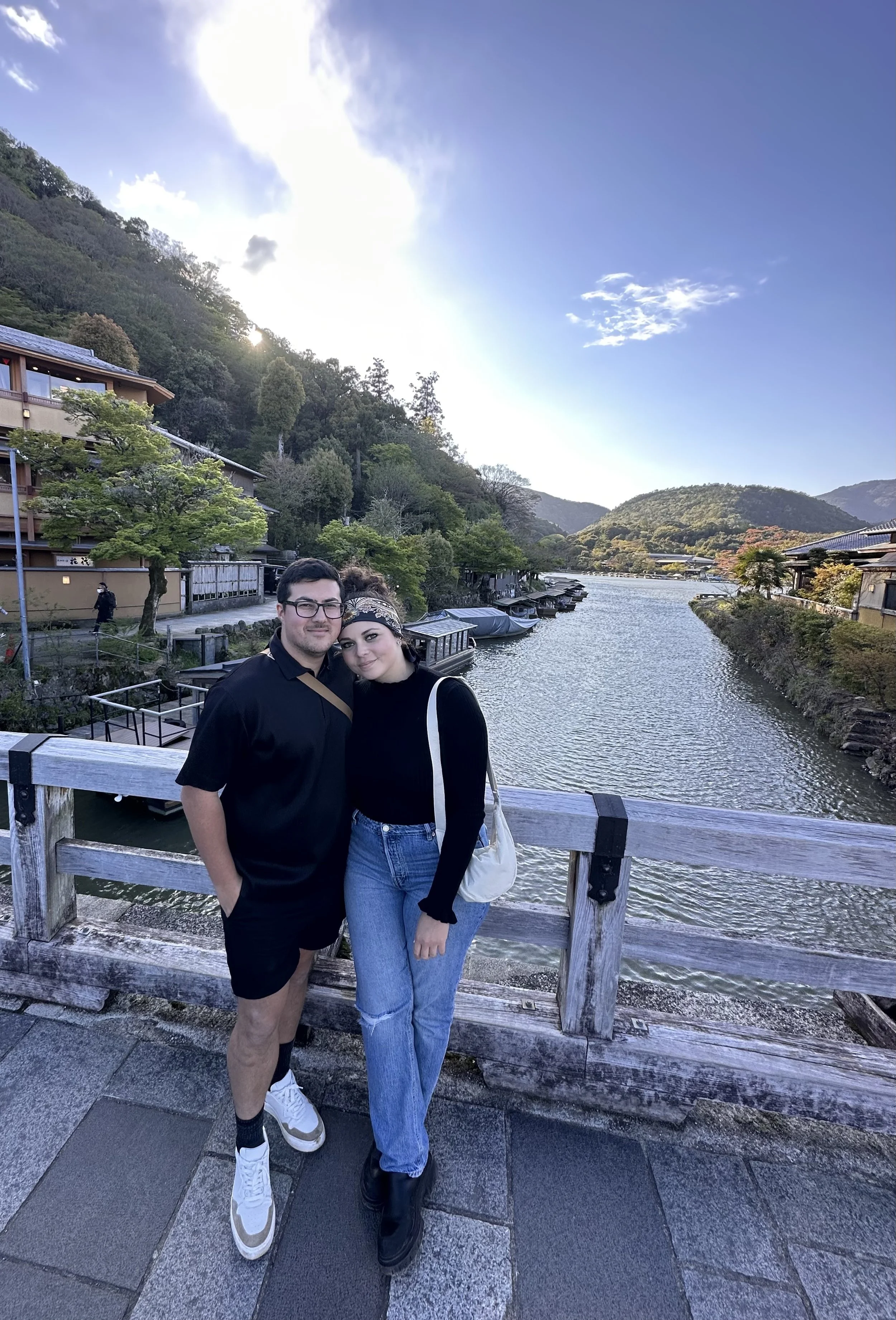
Kyoto felt like Tokyo's quieter, older sibling. The one who stayed home and kept the traditions alive while Tokyo went off and reinvented everything.
After five days in one of the most overwhelming and extraordinary cities on earth, Kyoto arrives like a deep breath. It is not slow exactly, it is just operating at a different frequency. More nature, more temples, more moments where you stop walking and just stand somewhere and try to take it in. In some ways it reminded me of San Diego, that balance of city and nature, except with centuries of history layered underneath everything you look at.
Three full days is the minimum for a first visit. Four is better, especially if you are planning a day trip to Nara and Osaka, which takes an entire day away from Kyoto and is worth doing but will leave you wishing you had one more day in the city itself. We wished we had stayed as long as we stayed in Tokyo. We also understand why we did not. Just know going in that Kyoto has a way of making you want more of it.
A Brief Look At
Your Itinerary
The full itinerary is at the bottom of the page when you are ready.
-
The arrival day that somehow manages to pack in two of the most iconic Kyoto experiences before the sun goes down. Lunch at a restaurant where they cook in front of you, the Golden Pavilion, a traditional tea ceremony, and then the Gion District at night in the rain, which turned out to be more beautiful than a clear evening would have been.
-
A full day away from Kyoto. Deer that bow back, a temple that belongs in a movie, a castle park that feels like Tokyo but older, and a food street at night that looks like the Vegas Strip but better. Full details on the Nara and Osaka pages.
-
The best decision of the entire Kyoto leg. A private guide who took us into temples we would never have entered on our own, showed us proper etiquette, fed us at a restaurant with no sign on the door, and changed how we understood the city entirely. Book this before you book anything else.
-
The morning that starts visually stunning and ends with Japanese macaques completely unbothered by your presence at the top of a very long staircase. Then the shinkansen back to Tokyo.
What to See on Your Visit to Kyoto
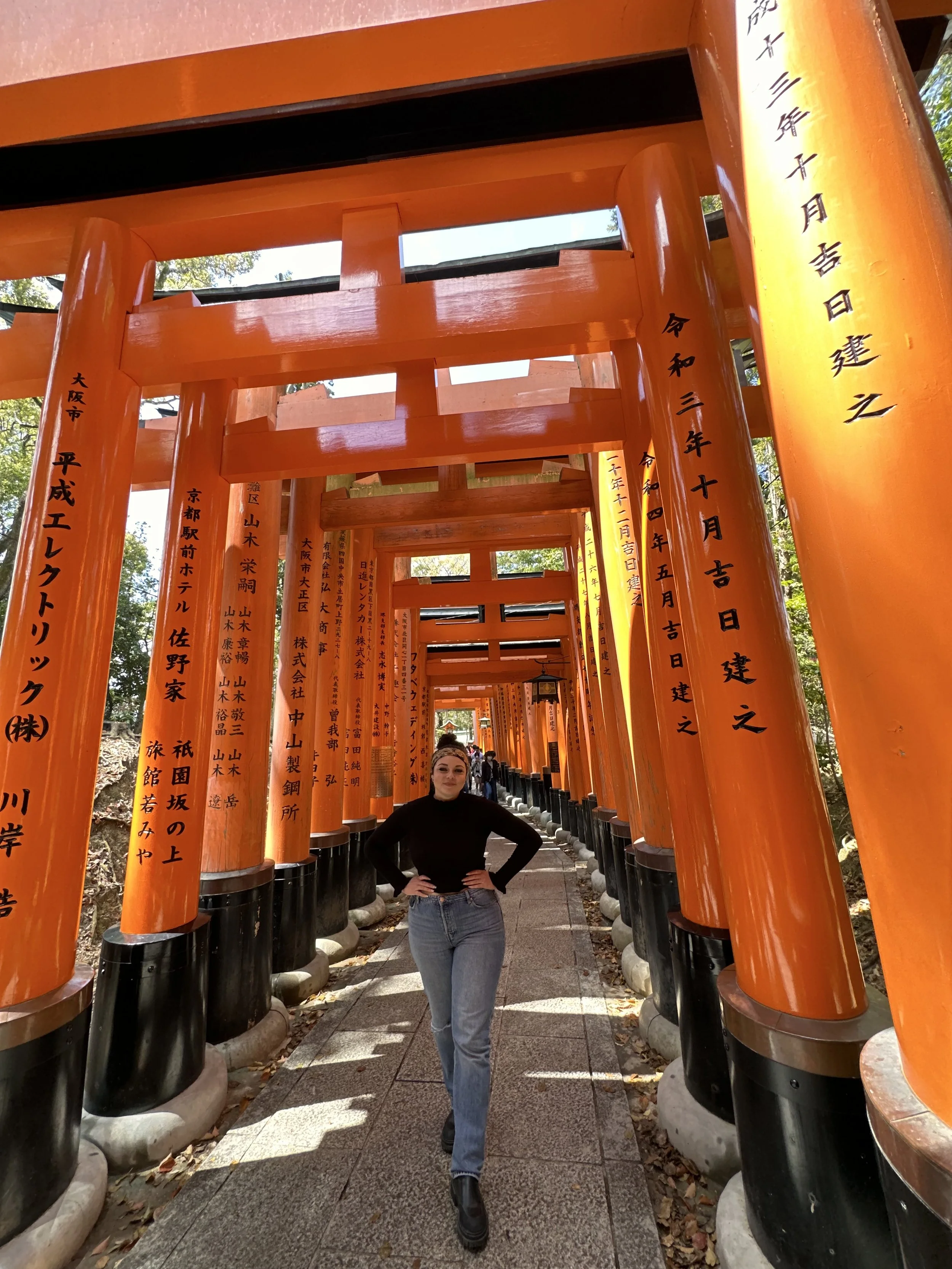
So iconically Japan that it feels like it should not be real. Thousands of vermilion torii gates climbing the forested slopes of Mount Inari in a tunnel that stretches for four kilometers up the mountain. The famous photograph you have seen a thousand times is taken near the base where the gates are densest and the crowds are thickest. Keep walking.
The further up the mountain you go, the fewer people you share it with and the more the place reveals itself. Somewhere on the upper trail, away from the tourists with their cameras at the entrance, we stumbled into what looked like a cemetery. Stone monuments lining the path, moss covered, completely silent, with the forest closing in. Some of these are O-Tsuka stones, Shinto memorial monuments donated by believers rather than actual graves, though the trail also passes through sections dedicated to the spirits of deceased businesses. Whatever they were exactly the atmosphere changed completely. Quieter, slightly eerie, and one of those unexpected moments that stays with you more than the famous gates themselves.
Walk as much of the trail as you can manage. The summit takes about two hours from the base and most people turn back at the halfway point. The upper mountain is worth the effort.
Kinkakuji Temple (The Golden Pavilion)
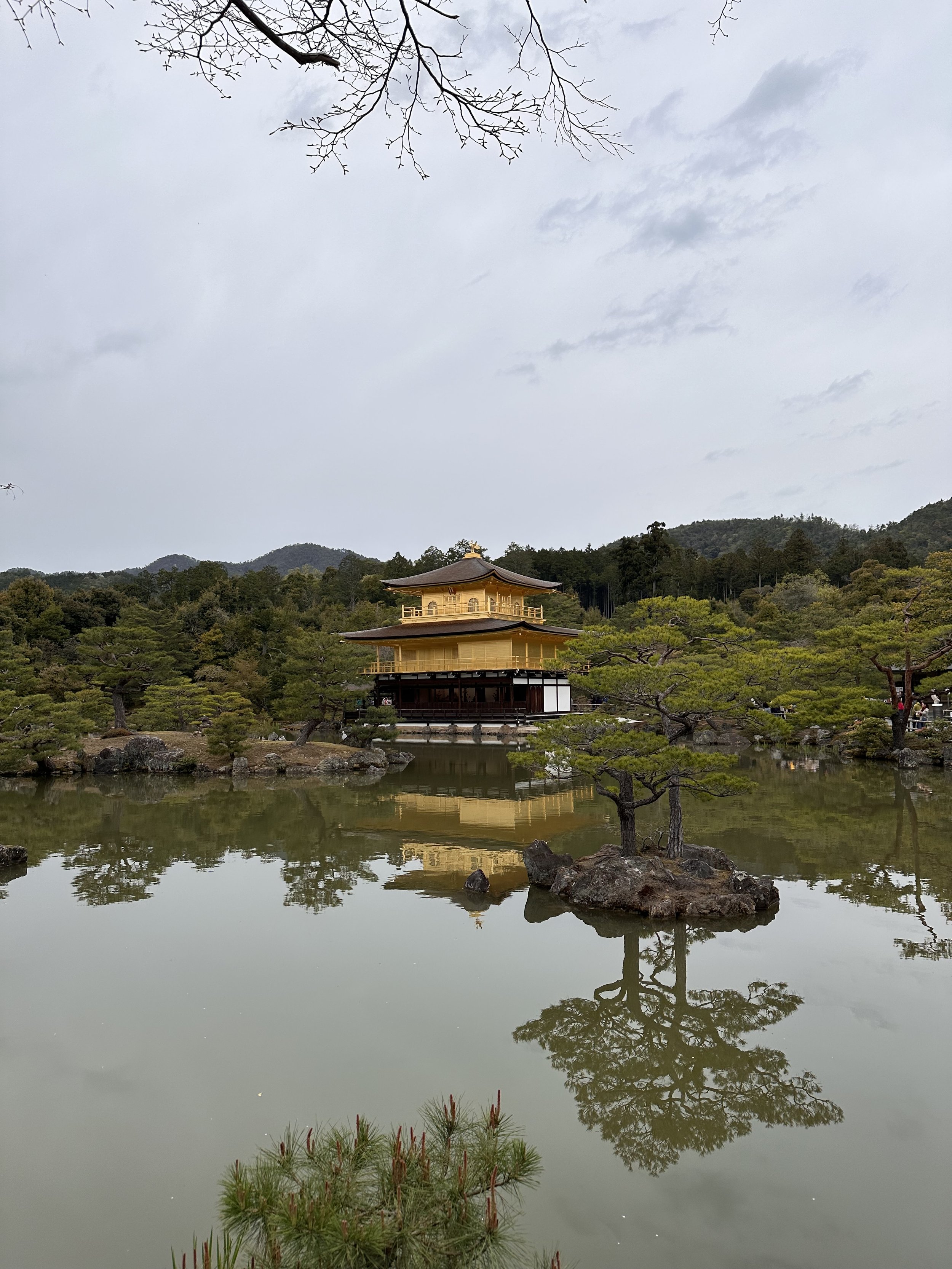
The only other time I had seen that much gold in one place was the Vatican. Kinkakuji is covered in real gold leaf and it reflects off the pond in front of it in a way that photographs genuinely cannot capture. It is one of those landmarks that earns its reputation completely.
Despite the crowds, and there are many, the grounds feel quiet. Something about the combination of the gold, the water, and the surrounding garden creates an atmosphere that people seem to enter and immediately lower their voices. Worth every minute.
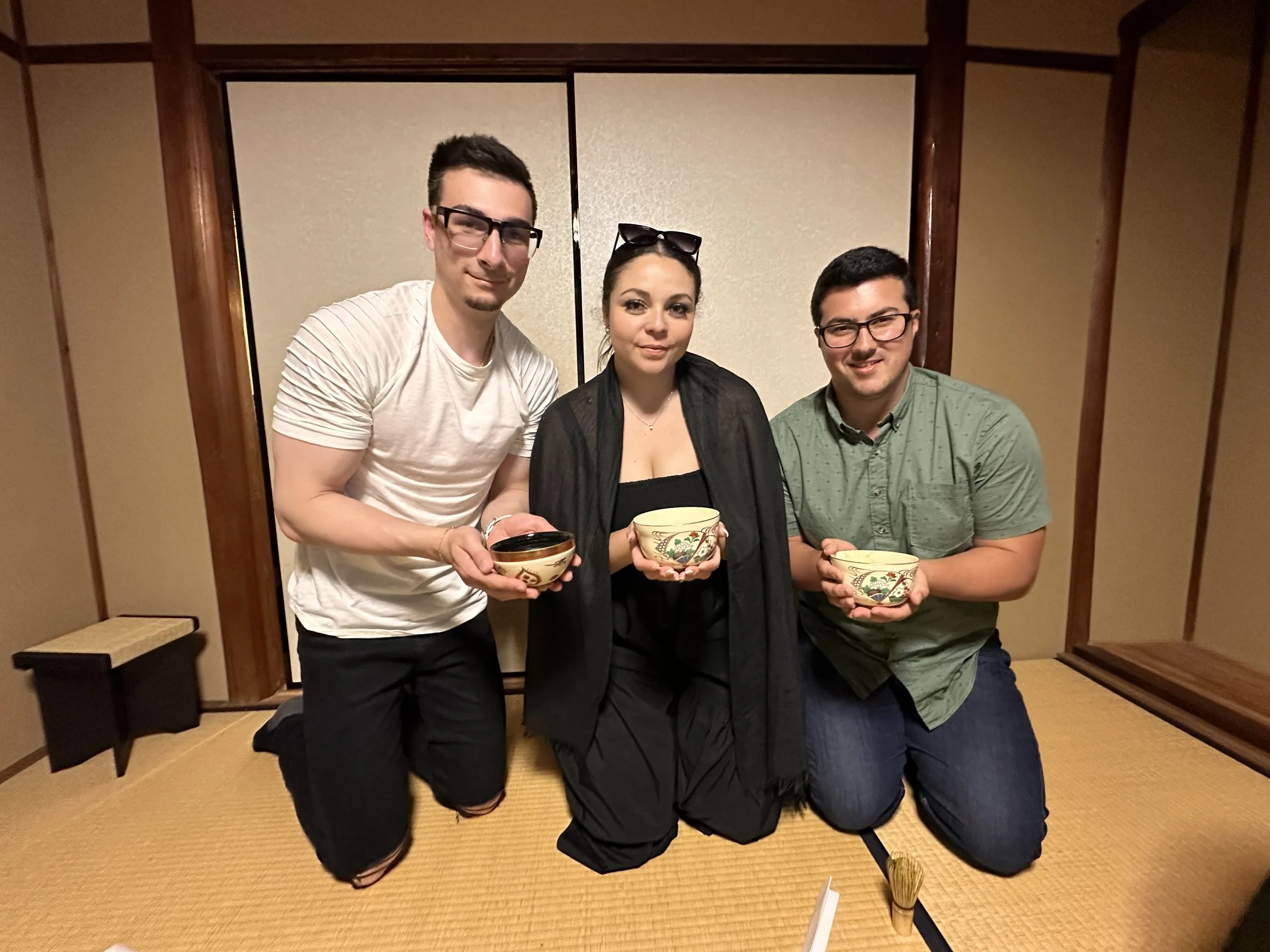
Book it. Even if you hate matcha, which I do, the experience itself is worth doing. Sitting in a traditional tea house, watching the ceremony performed with a level of precision and intentionality that makes you feel like every movement matters, is one of those Kyoto experiences that could not happen anywhere else. The matcha is bitter and I drank it anyway because the context made it feel like the right thing to do
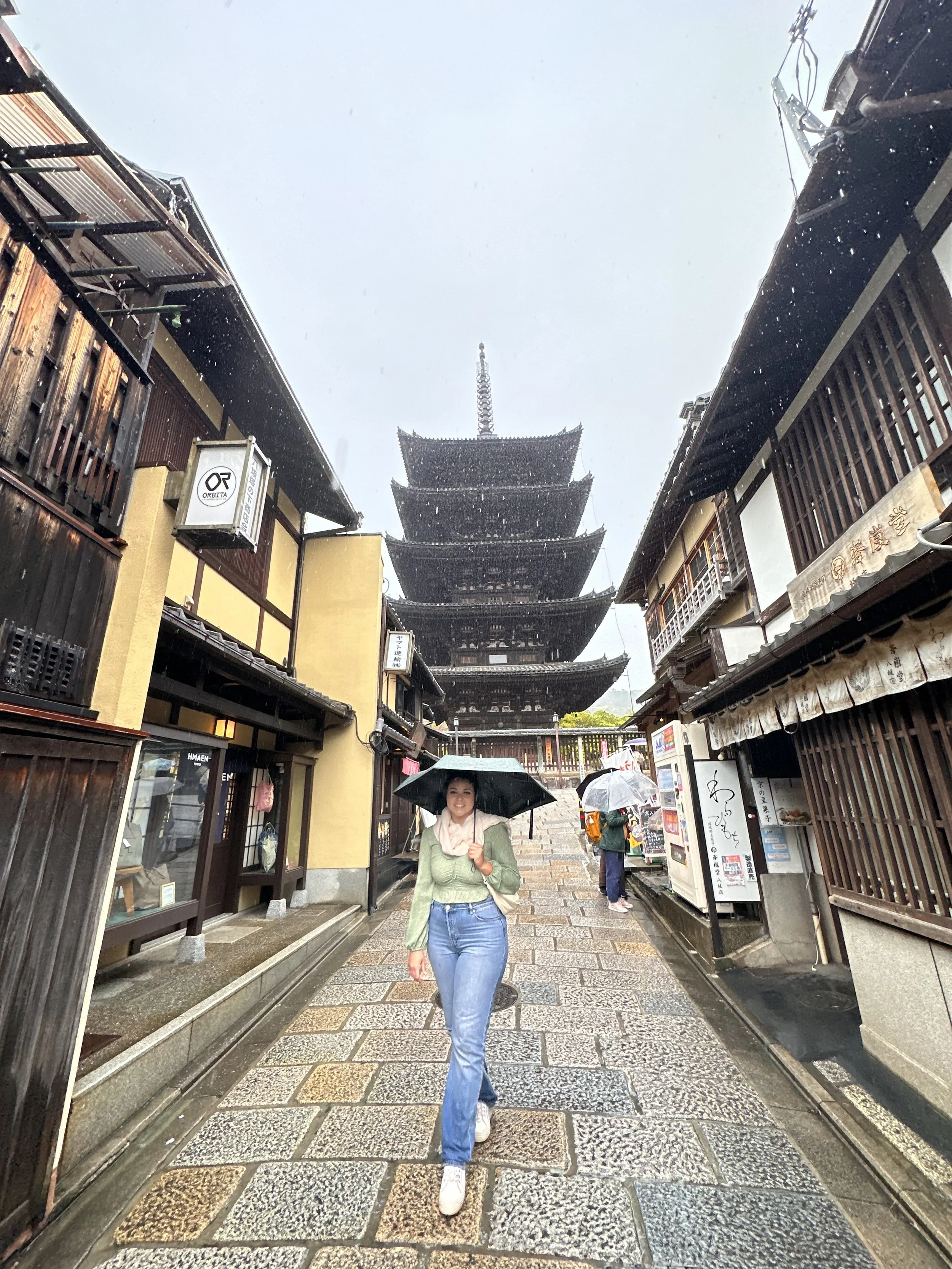
Gion District
The most preserved historic district in Japan and the place most associated with Kyoto's geisha culture. Narrow lanes of traditional wooden machiya townhouses, stone-paved alleys, paper lanterns, and the sense that the city has been protecting this particular corner of itself for a very long time.
Go at night. The lanterns are lit, the crowds thin slightly, and the rain, if it is raining, makes everything more beautiful not less. Walk Hanamikoji Street, find the Gion Tatsumi Bridge, and end at Yasaka Shrine where the lanterns illuminate the gates in a way that feels completely unreal.
We never spotted a geisha. We also did not try very hard because it felt like the wrong kind of looking. Just being in Gion at night is enough.
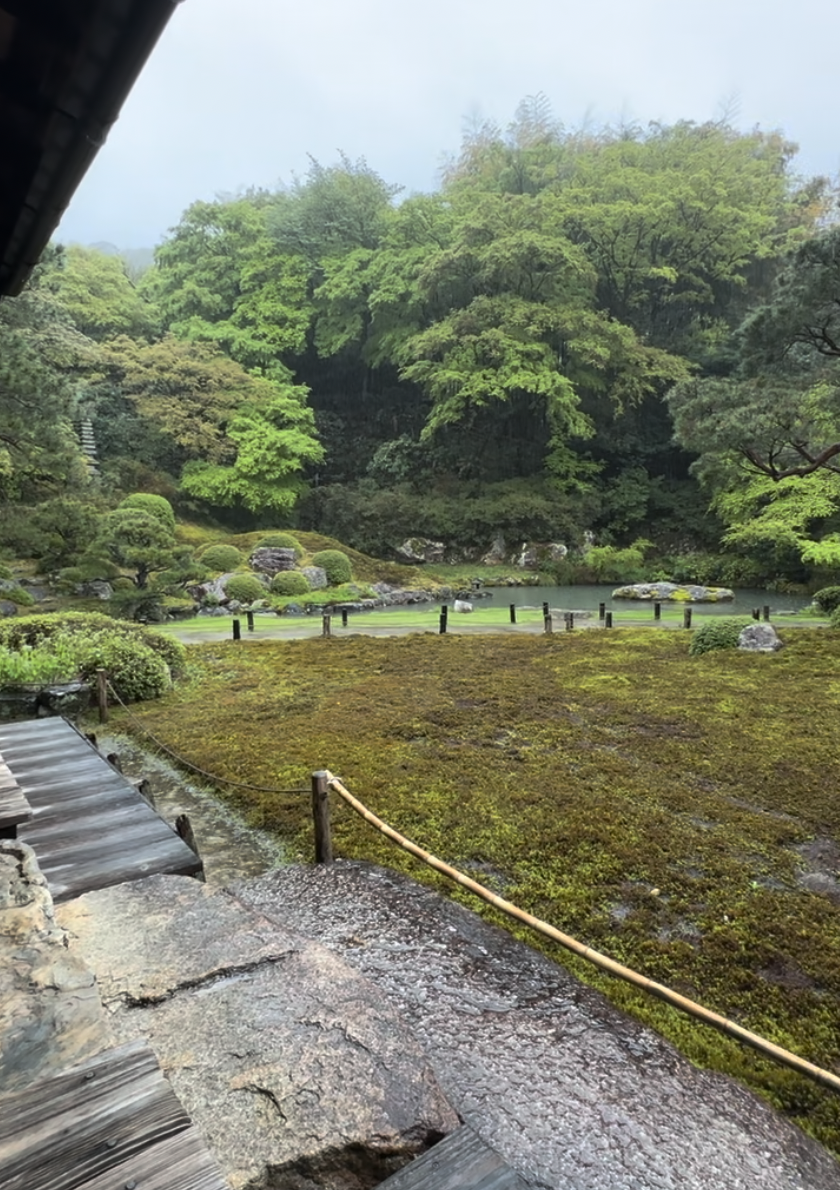
Not on most first timer itineraries and one of the best things we saw in Kyoto. Our private guide brought us here and we would never have gone in on our own. The gardens are stunning, the atmosphere is the most peaceful of any place we visited in Japan, and standing inside it I felt something I can only describe as not feeling worthy enough to be there. Not unwelcome, just aware of how genuinely special the place was.
If you are doing a private tour, ask your guide to take you here. If you are not, go anyway.
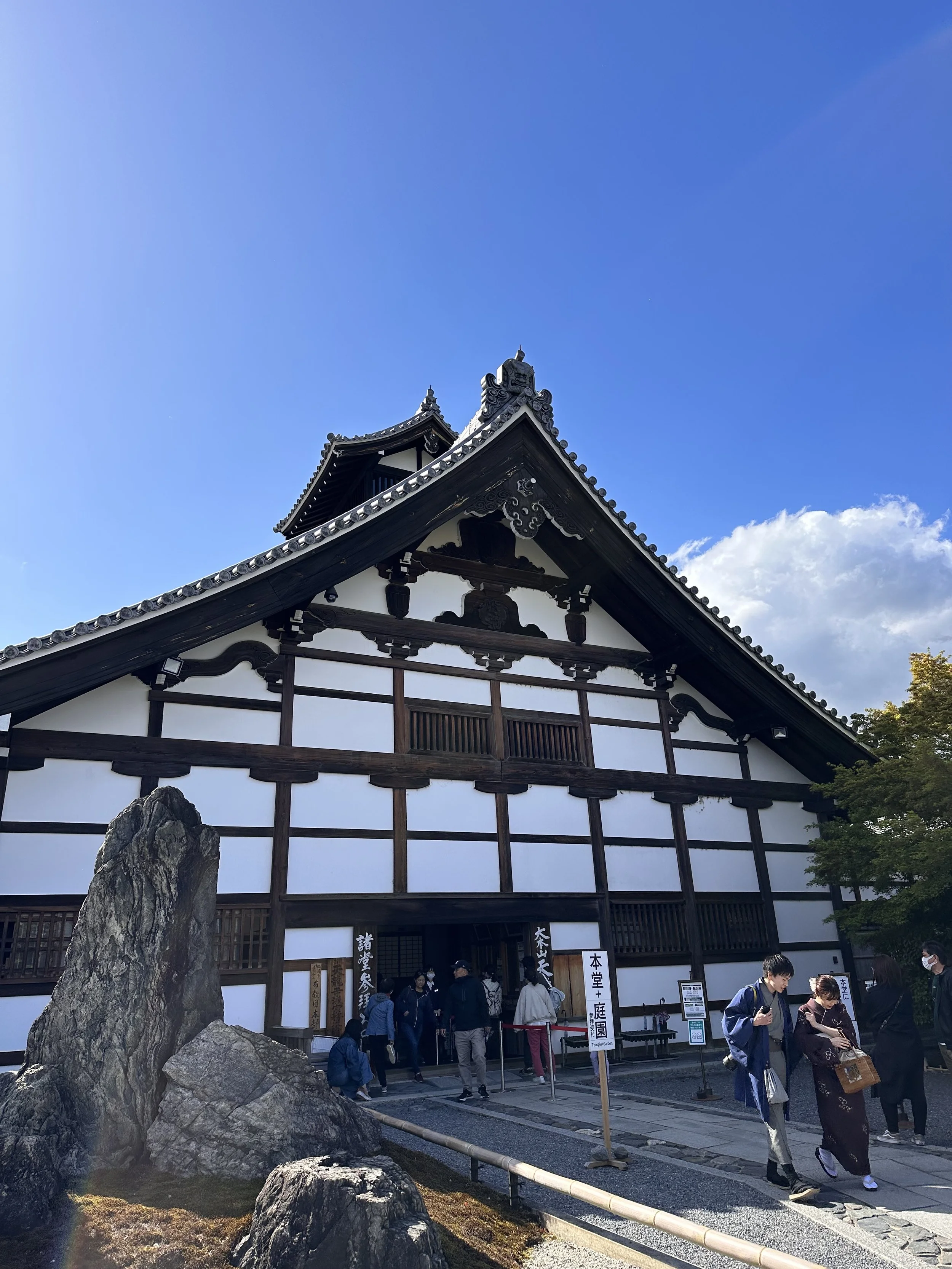
Arashiyama Bamboo Grove
The bamboo grove is visually striking but honest expectations help here. By the time we visited we had already walked through significant bamboo at Fushimi Inari and the grove felt more crowded and performative than magical. Everyone around us was focused on getting the perfect photo rather than actually being there and that energy is hard to escape.
It is still worth seeing. The scale of the bamboo is impressive and the light through the stalks is genuinely beautiful. Just go in knowing it is one of those places that photographs better than it feels and that the crowds are part of the experience whether you like it or not. Going early before 8 AM helps significantly.
If you had to choose between Fushimi Inari and the bamboo grove, choose Fushimi Inari. It has bamboo too and infinitely more to offer beyond it.
Yasaka Koshin-do Temple and the Kukurizaru
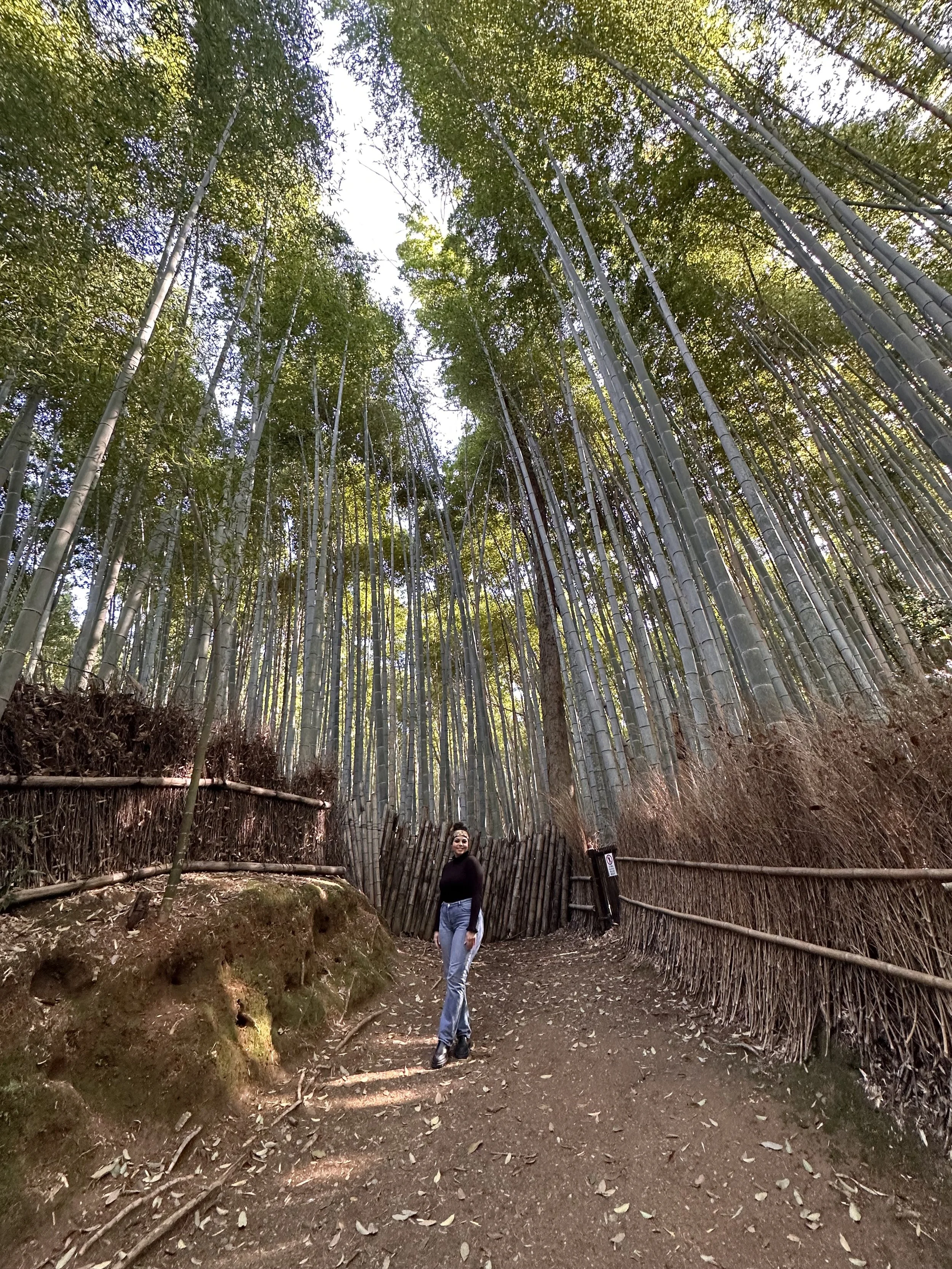
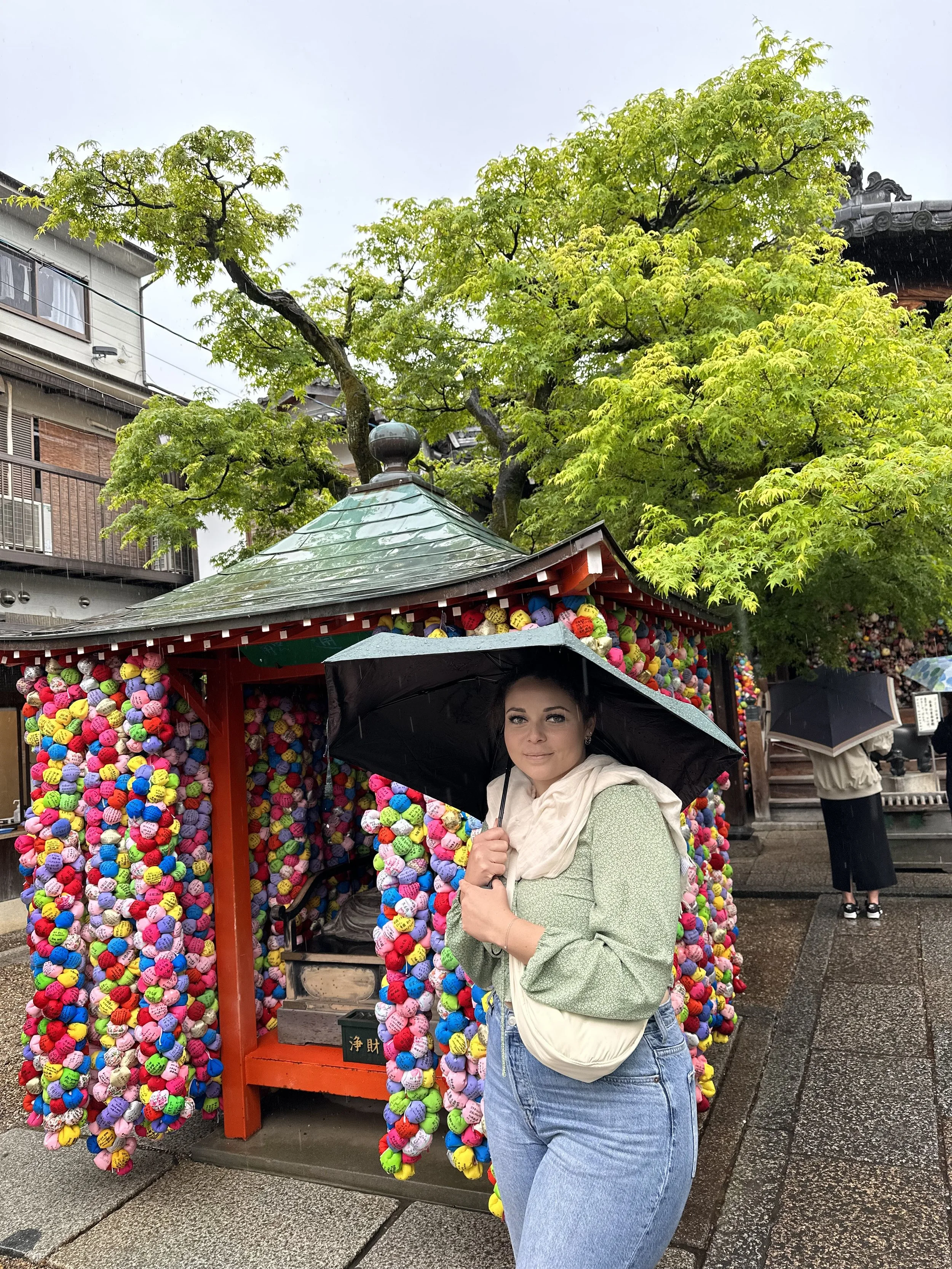
Tucked into the Higashiyama area, this small temple is covered in hanging fabric balls in every color imaginable. These are Kukurizaru, bound monkey charms where visitors write their wishes or desires and hang them at the temple in hopes of having them granted. It is one of those places that sounds like a tourist attraction and turns out to be genuinely moving when you are standing in front of it. The colors against the traditional architecture and the rain made it one of the most beautiful things we saw in Kyoto.
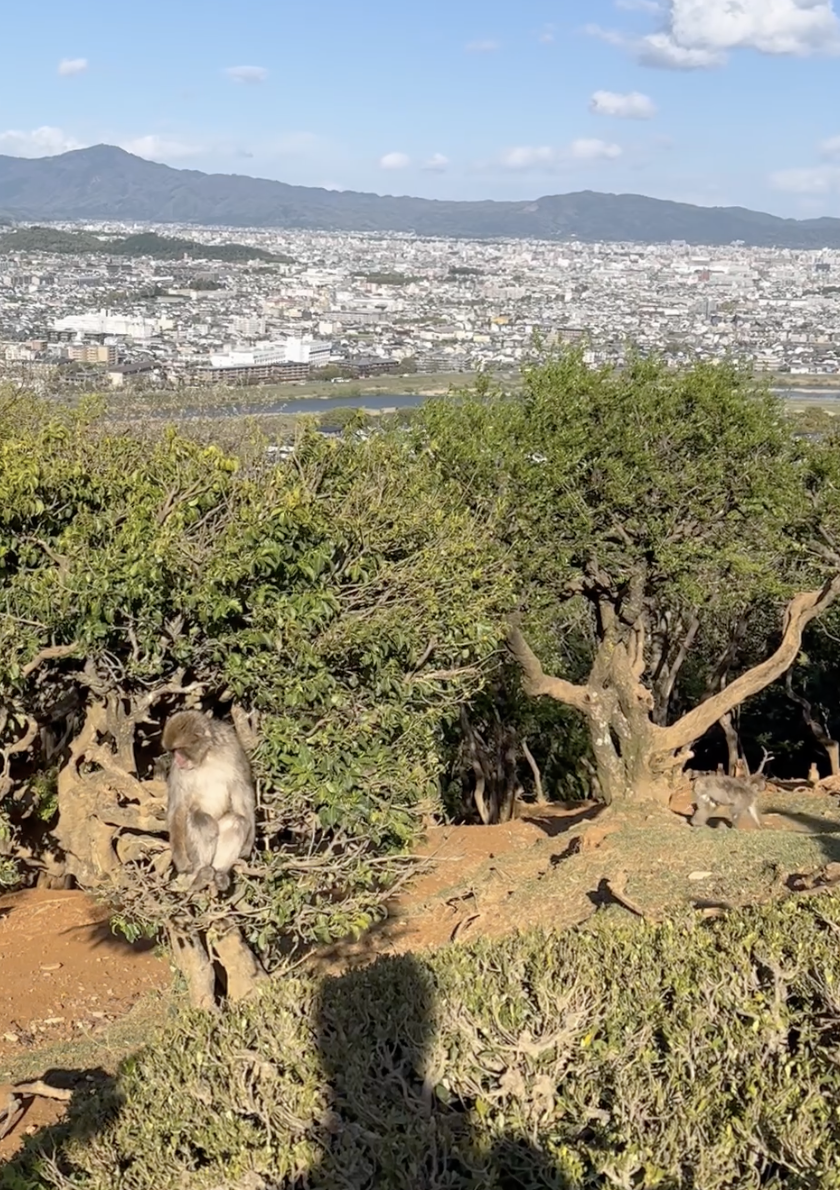
Worth every one of the roughly 250 stairs to get there. Japanese macaques completely unbothered by human presence, moving around you as if you are part of the landscape rather than visitors to it. The views from the top over Arashiyama and the surrounding mountains are also genuinely stunning, a completely different perspective from anything else on the trip. Go in the afternoon when the morning crowds at the bamboo grove have thinned and you have the energy for the climb.
Tenryu-ji Temple and Garden
One of the finest gardens in Kyoto, which is saying something in a city that takes its gardens extremely seriously. The pond garden at Tenryu-ji has barely changed since the 14th century and walking through it on the way to the bamboo grove puts everything that follows into a different context. Do not skip it to get to the bamboo faster.
Chion-in Temple at Night
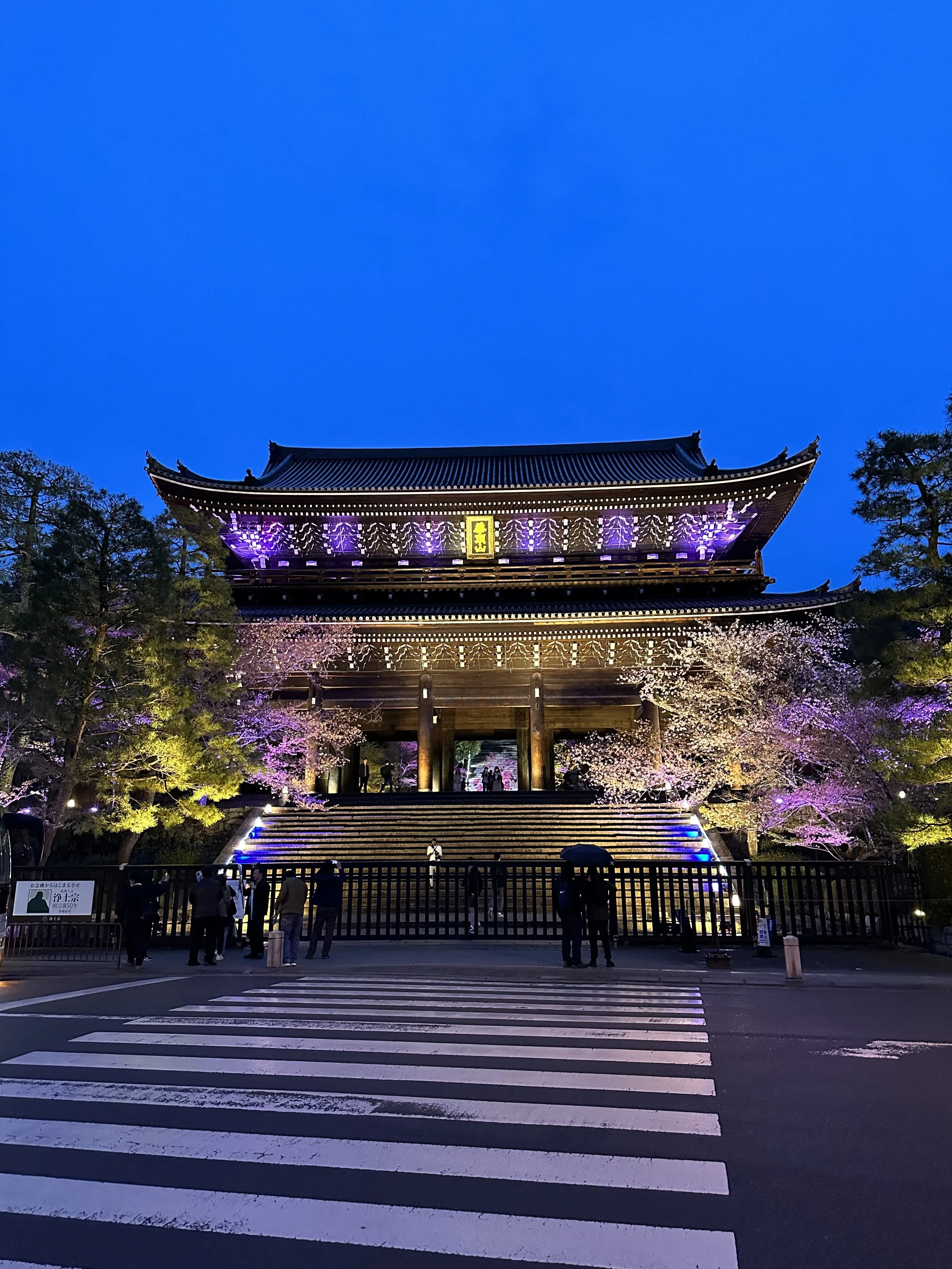
Chion-in is one of the most significant Buddhist temples in Japan and also one of the most architecturally overwhelming. The Sanmon Gate at the entrance is the largest wooden temple gate in the country, standing 24 meters tall and 50 meters wide, and the wide stone staircase behind it leading up to the main temple grounds is the one that stopped us in our tracks.
We visited at night during cherry blossom season when the temple holds special illuminations. The contrast between the historical architecture and the soft glow of the lights in the rain was one of the most beautiful things we saw in Kyoto. The steps themselves are what I keep coming back to. Wide, worn, ancient, leading up into something lit and quiet at the top. Standing at the base looking up at them in the rain felt like a scene from a film.
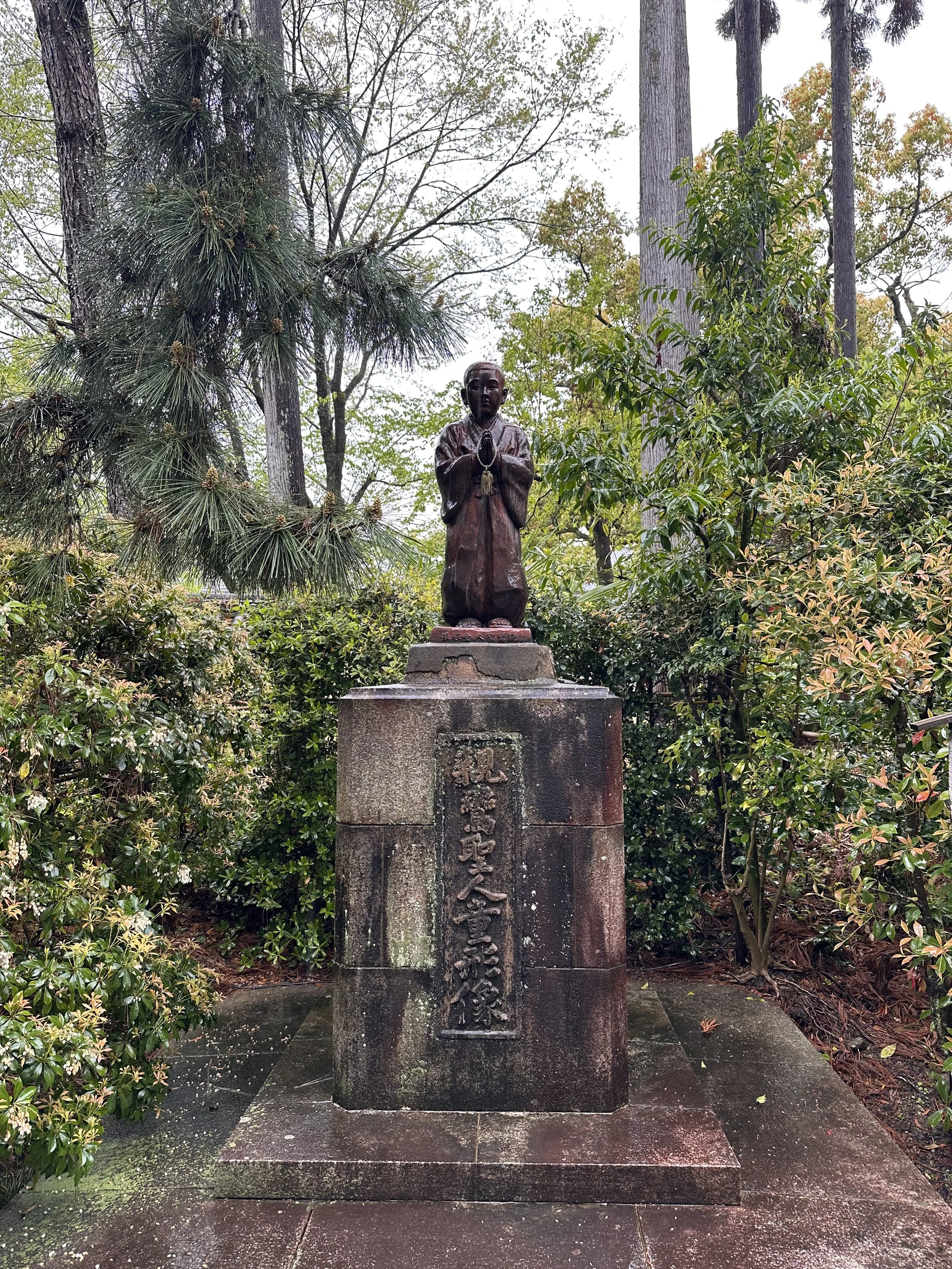
The temple also has a nightingale floor corridor, flooring deliberately designed to make a chirping sound when walked on as an ancient security system, and houses Japan's largest temple bell at 74 tons, rung 108 times every New Year's Eve by a team of 17 monks. Worth knowing before you walk through it.
Where to Stay Your First Time in Kyoto
Hyatt Place Kyoto was where we stayed and it was genuinely nice. Well located, comfortable, and a strong base for getting around the city. The location put us within easy reach of Gion and the eastern temples while still being manageable for taxis and trains to the rest of the city. Highly recommend.
Know the Neighborhoods
Higashiyama is the most atmospheric neighborhood for a first visit, close to Gion, the historic stone steps, and the eastern temple district. Staying here puts you in the most traditionally Kyoto feeling part of the city.
Downtown Kyoto around Kawaramachi and Shijo is the most convenient base for getting around, with easy access to restaurants, bars, shopping, and transport connections.
Arashiyama is worth considering if your trip is heavily focused on the western temples and bamboo grove, though it is further from the eastern districts and Gion.
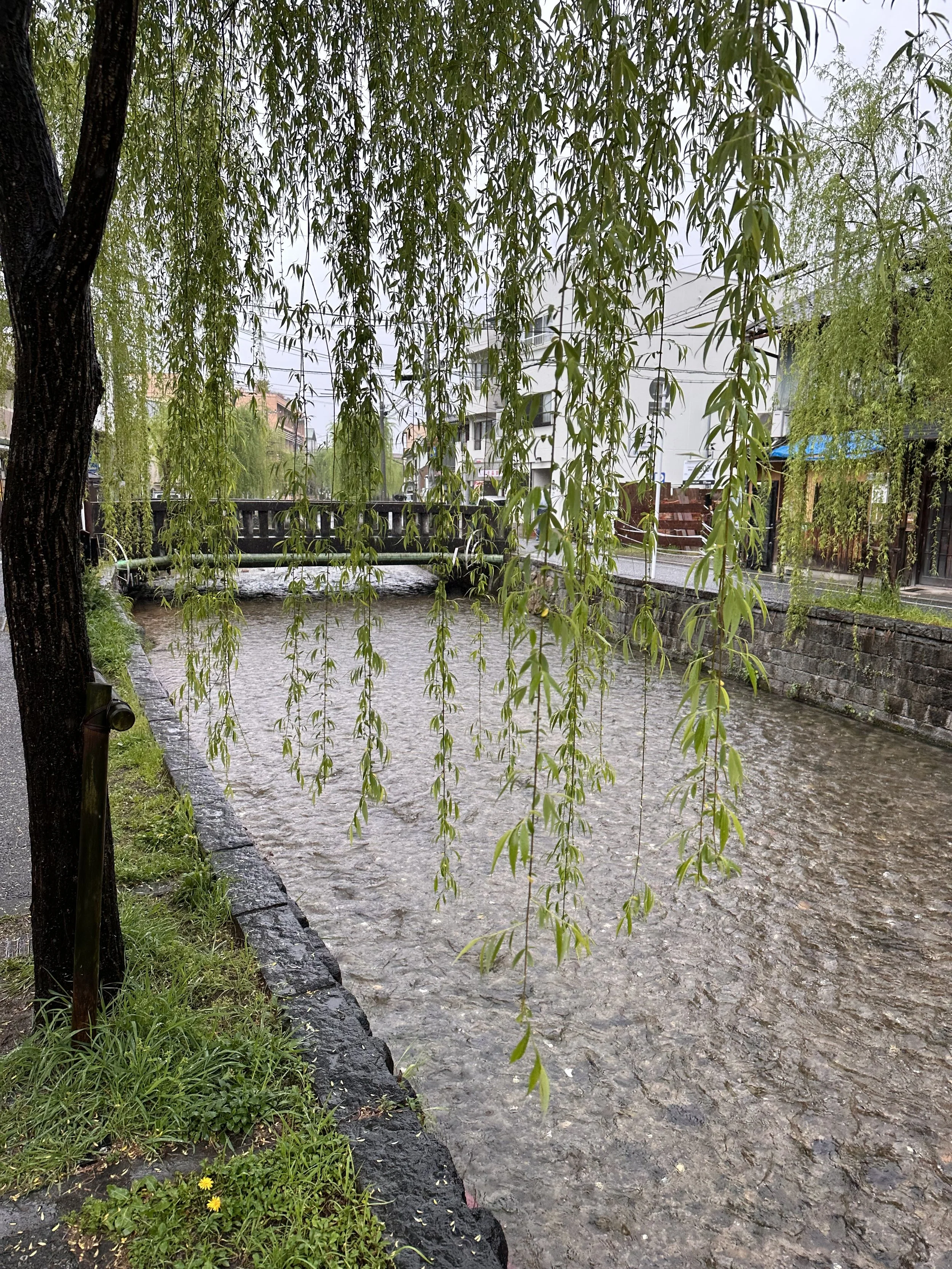
Hotel Suggestions
Hyatt Place Kyoto is where we stayed and would stay again. Comfortable, well located, and a reliable base for the city.
The Ritz Carlton Kyoto sits on the Kamogawa River and is the classic Kyoto splurge. Views of the river, the mountains, and the kind of service that makes the city feel even more special.
Hotel The Mitsui Kyoto is a newer luxury property built around a historic site near Nijo Castle. Worth considering if you want something that feels deeply connected to the city's history.
For a more traditional experience, a ryokan stay in Higashiyama or near the Philosopher's Path puts you inside the Kyoto experience rather than adjacent to it.
A Note on Traditional Stays
We met several other tourists in Kyoto who were staying in traditional Japanese machiya townhouses or ryokans rather than hotels. A machiya is a traditional wooden townhouse and several have been converted into private rentable accommodations throughout the city. A ryokan is a traditional Japanese inn with tatami rooms, futon bedding, communal baths, and often multi course kaiseki meals included.
Both are genuinely special experiences and deeply connected to what makes Kyoto different from anywhere else in Japan. That said for a first trip, especially if you are not used to sleeping on a futon, navigating a communal bath, or the general etiquette of a traditional stay, a comfortable Western style hotel gives you one less thing to figure out while you are already processing a lot. Once you know Kyoto a little better a ryokan or machiya stay would be one of the first things we would add on a return visit.
Kyoto approaches food the way it approaches everything else. With intention. The ingredients are seasonal, the presentation is considered, and even a simple meal at a local restaurant feels like someone thought carefully about what they put in front of you.
Where to Eat & Drink on Your First Trip to Kyoto
Dainoji
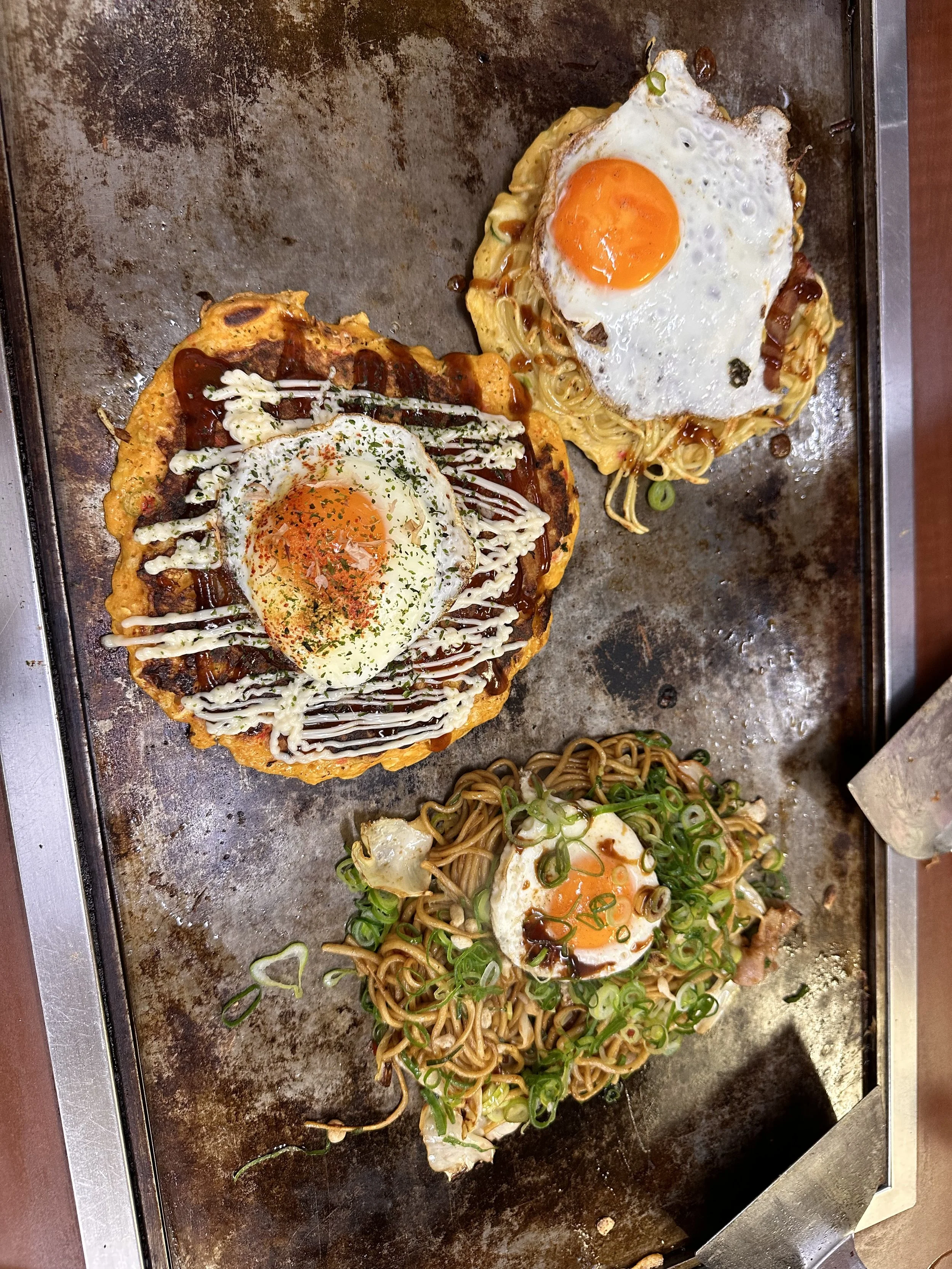
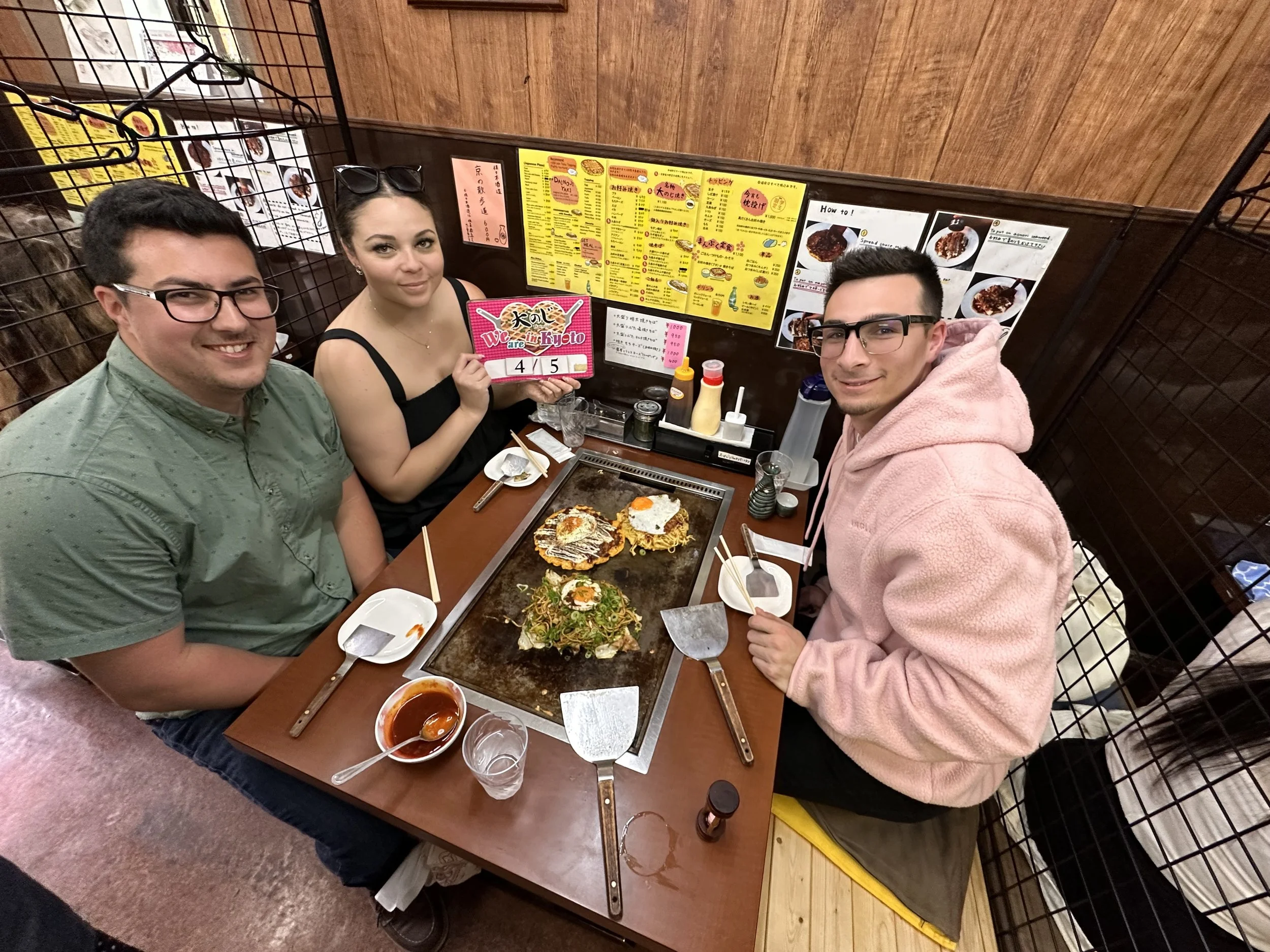
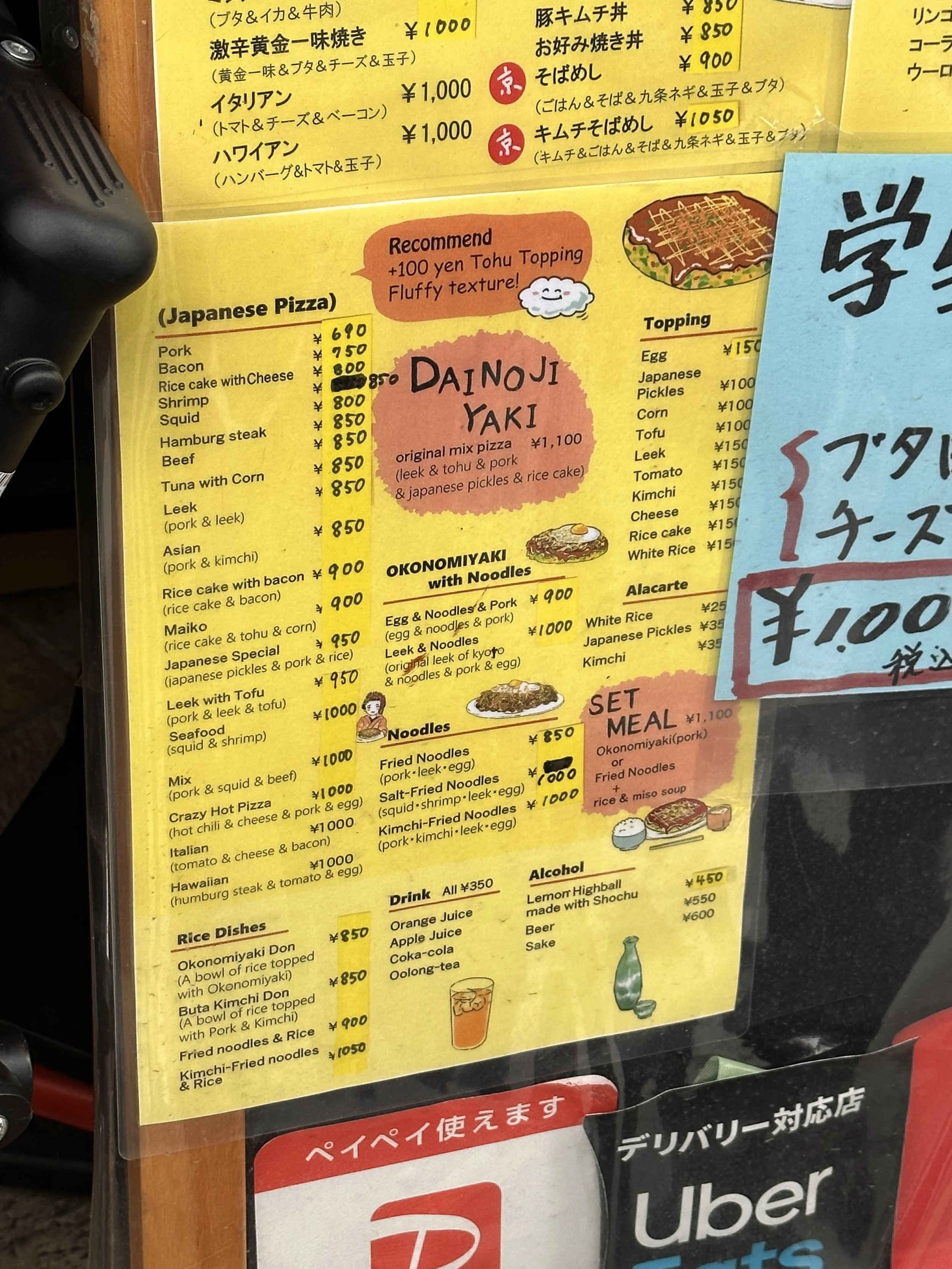
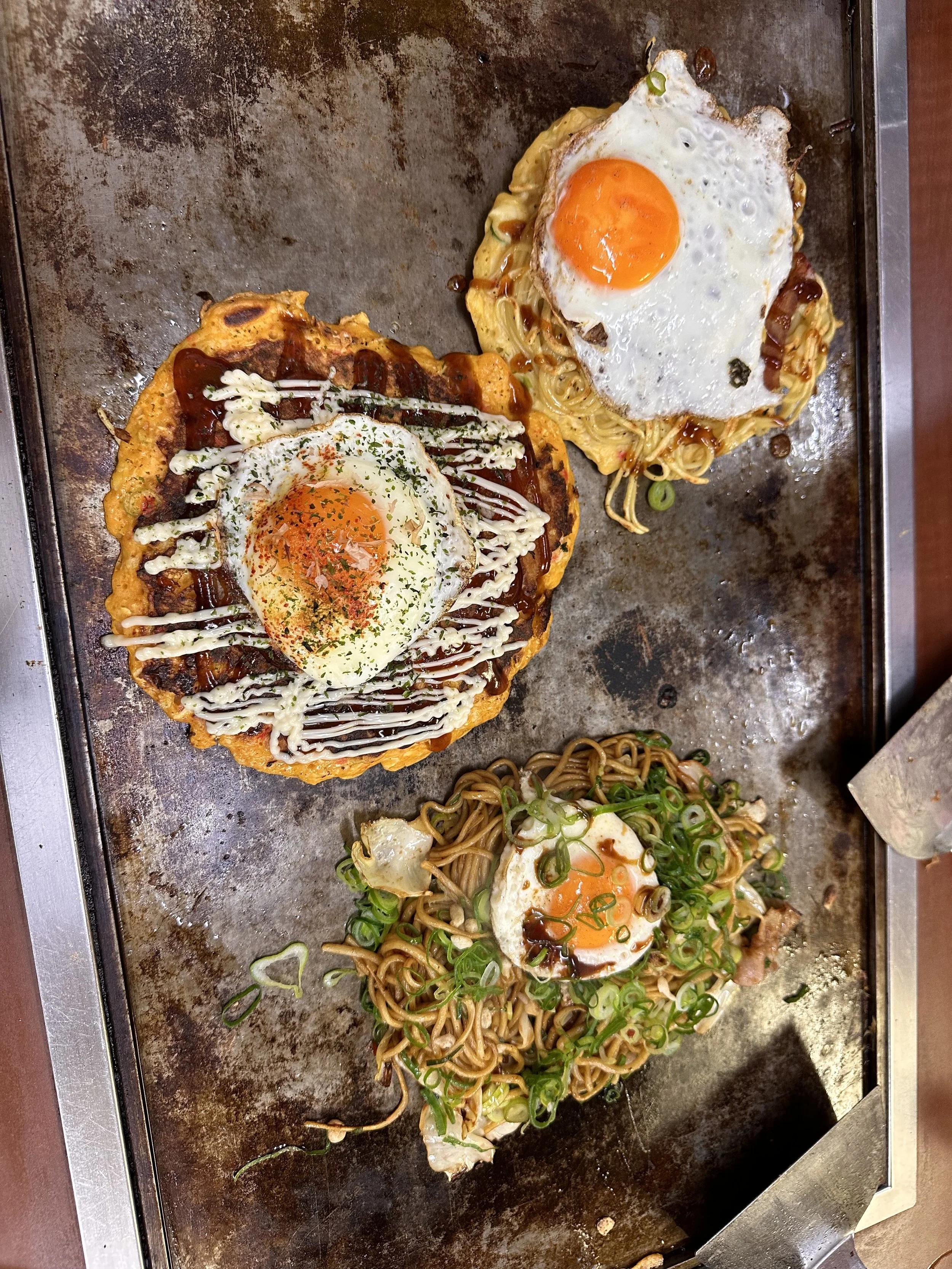
This was one of the most memorable meals of the entire Japan trip. We ate here before heading to Kinkakuji and the Japanese pizza, okonomiyaki, was extraordinary. They make it in front of you, you are involved in the process, and watching it come together at the table is as much of the experience as eating it. The others in our group got the okonomiyaki and I got yakisoba and both were completely worth it. Do not skip this.
The Restaurant With No Sign
Our guide took us to a place that had no sign on the door. Nothing on the outside to indicate it was a restaurant at all. Inside there were two families eating, both with very young children using chopsticks perfectly while our friend still had not quite figured them out. We ordered something similar to an omelette with ketchup on top which sounds strange and was delicious. This is the kind of meal that only happens when someone who knows the city takes you somewhere they trust. It is not a place you can find on a map. It is a reason to book a private guide.
Deep fried beef cutlet served rare with a stone pot for cooking it further yourself. Pontocho Alley is one of the most atmospheric dining streets in Japan, a narrow lane of restaurants running parallel to the Kamo River, and this is one of the best reasons to eat there.
A small bar with about ten to fifteen seats that sold beer beyond Japanese options, which after several days of exclusively Japanese beer we were genuinely craving. Intimate, unpretentious, and exactly the kind of bar that makes Kyoto feel real rather than performative. The izakaya bars throughout Kyoto generally seat six to ten people maximum and the atmosphere is so intimate that you do not want to take photos and break the spell. Just be in it.
The world's first Starbucks housed in a traditional Japanese machiya townhouse, over 100 years old, sitting on Ninenzaka street in Higashiyama. The exterior blends so seamlessly into the historic streetscape that people regularly walk past without noticing the subtle noren curtain and lantern marking the entrance. Inside, the second floor has tatami mat seating where you remove your shoes and sit on silk cushions with a moss garden visible through the windows below. The coffee is Starbucks. The building is extraordinary. Finding a seat is nearly impossible but the experience of being inside it is worth the attempt. Open daily from 8 AM.
What to Try at Least Once in Kyoto
Kyoto is less about the food and more about the experience of being there. That said a few things are worth seeking out.
Okonomiyaki at a place where it is made in front of you or you make it yourself. Dainoji does this and it was one of the most memorable meals of the whole Japan trip.
Yudofu, which is tofu simmered in kombu broth, is specific to Kyoto in a way that reflects the city's Buddhist temple food traditions. Simple, delicate, and completely different from anything you would find in Tokyo.
Kaiseki if the budget allows. The traditional Kyoto multi course meal is one of the finest dining experiences in Japan and the city is the place to have it.
And at least one meal in Pontocho Alley, not for any specific dish but for the experience of eating in one of the most atmospheric dining streets in the world.
Beyond that, eat where your guide takes you and point at what looks good. Kyoto rewards curiosity over planning in the same way the rest of Japan does.
What to Pack for Your First Trip to Kyoto
Kyoto is a walking city with a significant amount of temple and shrine visiting built into every day. Pack accordingly.
Weather for Cherry Blossom Season (Late March to Early April)
Early April in Kyoto brings mild, pleasant days with temperatures typically reaching the mid to upper 60s Fahrenheit during the day. Mornings and evenings are cooler, usually dropping into the mid 40s, so layers are worth having. Rain is more common in Kyoto than Tokyo during this period and there is a reasonable chance of at least one rainy day in a three or four day visit. We had rain for two of our days and it did not diminish the experience at all. In some cases it made things more beautiful. Bring a compact umbrella and do not let a rainy forecast change your plans.
Comfortable walking shoes that slip on and off easily. You will remove them at multiple temples and shrines every single day. A compact umbrella. Kyoto in cherry blossom season is unpredictable and a rain jacket or umbrella is essential. Layers for cool mornings and evenings. One slightly dressier outfit for nicer restaurants and bars. Small daypack for temple visits, water, and layers. Cash. Kyoto's smaller restaurants, bars, and temple entry fees often require it.
Core Items for Kyoto
Temple etiquette matters more here than anywhere else in Japan. Remove shoes when indicated, speak quietly, do not photograph ceremonies or people without permission, and follow your guide's lead if you have one. Having a guide explain what is appropriate in each space changed our experience completely.
The beds are significantly smaller than Western hotel beds. Even in nicer properties like the Hyatt Place, the beds are closer to a full or smaller rather than the queen or king you might expect at home. Worth knowing before you arrive so it does not catch you off guard.
Private tours are worth the investment in Kyoto more than anywhere else in Japan. The city's history is so layered and the temple etiquette so specific that having someone who knows both changes what you are able to access and experience. Book through Viator or a similar platform and look for guides with strong reviews specifically for Kyoto temple tours.
Local Details Worth Knowing
Sick, Soaking Wet, and Completely Unwilling to Leave
It started raining on our first evening in Kyoto and did not really stop.
We were also starting to get sick, which we managed with powdered Theraflu and the kind of determination that only exists when you are in a place you know you might never come back to. Neither the rain nor the sickness won.
The first moment that stays with me is Shoren-in Temple, which our private guide brought us to during our full day tour of the city. The gardens were immaculate, the silence complete, and standing inside it I felt something I had not felt anywhere else on the trip. Not unwelcome, just genuinely unworthy of the space. Like I had wandered into somewhere too beautiful and too considered for my presence to make any sense there. I have never felt that in a building or a garden before. I have not felt it since.
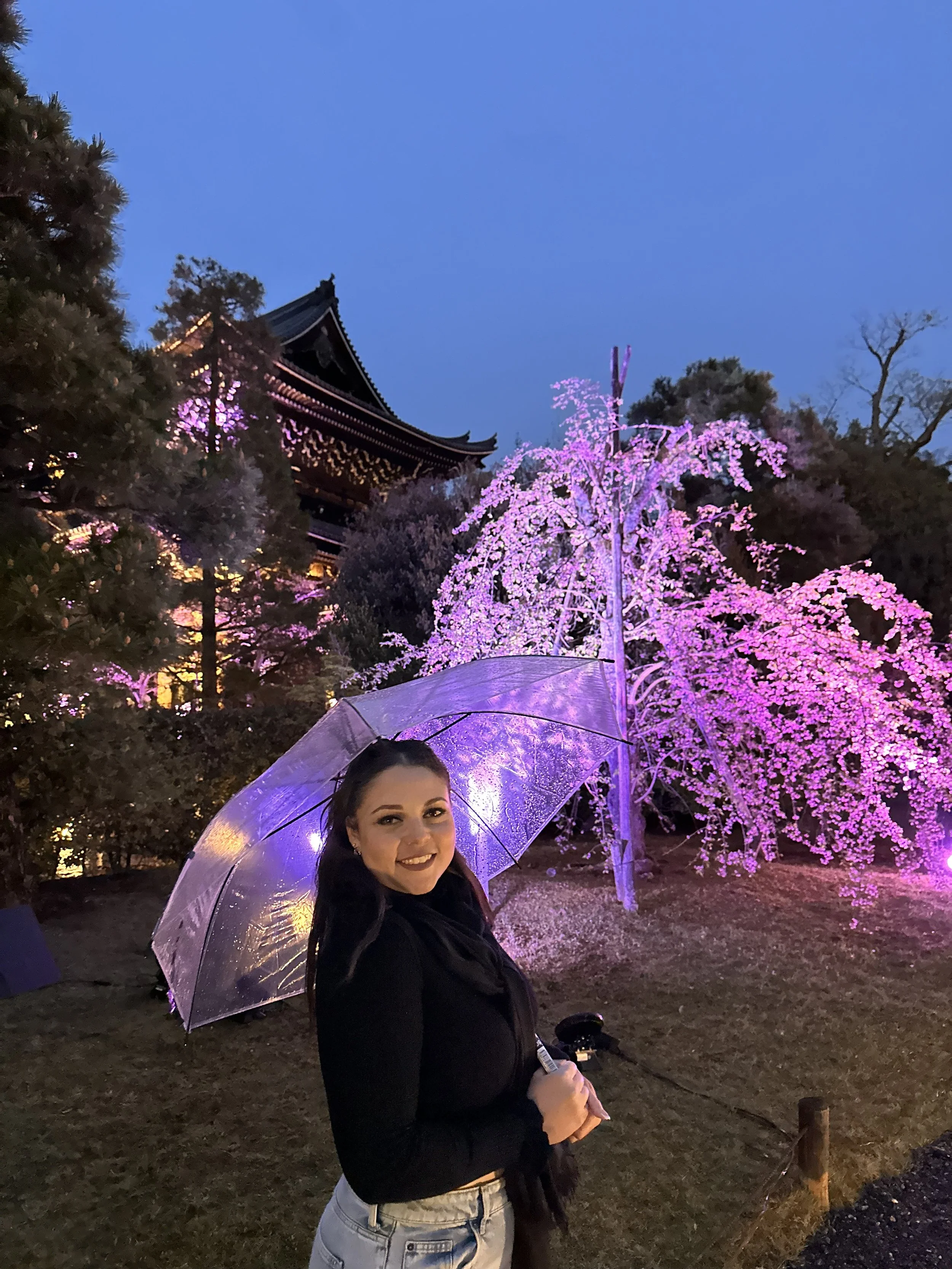
The second moment is Higashiyama at night in the rain. The stone steps of Chion-in Temple lit by the special cherry blossom illuminations, the rain falling through the light, the ancient stone glistening and wet. We were exhausted and sick and walking in the rain and it was one of the most beautiful things I have seen anywhere. Rain in Kyoto does not ruin the experience. It adds something. A quiet, a softness, a feeling that the city is showing you a version of itself that the clear-sky tourists do not get to see.
Kyoto is the kind of place that gives you more the worse conditions get. We left wishing we had stayed longer. We always will.
Itinerary for Your First
Trip to Kyoto
After five days in Tokyo, Kyoto feels like stepping into a completely different country. The pace changes, the architecture changes, the air changes. Tokyo is relentless in the best possible way. Kyoto is deliberate. Every temple, every garden, every stone path feels like it was placed exactly where it is for a reason that goes back centuries. You spend the first day just adjusting to that. By the second day you start to understand what you are actually looking at. By the third day you are standing somewhere extraordinary wishing you had booked one more night.
Here is how to make the most of it on your first visit.
Kyoto is best navigated by Uber, bus, and on foot. Unlike Tokyo where Uber can be unreliable, Uber works well in Kyoto and is often easier than trying to communicate a destination to a taxi driver. Buses cover most of the major temple districts. The city is very walkable within neighborhoods, though the distances between eastern Kyoto, downtown, and Arashiyama in the west are significant enough that you will want transport between them.
One practical note worth knowing: after many of the popular activities and temples, calling a taxi can be difficult because companies do not always answer immediately. Most major activity locations have a taxi stand nearby. The tea ceremony location near Kinkakuji has one just out front that opens around 5:30 PM. Knowing this in advance saves significant stress.
A Note on Getting Around Kyoto
If you have not already learned this from the Tokyo to Kyoto journey, reserve your seats for the return trip to Tokyo before you leave. We did not on the way to Kyoto and spent the journey uncomfortable and standing. Book reserved seats. The difference in comfort is significant and the cost difference is minimal.
Also: Reserve Your Shinkansen Seats
Day 1 - Arrive, Kinkakuji, Tea Ceremony, and Gion at Night
Morning: Shinkansen from Tokyo
The 8:03 AM shinkansen from Tokyo Station arrives in Kyoto at 10:45 AM. Reserve your seats in advance. Get a window seat on the right side of the train heading southwest for views of Mt. Fuji on a clear day, usually visible around 40 minutes after departure.
Take an Uber from Kyoto Station to your hotel, about 15 minutes. Drop your bags and head straight back out. The afternoon is full.
Midday: Lunch at Dainoji
Before Kinkakuji, lunch at Dainoji. The okonomiyaki is made in front of you and it is one of the most memorable meals of the Kyoto leg. Order it. Watch it being made. Take your time with it.
Afternoon: Kinkakuji Temple and the Tea Ceremony
Take a taxi to Kinkakuji, about 20 minutes from central Kyoto. Walk the garden path to the first viewpoint and stand there for a moment before reaching for your camera. The gold is real and the reflection in the pond is exactly as extraordinary as every photograph suggests.
From Kinkakuji, the tea ceremony is a short walk away, bookable through GetYourGuide. The house has an orange shop curtain and sits just beside the bicycle parking area for the temple. Check in and wait to be called in.
The ceremony takes 45 minutes. You will sit on the floor. Matcha will be prepared and served with quiet precision. Drink it even if you do not like matcha. The context makes it worth it.
There is a kimono add-on available when you book. Everyone else in our group did it. We did not and have zero regrets. It did not feel necessary to get the full value of the experience and adds time and cost you may not need. That said if wearing a kimono is something you want to do in Kyoto, this is a convenient way to do it.
After the ceremony, there is a large taxi stand just in front of the activity location that usually opens around 5:30 PM. Do not try to call a taxi. Just walk to the stand. We learned this the hard way, much like Lake Kawaguchiko.
Evening: Gion District and Chion-in Temple at Night
Head back to the hotel to freshen up and then make your way to Gion for the evening. The district is about 1.5 miles from the Hyatt Place Kyoto and walkable.
Start at Maruyama Park, which is home to a famous weeping cherry blossom tree that during sakura season becomes one of the most photographed trees in Japan. Then walk to Yasaka Shrine where the lanterns illuminate the gates after dark in a way that photographs cannot fully capture. Stand there for a while.
From Yasaka Shrine, walk down Hanamikoji Street, the heart of Gion. Traditional wooden townhouses on both sides, paper lanterns, and the sense that this street has looked approximately like this for several hundred years. At the end find Gion Tatsumi Bridge, one of the oldest bridges in the district, and cross it slowly.
Continue to Chion-in Temple. The Sanmon Gate is the largest wooden temple gate in Japan and behind it a wide stone staircase leads up to the main temple grounds. During cherry blossom season the temple holds special illuminations at night. Stand at the base of those steps and look up. It was raining when we were there and the lights reflecting off the wet stone and the rain falling through the glow made it one of the most beautiful things we saw in all of Kyoto. The steps are the thing. They are exactly as impressive as they sound.
End the evening at Hop Seed, a small bar with about ten seats that sells non-Japanese beer options. Order something cold and sit with it for a while. Tomorrow is a full day away from Kyoto.
Day 2 - Day Trip to Nara and Osaka
Day 3 - Full Day Private Tour of Kyoto
Book this before you book anything else in Kyoto. We booked through Viator, a seven to eight hour private tour called Private Kyoto Tour with a Local, Highlights and Hidden Gems, Personalised. Book months in advance, especially during cherry blossom season when guides fill up quickly. And do not let the idea of a private guide put you off before you look at the price. It was nowhere near as expensive as we expected and was easily the best value of anything we paid for in Japan.
By the time we had our guide it was our eighth day in Japan. We had already seen so many temples, shrines, and gardens that walking into another famous one was starting to feel like diminishing returns. What our guide gave us was not more of the same. It was depth. She took us into spaces we would never have entered on our own, not because we could not but because we did not know it was acceptable or how to behave once inside. She showed us that it was welcomed. She explained what we were looking at in a way that made everything we had already seen that week suddenly make more sense. She took us to a restaurant with no sign on the door. She spent eight hours quietly teaching us about a culture we had been walking through for a week without fully understanding.
That is what a private guide in Kyoto is worth. Not a checklist of famous spots. The thing underneath the spots.
Morning: Shoren-in Temple
Our guide started us at Shoren-in, one of the most significant temples in Kyoto and one that most first timers walk past without going in. The gardens are among the finest in the city. The atmosphere inside is the quietest and most considered of anywhere we visited in Japan.
Standing in the garden I felt something I can only describe as unworthy of the space. Not unwelcome. Just aware that I was somewhere too beautiful and too intentional for my presence to fully make sense. I have not felt that anywhere since.
Midday: The Restaurant With No Sign
Our guide took us to a restaurant that had no sign outside, nothing to indicate from the street that it was a restaurant at all. Inside, two families were eating quietly, both with very young children using chopsticks with complete ease. We ordered something like an omelette with ketchup on top. It was one of the best things we ate in Kyoto.
This is not a restaurant you can find on a map. It is a reason to book a guide.
Afternoon: Kyoto With Someone Who Actually Knows It
Our guide took us through the Nanzenji Temple area including the Sanmon Gate, to Yasaka Koshin-do Temple to see the Kukurizaru hanging balls where visitors write their wishes on fabric in every color and hang them at the temple, and to various smaller temples and streets that the standard tourist route completely misses.
She explained things throughout the day that changed how we understood not just Kyoto but Japan as a whole. How to behave in a temple space. What certain offerings mean. Why certain things are done certain ways. Eight hours was not enough.
Evening
Follow your guide's recommendations for dinner. She will know exactly where to go based on what you liked during the day. Trust her.
Day 4 - Arashiyama, Bamboo Grove, and Monkey Park
Start early. The bamboo grove at 7 AM is a completely different experience from the bamboo grove at 10 AM.
Early Morning: Fushimi Inari
If you have not already visited Fushimi Inari, go before Arashiyama. The shrine is open 24 hours and early morning is the best time to experience it. Take the JR Nara Line from Kyoto Station to JR Inari Station, literally at the shrine entrance.
Walk as much of the trail as you can. The famous torii gate tunnel is near the base. Keep going past it. The upper mountain, quieter and stranger and more atmospheric, is where the experience becomes genuinely memorable. Watch for the O-Tsuka stone monuments along the upper trail, which look like tombstones and feel like a cemetery and are actually Shinto memorial monuments. The atmosphere changes completely when you reach them.
Morning: Tenryu-ji Temple and the Bamboo Grove
Take a taxi to Arashiyama, about 25 minutes from central Kyoto. Start at Tenryu-ji Temple and spend time in the garden before moving on. The pond garden has barely changed since the 14th century and is one of the finest in Japan. Do not rush through it to get to the bamboo faster.
Exit the temple through the north gate and you will find yourself at the base of the bamboo grove. Walk uphill through it slowly. The light through the bamboo changes as you climb and the sound of the stalks moving in the wind is unlike anything else. It will be crowded. Go slowly anyway and let the crowds become part of the experience rather than a distraction from it.
Late Morning: Iwatayama Monkey Park
From the bamboo grove, walk to Iwatayama Monkey Park. The climb is about 250 stairs and it is worth every one of them. Japanese macaques move around you at the top completely unbothered by your presence, going about their business as if you are simply part of the landscape. The views over Arashiyama and the surrounding mountains from the top are also genuinely stunning, an entirely different perspective from anything else on the trip.
Go earlier rather than later. We arrived at 4:15 PM and had to move quickly to see everything before closing. Give yourself more time than we did.
Midday: Head Back to Kyoto and the Shinkansen to Tokyo
Return to the hotel, collect your bags, and head to Kyoto Station for the shinkansen back to Tokyo. Reserve your seats. The journey takes about two hours and fifteen minutes.